How the Recipe P Approach is Reshaping Classroom Cooking
The Recipe P approach is a transformative pedagogical framework—comprising Predict, Practice, and Propose—that shifts culinary education from rote instruction to inquiry-based learning. By prioritizing the "why" behind chemical reactio...
The Recipe P approach is a transformative pedagogical framework—comprising Predict, Practice, and Propose—that shifts culinary education from rote instruction to inquiry-based learning. By prioritizing the "why" behind chemical reactions and techniques over the simple execution of a dish, it fosters critical thinking, scientific literacy, and creative innovation in modern classrooms.
Contents
For decades, classroom cooking was defined by the "copy-and-paste" method: a teacher demonstrated a recipe, and students mimicked the steps. While this produced edible results, it often failed to equip students with the foundational understanding of food science or the adaptability required in professional kitchens. As we navigate 2026, the educational landscape has shifted. The Recipe P approach has emerged as the gold standard for vocational culinary programs and secondary school family and consumer science (FCS) departments alike. This method treats the kitchen as a laboratory and the recipe as a hypothesis, fundamentally changing how students perceive, handle, and innovate with food.
The Three Pillars of the Recipe P Framework
To understand how this approach is reshaping the classroom, one must look at its three core components. Unlike traditional models that begin with "Step 1: Preheat oven," the Recipe P model begins with cognitive engagement long before a knife touches a cutting board.
1. Predict: The Hypothesis Phase
In the Predict phase, students are presented with a list of ingredients and a specific heat application or processing method. Before they begin cooking, they must document what they believe will happen at a molecular level. For example, if the lesson involves making a meringue, students predict how mechanical agitation affects egg white proteins and what role cream of tartar plays in stabilization.
This phase forces students to activate prior knowledge of chemistry and physics. It transforms the recipe from a set of orders into a scientific query. In 2026 classrooms, this is often facilitated through digital lab notebooks where students record their "Expected Outcomes" versus "Actual Results." By predicting outcomes, students become more observant during the cooking process, looking for the specific visual and textural cues they anticipated.
2. Practice: The Technical Execution
The Practice phase is the hands-on application, but with a significant twist. In a Recipe P classroom, the focus is not on finishing the dish as quickly as possible. Instead, the focus is on mastering the technique as a repeatable variable.
During this stage, instructors emphasize the "Practice of Precision." Students use standardized tools—infrared thermometers, digital scales, and pH strips—to monitor the transformation of food. If a student is practicing a sauté, the goal is not just a cooked piece of chicken; it is the mastery of the Maillard reaction. They monitor surface temperature and moisture release, ensuring that the "Practice" aligns with the "Predict" phase. This creates a high level of accountability and technical rigor that traditional classroom cooking often lacked.
3. Propose: The Innovation Stage
The final and perhaps most influential pillar is Propose. Once the standard version of a recipe or technique is mastered, students are tasked with proposing a modification based on a specific constraint. This might involve:
- Nutritional Substitution: "Propose a way to achieve this texture while reducing saturated fat by 30%."
- Sustainability Modification: "Propose a version of this dish using a plant-based protein that mimics the original's umami profile."
- Functional Change: "Propose a method to make this sauce stable for a 2-hour holding period in a catering environment."
This stage prepares students for the real-world demands of the food industry, where Research and Development (R&D) and cost-optimization are as important as flavor. It moves the student from a "cook" to a "culinary creator."
Why the Shift from Traditional Instruction is Necessary
The transition to the Recipe P approach wasn't just a trend; it was a response to the evolving needs of the global food system. By 2026, the culinary industry has demanded graduates who are more than just "line-ready." They need to be "problem-ready."
Moving Beyond Rote Memorization
Traditional recipes are rigid. If a student learns to make a specific sauce but doesn't understand the principle of emulsification, they are lost if they encounter an unfamiliar ingredient or a broken sauce. The Recipe P approach prioritizes principles over products. By understanding the "P" of "Practice" as a scientific constant, students gain the confidence to troubleshoot in real-time. This reduces food waste in the classroom and increases student self-efficacy.
Integration of STEM and CTE
The Recipe P approach has successfully bridged the gap between Science, Technology, Engineering, and Math (STEM) and Career and Technical Education (CTE). In the 2026 curriculum, cooking is no longer seen as a "soft skill" elective. It is recognized as an applied science. School districts that have adopted Recipe P report higher engagement in chemistry and biology because students can see the immediate, edible application of these subjects.
Implementation: How Classrooms are Changing
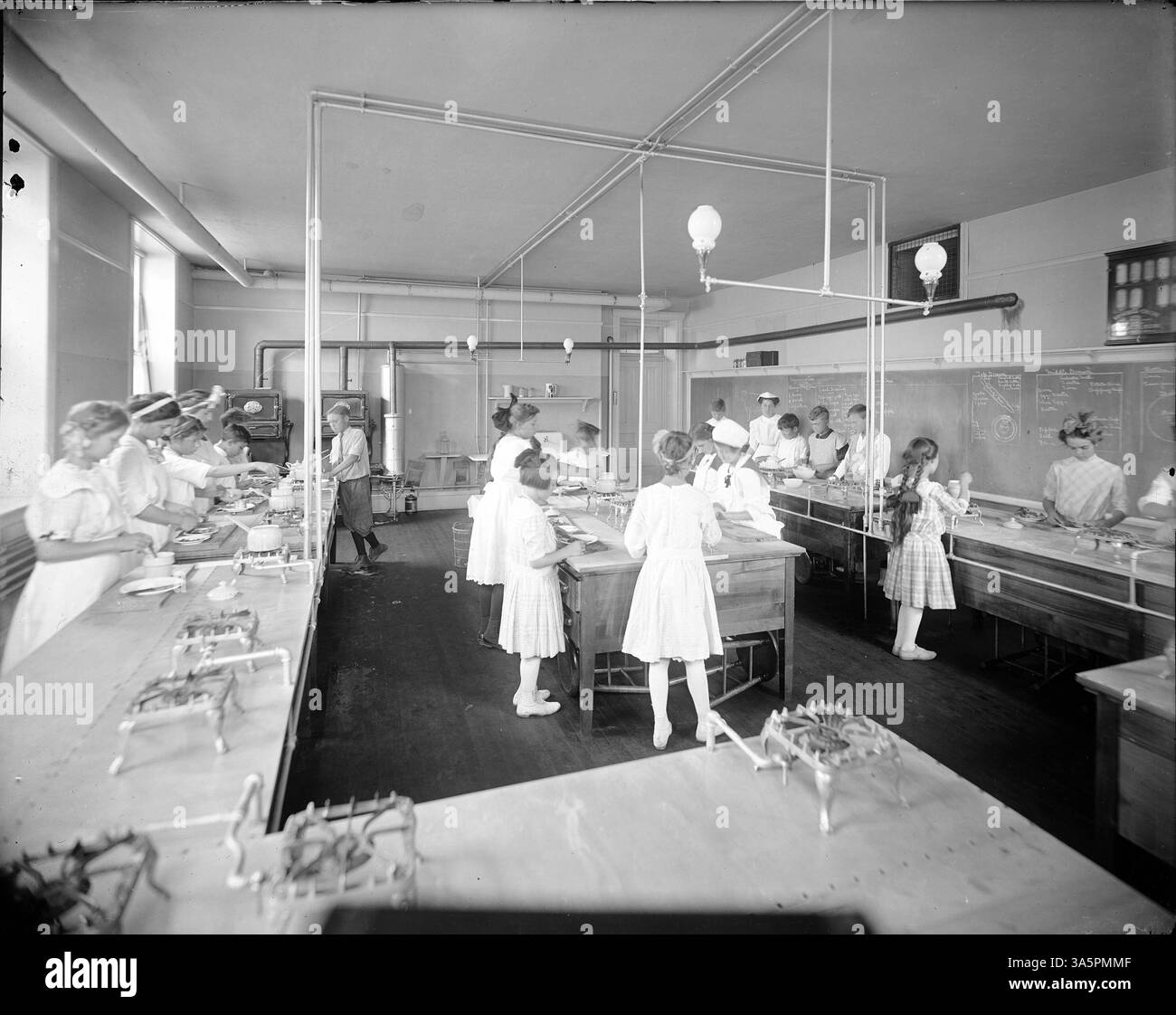
The physical and structural layout of the classroom has evolved to accommodate this methodology. The "home economics" kitchens of the past are being replaced by "Culinary Innovation Labs."
| Feature | Traditional Classroom Cooking | Recipe P Approach (2026) |
|---|---|---|
| Primary Goal | Completion of a meal | Mastery of a culinary principle |
| Student Role | Following instructions (Passive) | Inquiry and experimentation (Active) |
| Technology | Standard ovens and stovetops | Precision induction, data logging, pH meters |
| Recipe Format | Narrative "How-to" steps | Flowcharts and "What-if" scenarios |
| Assessment | Taste and appearance of the final dish | Documentation of process and "Propose" logic |
| Ingredient Focus | General pantry staples | Focus on functionality and sustainability (Plant-P) |
The Role of "Plant-Forward" and "Planet-Friendly"
In many modern iterations, the "P" also stands for Plant-Forward and Planet-Friendly. As sustainability becomes a core requirement in educational standards, the Recipe P approach uses the "Propose" phase to challenge students to find lower-carbon alternatives to traditional dishes. This aligns culinary education with global environmental goals, teaching students how to source ingredients locally and reduce the ecological footprint of their menus.
Assessment in the Recipe P Model
One of the greatest challenges in reshaping classroom cooking was changing how students are graded. In the past, if the cake rose and tasted good, the student received an 'A'. Under the Recipe P model, the "Product" is only a fraction of the grade.
Process-Based Grading
Instructors now evaluate the Predict and Propose journals with the same weight as the final dish.
- Logic and Reasoning: Did the student correctly identify the leavening agent's role in their prediction?
- Technical Accuracy: Did the student maintain the correct temperature range during the practice phase?
- Innovation Quality: Was the student's proposal for a recipe modification grounded in food science, or was it a random guess?
This method of assessment ensures that students who might struggle with the physical dexterity of cooking but have a brilliant grasp of the science are still recognized, while also pushing "natural" cooks to understand the mechanics behind their talent.
Challenges and Considerations for Educators
While the Recipe P approach offers significant advantages, its implementation in 2026 is not without hurdles. School administrators must consider several factors before a full-scale rollout.
Teacher Professional Development
The shift requires educators to be as comfortable with food chemistry as they are with knife skills. Many long-time instructors require retraining to move from a demonstration-led style to a facilitator-led style. This involves learning how to manage a classroom where five different groups might be "Proposing" five different recipe variations simultaneously.
Equipment and Ingredient Costs
Precision cooking requires precision equipment. While a standard whisk works for a basic class, a Recipe P classroom might require immersion circulators for sous-vide experiments or specialized scales for modernist ingredients (hydrocolloids). Furthermore, the "Propose" phase can sometimes lead to increased ingredient usage as students test various iterations of a dish.
Time Constraints
The standard 50-minute high school period is often the biggest enemy of the Recipe P approach. Predicting and Proposing take time. Many schools are moving toward "block scheduling" (90–120 minute periods) to allow students the necessary time to document their predictions, execute the practice, and reflect on their proposals without rushing.
Frequently Asked Questions
Does the Recipe P approach replace classical French techniques?
No, it enhances them. The Recipe P approach uses classical techniques (like the Mother Sauces) as the foundation for the "Practice" phase. Instead of just learning how to make a Béchamel, students use the "Predict" phase to understand starch gelatinization, making them better at the technique itself.
Can this approach be used in primary schools?
Yes, in a simplified form. Younger students can "Predict" what happens when you freeze juice or "Propose" a new fruit combination for a salad. The core philosophy of inquiry-based learning is adaptable to all age levels.
How does this prepare students for the workforce?
The modern food industry is increasingly focused on innovation, consistency, and sustainability. By training students to be analytical and creative problem-solvers, the Recipe P approach makes them ideal candidates for roles in product development, kitchen management, and high-end culinary arts.
What if a student's "Propose" phase results in a failed dish?
In the Recipe P model, a "failed" dish is a successful data point. As long as the student can explain why the proposal failed (e.g., "The acidity in the substitute curdled the dairy"), they can still achieve a high grade. The focus is on the scientific process, not just the edible outcome.
Is the Recipe P approach compatible with digital learning?
Extensively. In 2026, many students use AI-assisted platforms to help with the "Predict" phase, allowing them to simulate chemical reactions before they try them in the physical kitchen. Digital portfolios are also used to track their "Propose" innovations over their entire four-year program.
Next Steps for Schools
For institutions looking to adopt this framework, the first step is a curriculum audit. Identify units where students are currently just "following orders" and insert a Predict requirement. Start small by allowing students to Propose one minor change to a standard recipe once a month. As the culture of the kitchen shifts from a production line to a laboratory, the full benefits of the Recipe P approach will begin to reshape not just the classroom, but the future of the food industry itself.
Image Gallery