How to Identify Motorcycle Bad Spark Plug Symptoms and Restore Engine Performance
Identifying a failing motorcycle spark plug involves observing subtle changes in engine behavior, starting with inconsistent idling, power loss during acceleration, or difficulty starting the engine. By performing a visual inspection o...
Identifying a failing motorcycle spark plug involves observing subtle changes in engine behavior, starting with inconsistent idling, power loss during acceleration, or difficulty starting the engine. By performing a visual inspection of the plug’s electrode color and condition, you can diagnose combustion efficiency, fuel mixture health, and potential ignition system faults before they lead to roadside breakdowns.
Contents
Understanding the Role of the Spark Plug
The spark plug is the heart of your motorcycle's ignition system. It functions as a bridge, conducting a high-voltage electrical current from the ignition coil into the combustion chamber. This current jumps the gap between the center electrode and the ground electrode, creating a spark that ignites the compressed air-fuel mixture. Because this process happens thousands of times per minute at extreme temperatures, spark plugs are "wear items." Over time, the electrodes erode, the ceramic insulator degrades, and carbon deposits build up, directly impacting the timing and strength of the ignition event. Recognizing when this degradation has moved beyond normal wear is essential for maintaining optimal engine health.
Common Symptoms of Failing Spark Plugs
Before you reach for your toolkit, your motorcycle will likely provide audible and physical cues that its spark plugs are nearing the end of their service life.
1. Difficulty Starting the Engine If your bike requires significantly more cranking time than usual, or if it struggles to catch on cold mornings, the spark plug may be losing its ability to generate a strong, consistent arc. When the gap between the electrodes becomes too wide due to erosion, the ignition coil may struggle to bridge that distance, resulting in a "no-start" or "hard-start" condition.
2. Rough Idle and Stalling A malfunctioning spark plug often fails to fire correctly at lower RPMs. If your engine feels shaky, vibrates excessively while at a stoplight, or threatens to stall when you pull in the clutch, it is frequently a sign of intermittent misfiring. This instability occurs because the engine cannot maintain a steady combustion cycle at low throttle inputs.
3. Misfiring Under Load You may notice a "stutter" or "hesitation" when you twist the throttle, especially when climbing a hill or overtaking. Under high engine load, the compression pressure within the cylinder increases, which makes it harder for the spark to jump the electrode gap. If the plug is worn, the spark is "blown out," leading to a noticeable drop in power or a jerking sensation.
4. Reduced Fuel Economy When a spark plug is fouled or malfunctioning, the combustion process is incomplete. Unburnt fuel is pushed out through the exhaust, meaning you are consuming fuel without gaining the corresponding kinetic energy. A sudden, unexplained drop in your motorcycle’s fuel efficiency is a classic indicator that your engine is not burning its mixture as cleanly as it should.
Visual Diagnostic Guide: Reading the Spark Plug
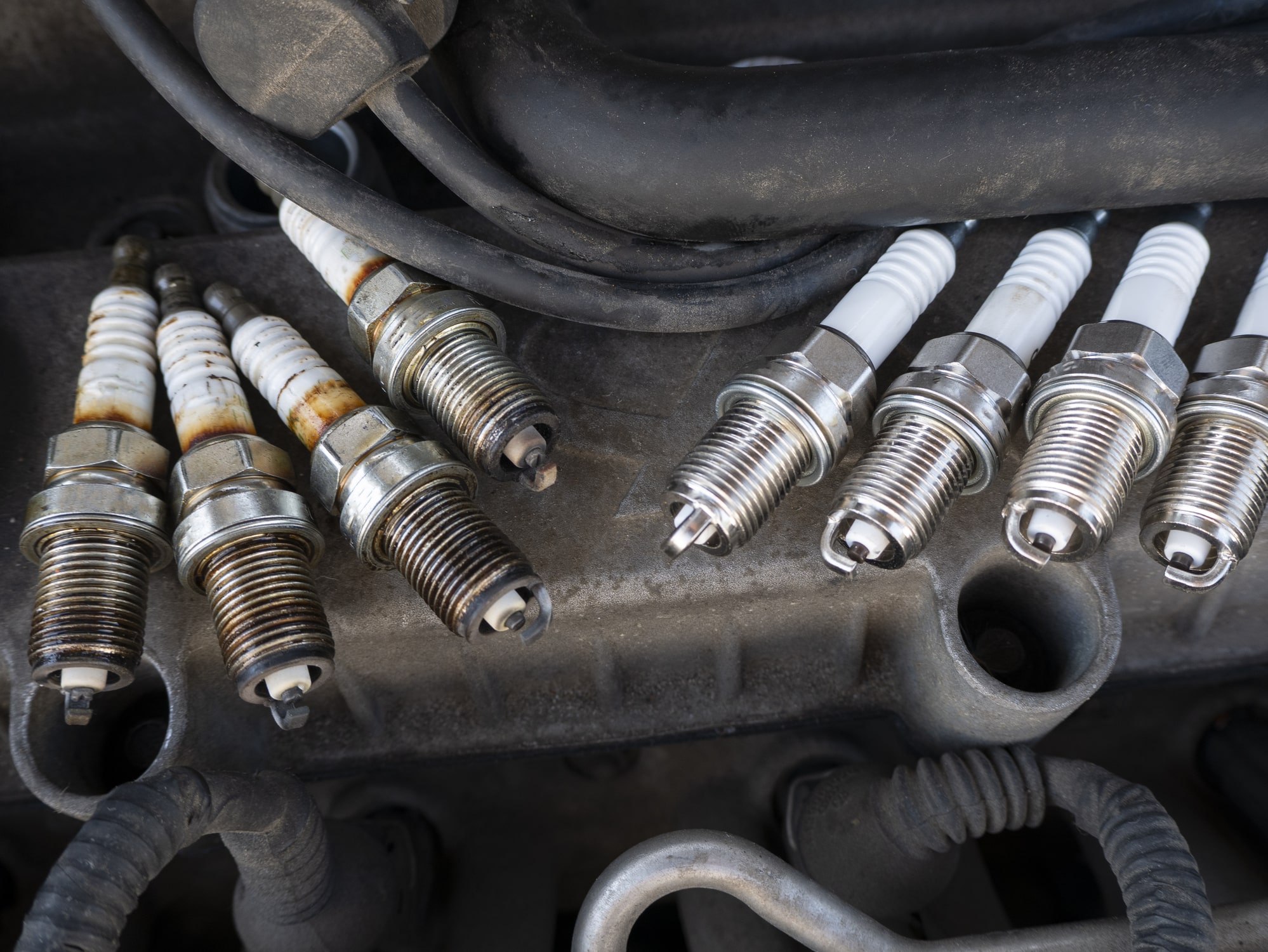
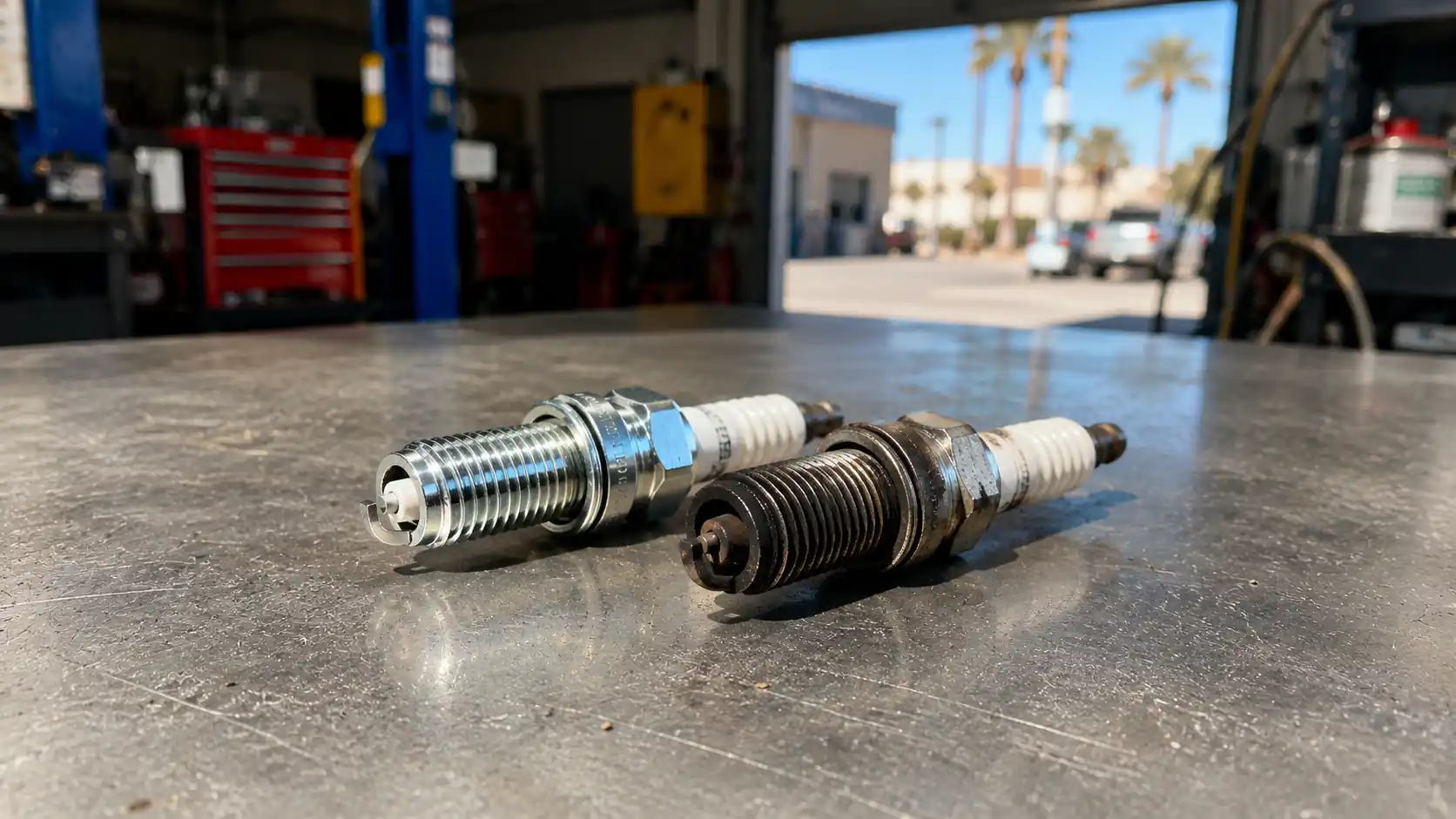
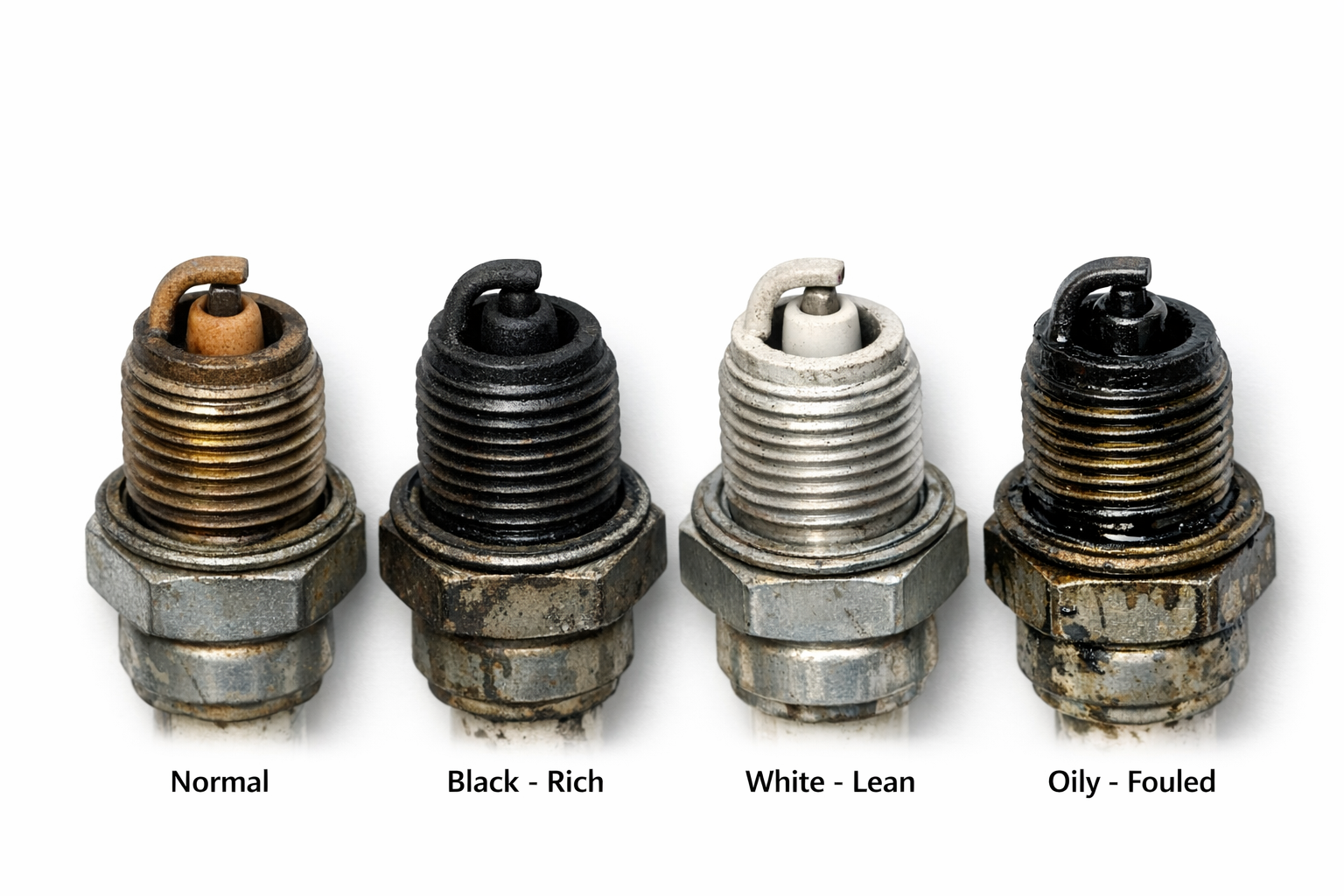
Once you have removed the spark plug, its physical appearance acts as a report card for your engine’s internal health. Always use a proper spark plug socket and ensure the engine is cool to the touch to prevent stripping the cylinder head threads.
| Appearance | Potential Cause | Action Required |
|---|---|---|
| Tan/Light Brown | Ideal combustion (Normal) | None; cleaning or replacement as per schedule |
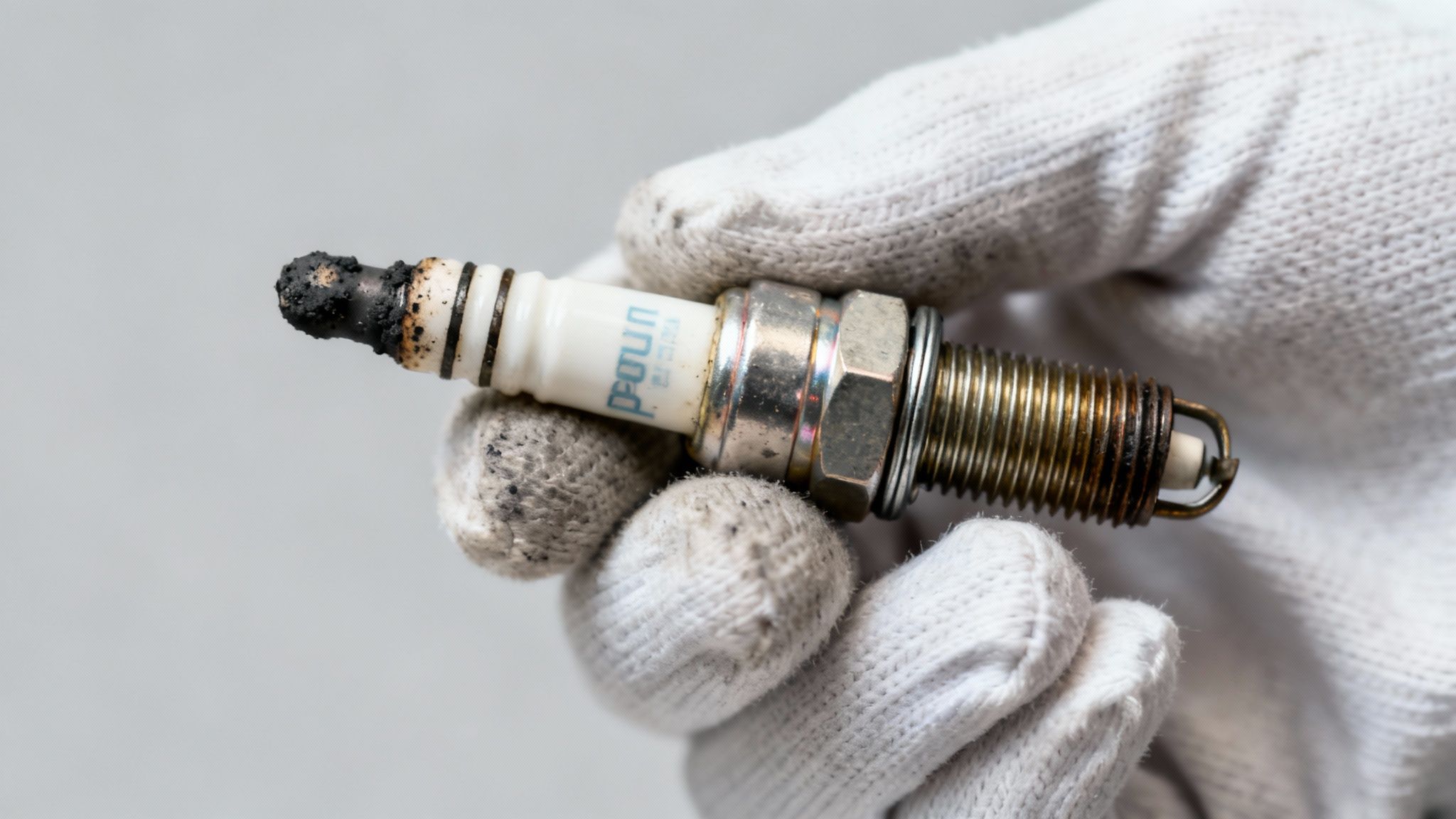
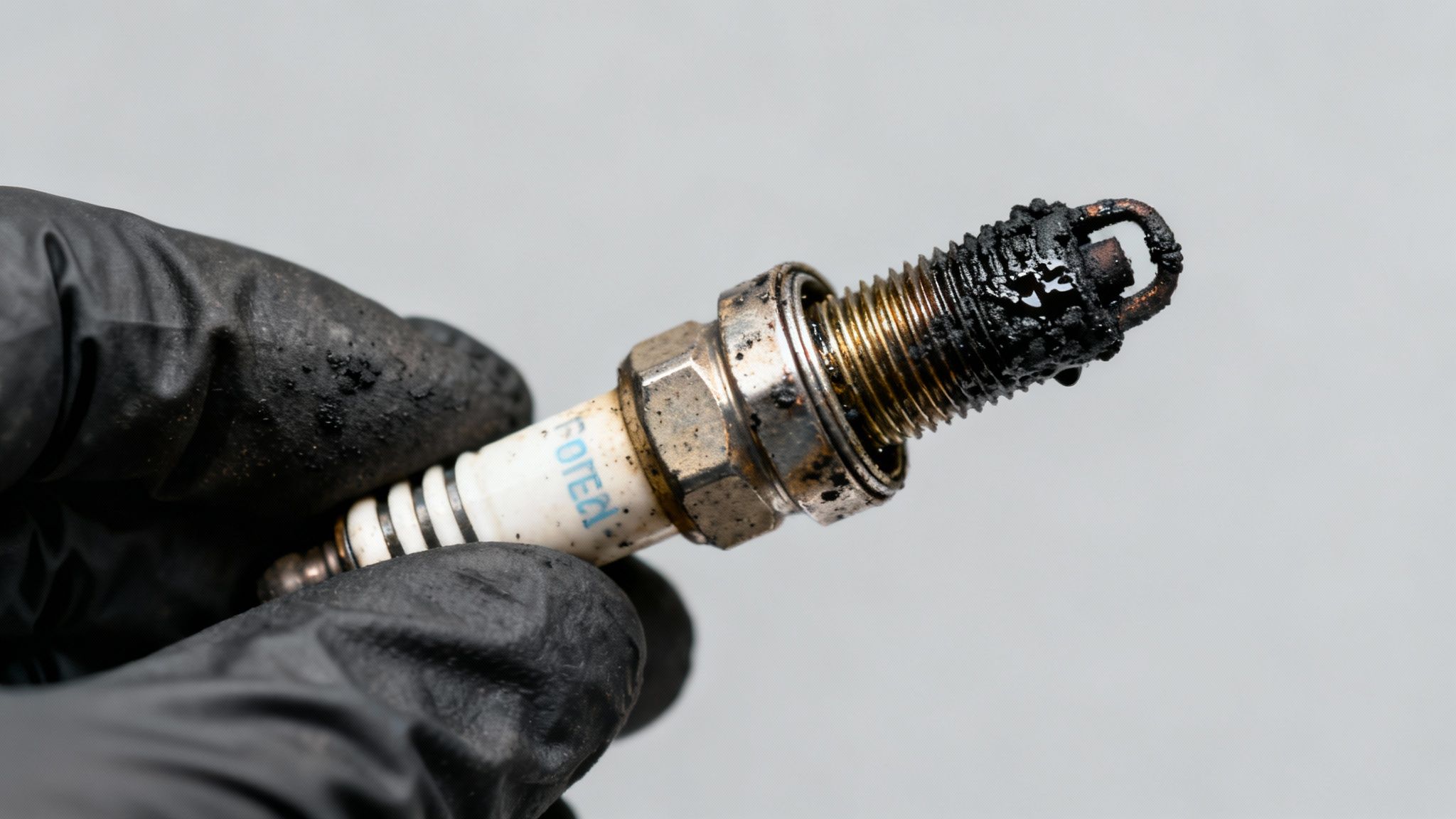
| Heavy Black Soot | Running too rich or excessive idling | Check air filter and carburetor/fuel injection mapping |
| White/Blistered | Overheating or lean fuel mixture | Check for vacuum leaks and cooling system status |
| Wet/Oily | Worn piston rings or valve seals | Perform a compression test; consult a mechanic |
| Eroded Electrodes | Normal aging or excessive heat | Replace spark plug immediately |
Step-by-Step Inspection Procedure
To verify your suspicion, follow this sequence:
- Access the Plugs: Remove the spark plug cap (or coil-on-plug unit). Ensure the area around the plug base is clean before removal to prevent debris from falling into the combustion chamber.
- Removal: Use a spark plug socket with a rubber insert. Turn counter-clockwise with steady pressure. If the plug feels "stuck," do not force it; apply a small amount of penetrating oil and let it sit.
- Examination: Compare the color and electrode shape against the table above. Check the porcelain insulator for cracks or hairline fractures, which can cause high-voltage leakage.
- Gap Measurement: Use a wire-style feeler gauge to measure the gap between the center and ground electrodes. Compare this measurement to the specifications found in your motorcycle’s owner’s manual. If it deviates from the factory tolerance, it should be adjusted or the plug should be replaced.
- Reinstallation: Hand-thread the new or cleaned plug to ensure you do not cross-thread the head. Tighten to the torque specification provided by the manufacturer. Over-tightening is a leading cause of cylinder head thread failure.
Addressing Related Ignition Issues
If replacing the spark plug does not resolve your symptoms, the issue may lie elsewhere in the ignition chain. Check your spark plug wires (high-tension leads) for signs of arcing—visible at night as tiny blue flashes near the wire—or brittleness. Furthermore, examine the ignition coil for heat-related failure. If the symptoms only appear once the bike is at operating temperature, it may indicate a failing coil that breaks down under thermal stress.
Frequently Asked Questions
How often should I change my motorcycle spark plugs? Most manufacturers recommend inspection every 3,000 to 5,000 miles, though iridium-tipped plugs can last significantly longer. Always refer to your specific service manual for the recommended interval, as performance engines require more frequent replacement than standard touring motorcycles.
Can I clean a fouled spark plug? You can remove light carbon deposits using a soft brass wire brush and a spray-on electrical contact cleaner. However, if the insulator is permanently stained or the electrode is eroded, cleaning is only a temporary fix. It is safer to replace the plug for long-term reliability.
Why is my spark plug electrode white? A white, blistered electrode indicates the engine is running "lean," meaning there is too much air and not enough fuel. This is a serious condition that can lead to engine overheating and catastrophic piston damage. If you see this, stop riding and have your fueling system inspected by a professional.
Does the spark plug type matter? Yes. You must use the heat range and thread reach specified by the motorcycle manufacturer. Using a plug with the wrong heat range can result in pre-ignition, where the air-fuel mixture ignites too early, potentially causing severe internal damage.
Should I use anti-seize on spark plug threads? In most modern motorcycle applications, manufacturers advise against anti-seize. The plating on new spark plugs is designed to provide the correct torque-to-clamp pressure ratio. Applying anti-seize can lead to over-torquing and potential thread damage in the aluminum cylinder head.
Final Recommendation
If you identify signs of wear, such as rounded electrodes, a heavily charred insulator, or a gap that exceeds the manual’s limit, replace the spark plug immediately. Given the low cost of the component relative to the potential cost of engine damage, keeping a fresh set of plugs is one of the most effective ways to ensure your motorcycle remains reliable throughout the 2026 riding season. If symptoms persist after installation, perform a compression test to rule out deeper mechanical issues.
Image Gallery