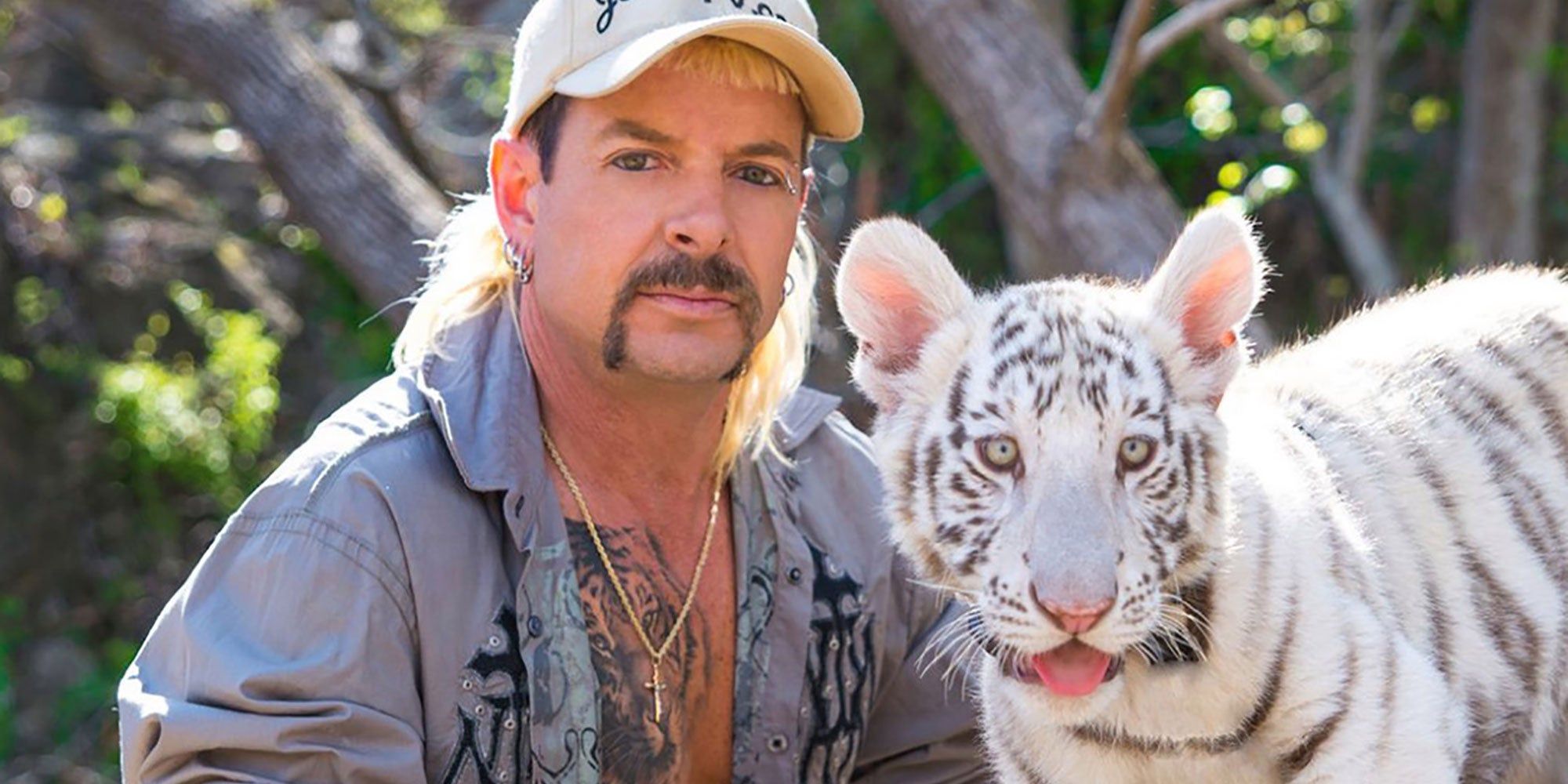
The Rise and Fall of Tiger King Joe Exotic: A Complete Timeline and Legal Breakdown
The story of Joe Exotic—born Joseph Allen Schreibvogel—is an extraordinary narrative of ambition, private zoo ownership, public spectacle, and eventual legal ruin. From establishing a modest wildlife sanctuary in Oklahoma to becoming t...
The story of Joe Exotic—born Joseph Allen Schreibvogel—is an extraordinary narrative of ambition, private zoo ownership, public spectacle, and eventual legal ruin. From establishing a modest wildlife sanctuary in Oklahoma to becoming the subject of a global television phenomenon, his life trajectory highlights the unchecked private big-cat industry in the United States, culminating in a federal conviction for a murder-for-hire plot and severe wildlife trafficking violations.
Contents
Early Life and the Founding of the GW Zoo
Before becoming known to millions as the "Tiger King," Joe Exotic worked as a police officer in Eastvale, Texas, and later managed a pet store with his family. The pivotal shift in his career occurred following the death of his brother, Garold Wayne Schreibvogel, in a car accident in 1997. Using funds from a legal settlement related to the accident, Joe's family purchased a 16-acre parcel of land in Wynnewood, Oklahoma.
In 1999, the facility opened as the Garold Wayne Exotic Pet Memorial Park (commonly known as the GW Zoo). Initially presented as a sanctuary for unwanted exotic animals, the park expanded rapidly over the following decade. What began as a local roadside exhibit evolved into one of the largest private collections of big cats, primates, and exotic fauna in North America.
To sustain the facility’s rising overhead costs, the GW Zoo developed an aggressive revenue model. This included charging public admission, selling merchandise, hosting traveling animal shows at shopping malls across the country, and offering interactive "cub-petting" sessions where visitors paid premium fees to hold and pose with young tigers and lions.
- [1999] GW Zoo Founded in Wynnewood, OK
- [2000s] Rapid Breeding & Cub-Petting Operations
- [2011] Copyright & Trademark Litigation (Carole Baskin)
- [2013] $1M Civil Court Judgment Against Joe Exotic
- [2017-2018] Murder-for-Hire Plot & Wildlife Crimes
- [2019-2022] Federal Conviction & Resentencing (21 Years)
- [2022] Passage of Big Cat Public Safety Act
The Tiger King Empire: Breeding, Entertainment, and Ambition
At its height, the GW Zoo housed hundreds of exotic animals, including over 80 tigers, along with lions, cougars, and jaguars. To maintain constant supplies of young cubs suitable for public interaction—which legally must be under 12 weeks of age to allow public contact under United States Department of Agriculture (USDA) guidelines—Joe Exotic initiated an intensive captive breeding program.
Beyond animal management, Joe crafted a self-styled media personality. He launched an online broadcast channel, produced dozens of country music videos (with vocals largely recorded by uncredited studio musicians), and ran a continuous promotional campaign built around his persona.
His political ambitions further elevated his public visibility:
- 2016 Presidential Campaign: Ran as an independent candidate for President of the United States, securing minor ballot access and internet attention.
- 2018 Oklahoma Gubernatorial Campaign: Ran as a candidate for the Libertarian Party nomination, placing third in the primary with over 660 votes.
However, behind the entertainment empire lay mounting operational expenses, regulatory scrutiny from federal agencies, and escalating friction with animal welfare organizations.
The Escalating Feud: Joe Exotic vs. Carole Baskin
The primary catalyst for Joe Exotic's downfall was his long-standing hostility toward Carole Baskin, the founder of Big Cat Rescue, a non-profit sanctuary located in Tampa, Florida. Baskin actively campaigned against roadside zoos, exotic animal breeding, and interactive cub-petting sessions, targeting Joe's mobile exhibitions and sponsor venues.
The feud intensified into legal warfare:
- Protests and Campaigning: Baskin organized grassroots campaigns urging venues to cancel Joe Exotic’s traveling cub-petting shows, severely curtailing his revenue stream.
- Trademark Infringement Lawsuit: In response, Joe began operating under business names confusingly similar to Baskin's organization, including "Big Cat Rescue Entertainment."
- The Civil Judgment: In 2011, Big Cat Rescue filed a federal trademark infringement lawsuit against Joe Exotic in the U.S. District Court for the Middle District of Florida. In 2013, the court ordered Joe Exotic and his associates to pay Big Cat Rescue over $1 million in damages.
The civil judgment devastated Joe financially. In attempts to shelter assets from collection, he transferred ownership of the park and its assets to family members and business associates, including Jeff Lowe, a retail entrepreneur who eventually gained control of the GW Zoo property.
The Murder-for-Hire Plot and Wildlife Violations
As financial strains mounted and his control over the park slipped, Joe Exotic's efforts against Baskin escalated from public threats on his internet show to criminal acts.
According to federal court documents filed by the U.S. Department of Justice, between November 2017 and September 2018, Joe Exotic attempted to hire two separate individuals to murder Carole Baskin:
- Attempt 1: He paid $3,000 to a park employee, Allen Glover, instructing him to travel from Oklahoma to Florida to carry out the murder.
- Attempt 2: Unbeknownst to Joe, his secondary attempt involved negotiating with an undercover agent from the Federal Bureau of Investigation (FBI), whom he offered money and assets in exchange for Baskin's death.
Simultaneously, federal law enforcement agencies—including the U.S. Fish and Wildlife Service (USFWS)—were investigating animal welfare abuses and illegal trade occurring at the GW Zoo. The investigation revealed that Joe Exotic had violated federal wildlife protection statutes:
- Endangered Species Act Violations: In October 2017, Joe shot and killed five healthy tigers at his zoo to free up cage space for other animals.
- Lacey Act Violations: He falsified paper records to conceal the illegal interstate sale and trafficking of big cats, disguising commercial transactions as "donations" or "transfers."
In September 2018, federal agents arrested Joe Exotic in Gulf Shores, Alabama.
Trial, Conviction, and Legal Proceedings
In April 2019, a federal jury in the U.S. District Court for the Eastern District of Oklahoma found Joe Exotic guilty on 19 criminal counts:
- 2 counts of murder-for-hire under 18 U.S.C. § 1958.
- 8 counts of violating the Lacey Act (falsifying wildlife records).
- 9 counts of violating the Endangered Species Act (killing 5 tigers and trafficking others).
| Charge Type | Statutory Authority | Jury Verdict |
|---|---|---|
| Murder-for-Hire (2 counts) | 18 U.S.C. § 1958 | Guilty (Both counts) |
| Endangered Species Act | 16 U.S.C. § 1538 | Guilty (9 counts) |
| Lacey Act Violations | 16 U.S.C. § 3372 | Guilty (8 counts) |
Initial Sentencing and Appeal
In January 2020, United States District Judge Judge Judge Paul H. White sentenced Joe Exotic to 22 years (264 months) in federal prison.
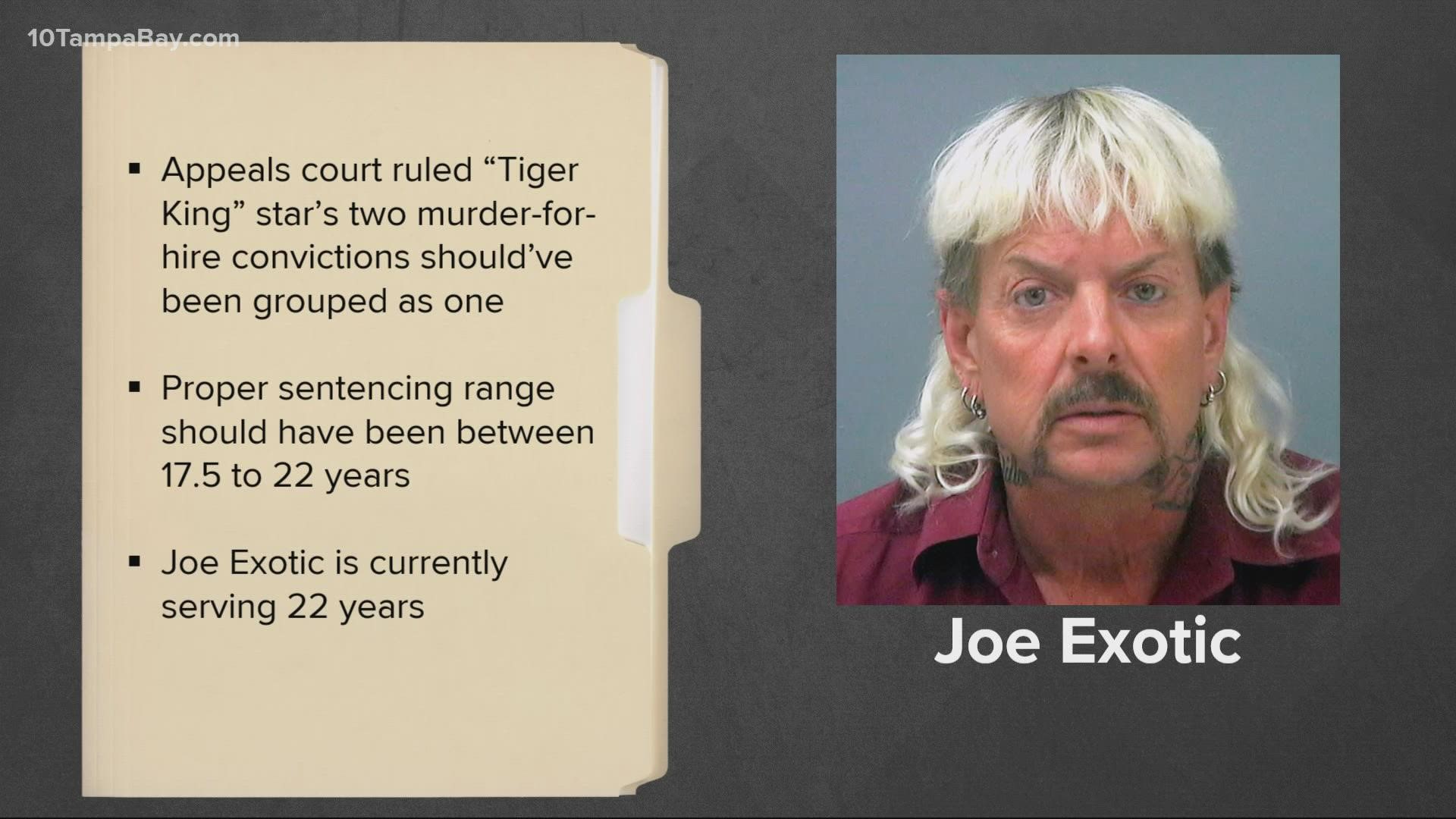
Following an appeal to the U.S. Court of Appeals for the Tenth Circuit, the appellate court upheld his convictions but ruled that the trial court erred in calculating the sentencing advisory guidelines. Specifically, the court ruled that the two murder-for-hire counts should have been grouped together during sentencing calculation because they shared a single harm objective (the death of Carole Baskin).
In January 2022, a federal judge resentenced Joe Exotic to 21 years (252 months) in prison—a reduction of one year from his original sentence.
Major Milestones in the Case of Joe Exotic
| Year | Event | Significance / Impact |
|---|---|---|
| 1999 | GW Zoo Opens | Establishes the Wynnewood, Oklahoma roadside animal exhibition. |
| 2013 | $1 Million Civil Judgment | Big Cat Rescue wins trademark suit, placing major financial pressure on Joe Exotic. |
| 2016 | Independent Presidential Run | Joe Exotic gains initial viral notoriety through third-party political campaigns. |
| 2018 | Federal Arrest | FBI and USFWS arrest Joe in Alabama following a murder-for-hire investigation. |
| 2019 | Federal Conviction | Found guilty on 19 federal counts involving murder-for-hire and wildlife law breaches. |
| 2020 | Initial Sentencing & Tiger King Release | Sentenced to 22 years; Netflix releases docuseries during worldwide pandemic lockdowns. |
| 2022 | Resentencing | Sentence adjusted to 21 years by the U.S. Tenth Circuit Court of Appeals. |
| 2022 | Passage of the Big Cat Public Safety Act | Federal legislation signed by President Biden, banning private possession and cub petting nationwide. |
Cultural Impact and Legislative Reform
The story of Joe Exotic achieved unprecedented media prominence in March 2020 when Netflix released the docuseries Tiger King: Murder, Mayhem and Madness. Releasing at the start of global COVID-19 pandemic stay-at-home orders, the show reached tens of millions of viewers within weeks, transforming a federal criminal case into a major pop-culture phenomenon.
While the series focused heavily on the chaotic rivalries among exotic animal owners, it brought national public attention to the systemic issues surrounding private exotic animal ownership in the United States. Animal welfare organizations used this heightened awareness to lobby for stricter federal oversight.
The Big Cat Public Safety Act
The most lasting legal legacy of the Joe Exotic saga was the passage of the Big Cat Public Safety Act (H.R. 263 / S. 1210). Signed into federal law in December 2022, the legislation fundamentally altered big-cat management nationwide:
- Prohibition of Public Contact: Prohibits direct public contact with big cats, permanently ending commercial "cub-petting" activities and photo operations.
- Phase-Out of Private Ownership: Prohibits individuals from acquiring, breeding, or trading big cats. Existing private owners are permitted to keep animals owned prior to enactment, provided they register them with the U.S. Fish and Wildlife Service and do not breed or buy additional specimens.
- Exemptions: Restricts big-cat possession exclusively to accredited sanctuaries, universities, state-licensed wildlife facilities, and USDA-licensed zoos meeting specific standards.
The law effectively eliminated the business model that sustained facilities like the GW Zoo for two decades.
Current Status and Where Things Stand
As of 2026, Joseph Maldonado-Passage remains incarcerated in the federal prison system, serving out his 21-year sentence at the Federal Medical Center (FMC) Fort Worth in Texas. His scheduled release date remains subject to standard federal custody policies, good-behavior credits, and potential executive clemency applications, which his legal team has repeatedly sought.
The GW Zoo property in Wynnewood, Oklahoma, underwent complete closure. In June 2020, a federal judge awarded ownership of the land to Carole Baskin's Big Cat Rescue to satisfy the unpaid civil judgment against Joe Exotic. The property was subsequently sold with restrictions prohibiting it from ever operating as an exotic animal park again.
Key Takeaways and Lessons Learned
- Legal Risks in Wildlife Trade: Operating roadside exotic exhibits under non-standard practices carries substantial criminal liability under federal wildlife protection acts like the Lacey Act and Endangered Species Act.
- Civil Judgments and Asset Protection: Attempting to shield business assets through fraudulent transfers or corporate renamings can compound legal exposure during civil execution processes.
- Regulatory Shifts: High-profile legal cases frequently serve as catalysts for federal policy changes, as demonstrated by the enactment of the Big Cat Public Safety Act.
Frequently Asked Questions
What charges was Joe Exotic convicted of?
Joe Exotic was convicted on 19 federal counts in April 2019: two counts of murder-for-hire under 18 U.S.C. § 1958, eight counts of falsifying wildlife records under the Lacey Act, and nine counts of violating the Endangered Species Act for killing five tigers and trafficking others.
Why was Joe Exotic resentenced in 2022?
In July 2021, the U.S. Court of Appeals for the Tenth Circuit ruled that the original trial court should have grouped the two murder-for-hire counts together when calculating advisory sentencing guidelines. This technical recalculation led to a resentencing hearing in January 2022, where his initial 22-year sentence was reduced to 21 years.
How did the Big Cat Public Safety Act impact private zoo owners?
Enacted in December 2022, the law bans private ownership, breeding, and public contact (such as cub-petting) with big cats across the United States. Current owners were grandfathered in but required to register their animals, while commercial breeding and interactive public exhibits were rendered illegal nationwide.
Who owns the former GW Zoo property today?
In 2020, a federal judge transferred control of the 16-acre Oklahoma property to Big Cat Rescue to satisfy an unpaid $1 million copyright/trademark judgment against Joe Exotic. Big Cat Rescue subsequently sold the land to private buyers under strict covenants that prohibit the property from housing exotic animals.
Image Gallery