Understanding the Relationship String Theory Debate: Science, Testability, and Physics
The debate surrounding string theory centers on its unique status as a candidate for a "Theory of Everything," capable of reconciling general relativity with quantum mechanics. Critics argue that the theory lacks empirical testability,...
The debate surrounding string theory centers on its unique status as a candidate for a "Theory of Everything," capable of reconciling general relativity with quantum mechanics. Critics argue that the theory lacks empirical testability, while proponents maintain that its mathematical internal consistency and ability to resolve long-standing paradoxes in physics justify its continued pursuit as a fundamental framework.
Contents
The Origin of the Conflict
String theory emerged from the necessity to resolve a fundamental incompatibility in physics: the irreconcilable differences between the gravitational physics of the macro-universe (general relativity) and the subatomic dynamics of the quantum world. In traditional physics, these two domains function under separate, often contradictory rules.
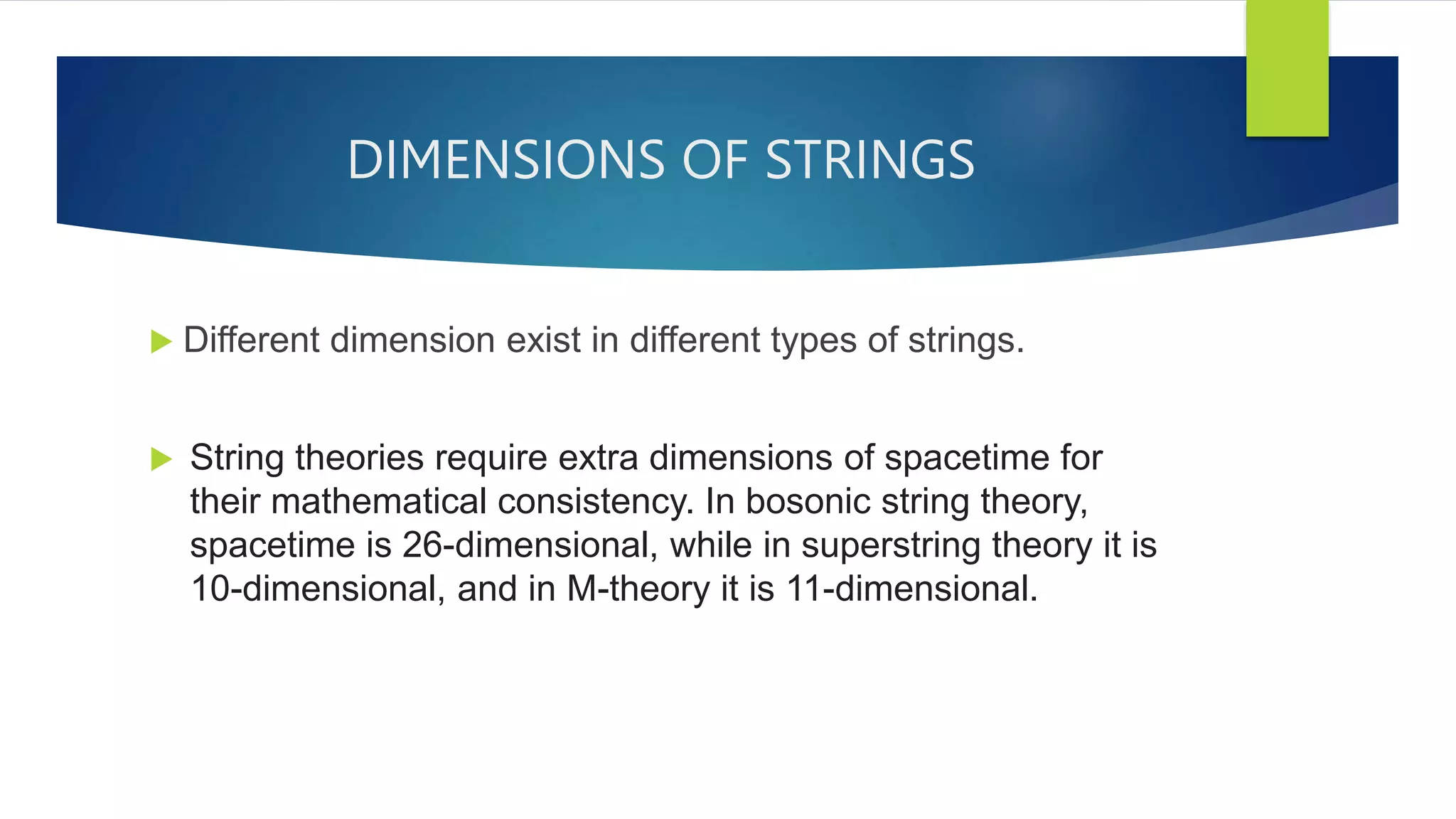
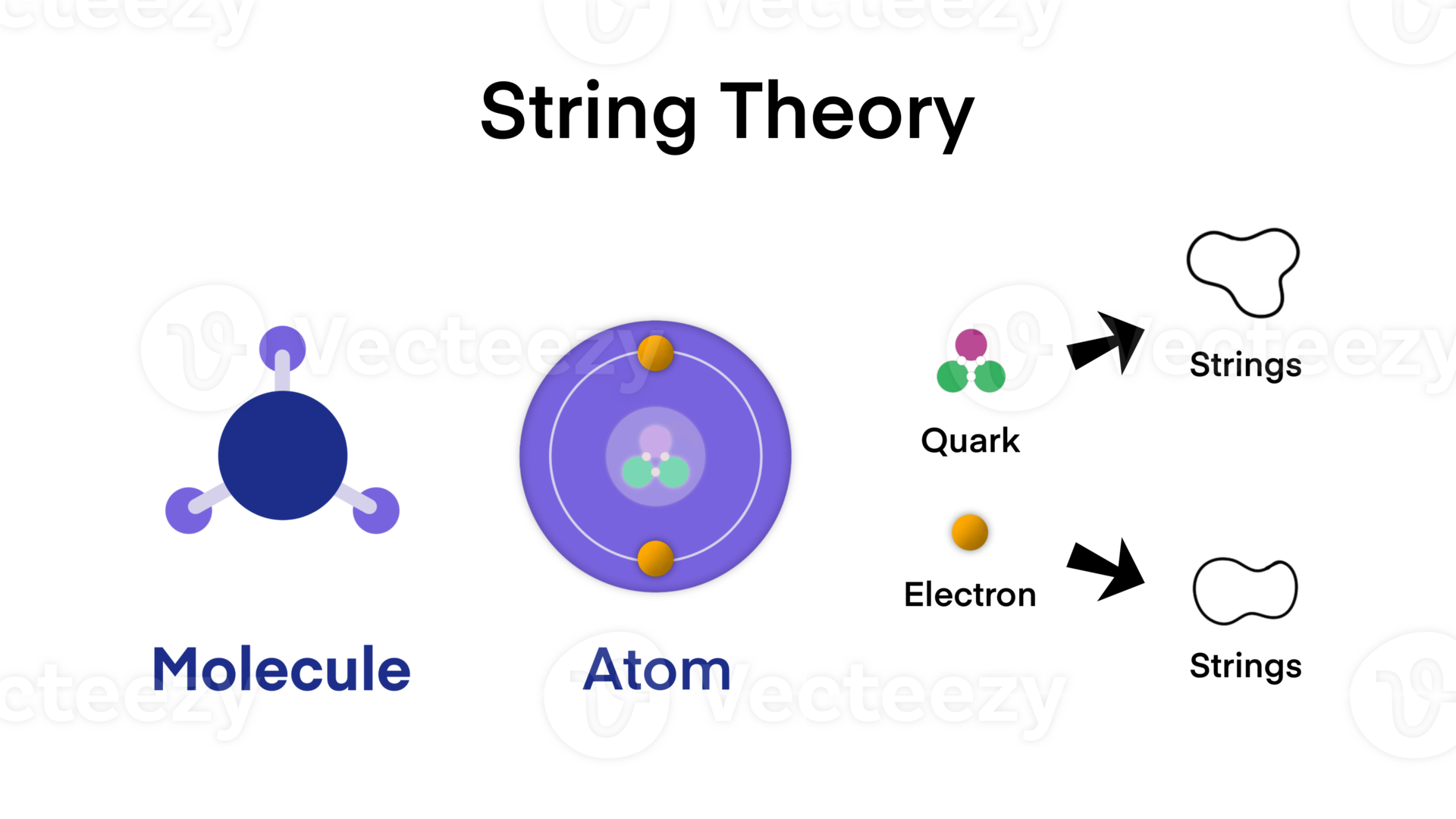
String theory proposes that the fundamental constituents of reality are not point-like particles, but rather infinitesimal, one-dimensional vibrating strings. The specific frequency at which these strings vibrate determines the properties of the resulting particle—whether it manifests as an electron, a photon, or the elusive graviton. While this offers an elegant unification, the mathematical requirements for the theory to work demand the existence of extra spatial dimensions, typically ten or eleven, which are hypothesized to be "compactified" or curled up at scales far too small for current detection.
Core Arguments in the Scientific Debate
The controversy surrounding string theory is not necessarily a dispute over its mathematical rigor, but rather a clash over the definition of scientific inquiry.
The Proponent Perspective
Supporters of string theory argue that the theory is an inevitable mathematical evolution of physics. Because string theory is mathematically constrained—meaning it does not allow for arbitrary changes to its structure—proponents argue that its success in describing gravity, a force that other quantum theories struggle to incorporate naturally, provides strong evidence of its validity. They view the current lack of empirical, laboratory-based verification as a temporary technological limitation rather than a structural flaw in the theory.
The Critic Perspective
Critics, including high-profile physicists such as Peter Woit and Lee Smolin, argue that string theory has stalled because it is "not even wrong." This critique stems from the principle of falsifiability, popularized by Karl Popper. Falsifiability asserts that for a theory to be considered scientific, there must be a specific experimental outcome that could potentially prove it false. Critics contend that because string theory can be adapted to accommodate almost any conceivable experimental observation, it essentially becomes a mathematical framework that describes everything and nothing simultaneously, thereby losing its predictive power.
Comparison of Theoretical Frameworks
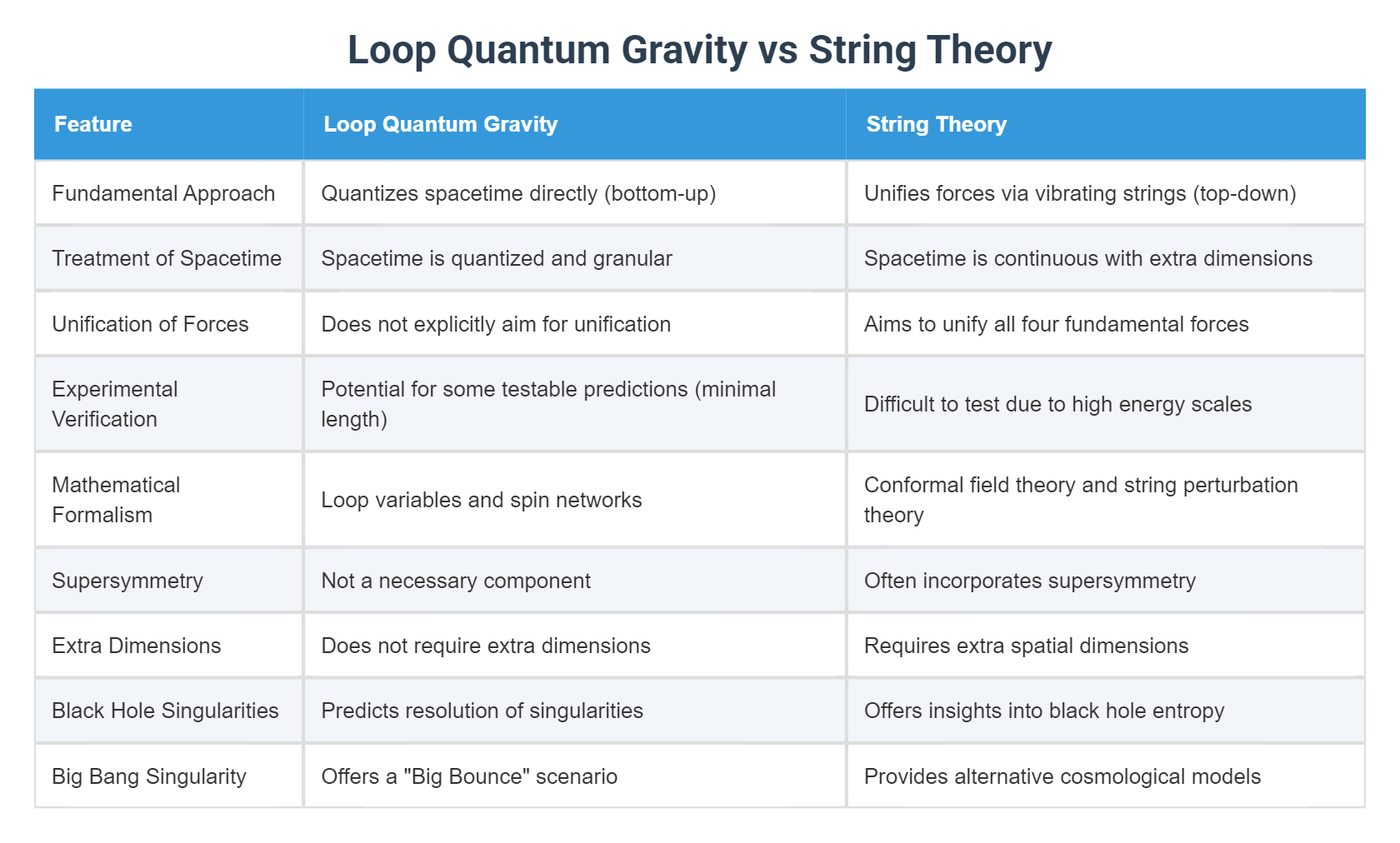
| Framework | Primary Focus | Testability Status | Main Challenge |
|---|---|---|---|
| String Theory | Unified force/gravity | Extremely high energy scales | Lack of direct experimental proof |
| Loop Quantum Gravity | Quantized spacetime | Theoretical predictions | Difficulty in recovering classical gravity |
| Standard Model | Particle interactions | High (confirmed) | Does not include gravity |
| General Relativity | Macro-scale gravity | High (confirmed) | Incompatible with quantum events |
The "Landscape" Problem
A major point of contention within the string theory debate is the "Landscape of Vacua." String theory calculations have revealed that there are potentially $10^{500}$ possible versions of the theory, each leading to a different physical universe with different fundamental constants.
For many physicists, this is problematic because it implies that string theory does not predict our specific universe—with its known laws of physics—but rather describes a vast multiverse where our existence is merely one of trillions of possibilities. Critics argue that if a theory can predict almost any outcome, it ceases to be a useful tool for understanding the specific, observed laws of nature in our own world.
The Quest for Experimental Verification
Despite the theoretical nature of the field, researchers are actively seeking ways to move string theory from the chalkboard to the laboratory. While we lack the energy levels necessary to probe strings directly—which would require particle accelerators the size of a galaxy—physicists look for indirect evidence in the cosmic background radiation or the structure of black holes.
- Gravitational Waves: Detecting specific signatures in gravitational waves could potentially reveal evidence of early universe processes described by string theory.
- Cosmological Data: Advanced measurements of the cosmic microwave background may show traces of "cosmic strings" or other residues predicted by string-theoretic models.
- Black Hole Thermodynamics: Using the AdS/CFT correspondence (a mathematical duality where a gravity theory in one space is equivalent to a quantum theory on its boundary), physicists can use string theory to calculate properties of black holes that match quantum mechanical predictions, providing a form of "mathematical verification."
Why the Debate Remains Unresolved
The relationship string theory debate persists in 2026 because of the sheer ambition of the project. It is not merely a hypothesis to be tested, but a potential paradigm shift. The debate forces the scientific community to ask: Does a theory that successfully unifies all fundamental forces, despite lacking direct experimental evidence, still constitute scientific progress?
For many, the answer depends on whether they view physics primarily as an empirical enterprise (driven by data) or a mathematical one (driven by the beauty and consistency of equations). This philosophical divide is why, after decades of research, the community remains deeply split between those who view string theory as the inevitable successor to the Standard Model and those who view it as a mathematical dead-end that has monopolized funding and intellectual capital.
Frequently Asked Questions
Is string theory considered a proven fact? No. String theory remains a mathematical framework or hypothesis. While it has successfully passed internal consistency checks and provides a framework for quantum gravity, it lacks direct experimental confirmation in the form of observed, unique predictions that differ from established physics.
Why are the extra dimensions in string theory hard to find? These dimensions are theorized to be "compactified" or curled up at the Planck scale. This scale is roughly $10^{-35}$ meters, which is significantly smaller than anything we can measure or probe with current particle accelerators like the Large Hadron Collider.
What is the "Theory of Everything" in this context? A "Theory of Everything" refers to a hypothetical framework that unites the four fundamental forces of nature: gravity, electromagnetism, the weak nuclear force, and the strong nuclear force. String theory is currently the most prominent candidate for such a theory.
Are there alternatives to string theory? Yes. Several alternatives exist, including Loop Quantum Gravity, which seeks to quantize space and time directly without adding extra dimensions, and Causal Dynamical Triangulations. Each has its own set of strengths and unresolved limitations.
Next Steps for Engagement
For those interested in following the development of this debate, the most productive path is to monitor publications from the Perimeter Institute for Theoretical Physics and major journals such as Physical Review D. Because the field relies heavily on complex mathematics, engaging with the debate requires a baseline understanding of quantum field theory and general relativity. If you are a student or researcher, focusing on the intersection of mathematical physics and cosmology—where the most promising observational tests currently lie—is the best way to stay informed on the shifting landscape of these fundamental theories.
Image Gallery