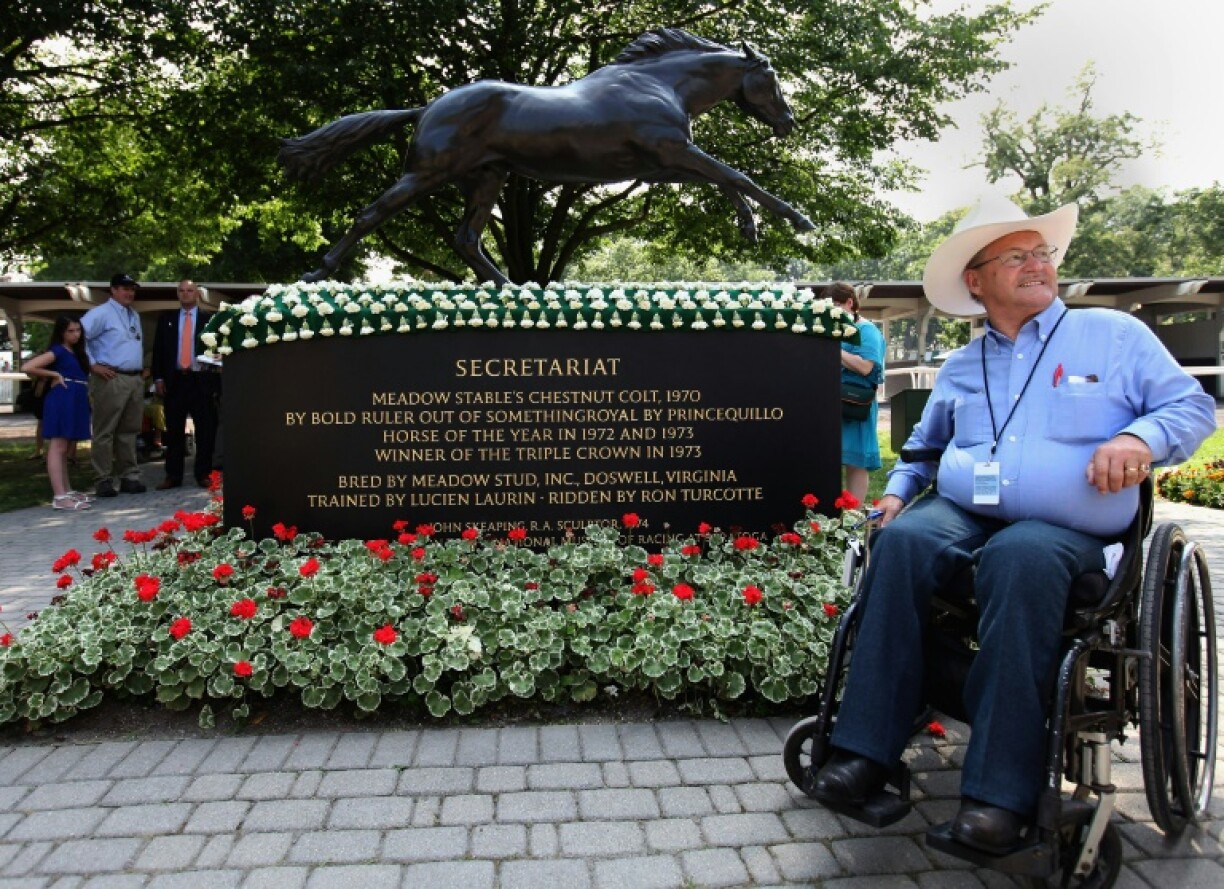
Ron Turcotte Was 31 When He Rode Secretariat: The Story Behind the Historic 1973 Triple Crown
Ron Turcotte was 31 years old during Secretariat’s historic 1973 Triple Crown victory. Born on July 22, 1941, the Canadian Hall of Fame jockey celebrated his 31st birthday in July 1972—just as he took over the regular riding duties abo...
Ron Turcotte was 31 years old during Secretariat’s historic 1973 Triple Crown victory. Born on July 22, 1941, the Canadian Hall of Fame jockey celebrated his 31st birthday in July 1972—just as he took over the regular riding duties aboard Secretariat—and remained 31 throughout the horse’s legendary spring campaign in 1973.
Contents
The Path to 1973: Ron Turcotte’s Journey to His Career Peak
When horse racing fans examine the historical footage of the 1973 Triple Crown, they witness a jockey executing tactical decisions with calm authority. That composure was no accident. At 31 years old, Ron Turcotte possessed the optimal combination of peak physical strength, seasoned racecraft, and deep familiarity with top-tier stakes competition.
Born in Grand Falls, New Brunswick, Canada, Turcotte did not begin his career in the traditional pony club environment. He worked in the Canadian lumber industry as a young man, developing exceptional upper-body strength and physical endurance before transitioning to horse racing in Toronto during the late 1950s. After starting as a hot walker and exercise rider at E. P. Taylor’s Windfields Farm, he earned his jockey license in 1961.
Turcotte quickly established himself as a dominant force in North American racing:
- Canadian Success: He led the jockey standings in Canada multiple times during the early 1960s, gaining a reputation for patient riding and gentle hands.
- Move to the United States Circuit: By the mid-1960s, Turcotte moved to the competitive New York and Florida circuits, winning high-profile races such as the 1965 Preakness Stakes aboard Tom Rolfe when he was just 23 years old.
- Partnership with Lucien Laurin: In the early 1970s, veteran trainer Lucien Laurin hired Turcotte as the primary contract rider for Penny Chenery’s Meadow Stable.
Before riding Secretariat, Turcotte piloted Meadow Stable's Riva Ridge to victories in the 1972 Kentucky Derby and Belmont Stakes. By the time Secretariat entered his three-year-old season in early 1973, Turcotte was already a two-time Kentucky Derby-winning jockey with over a decade of elite racing experience under his belt.
Why Age 31 Was the Ideal Point in Turcotte’s Racing Career
In thoroughbred racing, a jockey’s early 30s often represents the sweet spot between physical agility and strategic maturity. Managing a horse of Secretariat’s massive size—standing over 16.2 hands high and weighing more than 1,150 pounds—required an extraordinary balance of finesse and muscle.
Physical Conditioning and Weight Management
At 31, Turcotte maintained a strict athletic regimen. Unlike younger jockeys who often struggle with fluid mechanics or dramatic weight-cutting routines, Turcotte had refined his weight-management process over twelve years of professional riding. He possessed the isometric core strength necessary to stay stable over a 1,200-pound animal running at 38 miles per hour without restricting the horse's breathing or stride length.
Tactical Maturity and Pace Perception
A crucial skill in flat racing is "clocking in the head"—the ability to feel the exact tempo of a race without looking at an electronic timer. Younger riders often panic when trailing early in a race or move too early when accelerating. At age 31, Turcotte had ridden thousands of races, allowing him to gauge fractions within fractions of a second. This spatial awareness proved vital during Secretariat’s runs, where pacing made the difference between setting record times and tiring out on the stretch.
Breaking Down the 1973 Triple Crown Campaign
Secretariat’s 1973 campaign remains the benchmark for performance in horse racing history. Throughout all three legs of the Triple Crown, Turcotte’s tactical choices maximized Secretariat’s natural athletic ability while conserving his energy across varying track conditions and distances.
1973 TRIPLE CROWN CAMPAIGN TIMELINE -------------------------------------------------- May 5, 1973 | Kentucky Derby | 1:59 2/5 (Record) May 19, 1973 | Preakness Stakes| 1:53 0/0 (Record) June 9, 1973 | Belmont Stakes | 2:24 0/0 (Record) -------------------------------------------------- Note: All three race times remain standing records.
1. The Kentucky Derby (Churchill Downs – May 5, 1973)
Riding at Churchill Downs, Turcotte allowed Secretariat to settle near the back of the 13-horse field through the opening quarter-mile. Rather than rushing the powerful colt, Turcotte systematically guided him around the outside of the field.
Secretariat ran every quarter-mile segment faster than the one before it:
- 1st Quarter: 25 1/5 seconds
- 2nd Quarter: 24 seconds
- 3rd Quarter: 23 4/5 seconds
- 4th Quarter: 23 2/5 seconds
- Final Quarter: 23 seconds
Secretariat crossed the finish line in 1:59 2/5, becoming the first horse in history to complete the 1 1/4-mile Kentucky Derby in under two minutes—a track and race record that still stands today.
2. The Preakness Stakes (Pimlico Race Course – May 19, 1973)
In the 1 3/16-mile Preakness Stakes, Turcotte executed one of the most famous mid-race maneuvers in racing history. Breaking from gate three, Secretariat broke last. As the field entered the first turn, Turcotte noticed a slow pace developing up front.
Rather than waiting for the backstretch, the 31-year-old jockey let Secretariat make a sweeping, dramatic move along the outside of the first turn, going from last to first in a matter of seconds. Turcotte hand-rode the colt home to win comfortably by 2 1/2 lengths. Following decades of timing disputes, the Maryland Racing Commission officially revised Secretariat’s winning time in 2012 to 1:53.00, establishing another standing track record.
3. The Belmont Stakes (Belmont Park – June 9, 1973)
The 1 1/2-mile Belmont Stakes produced what is widely considered the single greatest individual athletic performance in horse racing history. Facing only four rivals, Turcotte allowed Secretariat to engage early with Sham, setting an aggressive pace through fractions of 22 3/5 and 46 1/5 seconds.
On the far turn, Secretariat pulled away from the field. Turcotte sat virtually motionless, holding the reins flat against the horse’s neck rather than using the whip. Secretariat expanded his lead with every stride, winning by 31 lengths in a world-record time of 2:24.00. Near the finish line, Turcotte made the famous gesture of looking back over his shoulder to check for trailing competitors, realizing he was entirely alone on the track.
Statistical Overview of Turcotte & Secretariat's 1973 Triple Crown
The table below summarizes Ron Turcotte’s age, performance metrics, and historic achievements during the 1973 Triple Crown series:
| Race Name | Date | Distance | Winning Time | Winning Margin | Turcotte's Age | Key Record Status |
|---|---|---|---|---|---|---|
| Kentucky Derby | May 5, 1973 | 1 1/4 Miles | 1:59 2/5 | 2 1/2 Lengths | 31 years, 9 mos | Standing Track & Stakes Record |
| Preakness Stakes | May 19, 1973 | 1 3/16 Miles | 1:53 0/0 | 2 1/2 Lengths | 31 years, 9 mos | Standing Track & Stakes Record |
| Belmont Stakes | June 9, 1973 | 1 1/2 Miles | 2:24 0/0 | 31 Lengths | 31 years, 10 mos | Standing World & Stakes Record |
Tactical Precision: How Turcotte Rode Secretariat
Many racing historians emphasize Secretariat's physical qualities—his heart size, muscle mass, and stride length—while overlooking Turcotte’s tactical contribution. Turcotte’s riding style suited Secretariat's disposition for three specific reasons:
- Minimal Interference: Turcotte rarely fought Secretariat for mouth control. He maintained light, responsive contact ("soft hands"), which prevented the high-strung colt from wasting energy by fighting the bit.
- Strategic Positioning: Turcotte avoided getting trapped along the rail inside dense fields. He routinely steered Secretariat into wide, clean paths where the horse had an uninterrupted view of the track and room to extend his stride.
- Restraint with the Whip: Throughout the 1973 Triple Crown, Turcotte relied almost exclusively on hand-riding—using voice commands, rhythm, and body weight to encourage Secretariat—striking him with the whip only when absolutely necessary to maintain focus.
Career Achievements and Life After Secretariat
Following Secretariat’s retirement to stud at Claiborne Farm at the end of 1973, Turcotte continued to ride as one of North America's premier jockeys. Over his 18-year career, he amassed impressive statistics:
- Career Wins: 3,032 race victories
- Classic Victories: 5 Triple Crown race wins (1965 Preakness on Tom Rolfe; 1972 Derby and Belmont on Riva Ridge; 1973 Derby, Preakness, and Belmont on Secretariat)
- Stakes Wins: Over 600 stakes victories across North America
The 1978 Injury and Subsequent Advocacy
Turcotte’s riding career came to a tragic end on June 14, 1978, at Belmont Park when he suffered a severe fall from his horse, Flag of Leyte Gulf, at the start of a race. The tumble fractured his spine, resulting in permanent paraplegia at age 36.
Despite the injury, Turcotte remained an active figure in the thoroughbred community. He served for decades as a prominent advocate and spokesperson for the Permanently Disabled Jockeys Fund (PDJF), helping raise awareness and financial support for injured riders.
Turcotte received high honors from the racing world and his home country:
- Inducted into the National Museum of Racing and Hall of Fame in Saratoga Springs, NY (1979).
- Inducted into the Canadian Horse Racing Hall of Fame (1980).
- Appointed a Member of the Order of Canada (1974) for his contributions to sport.
Frequently Asked Questions
How old was Ron Turcotte when Secretariat won the Belmont Stakes?
Ron Turcotte was 31 years old when he rode Secretariat to victory in the Belmont Stakes on June 9, 1973. He turned 32 a month later, on July 22, 1973.
Was Ron Turcotte the only jockey to ride Secretariat?
No. Paul Feliciano rode Secretariat in his first two career starts as a two-year-old in early July 1972. Turcotte took over the reins for Secretariat’s third start on July 31, 1972 (the Sanford Stakes) and rode him in 18 of his remaining 19 career races. Eddie Maple rode Secretariat in his final career race at Woodbine in October 1973 while Turcotte served a riding suspension.
How many Triple Crown races did Ron Turcotte win in total?
Ron Turcotte won five Triple Crown races during his career: the 1965 Preakness Stakes (Tom Rolfe), the 1972 Kentucky Derby (Riva Ridge), the 1972 Belmont Stakes (Riva Ridge), and all three legs of the 1973 Triple Crown (Secretariat).
Did Ron Turcotte win back-to-back Kentucky Derbies?
Yes. Turcotte won the Kentucky Derby in 1972 with Riva Ridge and again in 1973 with Secretariat, making him one of a select few jockeys in thoroughbred racing history to achieve consecutive Derby victories.
Why did Ron Turcotte look back during the 1973 Belmont Stakes?
As Secretariat rounded the final turn in the Belmont Stakes, Turcotte turned his head to check the infield video screen and look back over his shoulder. He did this to see where the rest of the field was, only to discover that Secretariat was running entirely by himself, more than a sixteenth of a mile ahead of the second-place horse.
Summary and Key Takeaways for Racing Enthusiasts
Ron Turcotte’s age—31 during the historic 1973 season—placed him at the peak of his physical capabilities and judgment. His light-handed riding style, combined with veteran racecraft developed across thousands of starts, proved to be the ideal match for Secretariat's extraordinary power.
For racing historians and fans researching the 1973 Triple Crown:
- Study the Splits: Analyze how Turcotte managed Secretariat’s quarter-mile fractions, particularly the progressive split times in the 1973 Kentucky Derby.
- Examine Race Footage: Review the 1973 Belmont Stakes to observe Turcotte’s still position in the irons, illustrating how a jockey minimizes drag to allow a horse to reach maximum speed.
- Support Jockey Safety: Explore the work of the Permanently Disabled Jockeys Fund (PDJF) to learn how past champions like Turcotte continue to support safety initiatives and financial assistance for injured athletes in horse racing.
Image Gallery