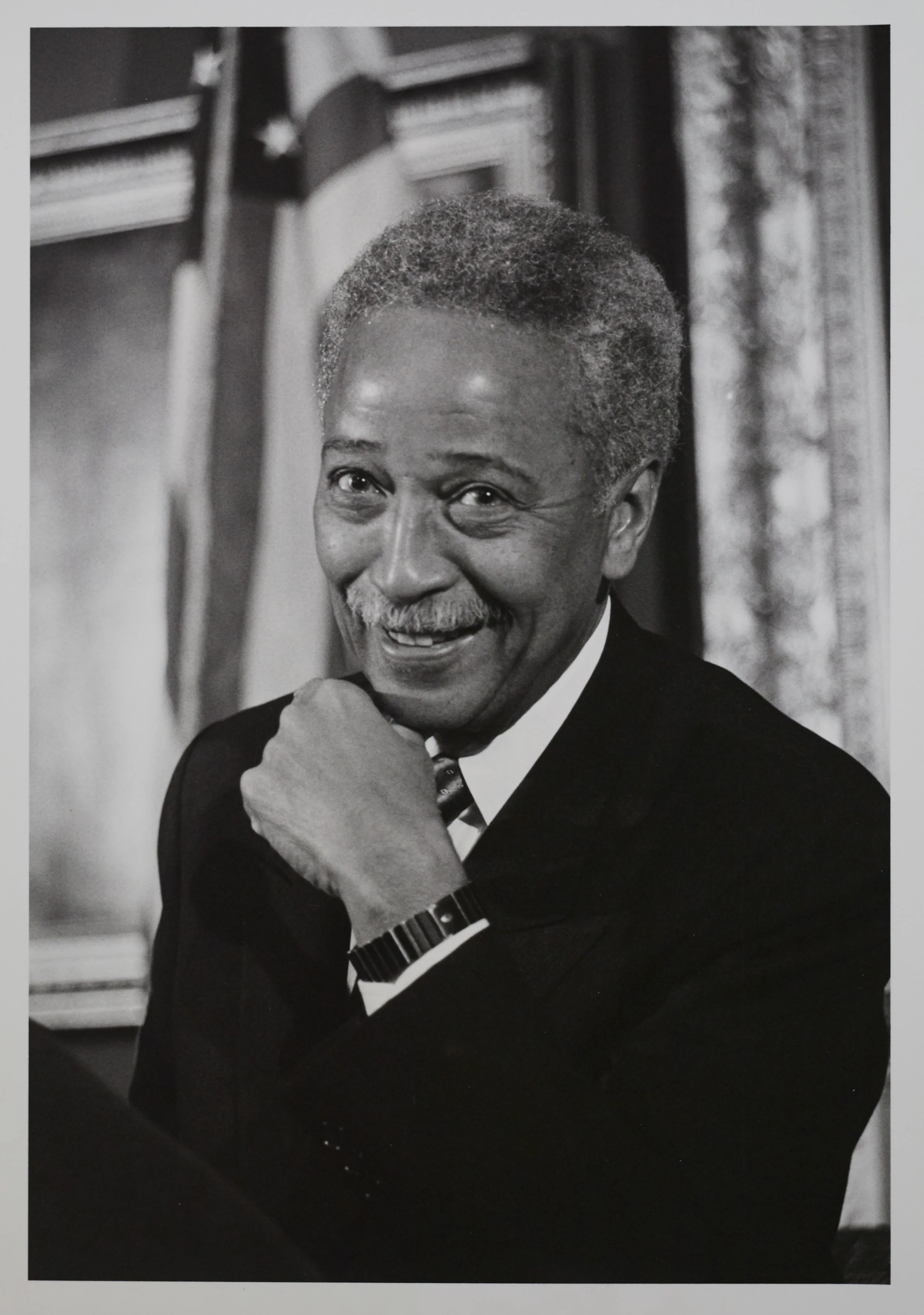
The Legacy of David N. Dinkins: A Reassessment of New York City’s First Black Mayor
The legacy of David N. Dinkins is defined by his role as the 106th Mayor of New York City and his efforts to heal a fractured metropolis through the "Safe Streets, Safe City" initiative, the revitalization of Times Square, and the stab...
The legacy of David N. Dinkins is defined by his role as the 106th Mayor of New York City and his efforts to heal a fractured metropolis through the "Safe Streets, Safe City" initiative, the revitalization of Times Square, and the stabilization of the city’s fiscal health during a national recession. While his administration was often characterized by the racial tensions of the early 1990s, historical analysis reveals that he laid the essential groundwork for the historic crime reduction and urban renewal that defined the city for the subsequent three decades.
Contents
The Ascent of the "Gang of Four" and the 1989 Election
David Norman Dinkins was born in 1927 in Trenton, New Jersey, but his political identity was forged in the crucibles of Harlem. After serving in the Marines and graduating from Howard University and Brooklyn Law School, he became a pillar of the "Gang of Four"—a group of influential Black leaders including Percy Sutton, Basil Paterson, and Charles Rangel. Together, they transformed the landscape of New York Democratic politics, moving power away from traditional machine structures toward a more inclusive representation.
In 1989, Dinkins entered the mayoral race at a time when New York City was reeling from racial polarization, most notably following the murder of Yusuf Hawkins in Bensonhurst. Dinkins presented himself as a "gentle man" capable of cooling the city's temperature. He defeated the three-term incumbent Ed Koch in the Democratic primary by assembling a "Gorgeous Mosaic"—a coalition of Black, Latino, and white liberal voters. His subsequent narrow victory over Republican Rudy Giuliani made him the first African American to lead the nation's largest city, a milestone that remains a cornerstone of his historical significance in 2026.
Safe Streets, Safe City: The Foundation of Modern Policing
One of the most persistent myths in New York City political history is that the dramatic drop in crime in the 1990s began solely under the Giuliani administration. In reality, the catalyst was the Safe Streets, Safe City program, a comprehensive public safety plan conceived and funded under David Dinkins.
Facing record-high homicide rates and public anxiety, Dinkins refused to take a purely reactive approach. Instead, he successfully lobbied the State Legislature for a dedicated tax surcharge to fund the hiring of thousands of new police officers. This was not merely a matter of increasing "boots on the ground"; the program emphasized community policing, aiming to build rapport between the NYPD and the neighborhoods they served.
By the time Dinkins left office in early 1994, the crime rate had already begun its historic decline. The expansion of the police force—growing to nearly 38,000 officers—provided his successor with the resources necessary to implement more aggressive policing strategies. Without the fiscal and legislative heavy lifting performed by the Dinkins administration, the "New York Miracle" of the late 90s would likely have lacked the manpower to succeed.
Economic Stewardship and the Rebirth of Times Square
Dinkins governed during a punishing national recession that severely curtailed the city’s tax revenue. Despite these constraints, his administration made strategic investments that yielded dividends for decades. Two specific deals stand out as pillars of his economic legacy:
- The USTA National Tennis Center Agreement: Dinkins negotiated a 99-year lease with the United States Tennis Association (USTA) to keep the US Open in Queens. This deal, which included the construction of Arthur Ashe Stadium, is often cited by economists as one of the best public-private partnerships in the city's history, generating hundreds of millions of dollars in annual economic activity for New York.
- The Revitalization of Times Square: Long before the "Disneyfication" of 42nd Street was credited to others, Dinkins signed the critical agreements that brought the Disney Corporation to the New Amsterdam Theatre. This move was the lynchpin for the transformation of Times Square from a center of urban decay into a global tourist destination.
Comparison of Key Dinkins Administration Initiatives
| Initiative | Primary Objective | Long-term Impact (as of 2026) |
|---|---|---|
| Safe Streets, Safe City | Increase NYPD headcount and community engagement. | Provided the manpower that fueled the 1990s-2010s crime drop. |
| USTA Expansion | Retain the US Open in Flushing Meadows-Corona Park. | Remains the city's most profitable annual sporting event. |
| Disney/42nd St. Deal | Redevelop the dilapidated Times Square district. | Transformed Midtown Manhattan into a global commercial hub. |
| The "Gorgeous Mosaic" | Promote racial and ethnic harmony. | Established a framework for inclusive representation in City Hall. |
| Health & Hospitals | Expand primary care in underserved neighborhoods. | Strengthened the safety net for NYC's public health system. |
The "Gorgeous Mosaic" and Racial Tensions
The term "Gorgeous Mosaic" was Dinkins' signature rhetorical device, used to describe the diverse tapestry of New York City’s population. However, his vision of harmony was tested by several high-profile incidents that complicated his legacy.
The most significant of these was the 1991 Crown Heights Riot, which erupted after a car in a motorcade for a Jewish spiritual leader accidentally struck and killed a Black child, Gavin Cato. In the ensuing violence, a Jewish scholar, Yankel Rosenbaum, was murdered. The Dinkins administration was criticized—both at the time and in subsequent state reports—for a perceived failure to act decisively to quell the unrest.
Similarly, the Flatbush Boycott of a Korean-owned grocery store highlighted the difficulties of mediating between competing ethnic interests in a volatile economic climate. While Dinkins viewed himself as a conciliator, his critics often framed his deliberation as indecisiveness. These events ultimately played a decisive role in his narrow loss to Rudy Giuliani in the 1993 rematch, as the "Gorgeous Mosaic" coalition fractured under the weight of identity politics.
Post-Mayoral Impact and Educational Leadership
After leaving City Hall, David Dinkins did not retreat from public life. He joined the faculty of Columbia University’s School of International and Public Affairs (SIPA), where he served as a Professor in the Practice of Public Policy for over two decades. In this role, he mentored a new generation of leaders, many of whom hold significant positions in New York’s government in 2026.
His annual "David N. Dinkins Leadership and Public Policy Forum" became a premier venue for discussing urban issues, poverty, and civil rights. His influence extended to the election of several of his former aides to high office, including Bill de Blasio, who served as the 109th Mayor. Dinkins’ late-life role as an elder statesman allowed for a gradual softening of his public image, as New Yorkers began to appreciate the long-term benefits of the policies he set in motion decades earlier.
Why the Dinkins Legacy Matters in 2026
As we look back from the vantage point of 2026, the Dinkins mayoralty serves as a case study in "quiet leadership." Unlike the combative styles of his predecessor Ed Koch or his successor Rudy Giuliani, Dinkins operated with a focus on institutional building and long-term stability.
His commitment to social services, even during a recession, prevented the city’s social fabric from unraveling. He expanded the Beacon Schools program, which turned public schools into community centers during off-hours, providing a safe haven for youth. He also prioritized the city’s response to the HIV/AIDS crisis and homelessness, treating these as public health issues rather than mere inconveniences.
The legacy of David N. Dinkins is one of foundational preparation. He was the mayor who took the heat for the city’s problems while quietly building the infrastructure—policing, economic, and social—that his successors would use to claim victory.
Frequently Asked Questions
Did crime really go down under David Dinkins?
Yes. While crime peaked in 1990, statistics from the FBI and NYPD show that homicide and other major crime categories began a sustained downward trend during the final three years of the Dinkins administration. This decline is largely attributed to the massive increase in the NYPD force funded by the "Safe Streets, Safe City" program.
What was the "Gorgeous Mosaic"?
The "Gorgeous Mosaic" was a term coined by David Dinkins to describe the diversity of New York City. Unlike the "melting pot," which implies assimilation into a single identity, the mosaic metaphor emphasized that each ethnic and racial group retains its unique identity while contributing to a beautiful whole.
Why did David Dinkins lose the 1993 election?
Dinkins lost a very close election to Rudy Giuliani primarily due to a shift in white ethnic voters in the outer boroughs, who were dissatisfied with the administration's handling of the Crown Heights riots and the sluggish economic recovery. Racial polarization played a significant role in the voting patterns of that cycle.
What were Dinkins' biggest economic achievements?
His most enduring economic achievements were the long-term lease with the USTA that kept the US Open in New York and the initial deals that led to the revitalization of Times Square. He also managed to maintain the city’s credit rating during a severe national recession, avoiding the fiscal collapse many feared.
How did Dinkins influence future New York City mayors?
Dinkins acted as a mentor to many figures in the Democratic Party. Mayor Bill de Blasio worked in his administration, and many of the progressive policies regarding police reform and social equity that gained traction in the 2010s and 2020s find their roots in the Dinkins era's philosophy of inclusive governance.
Conclusion and Next Actions
Understanding the legacy of David N. Dinkins requires looking past the headlines of the early 90s and examining the structural changes he implemented. For those interested in New York City history or urban policy, the following steps are recommended:
- Research the "Safe Streets, Safe City" legislation: Explore how the tax surcharges were structured and how they impacted city budgets in the 1990s.
- Visit the David N. Dinkins Archives: The New York City Department of Records and Information Services (DORIS) maintains a vast collection of his mayoral papers, providing insight into his administration's decision-making processes.
- Study the USTA/US Open Deal: For students of public-private partnerships, this remains a gold-standard case study in urban economic development.
David Dinkins was a pioneer whose mayoralty proved that a focus on dignity, inclusion, and long-term investment could stabilize a city in crisis. In 2026, his "Gorgeous Mosaic" remains the aspirational blueprint for the future of urban America.
Image Gallery