Strategies for Generating Tax-Free Income from Life Insurance
Life insurance can provide tax-free income through a combination of tax-exempt death benefits for beneficiaries and "living benefits" for the policyholder. By utilizing permanent life insurance structures, owners can access accumulated...
Life insurance can provide tax-free income through a combination of tax-exempt death benefits for beneficiaries and "living benefits" for the policyholder. By utilizing permanent life insurance structures, owners can access accumulated cash value through tax-free withdrawals up to their cost basis and through policy loans that do not trigger income tax obligations, provided the policy remains in force.
Contents
The concept of using life insurance as a source of tax-free income has gained significant traction in 2026 as taxpayers seek alternatives to traditional retirement accounts. Unlike a 401(k) or a traditional IRA, where distributions are taxed as ordinary income, or a Roth IRA, which has strict contribution limits and income phase-outs, certain life insurance policies allow for the accumulation and distribution of wealth with unique tax advantages. This strategy is often referred to as a Life Insurance Retirement Plan (LIRP).
The Mechanism of Tax-Free Cash Flow
To understand how life insurance generates tax-free income, one must distinguish between the two primary ways money leaves a policy: withdrawals and loans.
Withdrawals Up to Cost Basis
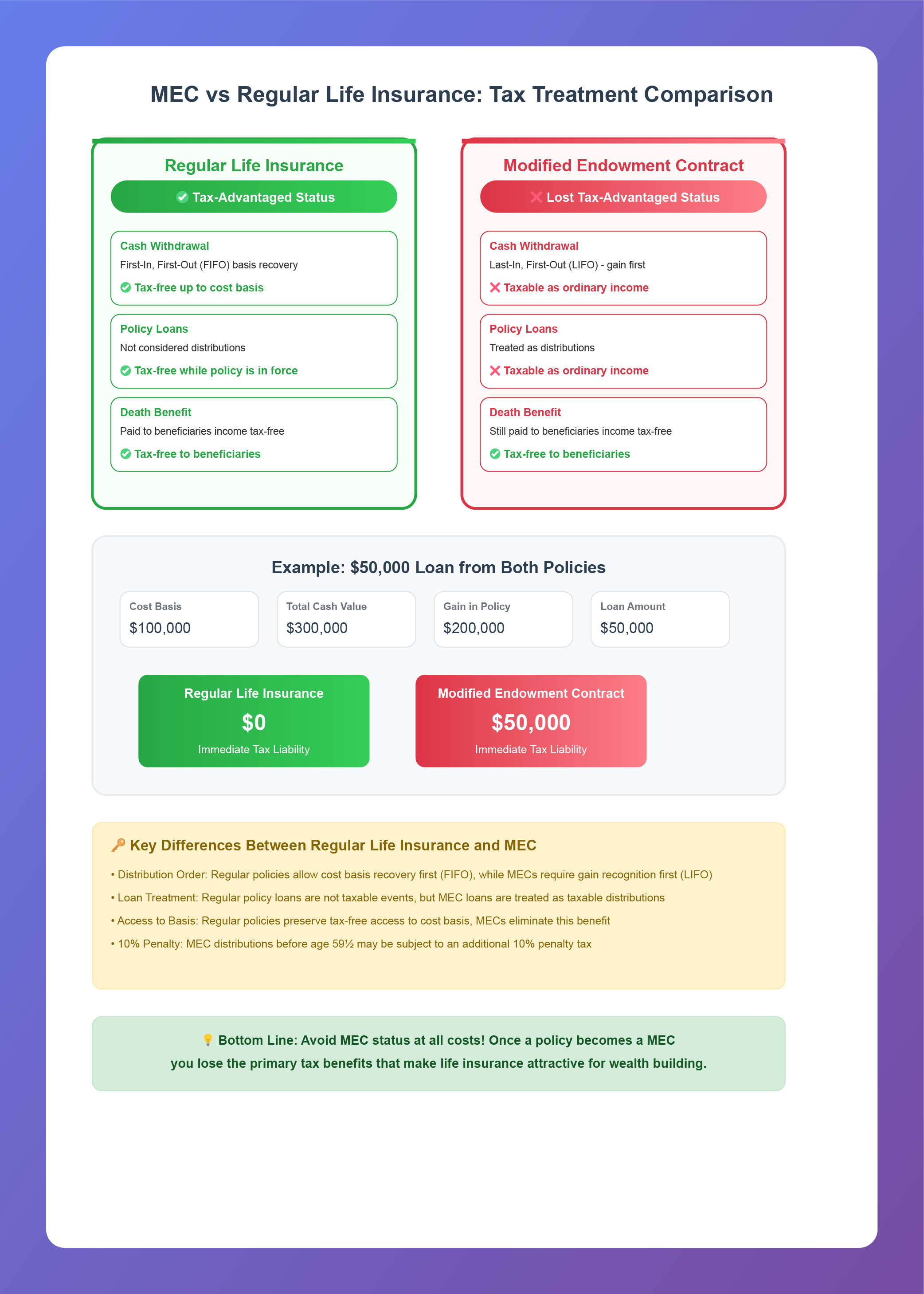
The IRS treats life insurance distributions on a "First-In, First-Out" (FIFO) basis. This means that when you withdraw money from a permanent life insurance policy, the first dollars out are considered a return of the premiums you paid. These premiums are your "cost basis." Because you have already paid taxes on the income used to pay those premiums, the IRS does not tax the withdrawal of that basis.
However, once you have withdrawn an amount equal to your total premiums paid, any further withdrawals are considered "gain" and are taxed as ordinary income. To avoid this, sophisticated investors pivot to the second mechanism: policy loans.
Policy Loans as a Tax-Free Bridge
Policy loans are the primary vehicle for generating tax-free income beyond the cost basis. When you take a loan from a life insurance policy, you are technically not withdrawing your own money. Instead, you are borrowing money from the insurance company, using your policy’s cash value as collateral.
Because the IRS classifies these funds as a loan rather than a distribution of gains, the money is not subject to income tax. In 2026, many high-performing policies offer "wash loans" or "participating loans."
- Wash Loans: The interest charged by the insurer on the loan is exactly offset by the interest or dividends credited to the collateralized cash value, resulting in a net-zero cost.
- Participating Loans: The borrowed funds continue to earn dividends or index credits as if the money were still in the account. If the credited rate is higher than the loan interest rate, the policyholder can actually "earn" money on the borrowed funds.
Types of Policies Suitable for Income Generation
Not all life insurance policies are designed for income. Term life insurance, for instance, provides no cash value and cannot generate income. Only permanent policies—specifically those with a cash accumulation component—are viable for this strategy.
Whole Life Insurance
Whole life insurance offers a guaranteed death benefit, fixed premiums, and a guaranteed rate of return on the cash value. For income purposes, the most attractive feature is the potential for dividends. While not guaranteed, many mutual insurance companies have paid dividends for over 150 consecutive years. These dividends can be used to purchase "paid-up additions," which exponentially increase both the death benefit and the cash value over time, providing a larger pool for future tax-free loans.
Indexed Universal Life (IUL)
IUL policies have become a dominant tool for tax-free income in 2026 due to their flexibility. The growth of the cash value is linked to a stock market index, such as the S&P 500. While the policyholder does not participate directly in the market, the insurer credits interest based on the index’s performance, subject to a "cap" (a maximum return) and a "floor" (usually 0%). This floor protects the principal against market downturns, making it a popular "safety first" growth vehicle for retirement.
Variable Universal Life (VUL)
VUL policies allow the policyholder to invest the cash value directly in sub-accounts that function like mutual funds. This offers the highest potential for growth but also the highest risk. If the underlying investments perform poorly, the cash value can decrease, potentially requiring higher premiums to keep the policy from lapsing. For tax-free income, VULs require diligent management to ensure the loan-to-value ratio remains sustainable.
Critical Rules and IRS Regulations
The tax-free nature of life insurance income is governed by specific sections of the Internal Revenue Code (IRC). Failure to adhere to these rules can turn a tax-advantaged asset into a significant tax liability.
Section 7702 and the 7-Pay Test
IRS Section 7702 defines what qualifies as a life insurance contract. To prevent people from using life insurance purely as a tax-sheltered investment vehicle with no insurance risk, the IRS implemented the "7-Pay Test" under the Technical and Miscellaneous Revenue Act of 1988 (TAMRA).
If you pay too much premium into a policy too quickly—specifically, if the total premiums paid during the first seven years exceed the amount needed to have the policy fully paid up in seven years—the policy becomes a Modified Endowment Contract (MEC).
- MEC Consequences: Distributions (including loans) from a MEC are taxed on a "Last-In, First-Out" (LIFO) basis. This means gains are taxed first. Furthermore, if you take money out of a MEC before age 59½, you may face a 10% IRS penalty.
Avoiding the "Tax Bomb" (Lapse Risk)
The most significant risk of a tax-free income strategy is a policy lapse. If a policyholder has taken substantial loans and the policy lapses (because the cash value is exhausted by interest charges or insurance costs), the IRS treats the outstanding loan balance as a "deemed distribution." In this scenario, all the borrowed gains that were previously untaxed suddenly become taxable as ordinary income in a single year. This is often referred to as the "tax bomb."
Comparison of Tax-Free Income Vehicles
| Feature | Life Insurance (LIRP) | Roth IRA | Municipal Bonds |
|---|---|---|---|
| Tax-Free Distributions | Yes (via loans/basis) | Yes (after 5 year/59.5) | Yes (Federal level) |
| Contribution Limits | No (based on DB) | Yes ($7,000 - $8,000) | No |
| Income Restrictions | No | Yes (Phase-outs apply) | No |
| Market Downside Protection | Yes (Whole Life/IUL) | No | No (Price risk) |
| Required Minimum Dist. (RMDs) | No | No | No |
| Early Access Penalty | No (pre-MEC limits) | Yes (on gains) | No |
Strategic Implementation for 2026
To successfully implement a tax-free income strategy, a specific "maximum fund, minimum death benefit" design is typically used.
- Policy Design: Work with a specialist to structure the policy so the death benefit is as low as possible while still complying with Section 7702. This minimizes the internal cost of insurance (COI), allowing more of your premium to flow into the cash accumulation account.
- Funding Phase: Aggressively fund the policy up to the MEC limit (the "7-Pay" limit). This maximizes the compounding effect of the cash value.
- The Accumulation Period: Allow the cash value to grow for at least 10 to 15 years. This duration is necessary to overcome the initial commissions and insurance costs inherent in permanent policies.
- The Distribution Phase: When retirement income is needed, begin by withdrawing the cost basis (tax-free). Once the basis is exhausted, switch to policy loans to access the remaining cash value tax-free.
Addressing Common Misconceptions
A common critique of life insurance as an income tool is the perceived high cost. While it is true that permanent life insurance has higher internal expenses than a low-cost Vanguard index fund, the tax advantages often outweigh those costs for individuals in high tax brackets.
Furthermore, the death benefit provides a "self-completing" feature. If the policyholder dies prematurely, the heirs receive a tax-free death benefit that is almost certainly larger than any alternative investment account would have grown to in that same timeframe. In 2026, as estate tax exemptions are subject to legislative volatility, the liquidity provided by a life insurance death benefit remains a cornerstone of estate planning.
Frequently Asked Questions
Is the death benefit of life insurance always tax-free?
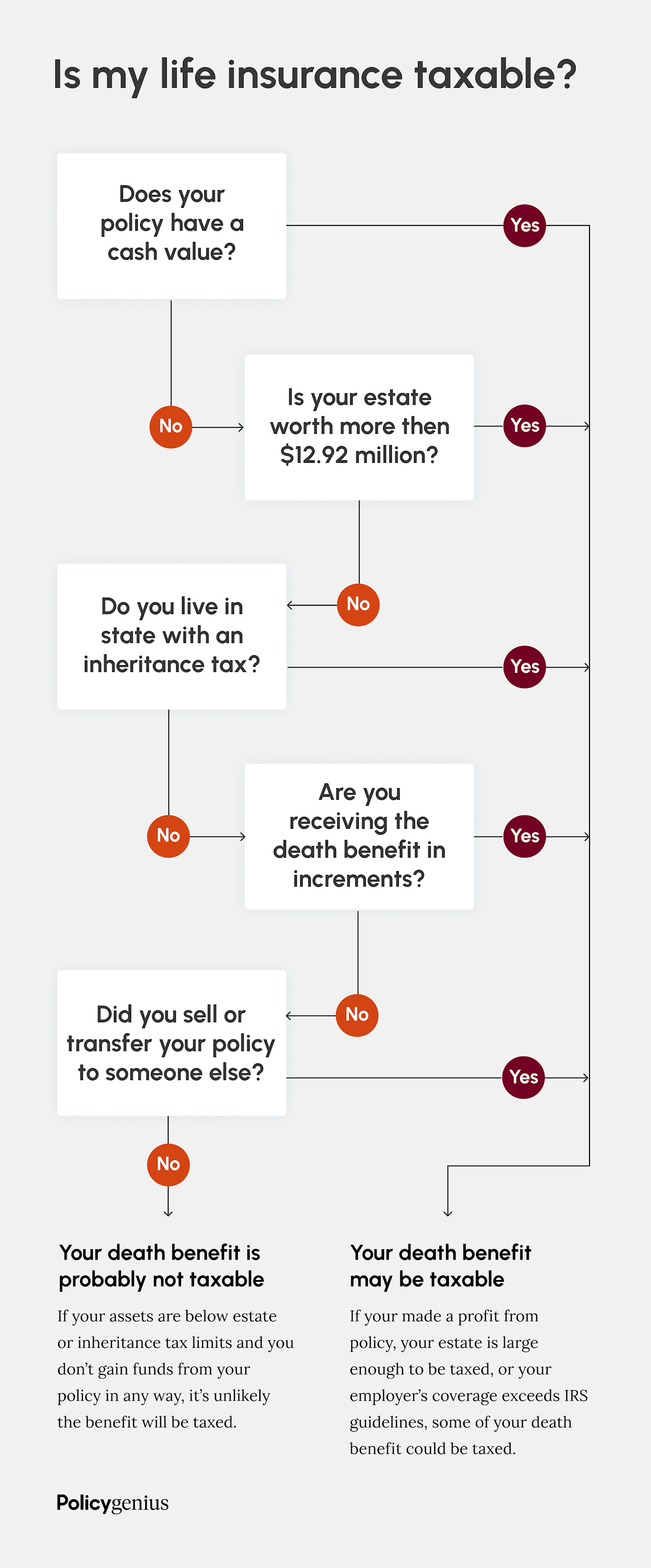
In most cases, yes. Under IRS Section 101(a)(1), life insurance proceeds paid to a beneficiary due to the death of the insured are generally not included in gross income. However, if the policy was "transferred for value" (sold to another party), a portion of the death benefit may be taxable. Additionally, while the benefit is income tax-free, it may still be included in the deceased's taxable estate for federal estate tax purposes if the insured owned the policy at the time of death.
How does a policy loan affect my death benefit?
When you take a policy loan, the outstanding balance (plus accrued interest) is deducted from the death benefit paid to your beneficiaries. For example, if you have a $1 million death benefit and an outstanding loan of $200,000 at the time of your death, your beneficiaries will receive $800,000. This is a crucial consideration if the primary goal of the policy is still family protection.
Can I lose money in an IUL policy?
While IUL policies have a "0% floor" that protects against market losses, you can still see a decrease in cash value. This happens if the interest credited to your account (which could be 0% in a bad market year) is less than the internal cost of insurance and administrative fees. To mitigate this, policies must be adequately funded and monitored by an advisor.
What is the difference between a LIRP and a Roth IRA?
Both provide tax-free income, but they have different rules. A Roth IRA has government-mandated contribution limits and requires the owner to have earned income. A LIRP (Life Insurance Retirement Plan) has no "earned income" requirement and allows for much larger contributions, provided the death benefit is high enough to support them. Additionally, a LIRP provides a death benefit, which a Roth IRA does not.
Can I use tax-free income from life insurance at any age?
Unlike a 401(k) or IRA, which generally requires you to wait until age 59½ to avoid a 10% penalty, you can access the cash value of a non-MEC life insurance policy at any age. This makes it a popular tool for individuals planning for early retirement or those who need a "bridge" to traditional retirement age.
Recommendation for Next Actions
Individuals considering life insurance for tax-free income should first conduct a MEC limit analysis to determine the maximum amount they can contribute without losing tax advantages. It is essential to obtain a "supplemental illustration" from an insurance carrier that specifically models the distribution phase (the "income" phase) to ensure the policy can sustain the projected loans without lapsing. Consult with a qualified tax professional and an independent insurance advisor to compare multiple carriers, as the internal costs and loan provisions vary significantly between companies.
Image Gallery