Why the Monroe Doctrine Was Significant: Defining Two Centuries of Foreign Policy
The Monroe Doctrine was significant because it established the United States as the dominant power in the Western Hemisphere, effectively ending the era of European colonization in the Americas. By declaring that any intervention by Eu...
The Monroe Doctrine was significant because it established the United States as the dominant power in the Western Hemisphere, effectively ending the era of European colonization in the Americas. By declaring that any intervention by European powers in the affairs of nations in the Americas would be viewed as a hostile act against the U.S., it fundamentally shifted global geopolitics and created the framework for American foreign policy that persists into 2026.
Contents
The Genesis of a Continental Identity
To understand why the Monroe Doctrine was significant, one must first look at the precarious state of the United States in the early 19th century. In 1823, the U.S. was still a relatively young nation, often overshadowed by the "Great Powers" of Europe. However, the conclusion of the Napoleonic Wars and the subsequent rise of independence movements across Latin America created a power vacuum. Spain’s empire was crumbling, and the "Holy Alliance" (Russia, Prussia, and Austria) was signaling a desire to help Spain regain its lost colonies.
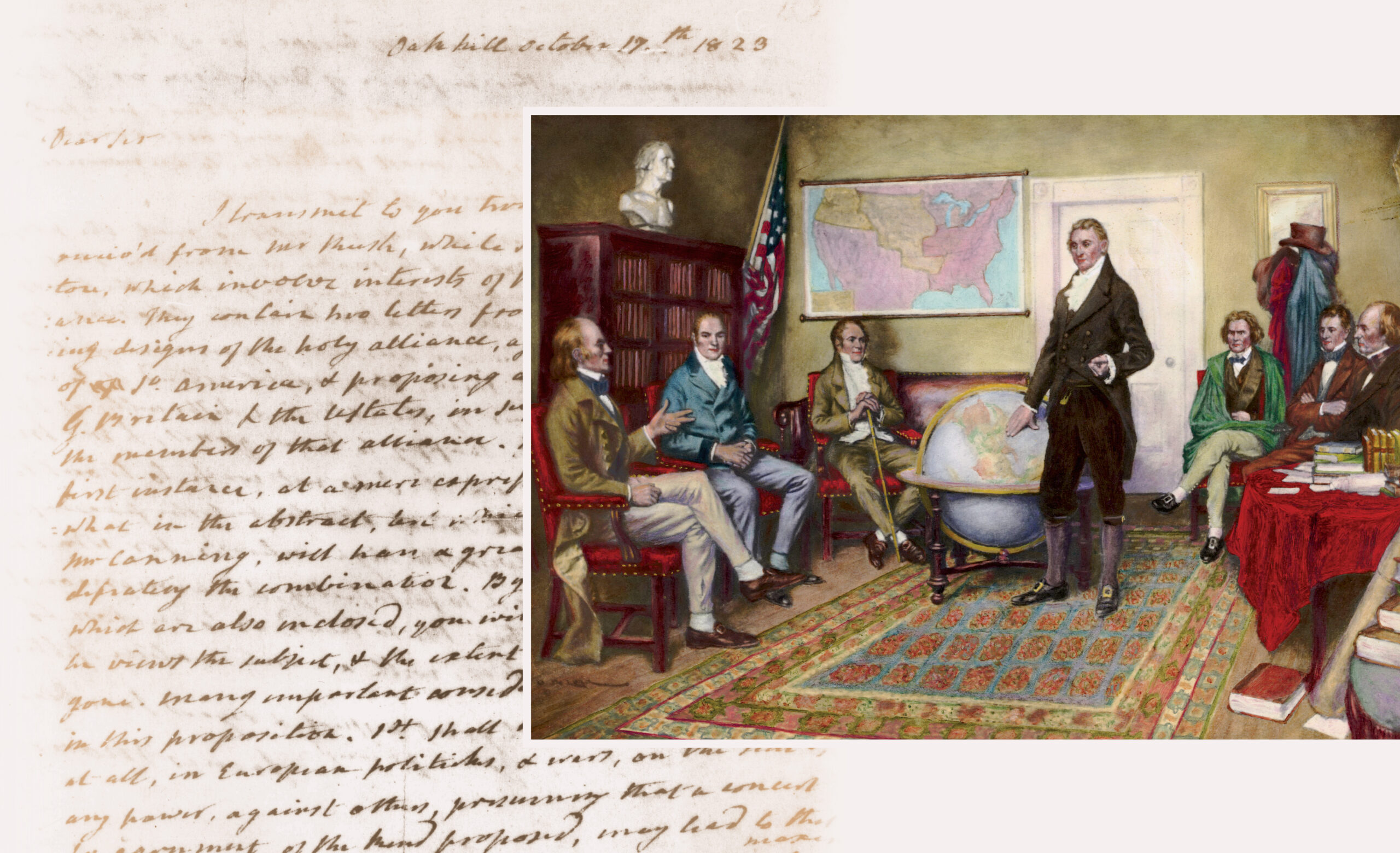
President James Monroe, heavily influenced by his Secretary of State John Quincy Adams, used his seventh annual message to Congress on December 2, 1823, to draw a line in the sand. The doctrine was not a law but a statement of intent. It asserted that the "American continents" were henceforth not to be considered as subjects for future colonization by any European powers. This was a radical assertion of sovereignty from a nation that, just a decade earlier, had seen its own capital burned by the British during the War of 1812.
The Three Pillars of the Monroe Doctrine
The significance of the doctrine is rooted in its three primary tenets. Each pillar addressed a specific geopolitical threat and served to separate the "New World" from the "Old World."
- Non-Colonization: This principle stated that the Americas were no longer open to European colonization. It was a direct response to Russian encroachments in the Pacific Northwest and fears that France or Spain might attempt to reclaim territories in South America.
- The Two Spheres: Monroe argued that the political systems of Europe were fundamentally different from those of the Americas. He proposed a "two spheres" concept, where the Western Hemisphere would be the domain of republics, while Europe remained the domain of monarchies.
- Non-Intervention: The U.S. pledged not to interfere in existing European colonies or the internal affairs of European nations. In exchange, it demanded that Europe stay out of the affairs of the newly independent Latin American republics.
By establishing these boundaries, the United States effectively claimed a "sphere of influence" long before it had the military might to enforce it. The doctrine's initial success relied heavily on the British Royal Navy, which shared an interest in keeping other European powers out of Latin American markets.
Evolution and the Roosevelt Corollary
While the original 1823 statement was largely defensive, its significance grew as it was reinterpreted by subsequent administrations. The most consequential evolution occurred in 1904 under President Theodore Roosevelt. Known as the Roosevelt Corollary, this update shifted the doctrine from a "hands-off" warning to a "hands-on" justification for intervention.
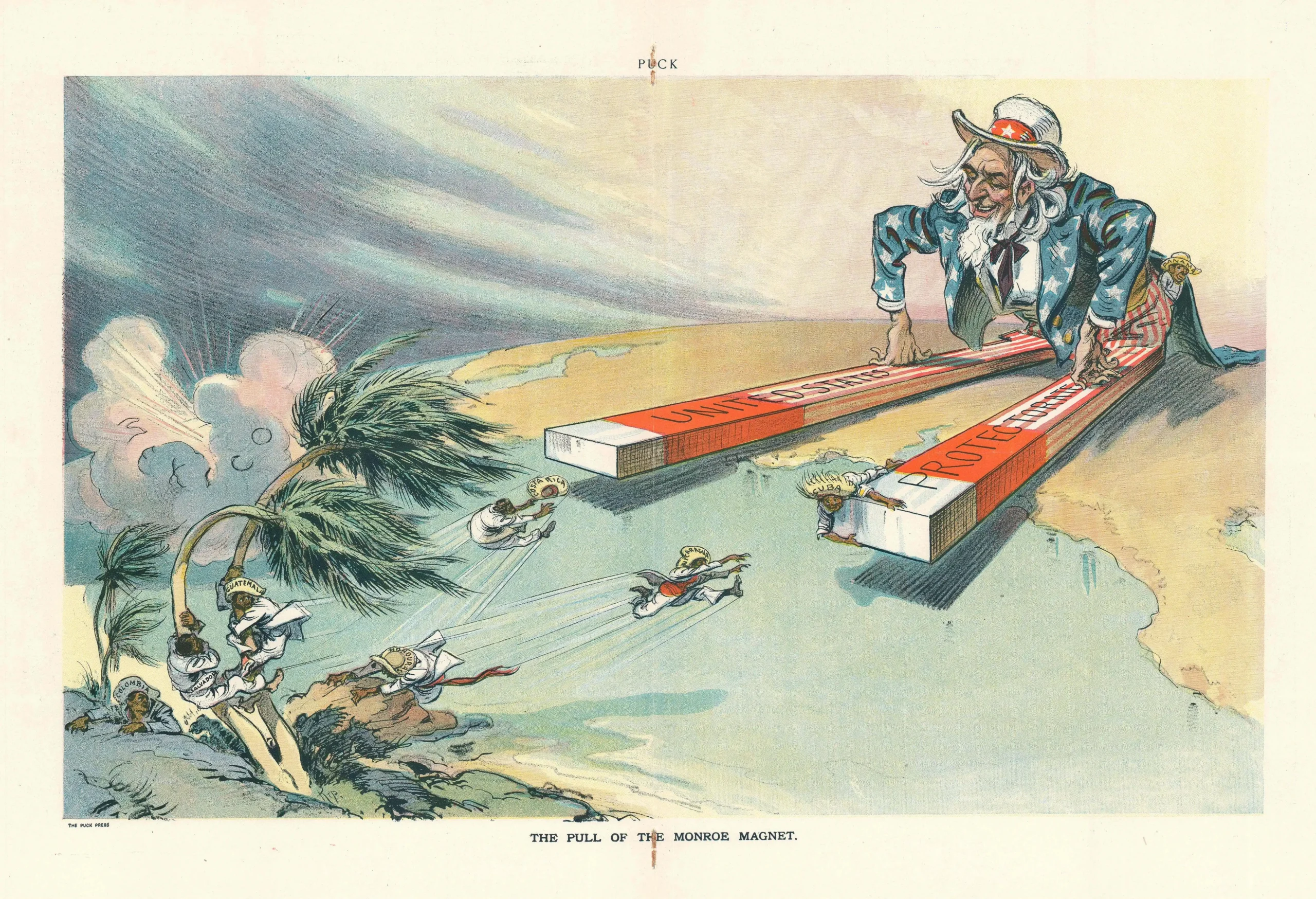
Roosevelt asserted that if a nation in the Western Hemisphere demonstrated "chronic wrongdoing" or an inability to maintain order, the United States had the right to exercise "an international police power." This transformed the Monroe Doctrine from a shield protecting Latin America into a sword that the U.S. could use to intervene in the internal affairs of its neighbors. This era saw U.S. military involvement in nations like Haiti, the Dominican Republic, and Nicaragua, fundamentally altering the United States' relationship with the rest of the continent.
Comparison of Doctrine Eras and Interpretations
The following table outlines how the significance and application of the Monroe Doctrine shifted across different historical eras through 2026.
| Era | Primary Interpretation | Key Objective | Major Event/Action |
|---|---|---|---|
| 1823 (Original) | Defensive/Isolationist | Prevent European re-colonization. | Response to the Holy Alliance and Russia. |
| 1904 (Roosevelt) | Interventionist | Act as an "international police power." | Construction of the Panama Canal; Caribbean interventions. |
| 1933 (Good Neighbor) | Collaborative | Shift toward non-intervention and trade. | Franklin D. Roosevelt's policy to improve relations. |
| Cold War Era | Anti-Communist | Prevent Soviet influence in the Americas. | Cuban Missile Crisis; support for anti-communist regimes. |
| Modern (2026) | Economic & Security | Countering global rivals' (e.g., China) influence. | Regional trade blocs and cybersecurity partnerships. |
Why the Doctrine Remains Historically Significant
The Monroe Doctrine is often cited as the longest-standing tenet of U.S. foreign policy. Its significance is multifaceted, impacting legal, political, and social spheres across two centuries.
The Foundation of American Hegemony
The doctrine was the first clear statement that the United States intended to be a world power. By claiming the Western Hemisphere as its exclusive domain, the U.S. set the stage for its eventual rise as a global superpower. It provided a moral and political justification for westward expansion and the acquisition of territory, often at the expense of both European claims and Indigenous sovereignty.
Impact on Latin American Sovereignty
The significance of the doctrine is viewed quite differently south of the U.S. border. While it initially offered a level of protection against European monarchies, it eventually became a symbol of U.S. paternalism and imperialism. Many Latin American intellectuals and leaders argued that the doctrine was not about "America for the Americans," but rather "America for the North Americans." This tension has shaped diplomatic relations in the hemisphere for over 200 years.
The Doctrine During the Cold War
In the 20th century, the Monroe Doctrine was repurposed to combat the spread of Communism. The U.S. Department of State often invoked the spirit of the doctrine to justify opposing Soviet influence in countries like Cuba, Guatemala, and Chile. The 1962 Cuban Missile Crisis was, in many ways, the ultimate test of the doctrine, as the U.S. risked nuclear war to prevent a rival European power (the USSR) from establishing a military foothold in the Western Hemisphere.
The Monroe Doctrine in the 2020s and 2026
As of 2026, the Monroe Doctrine continues to be a point of discussion in contemporary diplomacy. While the 19th-century language of "colonization" is obsolete, the underlying concept of protecting regional interests from external rivals remains highly relevant.
Modern significance often manifests in discussions regarding foreign investment in Latin American infrastructure and telecommunications. U.S. policymakers frequently express concerns when extra-hemispheric powers—particularly those with conflicting political systems—gain significant economic or digital footprints in the region. Although the "Two Spheres" concept has evolved, the idea that the Western Hemisphere should maintain a distinct security and political identity remains a cornerstone of strategic planning at the National Archives and within the Department of Defense.
Frequently Asked Questions
Did the Monroe Doctrine have the force of law?
No, the Monroe Doctrine was never a formal law or a treaty. It was a statement of policy included in a presidential address to Congress. Its power came from the fact that it was consistently upheld by future presidents and eventually became a customary part of international relations regarding the Western Hemisphere.
How did European powers react to the doctrine in 1823?
Most European powers initially viewed the doctrine with contempt or indifference, as the United States lacked the naval power to enforce it. However, the British government supported the principle because it aligned with their own goal of preventing other European nations from interfering with British trade in Latin America.
What is the difference between the Monroe Doctrine and Manifest Destiny?
While related, they are distinct concepts. The Monroe Doctrine was a foreign policy focused on keeping European powers out of the Americas. Manifest Destiny was a domestic belief that the United States was divinely ordained to expand across the North American continent to the Pacific Ocean.
Is the Monroe Doctrine still in effect in 2026?
Technically, the doctrine has never been rescinded. While the "Good Neighbor Policy" of the 1930s and various 21st-century diplomatic shifts have moved away from the interventionist aspects of the Roosevelt Corollary, the core idea that the U.S. has a special interest in the security and stability of the Western Hemisphere remains a fundamental part of U.S. strategic logic.
How did the doctrine affect the Spanish-American War?
The doctrine provided the ideological groundwork for the Spanish-American War in 1898. The U.S. justified its intervention in Cuba’s struggle for independence from Spain by arguing that Spanish colonial rule was a violation of the principles of liberty in the Western Hemisphere, eventually leading to the U.S. acquiring Puerto Rico, Guam, and the Philippines.
Final Perspective on Historical Significance
The Monroe Doctrine was significant because it redefined the map of the world into two distinct political and geographic spheres. It transitioned the United States from a reactive post-colonial state into a proactive regional leader. Whether viewed as a noble defense of republicanism or a pretext for hemispheric dominance, its influence on the trajectory of the Americas is undeniable. For students of history and policy experts in 2026, the doctrine remains the essential starting point for understanding how the United States views its role in its own neighborhood and the world at large.
Image Gallery