Best Luxury Business Cards: Premium Materials, Finishing Techniques, and Provider Comparison
Selecting the best luxury business cards involves evaluating high-end materials like ultra-thick paper stock, metal, wood, or acrylic, alongside sophisticated finishing techniques such as foil stamping, edge painting, and engraving to...
Selecting the best luxury business cards involves evaluating high-end materials like ultra-thick paper stock, metal, wood, or acrylic, alongside sophisticated finishing techniques such as foil stamping, edge painting, and engraving to project an image of prestige and professionalism.
Contents
In the corporate, executive, and high-net-worth entrepreneurial sectors, first impressions are tangible. A standard 14pt paper card printed via mass-market digital presses often fails to convey the exclusivity required for high-stakes networking. Luxury business cards serve as a physical extension of personal or corporate branding, communicating permanence, attention to detail, and substantial investment. Achieving this level of presentation requires navigating a specialized market of premium print houses, custom finishing options, and specific material constraints that affect everything from wallet portability to design readability.
Defining Characteristics of Luxury Business Cards
What separates a standard business card from a luxury variant goes beyond a higher price tag. The distinction lies in structural composition, tactile feedback, and manufacturing complexity.
Standard commercial printing relies on lightweight cardstocks—typically ranging from 80lb text to 100lb cover, or standard 14pt to 16pt cardstock—which are optimized for high-speed, high-volume production. Luxury business cards, by contrast, utilize specialized substrates that start at 32pt (approximately 0.5mm thick) and can exceed 100pt (over 1mm thick), or entirely non-paper materials like stainless steel, anodized aluminum, wood veneer, and thick, frosted acrylic.
Tactile experience is another defining pillar. When a recipient holds a luxury card, they encounter resistance to bending, precise edge finishes, and deeply impressed textures. These elements trigger psychological responses associated with quality and trust. Print production methods for these cards often require manual intervention, multi-pass printing presses, specialized die-cutting, or precision laser etching, turning each card into a bespoke artifact rather than a disposable commodity.
Material Selection: Choosing the Right Substrate
The foundation of any high-end card is the material itself. Different substrates project distinct brand identities and come with unique design limitations.
Ultra-Thick Cotton and Paper Stocks
Cotton paper, particularly 100% cotton rag (such as Crane’s Lettra), offers a soft, luxurious texture without relying on wood pulp. Because cotton fibers are naturally longer and softer than wood fibers, they accept deep impressions exceptionally well. This makes cotton stocks the preferred choice for letterpress printing and heavy debossing.
Duplexing and triplexing—gluing two or three sheets of heavy cardstock together—allow creators to combine different colors or textures. For instance, a designer might sandwich a vibrant colored middle layer between two heavy white sheets, creating a striking colored core visible only on the edges.
Metal Substrates
Metal business cards are predominantly crafted from stainless steel, brass, or anodized aluminum. Thickness typically ranges from 0.3mm to 0.5mm. While thinner metal cards can feel flimsy, heavier variants provide a substantial, weighted feel in the hand.
Manufacturing metal cards involves chemical etching, laser cutting, or screen printing. Because ink does not absorb into metal, graphics and text are either chemically etched away (leaving a recessed area), surface-printed with specialized epoxies, or pierced completely through the metal using lasers.
Alternative Materials: Wood and Acrylic
Wood veneer cards are sliced to paper-thin tolerances and backed with a synthetic core to prevent snapping along the grain. Common woods include maple, cherry, and walnut, each offering distinct grain patterns and laser-burned engraving aesthetics.
Acrylic cards utilize clear, frosted, or tinted polymers. These are typically screen-printed or UV-flatbed printed, offering a modern, translucent aesthetic that stands out in traditional paper-heavy cardholders.
Advanced Finishing Techniques
The visual and textural depth of luxury cards is largely achieved through specialized post-press finishing techniques. Executing these methods requires precision alignment and experienced press operators.
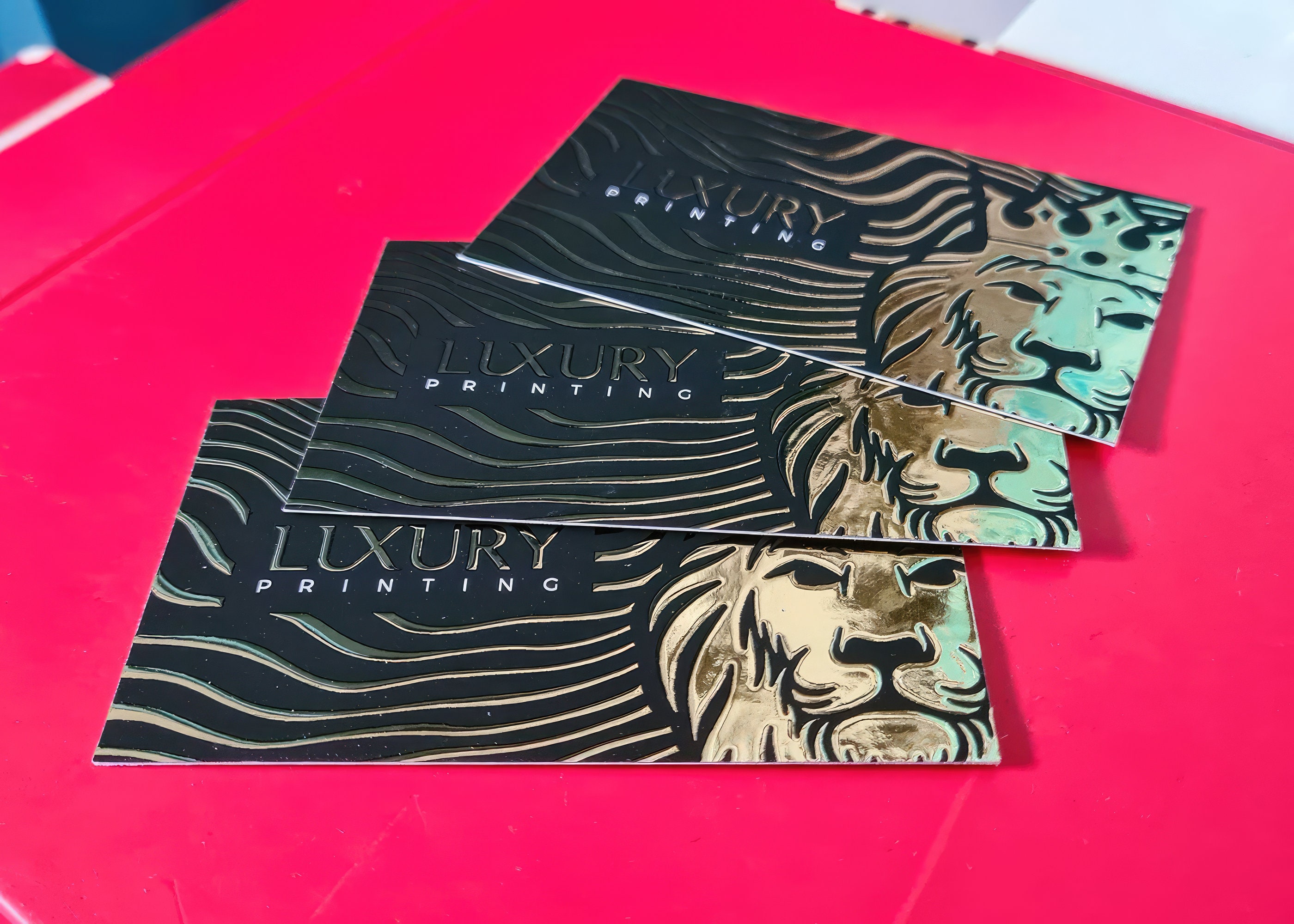
- Letterpress and Debossing: Letterpress uses a metal plate to press ink into paper, creating a recessed impression. Debossing creates the same depressed effect without ink, relying purely on shadows and tactile depth.
- Embossing: The inverse of debossing, embossing pushes the paper fibers upward from the back, creating a raised, three-dimensional surface that catches light and shadow.
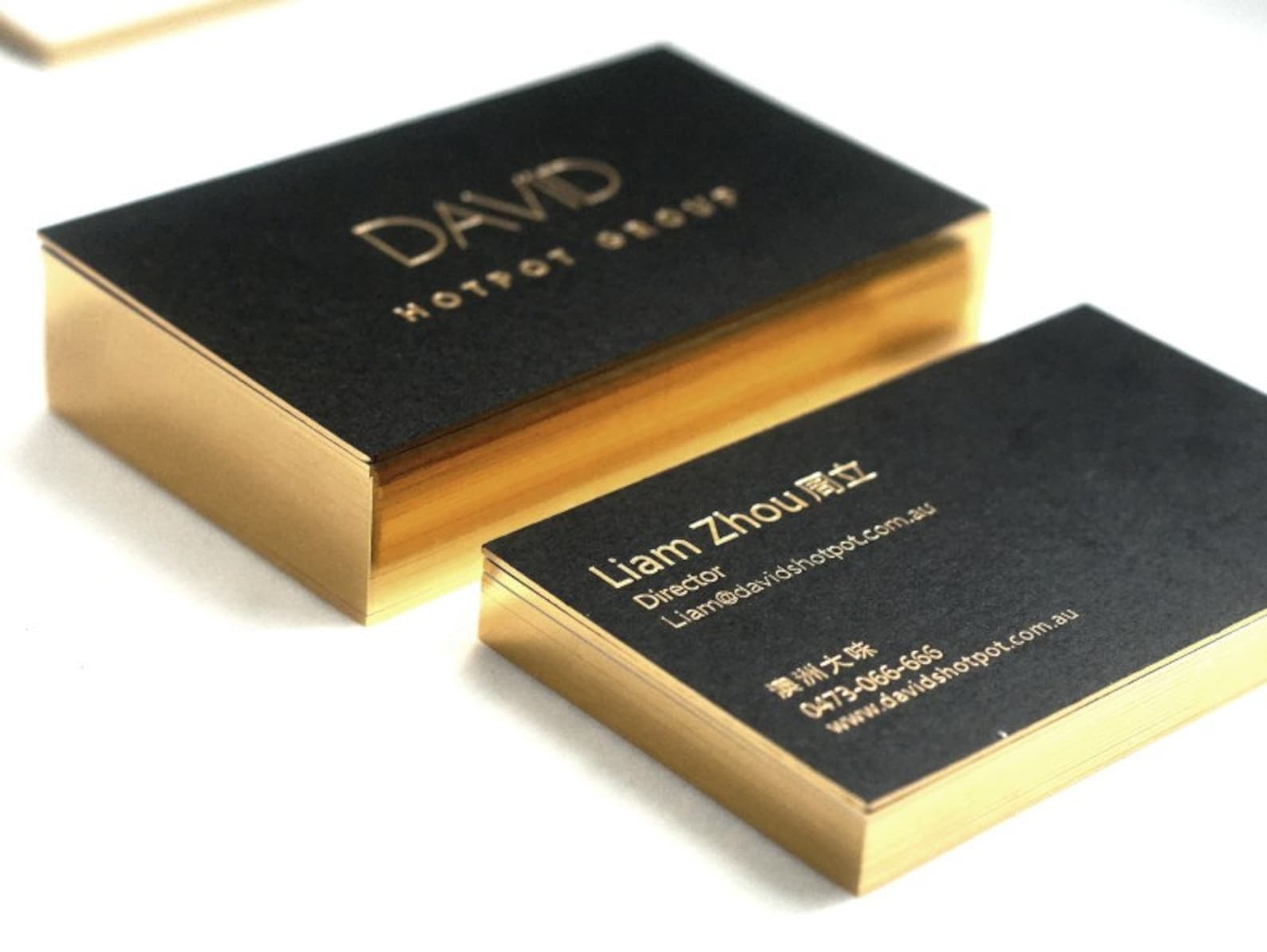
- Foil Stamping: Metallic or pigmented foils (gold, silver, rose gold, matte black, or holographic) are applied to the card using heated metal dies. The heat and pressure bond the foil permanently to the paper stock.
- Edge Painting and Gilding: Thick duplexed or triplexed cards allow for the edges to be hand-painted to match a brand color, or gilded with metallic foils that catch the light when the stack is viewed from the side.
- Spot UV: Applying a clear, glossy UV coating over specific matte areas creates a subtle contrast in sheen, highlighting logos or patterns when tilted in the light.
| Material Type | Standard Thickness | Primary Finishing Methods | Best Suited For | Key Limitation |
|---|---|---|---|---|
| Cotton Paper | 32pt to 110pt+ | Letterpress, Embossing, Foil Stamping, Edge Painting | Creative directors, boutique legal practices, luxury real estate | Susceptible to moisture and staining |
| Stainless Steel | 0.3mm to 0.5mm | Chemical Etching, Laser Cutting, Screen Printing | Tech founders, venture capitalists, high-end consultants | High per-unit cost; cannot be written on easily |
| Wood Veneer | 0.5mm to 0.8mm | Laser Engraving, UV Printing | Architects, design firms, eco-luxury brands | Brittle along the wood grain |
| Frosted Acrylic | 0.7mm to 1.0mm | UV Flatbed Printing, Screen Printing | Modern agencies, entertainment executives, designers | Prone to scratching and fingerprints |
Comparing Top Luxury Business Card Providers
The market for high-end stationery includes specialized artisan presses and premium online printing conglomerates. Selecting a provider depends on whether a project requires standard luxury templates or fully bespoke engineering.
Artisan and Boutique Letterpress Studios
Independent print shops specializing in letterpress and cotton stocks offer the highest degree of customization. Printers such as Bella Figura, Studio on Fire, and Mama's Sauce allow clients to specify exact Pantone matching, custom paper weights, and complex multi-level debossing. These studios typically require vector artwork prepared to strict technical guidelines and involve consultation processes that span several days. Turnaround times are longer, and pricing is significantly higher, often starting at several dollars per card for minimum runs of 100 to 250 pieces.
Specialized Metal and Acrylic Fabricators
For metal and alternative substrates, companies like My Metal Business Card, Metal Business Cards, and specialized corporate stationers dominate the space. These manufacturers handle the complex chemical etching and laser cutting required for metals. They often provide digital proofs showing how negative space will look on a pierced steel card. While their minimum order quantities (MOQs) are generally higher (often starting at 50 to 100 metal cards), they provide an unmatched industrial aesthetic.
Premium E-Commerce Print Platforms
Larger online platforms, such as MOO, offer accessible entry points into luxury paper products through their Luxe line (utilizing Mohawk Superfine paper with colored seam inserts) and cotton options. While less customizable than a boutique artisan press, these platforms provide streamlined online design tools, predictable pricing, and faster turnaround times, making them suitable for growing businesses that need high quality without an extensive bespoke design process.
Design Best Practices for High-End Substrates
Designing for luxury substrates differs fundamentally from designing for standard office printers. Over-cluttering a card diminishes its impact.
- Embrace Negative Space: On heavy cotton or etched metal, empty space communicates confidence. Allow the texture of the material to do the heavy lifting rather than crowding the layout with graphics, social media icons, and excessive text.
- Optimize Typography: Thin serif fonts or clean, minimalist sans-serifs perform best in letterpress and foil stamping. Extremely small font sizes (below 7pt) can fill in with ink or fail to register clearly on textured cotton or heavy metal.
- Account for Registration Tolerances: When combining multiple finishing techniques—such as registering a foil stamp directly over a debossed area—slight shifting can occur during production. Work with your printer to understand their registration tolerances to avoid misaligned elements.
Common Mistakes to Avoid
Investing in luxury business cards involves significant expense, making it critical to avoid common pitfalls during the design and ordering phases.
- Skipping Physical Proofs: Digital proofs viewed on a calibrated monitor cannot accurately convey how a foil stamp will catch the light or how deep a letterpress impression will feel. Always request a physical sample pack or a custom press proof for large orders.
- Ignoring Pocket and Wallet Constraints: Ultra-thick cards (over 100pt) or heavy stainless steel cards do not fit standard cardholders easily. If a card is too thick or rigid, recipients may struggle to store it comfortably in a traditional wallet.
- Overloading Contact Information: Including every phone number, email address, physical office location, and social media handle clutters the design. Keep contact details to the essentials: name, title, direct phone, email, and primary web URL.
Frequently Asked Questions
How much do luxury business cards typically cost?
Pricing varies widely based on material, quantity, and finishing complexity. Basic premium paper cards from automated online platforms may cost between $1 to $2 per card for small runs. Custom cotton letterpress cards with edge painting or multi-pass foil stamping often range from $3 to $8+ per card. Custom metal or wood cards can range from $4 to $10+ per card depending on etching complexity and minimum order thresholds.
What is the turnaround time for custom luxury business cards?
Standard online luxury printing typically takes 5 to 10 business days. Bespoke artisan letterpress or metal etching projects require significantly more time, often ranging from 2 to 4 weeks due to custom plate making, manual finishing processes, and physical proof approvals.
Can I write notes on metal or coated luxury business cards?
Most metal, acrylic, and heavily UV-coated paper cards cannot be written on with a standard ballpoint pen. If you frequently write notes, appointments, or direct extensions on your cards for clients, opt for uncoated cotton paper stocks that readily accept ink from pens and pencils.
How many luxury business cards should I order at once?
Because contact information, titles, and branding can change, it is generally advisable to order luxury cards in batches of 100 to 250. While ordering higher quantities reduces the per-unit cost, the higher upfront investment and risk of obsolescence make moderate runs more practical for high-end executive networking.
Next Steps and Implementation
Begin by auditing your current networking requirements and identifying which material aligns with your professional identity—whether that is the tactile tradition of 100% cotton letterpress or the modern edge of stainless steel. Assemble your vector brand assets (AI or EPS files), outline your essential contact details, and reach out to two specialized printers for sample kits before committing to a final production run.
Image Gallery