Arnold Schwarzenegger Documentary Reveals the Iron Truth
The three-part Netflix docuseries Arnold offers an intimate and unvarnished look at the multi-faceted life of Arnold Schwarzenegger, tracing his trajectory from a small Austrian village to global bodybuilding dominance, Hollywood super...
The three-part Netflix docuseries Arnold offers an intimate and unvarnished look at the multi-faceted life of Arnold Schwarzenegger, tracing his trajectory from a small Austrian village to global bodybuilding dominance, Hollywood superstardom, and political office. Far from a conventional promotional biography, the project confronts the complex intersection of intense ambition, personal controversies, and unprecedented achievement, presenting a balanced perspective on what drove a rural immigrant to reshape multiple global industries.
Contents
Introduction: Deconstructing the Myth of the Austrian Oak
For decades, the cultural perception of Arnold Schwarzenegger was defined by his cinematic action persona and his legendary status in the sport of bodybuilding. However, documentary filmmaking has a unique capacity to peel back layers of public branding. When examining the Arnold documentary series, viewers are invited to look past the punchlines, catchphrases, and iconic physique to examine the psychological architecture of a generational icon.
The production does not shy away from the darker elements of Schwarzenegger's past or the collateral damage often wrought by relentless ambition. By allowing Schwarzenegger himself to narrate his triumphs alongside his failures—and corroborating these accounts with perspectives from peers, journalists, and family members—the series establishes a critical framework for understanding modern celebrity culture. This analysis explores how the documentary structures its narrative, the core themes it unpacks, and why its unvarnished look at the "iron truth" resonates with contemporary audiences seeking authenticity over hagiography.
The Genesis of Ambition: Thal, Austria, and the Escape Route
To understand Schwarzenegger, one must understand the environment he left behind. Growing up in post-World War II Thal, Austria, Schwarzenegger faced a restrictive domestic environment marked by economic scarcity and a strict, emotionally distant father, Gustav Schwarzenegger.
The documentary dedicates significant runtime to exploring how these early conditions catalyzed an insatiable psychological hunger. Rather than succumbing to the limitations of a provincial European village, Schwarzenegger treated his physical development as a literal and figurative vehicle for escape.
- The Visionary Mindset: Schwarzenegger famously formulated a mental blueprint for his life while still a teenager, visualizing success in America before he ever set foot on foreign soil.
- Physical Culture as Salvation: Weightlifting provided measurable, objective validation in a world where he felt powerless. Every pound added to the barbell represented a step further away from the austerity of post-war Austria.
- The Departure: By his late teens, he had outgrown his surroundings, winning junior bodybuilding titles and setting his sights squarely on the United States, arriving in 1968 with limited English capital but immense operational drive.
Bodybuilding Dominance and the Gold's Gym Era
Schwarzenegger’s arrival in Southern California marked the beginning of modern professional bodybuilding. The documentary details his ascension through the ranks of the golden era of bodybuilding, centered around Venice Beach and Gold’s Gym.
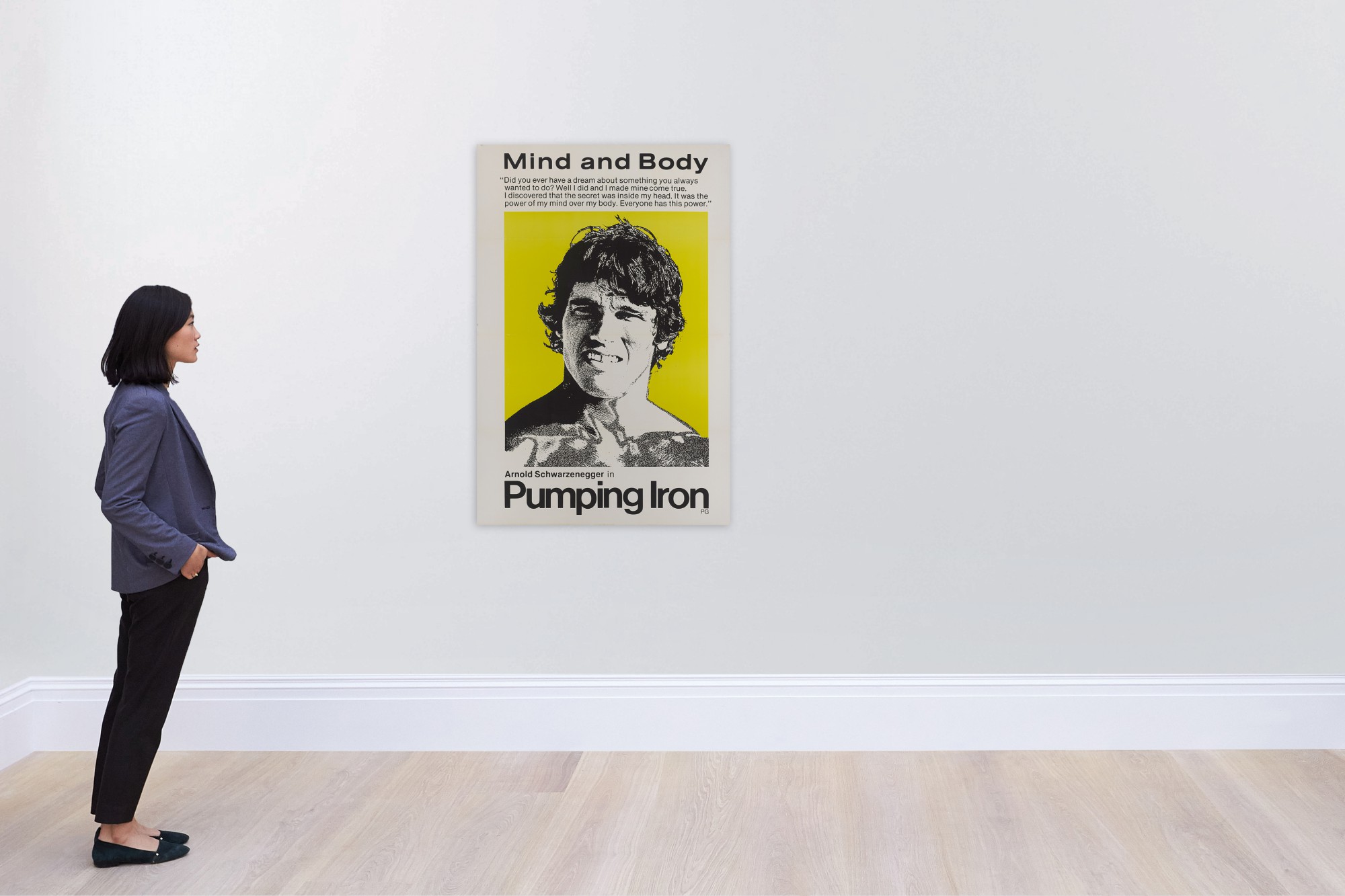
However, the series avoids getting bogged down in mere nostalgic worship. It addresses the tactical mindset required to win seven Mr. Olympia titles. Schwarzenegger was not just a physical specimen; he was an early adopter of sports psychology and self-promotion. He understood that bodybuilding was niche, and he deliberately worked to commercialize the sport, famously featured in George Butler’s foundational 1977 film Pumping Iron.
| Milestone / Era | Location / Context | Strategic Focus | Primary Outcome |
|---|---|---|---|
| Early Training | Thal & Graz, Austria | Basic physical conditioning | Junior Mr. Europe title (1965) |
| Golden Era | Venice Beach, California | Advanced hypertrophy & psychology | 7x Mr. Olympia titles |
| Cinematic Transition | Hollywood, California | Accent reduction, acting classes | Global action film superstardom |
| Political Office | Sacramento, California | Bipartisan appeal, fiscal reform | Two terms as Governor of California |
The documentary highlights the intense psychological warfare of competitive bodybuilding, illustrating how Schwarzenegger utilized strategic intimidation and psychological tactics against competitors like Sergio Oliva and Lou Ferrigno, while simultaneously mentoring them. This duality—ruthless competitor paired with charismatic motivator—remains a central tension throughout his career.
Hollywood Superstardom: Navigating Rejection and Reinvention
Transitioning from a muscular athlete to a leading Hollywood man faced immense skepticism. Industry executives doubted whether a man with a massive frame, a thick Austrian accent, and an unpronounceable surname could ever achieve mainstream box-office success.
The documentary examines the meticulous strategy Schwarzenegger employed to overcome these hurdles:
- Studying the Craft: He took acting, voice, and accent-reduction lessons, treating his career as a professional business enterprise rather than a matter of luck.
- Owning the Niche: After initial struggles in comedic roles like Hercules in New York, he found his breakthrough in John Milius’s Conan the Barbarian (1982), where his physical attributes became an asset rather than a distraction.
- The Blockbuster Pinnacle: The partnership with director James Cameron for The Terminator (1984) cemented his status as a cinematic icon, proving that physical presence could be successfully leveraged into complex sci-fi and action narratives.
The series details how Schwarzenegger carefully managed his brand, transforming himself into a global cinematic commodity by the late 1980s and 1990s through hits like Predator, Total Recall, and Terminator 2: Judgment Day.
Confronting the Controversies: Personal Accountability
The most critical analytical contribution of the Arnold documentary is its handling of Schwarzenegger’s personal life and public missteps. A comprehensive biographical examination must address the friction between public success and private accountability.
The series directly addresses the dissolution of his marriage to Maria Shriver and the revelation in 2011 regarding a child born out of wedlock with a household employee. Schwarzenegger does not attempt to deflect responsibility or offer defensive justifications; instead, he acknowledges the pain caused to his family and the irreversible impact of his actions. By addressing these failures head-on, the documentary prevents itself from devolving into standard promotional PR, earning a degree of critical credibility by acknowledging the human cost of unbridled ambition.
Furthermore, the series touches upon historical allegations of inappropriate behavior toward women on film sets and during his public life, situating them within the broader cultural shifts regarding workplace conduct and power dynamics in Hollywood.
Political Leadership: The Governator Era
In 2003, amidst the California electricity crisis and the recall of Governor Gray Davis, Schwarzenegger transitioned from the silver screen to the political arena, winning election as the 38th Governor of California.
The documentary reviews this unexpected chapter, highlighting the friction between his outsider populist appeal and the complex realities of state governance. Key elements of this period include:
- Bipartisan Navigation: Operating as a moderate Republican in a heavily Democratic state required pragmatic compromise, often drawing criticism from the hardline factions of his own party.
- Environmental Legislation: Spearheading landmark climate change initiatives, such as the Global Warming Solutions Act of 2006 (AB 32), which set aggressive targets for greenhouse gas reductions.
- Economic Challenges: Managing structural budget deficits during the 2008 global financial crisis, which tested his administrative resilience.
While his tenure faced significant legislative gridlock and mixed public approval ratings by the time he left office in 2011, the documentary frames his political career as a logical extension of his desire to conquer every major institutional frontier available to him.
Frequently Asked Questions
What is the structure of the Arnold documentary series?
The docuseries is split into three distinct episodes, each focusing on a primary phase of his life: bodybuilding (Act I: Limitless), Hollywood (Act II: Actor), and politics/personal life (Act III: American). This episodic division allows for focused deep-dives rather than a rushed chronological overview.
Does Arnold Schwarzenegger address his past controversies honestly?
Yes. The documentary features direct segments where Schwarzenegger discusses his marital infidelity, family separation, and historical behavioral criticisms without evasion, acknowledging the damage caused by his personal decisions.
Who else is interviewed in the documentary series?
In addition to extensive interview footage with Schwarzenegger himself, the series features commentary from industry peers, directors like James Cameron and Ivan Reitman, journalists, political allies and opponents, and family members who offer external perspectives on his life trajectory.
How does the documentary cover his steroid use in bodybuilding?
Schwarzenegger openly discusses his use of performance-enhancing substances during his competitive bodybuilding career, contextualizing it within an era when such substances were legal, less understood, and widely utilized across professional strength sports.
What is the primary takeaway of the series regarding success?
The documentary emphasizes that relentless drive and clear visualization are powerful tools for achievement, but it simultaneously illustrates that extreme ambition often requires significant personal sacrifices and can lead to profound relational costs.
Conclusion and Final Recommendations
The Arnold documentary succeeds by refusing to present a sanitized, heroic caricature. Instead, it offers a sobering, multi-dimensional character study of a man who systematically conquered three entirely disparate fields through sheer willpower, strategic calculation, and relentless discipline. For viewers seeking a nuanced examination of ambition, celebrity, and accountability, the series serves as a compelling case study in modern icon-making. Approach the docuseries not as a mere celebration of physical and financial triumph, but as a balanced exploration of the heavy toll exacted by a life lived entirely on the extreme edges of ambition.
Image Gallery