How to Use Example Evaluation Questions in Security Assessments
Example evaluation questions accelerate security assessments by providing a standardized baseline to test controls across applications, infrastructure, and third-party vendors. To use them effectively, security teams must scope questio...
Example evaluation questions accelerate security assessments by providing a standardized baseline to test controls across applications, infrastructure, and third-party vendors. To use them effectively, security teams must scope questions against recognized frameworks, tailor broad templates to target asset criticality, demand objective evidence, and evaluate responses using structured risk rubrics rather than binary checkboxes.
Contents
The Strategic Role of Example Evaluation Questions
Security assessments are critical for identifying vulnerabilities, verifying regulatory compliance, and evaluating vendor risk. However, starting an assessment from scratch often leads to inconsistent evaluations, missed control domains, and administrative burnout. Example evaluation questions—drawn from established cybersecurity frameworks, open-source repositories, and industry standard questionnaires—provide an essential blueprint.
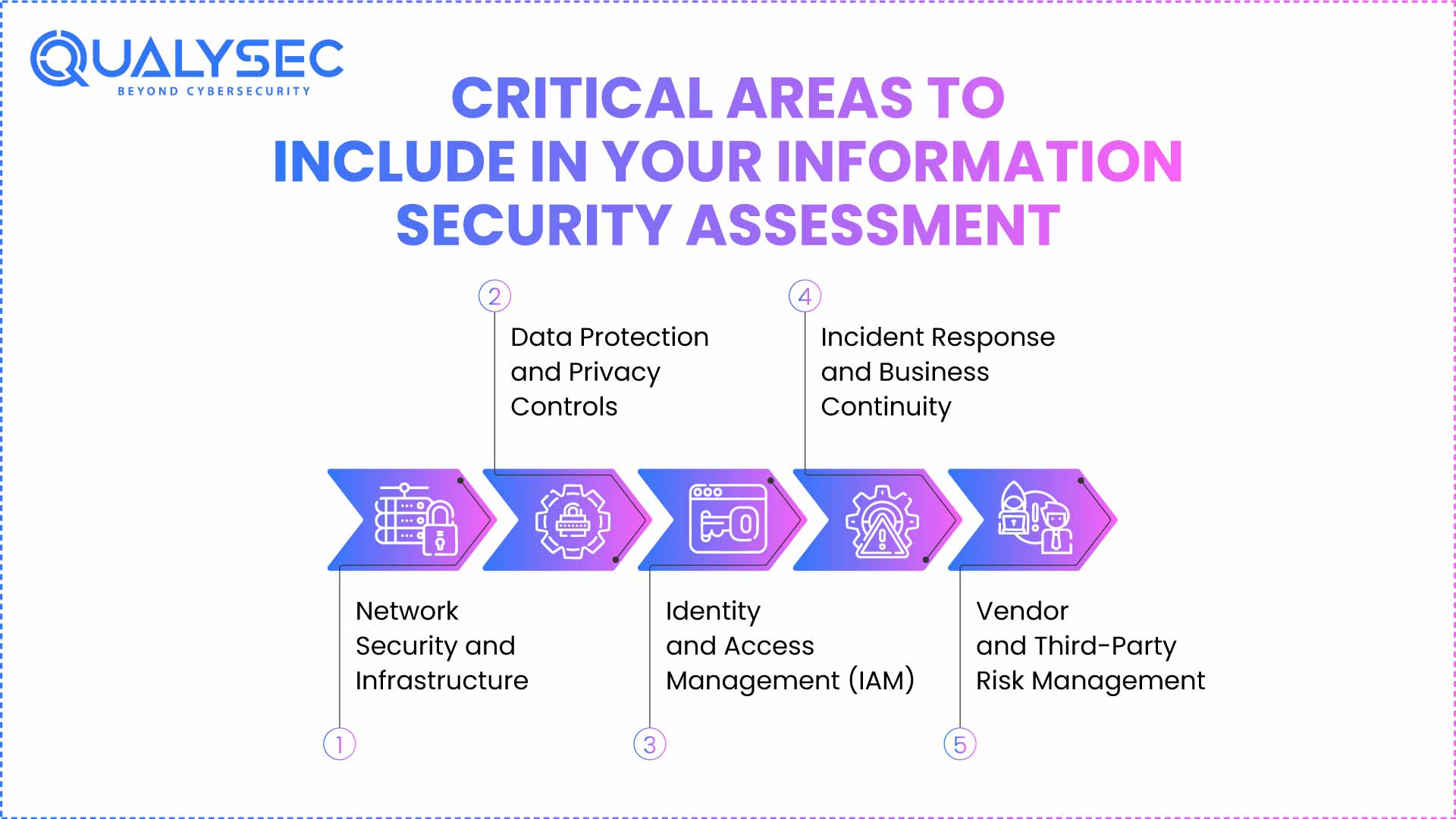
When applied correctly, pre-built questions serve as structural scaffoldings. They ensure that assessors cover essential domains such as identity and access management, data protection, incident response, and business continuity. However, blindly using generic questions without contextualization creates significant risk. A common vulnerability in modern enterprise risk management is treating a security assessment as a passive exercise, where organizations issue standardized security questionnaires and accept written claims without validation.
To transform example evaluation questions into effective security tools, organizations must integrate them into a disciplined assessment lifecycle. This involves contextualizing questions for specific environments, defining clear evidentiary requirements, and evaluating responses through standardized scoring systems.
Selecting Frameworks and Question Repositories
Before choosing evaluation questions, security teams must align their assessment objectives with established cybersecurity standards. Using vetted repositories ensures that your questions map directly to recognized security controls and regulatory standards.
| Framework | Details |
|---|---|
| NIST SP 800-53 & CSF | Deep control baselines for US federal & enterprise environments |
| ISO/IEC 27001:2022 | Global standard for Information Security Management Systems |
| CIS Critical Security Controls | Prioritization framework focused on actionable technical defenses |
| CSA CAIQ (v4+) | Tailored specifically for cloud provider assessments |
NIST Special Publication 800-53 and CSF
The NIST Computer Security Resource Center maintains NIST SP 800-53 Rev. 5, which provides comprehensive security and privacy controls for systems and organizations. For general risk management, the NIST Cybersecurity Framework (CSF 2.0) offers high-level guidance structured around core functions: Govern, Identify, Protect, Detect, Respond, and Recover. Example questions derived from NIST guidance excel at deep technical and operational evaluations.
ISO/IEC 27001 Standards
Organizations operating internationally often align assessments with the ISO/IEC 27001 standard. Example questions based on Annex A controls focus heavily on governance, organizational policies, physical security, and operational management.
CIS Critical Security Controls
Maintained by the Center for Internet Security, the CIS Controls offer a prioritized set of defensive actions. Questions derived from CIS Controls are inherently practical and technical, making them ideal for internal system audits and technical control validation.
Cloud Security Alliance (CSA) CAIQ
When evaluating cloud service providers (CaaS, PaaS, SaaS), the Cloud Security Alliance Consensus Assessments Initiative Questionnaire (CAIQ) provides pre-formulated questions tailored to cloud architecture. The CSA CAIQ maps directly to the CSA Cloud Controls Matrix (CCM), ensuring coverage of cloud-specific risks like multi-tenancy isolation and shared responsibility models.
Step-by-Step: Customizing and Applying Sample Questions
Using example questions successfully requires a four-stage execution model. Merely copy-pasting a questionnaire into an email creates unnecessary friction and incomplete security insights.
- Scope & Categorize Asset Risk
- Determine asset criticality, data classification, and exposure.
- Contextualize & Filter Questions
- Remove irrelevant items; tailor language to specific architecture.
- Assign Required Evidence Artifacts
- Pair every technical claim with mandatory artifact requirements.
- Evaluate & Score via Risk Rubric
- Measure maturity using objective criteria rather than yes/no answers.
Step 1: Scope the Assessment and Classify Assets
Not every system requires a 300-question deep-dive assessment. Categorize the target target (vendor, application, internal network segment) based on data classification and operational criticality:
- High Criticality: Systems processing sensitive data (PHI, PII, financial records) or critical infrastructure.
- Moderate Criticality: Internal business tools storing non-public operational data.
- Low Criticality: Isolated systems holding public or non-sensitive information.
Use example questions selectively based on this classification. High-criticality systems demand comprehensive technical and architectural questions, while low-criticality systems require condensed baselines.
Step 2: Contextualize and Filter Generic Templates
Generic sample questions often contain vague or non-applicable phrasing. For instance, asking a pure SaaS vendor about their physical datacenter perimeter security is inefficient if they operate entirely within major public cloud environments.
Transform generic questions into specific, measurable prompts:
- Generic Example: "Do you enforce strong password policies?"
- Contextualized Version: "Does the system enforce multi-factor authentication (MFA) using phishing-resistant methods (e.g., FIDO2/WebAuthn) for all administrative and user access?"
Step 3: Define Required Evidence Artifacts
Never rely solely on narrative answers. Every structural sample question should be paired with explicit proof expectations. When sending evaluation questions to vendors or internal sysadmins, specify the acceptable evidence types:
- Configuration Screenshots: Showing active encryption settings, firewall rules, or password policies.
- Audit Reports: SOC 2 Type II reports, ISO certifications, or third-party penetration test executive summaries.
- System Logs: Redacted log exports demonstrating active monitoring or centralized logging integration.
- Policy Documents: Formally approved Information Security Policies, Incident Response Plans, and Business Continuity Plans.
Step 4: Establish Objective Scoring Rubrics
Binary "Yes/No" options fail to capture control maturity. Implement a scoring rubric based on established capability models, such as the Capability Maturity Model Integration (CMMI):
- 0 - Non-Existent: Control is missing with no plans for implementation.
- 1 - Ad-Hoc / Informal: Control exists informally but lacks documentation or consistent execution.
- 2 - Documented: Control is formally documented but lacks automated enforcement or regular testing.
- 3 - Fully Implemented & Automated: Control is documented, technically enforced, and continuously monitored.
- 4 - Optimized: Control is routinely audited, tested via exercises (e.g., red teaming), and continuously improved.
Domain-Specific Question Breakdown and Analysis
To illustrate how to adapt sample evaluation questions, consider these four key security domains. Each entry demonstrates how to move from a standard question to technical validation.
| Security Domain | Sample Evaluation Question | Verification Focus | Required Artifact |
|---|---|---|---|
| Access Control | How is administrative access governed and authenticated? | Enforcement of MFA and Least Privilege | IAM role policies, SSO configuration, audit log samples |
| Incident Response | What is the formal process for detecting and containing breach events? | Incident timelines, notification, and escalation paths | Formal IR Plan, tabletop exercise summary, post-mortem reports |
| Data Protection | How is data protected at rest and in transit? | Cryptographic standards and key lifecycle | Key management policy, TLS config screenshots, KMS architecture diagram |
| Vulnerability Management | How frequently are systems scanned and patched? | Remediation SLAs and exposure windows | Executive pen-test summary, vulnerability scanner report |
1. Identity and Access Control (IAM)
- Sample Question: "Does the organization enforce Centralized Identity Management and Least Privilege Access across all production environments?"
- Why it matters: Excessive privileges and unmanaged accounts remain leading attack vectors.
- How to evaluate: Verify whether single sign-on (SSO) and role-based access control (RBAC) are mandatory. Look for quarterly access review evidence to ensure offboarded employees immediately lose access.
2. Incident Response and Business Continuity
- Sample Question: "What is the documented procedure for declaring, containing, and communicating a cybersecurity incident, and when was it last tested?"
- Why it matters: Written policies are ineffective if personnel have never practiced them.
- How to evaluate: Ask for the date and executive summary of the most recent tabletop exercise. Check whether notification timelines comply with applicable regulations (such as the 72-hour reporting window under GDPR or specific SEC disclosure requirements).
3. Data Encryption and Storage Security
- Sample Question: "What cryptographic standards govern sensitive data at rest and in transit across internal networks and external interfaces?"
- Why it matters: Data breaches involving unencrypted or weakly encrypted data expose organizations to severe regulatory fines and reputational damage.
- How to evaluate: Ensure data at rest uses strong algorithms (e.g., AES-256) and data in transit uses TLS 1.3 (or minimum TLS 1.2 with secure cipher suites). Verify that cryptographic keys are managed separately from the data via dedicated key management services (KMS).
4. Vulnerability and Patch Management
- Sample Question: "What is the organization's patch management SLA for critical vulnerability remediations, and how are third-party libraries monitored?"
- Why it matters: Unpatched software and compromised open-source dependencies (software supply chain risk) account for a major portion of exploitation attempts.
- How to evaluate: Look for specific remediation SLAs (e.g., critical CVEs resolved within 14 days). Request evidence of automated dependency scanning (Software Bill of Materials / SBOM tools) within the CI/CD pipeline.
Common Pitfalls to Avoid
Even experienced teams make critical errors when employing pre-built assessment questions. Avoiding these traps ensures that assessments remain rigorous and actionable.
Questionnaire Fatigue and Question Bloat
Sending 500-question spreadsheets to internal product teams or third-party vendors creates operational bottlenecks. Assessors receive rushed, low-quality answers.
- Fix: Prioritize depth over breadth. Limit initial assessments to top-tier control requirements. Request deeper technical evaluations only if risk triggers are identified.
Accepting Self-Attestation as Proof
Accepting a vendor's or system owner's unverified "Yes" introduces significant unmitigated risk.
- Fix: Establish a strict policy: any claim without accompanying evidence (policy document, architecture diagram, scan report, SOC report) is marked as "Unverified" and scored zero.
Static, One-Time Assessments
Security postures deteriorate over time due to drift, configuration errors, and emerging threats. Treating a questionnaire evaluation as a permanent seal of approval leaves organizations blind to newly introduced risks.
- Fix: Implement continuous monitoring practices. Pair point-in-time questionnaire evaluations with continuous threat intelligence feeds, automated vulnerability scans, and mandatory annual reassessments.
Frequently Asked Questions
What is the difference between a security assessment and a security audit?
A security assessment is an ongoing, risk-focused process designed to identify vulnerabilities, measure control effectiveness, and guide risk mitigation strategies. A security audit is a formal, independent examination evaluated against a specific compliance framework or standard (such as ISO 27001 or SOC 2) to provide formal assurance to third parties.
How do I adapt sample questions for small vendors or internal startups?
Small organizations often lack the resources to maintain enterprise-grade policy documentation. Instead of penalizing them for missing complex policies, tailor sample questions to focus on technical safeguards. Ask for direct proof of cloud provider security controls, enforced MFA, automated patch management, and centralized endpoint management.
Should we make our security assessment questions public to vendors in advance?
Yes. Providing sample evaluation questions upfront allows vendors and internal teams to gather necessary evidence and review policy documents before formal assessments begin. This reduces completion times and improves response accuracy.
How often should security assessment evaluation questions be updated?
Question sets should be reviewed at least annually to incorporate updated control frameworks, emerging threat vectors (such as AI system vulnerabilities), and new regulatory compliance requirements.
Can automated vendor assessment platforms replace evaluation questions?
Automated risk rating platforms provide valuable attack-surface visibility, but they cannot evaluate internal controls, governance policies, or data handling procedures. Automated tools should complement—not replace—contextual evaluation questions and evidence reviews.
Practical Recommendation and Next Actions
To successfully implement sample evaluation questions within your organization's security assessments:
- Adopt a Recognized Baseline: Download and review standard question sets from established sources, such as the NIST Cybersecurity Framework, CIS Controls, or the CSA CAIQ.
- Build a Tiered Questionnaire Matrix: Categorize questions into Tier 1 (High Criticality), Tier 2 (Moderate Criticality), and Tier 3 (Low Criticality) templates to prevent survey bloat.
- Mandate Evidence Mapping: Update your assessment portal or questionnaire templates to require file attachments or configuration links for every affirmative technical claim.
- Train Assessment Personnel: Ensure your security analysts are trained to score responses based on capability maturity rather than simply verifying answered boxes.
Image Gallery