The Core Advantages of Agile Software Development in 2026
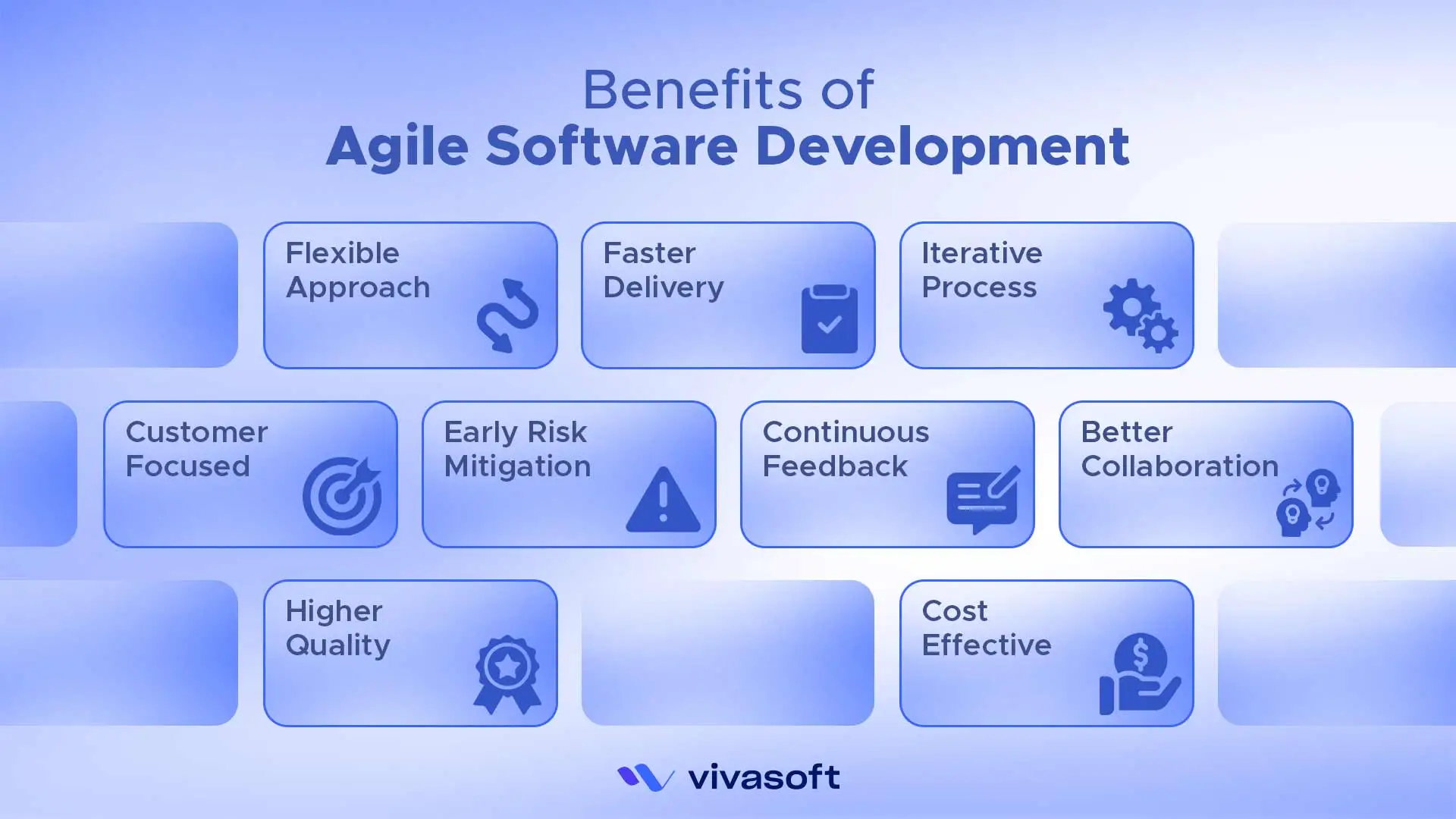
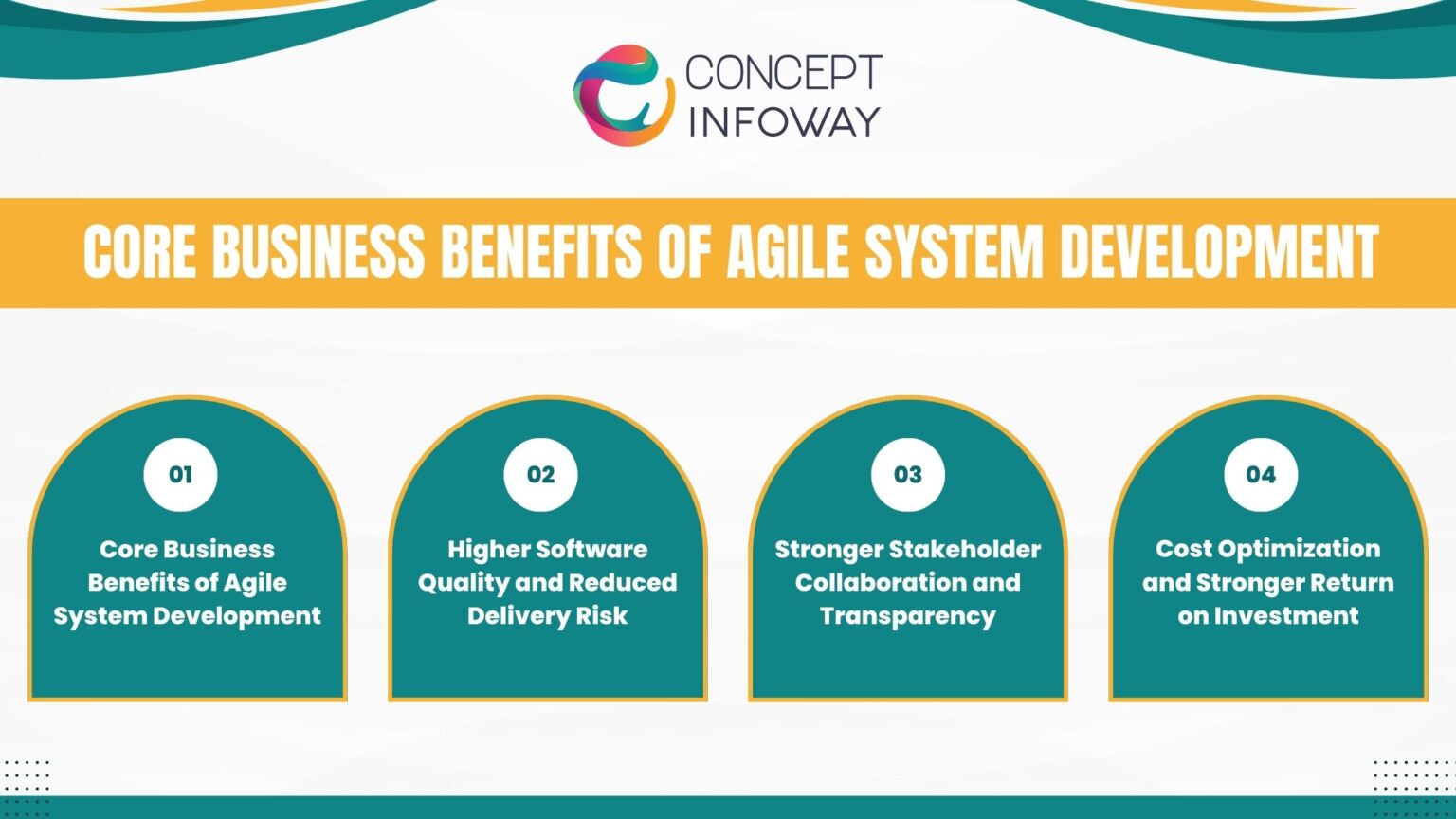
Agile software development advantages center on the ability to pivot based on real-time feedback, ensuring that the final product aligns with evolving user needs rather than rigid, outdated requirements. By breaking projects into small...
Agile software development advantages center on the ability to pivot based on real-time feedback, ensuring that the final product aligns with evolving user needs rather than rigid, outdated requirements. By breaking projects into small, manageable increments, teams reduce risk, accelerate time-to-market, and maintain high quality through continuous integration and stakeholder transparency.
Contents
The landscape of software engineering has shifted significantly by 2026. While the core tenets of the Agile Manifesto—drafted over two decades ago—remain the foundation, the application of these principles has matured to accommodate hyper-automated environments and distributed global teams. Organizations that successfully leverage Agile methodologies do not just build software faster; they build the right software with greater financial efficiency and team resilience.
Understanding the Shift: From Waterfall to Iterative Delivery
To appreciate the advantages of Agile, one must understand the traditional "Waterfall" model it replaced. In Waterfall, development follows a linear sequence: requirements, design, implementation, verification, and maintenance. This model assumes that all requirements can be known upfront. However, in 2026, market volatility and rapid technological shifts make upfront certainty impossible.
Agile software development operates on an iterative and incremental basis. Instead of a single, massive "Big Bang" release, the project is divided into Sprints or iterations—typically lasting one to four weeks. Each iteration results in a working software increment. This fundamental shift provides the bedrock for all the specific advantages discussed below.
Top Strategic Advantages of Agile Software Development
1. Enhanced Adaptability and Flexibility
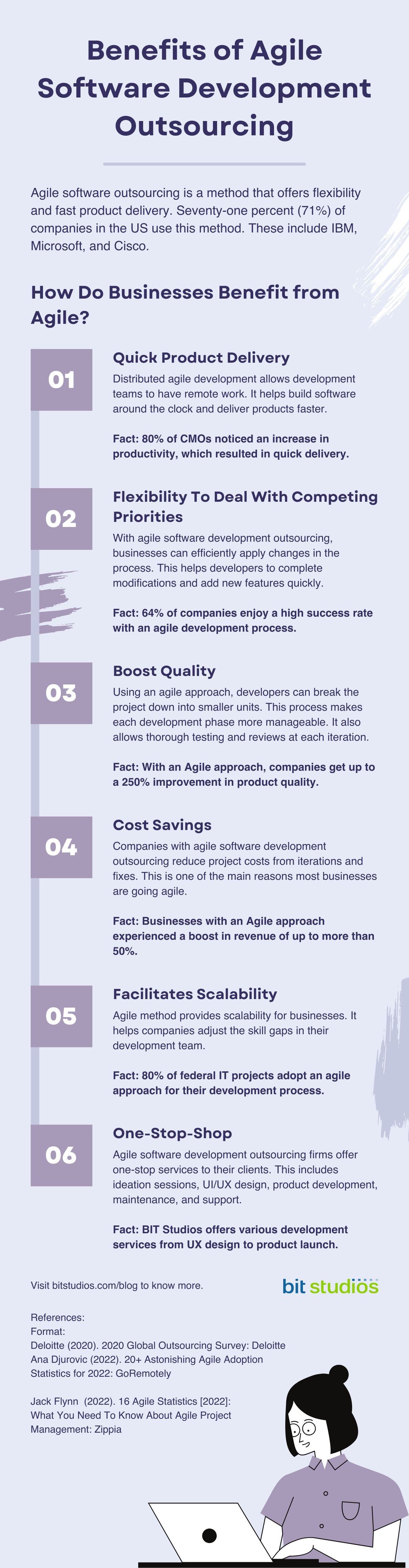
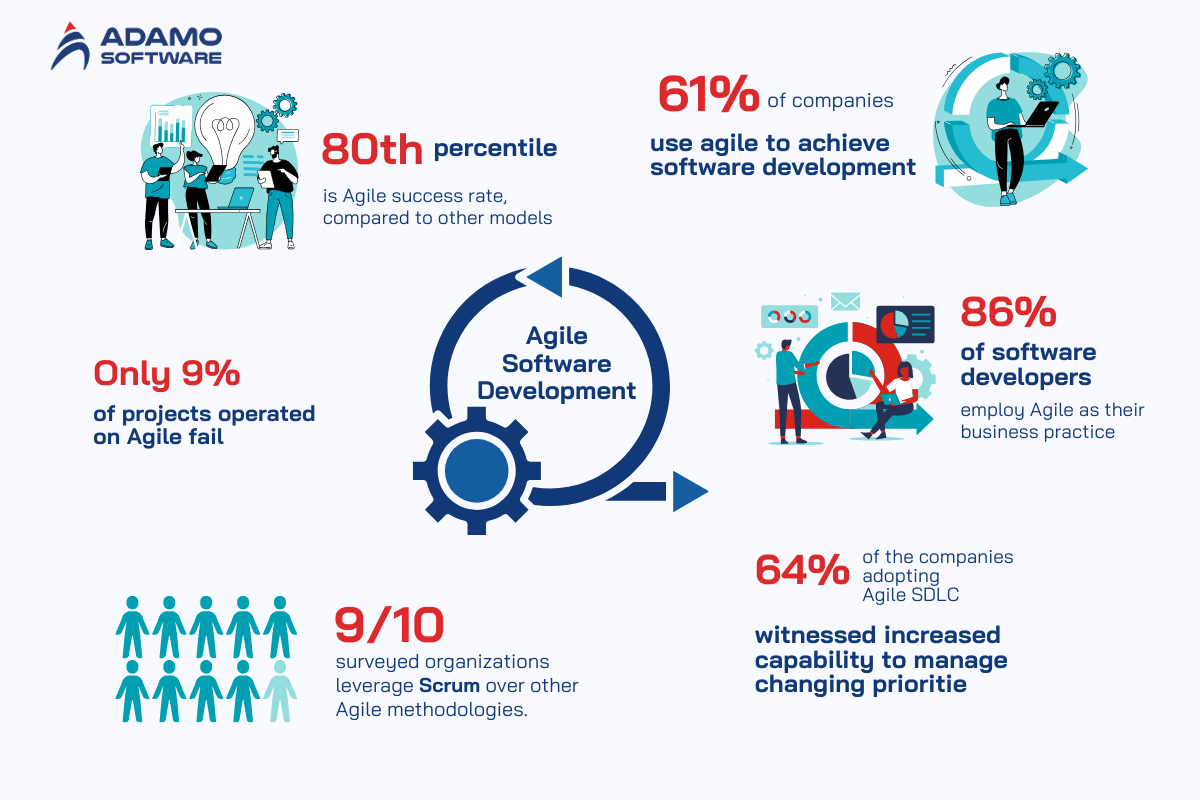
The primary advantage of Agile is its inherent flexibility. In a traditional project, changing a requirement mid-way through development is often catastrophic for the budget and timeline. Agile embraces change. Since the team works in short cycles, the "Product Backlog" (the list of all work to be done) is constantly re-prioritized.
If a competitor releases a new feature or a global economic shift occurs, an Agile team can pivot in the very next sprint. This responsiveness ensures that the development effort is always focused on the highest-value tasks, preventing the "sunk cost" fallacy where teams continue building features that are no longer relevant.
2. Superior Product Quality
Quality is not an afterthought in Agile; it is baked into the process. Because the software is developed in small increments, testing occurs continuously throughout the lifecycle. This is often supported by technical practices such as:
- Test-Driven Development (TDD): Writing tests before the code itself.
- Continuous Integration/Continuous Deployment (CI/CD): Automatically testing and deploying code multiple times a day.
- Peer Reviews: Frequent "pair programming" or code reviews that identify bugs early.
By identifying and fixing defects in real-time, teams avoid the "technical debt" that often accumulates in longer development cycles. By 2026, the integration of AI-driven automated testing has further enhanced this advantage, allowing Agile teams to maintain 99.9% uptime and stability even while deploying daily.
3. Accelerated Time-to-Market
Agile allows businesses to launch a Minimum Viable Product (MVP) much sooner than traditional methods. Instead of waiting 18 months for a "perfect" system, a company might release a functional core version in three months.
This early entry into the market provides two critical benefits:
- Early Revenue: The business starts seeing a return on investment (ROI) while the rest of the software is still being built.
- Early Feedback: Real users provide data that informs the development of future features, ensuring the product evolves according to actual market demand.
Increased Stakeholder Transparency and Engagement
One of the most common complaints in legacy software projects was the "black hole" effect—stakeholders would hand over requirements and then see nothing for six months. Agile eliminates this through radical transparency.
Continuous Feedback Loops
Through "Sprint Reviews" or "Demos," stakeholders see the progress of the software at the end of every iteration. This frequent interaction builds trust between the development team and the business units. Stakeholders can see the product taking shape and provide course corrections early, ensuring there are no unpleasant surprises at the end of the project.
Visibility into Progress
Agile uses visual tools like Kanban boards and Burndown charts. In 2026, these tools are often integrated into centralized enterprise resource planning (ERP) systems, allowing executives to see real-time "Velocity" (the amount of work a team completes in a sprint) and "Lead Time" (the time it takes for an idea to become a live feature).
Operational Benefits for Development Teams
Improved Predictability and Risk Management
While it may seem counterintuitive, Agile is more predictable than Waterfall. Because sprints are fixed in length (time-boxed), the team knows exactly when the next update is coming. Furthermore, the practice of "Estimation" in Agile is based on actual historical performance (Velocity) rather than theoretical guesses.
Risk is mitigated because failure happens in small doses. If an architectural decision is wrong, the team will likely discover it within two weeks during a sprint, rather than two years into a project. This "fail-fast" mentality protects the organization’s capital and reputation.
Empowered Teams and Higher Morale
Agile methodologies, particularly Scrum, emphasize self-organizing teams. Instead of a project manager dictating every task, the team decides how to accomplish the work defined in the backlog. This autonomy leads to:
- Increased Ownership: Developers feel a greater sense of responsibility for the quality of the product.
- Reduced Burnout: Sprints promote a sustainable pace of work, avoiding the "death marches" common in legacy software environments.
- Continuous Improvement: Through "Retrospectives," teams analyze their own performance every few weeks and make incremental changes to their workflow.
Comparison of Leading Agile Frameworks
Different Agile frameworks offer different advantages depending on the project's nature. The following table compares the three most common frameworks used in 2026.
| Feature | Scrum | Kanban | Extreme Programming (XP) |
|---|---|---|---|
| Primary Focus | Managing complex product development via Sprints. | Visualizing workflow and maximizing efficiency. | Engineering excellence and code quality. |
| Cadence | Regular fixed-length iterations (1-4 weeks). | Continuous flow; no fixed iterations. | Short cycles (often 1 week). |
| Roles | Defined: Scrum Master, Product Owner, Dev Team. | No predefined roles. | Defined engineering roles and "Customer" role. |
| Change Management | Changes held until the next Sprint starts. | Changes can happen at any time if capacity allows. | Changes accepted if the iteration hasn't started. |
| Best For | New product development with high uncertainty. | Maintenance, support, and operational tasks. | Projects with high technical risk or safety requirements. |
Financial and Business Impact
From a CFO's perspective, Agile software development advantages manifest as cost avoidance and capital efficiency.
In 2026, software is rarely "finished"; it is a living entity. Agile allows organizations to treat software development as an operational expense (OpEx) that scales with business value, rather than a massive capital expenditure (CapEx) with an uncertain outcome. By prioritizing the "Product Backlog" based on ROI, the business ensures that if the budget is cut, the most valuable features have already been built and deployed.
The Evolution of Agile in 2026: AI and Hyper-Automation
As of 2026, the advantages of Agile have been amplified by Artificial Intelligence. "AI-Agile" integration allows for:
- Predictive Backlog Refinement: AI identifies which user stories are likely to cause bottlenecks.
- Automated Documentation: Large Language Models (LLMs) now generate technical documentation from the code in real-time, solving one of Agile's historical weaknesses.
- Dynamic Resource Allocation: Agile scaling frameworks (like SAFe or LeSS) use machine learning to balance workloads across dozens of distributed teams instantly.
Common Challenges and Mitigations
While the advantages are numerous, Agile is not a "silver bullet." It requires a cultural shift that many organizations struggle with.
- Lack of Specialized Training: Agile fails when teams use the terminology without the underlying principles. Solution: Invest in Agile Alliance certified coaching.
- Remote Team Fragmentation: Distributed teams can lose the "osmotic communication" of an office. Solution: Use digital whiteboarding and persistent video "rooms" to mimic a shared space.
- Scope Creep: Flexibility can lead to a never-ending project. Solution: Strict adherence to the "Definition of Done" (DoD) and firm Product Owner oversight.
Frequently Asked Questions
Is Agile better than Waterfall for all projects?
Not necessarily. Waterfall is still effective for projects with fixed requirements, strict regulatory hurdles that require massive upfront documentation, or hardware-centric projects where changes are physically expensive. However, for software-focused initiatives where user behavior is a factor, Agile is almost always superior.
How does Agile improve security?
In modern Agile, this is often called DevSecOps. Security checks are integrated into the "Definition of Done." Instead of a security audit at the very end of development, automated security scanning occurs during every code commit, ensuring vulnerabilities are caught within hours of being written.
What is the role of a manager in an Agile team?
The role shifts from "Command and Control" to "Servant Leadership." A manager in an Agile environment focuses on removing organizational blockers, securing resources, and fostering the professional growth of team members, rather than assigning individual daily tasks.
Does Agile lead to poor documentation?
This is a common myth. The Agile Manifesto values "working software over comprehensive documentation," but it does not forbid documentation. In fact, most high-performing Agile teams use automated tools to ensure that documentation is living, accurate, and tied directly to the codebase.
How do you measure success in Agile?
Success is measured through business value delivered, user satisfaction, and team health. Technical metrics include Cycle Time (how long it takes for a task to go from "In Progress" to "Done") and Deployment Frequency.
Practical Recommendation
If your organization is transitioning to Agile in 2026, start small. Do not attempt a "Big Bang" transformation. Select a single, high-impact pilot project and a cross-functional team. Ensure you have a dedicated Product Owner who has the authority to make decisions on priority. Once the pilot demonstrates improved speed and quality, use those results to advocate for broader organizational change.
For further reading on the foundational principles, the Scrum Guide remains the authoritative source for the Scrum framework, updated to reflect modern hybrid work realities.
Image Gallery