Michael Moore Documentaries: A Timeline of Impact
Michael Moore’s documentaries have reshaped the American political landscape by forcing marginalized issues—corporate greed, gun violence, and healthcare inequality—into the mainstream. From the 1989 debut of Roger & Me to his later wo...
Michael Moore’s documentaries have reshaped the American political landscape by forcing marginalized issues—corporate greed, gun violence, and healthcare inequality—into the mainstream. From the 1989 debut of Roger & Me to his later works, his films have triggered legislative discussions, changed industry standards for documentary distribution, and influenced public opinion on global policy.
Contents
Since his emergence in the late 1980s, Michael Moore has occupied a unique and often polarizing space in global cinema. He did not merely record history; he sought to intervene in it. By 2026, his body of work is viewed as a foundational blueprint for the "activist documentary," a subgenre that blends investigative journalism with a highly personal, participatory narrative style. This timeline explores how his major films transitioned from cultural curiosities to significant catalysts for social and political change.
1989: Roger & Me and the Birth of Participatory Activism
When Michael Moore released Roger & Me, the documentary landscape was largely dominated by "fly-on-the-wall" cinéma vérité or dry, educational programming. Moore introduced a confrontational, satirical, and deeply personal approach. The film followed his attempts to interview Roger Smith, the CEO of General Motors (GM), regarding the devastating impact of plant closures on Moore’s hometown of Flint, Michigan.
The impact was immediate and twofold. Economically, it became one of the highest-grossing documentaries of its time, proving that non-fiction film could be commercially viable in mainstream theaters. Politically, it humanized the "Rust Belt" struggle, bringing the consequences of deindustrialization into living rooms across America. While it did not stop GM’s corporate restructuring, it established a new archetype: the filmmaker as a populist hero, a persona that Moore would leverage for decades to come.
2002: Bowling for Columbine and the Gun Control Debate
Thirteen years after his debut, Moore released Bowling for Columbine, an examination of the causes for the 1999 Columbine High School massacre and the broader culture of fear and gun violence in the United States. This film remains a landmark in documentary history due to its tangible, real-world consequences.
One of the most famous sequences involved Moore taking two Columbine survivors to the headquarters of Kmart to demand a refund for the bullets still lodged in their bodies. This direct-action approach led to a significant corporate policy change: shortly after the film’s release, Kmart announced it would phase out the sale of handgun ammunition.
Furthermore, the film’s win at the Academy of Motion Picture Arts and Sciences for Best Documentary Feature provided Moore with a global platform. His acceptance speech, in which he criticized the then-imminent invasion of Iraq, became a defining cultural moment of the early 2000s, cementing his role as a lightning rod for political discourse.
2004: Fahrenheit 9/11 and the Geopolitical Shift
If Bowling for Columbine made Moore a household name, Fahrenheit 9/11 made him a geopolitical force. The film critiqued the George W. Bush administration’s handling of the September 11 attacks and the subsequent Iraq War. Its impact can be measured through three distinct lenses:
- Commercial Success: According to Box Office Mojo, the film earned over $222 million worldwide, making it the highest-grossing documentary in history—a record it still holds in 2026. This success proved that political documentaries could compete with Hollywood blockbusters.
- Critical Recognition: It won the Palme d'Or at the Cannes Film Festival, the first documentary to do so since 1956. This elevated the status of the "agitprop" documentary to the highest levels of high-art cinema.
- Political Mobilization: Released during an election year, the film was designed to influence the 2004 U.S. Presidential election. While it did not prevent the re-election of George W. Bush, it significantly shifted the public narrative regarding the justifications for the Iraq War and the relationship between the Bush family and Saudi interests.
2007: Sicko and the Path to Healthcare Reform
With Sicko, Moore turned his lens toward the American healthcare industry, comparing the U.S. system with the universal healthcare models of Canada, France, the United Kingdom, and Cuba. Unlike his previous works, which focused on dismantling existing structures, Sicko was an argument for a specific policy shift.
The film’s impact was felt most strongly during the early years of the Obama administration. As the debate over the Affordable Care Act (ACA) intensified, Sicko served as a visual primer for the "public option" and universal coverage. Moore testified before Congress, and the film’s portrayal of insurance company denials became a frequent talking point for healthcare reform advocates. By highlighting the efficiency of other nations' systems, Moore helped normalize the concept of healthcare as a human right rather than a commodity in American public discourse.
2009–2018: Capitalism, Trump, and the Digital Era
As the 2010s progressed, Moore’s focus widened to address systemic failures of global capitalism and the rise of populism.
- Capitalism: A Love Story (2009): Released in the wake of the 2008 financial crisis, this film explored the "casino economy" of Wall Street. It is often credited with foreshadowing the Occupy Wall Street movement that emerged two years later.
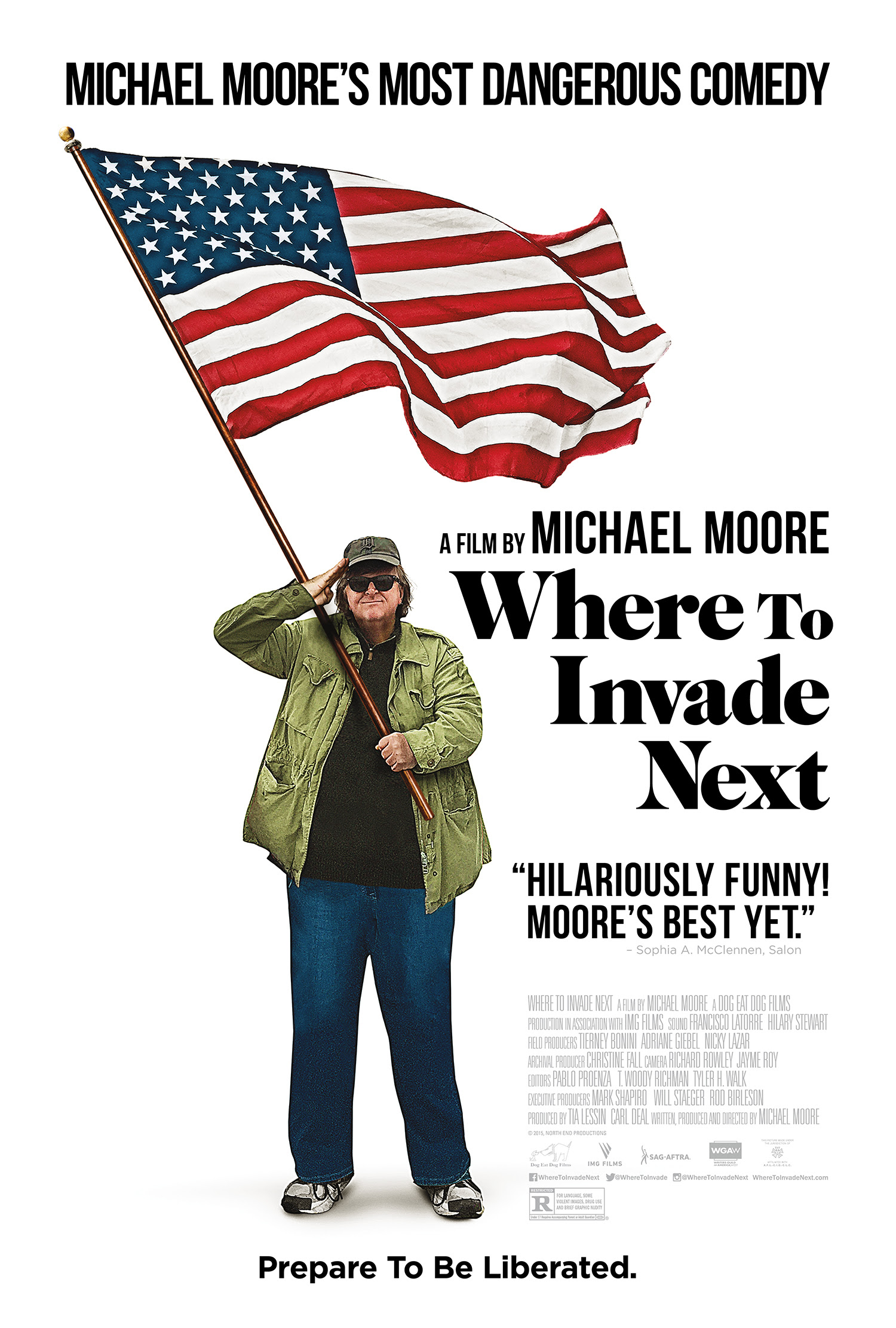
- Where to Invade Next (2015): This film took a more optimistic approach, "stealing" social policies from European countries (such as free university in Slovenia and prison reform in Norway) to show how they could work in the U.S.
- Fahrenheit 11/9 (2018): This served as a bookend to his 2004 masterpiece, examining the rise of Donald Trump and the erosion of democratic norms. It emphasized grassroots activism and the power of local movements, such as the teacher strikes in West Virginia.
Summary of Major Film Impacts
The following table summarizes the primary subject matter and the documented socio-political results of Michael Moore’s most influential films.
| Year | Film | Primary Subject | Documented Impact |
|---|---|---|---|
| 1989 | Roger & Me | GM Plant Closures / Deindustrialization | Mainstreamed the participatory documentary; revitalized Flint advocacy. |
| 2002 | Bowling for Columbine | Gun Culture / School Shootings | Led Kmart to stop selling handgun ammo; won Best Documentary Oscar. |
| 2004 | Fahrenheit 9/11 | War on Terror / Bush Administration | Highest-grossing documentary ever; won Palme d'Or; shifted Iraq War narrative. |
| 2007 | Sicko | U.S. Healthcare System | Influenced the ACA debate; popularized the universal healthcare movement. |
| 2009 | Capitalism: A Love Story | 2008 Financial Crisis / Wall Street | Anticipated the themes of the Occupy Wall Street movement. |
| 2018 | Fahrenheit 11/9 | Trump Presidency / Voter Suppression | Heightened focus on grassroots activism and electoral reform. |
The "Moore Effect": Analytical Legacy
To understand the timeline of Moore's impact, one must look beyond the individual films and consider his influence on the medium itself. The "Moore Effect" refers to the shift in documentary filmmaking from objective observation to subjective advocacy.
The Rise of the Filmmaker-Protagonist
Moore popularized the idea that the filmmaker’s presence—often wearing a baseball cap and carrying a microphone—is essential to the story. This technique creates an emotional bridge for the audience, making complex economic or political issues feel personal.
Distribution and Commercialization
Before Moore, documentaries were rarely seen as lucrative investments for major studios. His success forced distributors like Lionsgate and IFC Films to reconsider the marketability of non-fiction. This opened the door for subsequent documentary hits like An Inconvenient Truth and Super Size Me, which followed Moore’s blueprint of combining information with entertainment.
Verification and Criticism
Moore’s impact also includes a heightened scrutiny of documentary ethics. His films often faced intense fact-checking from both the left and the right. This "check and balance" environment has led to more rigorous standards in the industry, as filmmakers now anticipate the kind of granular scrutiny Moore faced regarding his editing choices and chronological sequencing.
Frequently Asked Questions
What is Michael Moore’s most successful documentary?
In terms of both financial revenue and global cultural reach, Fahrenheit 9/11 (2004) remains his most successful work. It earned over $222 million at the box office and remains the top-grossing documentary of all time. Its success proved that a documentary could act as a major cultural event, dominating headlines for months.
Did Michael Moore’s films actually change any laws?
While films rarely result in immediate legislative changes, Moore’s work has directly influenced corporate policy and shifted public opinion which leads to lawmaking. The most direct example is Bowling for Columbine, which resulted in Kmart’s decision to stop selling handgun ammunition. Sicko is also widely credited with helping build the public support necessary for the passage of the Affordable Care Act.
How did Michael Moore influence later filmmakers?
Moore pioneered the "participatory" style of documentary, where the filmmaker is a central character. You can see his influence in the work of Morgan Spurlock (Super Size Me), Alex Gibney, and many contemporary YouTube essayists who use a mix of humor, personal narration, and investigative journalism to tackle social issues.
Are Michael Moore's documentaries considered "objective"?
No, and Moore himself has often stated that he does not believe in a truly "objective" documentary. He views his films as "cinematic op-eds" or essays. While they are based on facts and interviews, they are structured to argue a specific point of view. Viewers are encouraged to see them as advocacy pieces rather than neutral educational films.
Why is Michael Moore so controversial?
His controversy stems from his aggressive interview tactics, his unapologetically liberal political stance, and his tendency to use selective editing to make satirical points. Critics often accuse him of oversimplifying complex issues, while supporters argue that his methods are necessary to cut through corporate and political PR.
Recommendation for Modern Viewing
To fully grasp the timeline of impact, viewers in 2026 should watch Michael Moore’s filmography in chronological order. This allows for an understanding of how the political concerns of the late 20th century evolved into the crises of the 21st. Start with Roger & Me to see the roots of American industrial decline, and follow it with Sicko to understand the systemic issues that continue to dominate current policy debates. When watching, pay close attention to the editing techniques and the use of archival footage, as these are the tools Moore used to build his arguments and influence a generation of activists.
Image Gallery