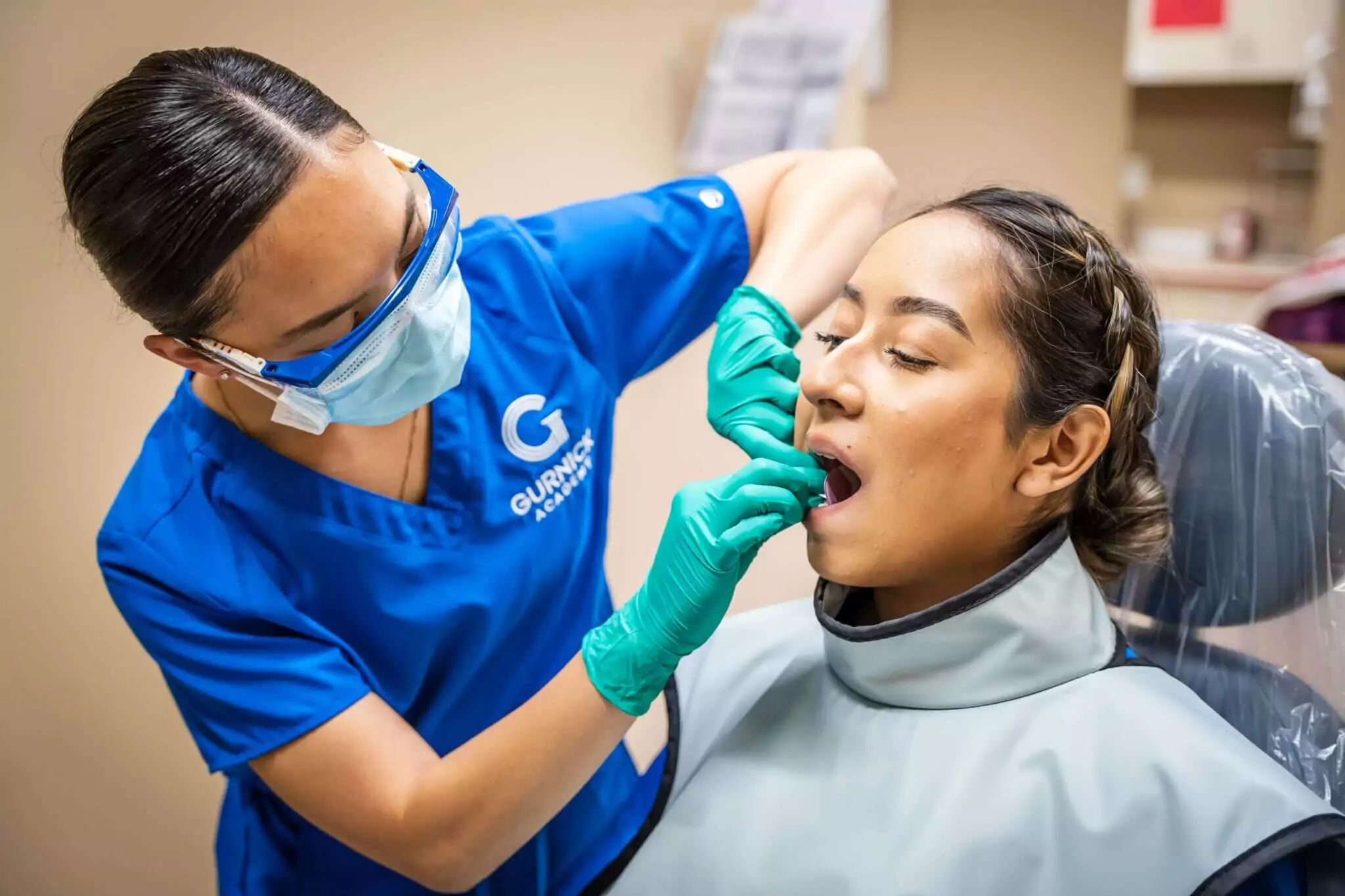
Dallas Dental Assistant Program Overview: Pathways, Licensing, and Career Guide
A Dallas dental assistant program delivers the clinical, radiographic, and administrative training necessary to enter the oral healthcare field in Texas. Students learn dental anatomy, infection control, chairside assisting, and digita...
A Dallas dental assistant program delivers the clinical, radiographic, and administrative training necessary to enter the oral healthcare field in Texas. Students learn dental anatomy, infection control, chairside assisting, and digital radiography through classroom study, lab practice, and clinical externships. Completion prepares candidates to earn Registered Dental Assistant (RDA) status through the Texas State Board of Dental Examiners.
Contents
Dental Assisting in Texas: Scope of Practice and Credentialing
Dental assistants play a pivotal role in private dental practices, specialty clinics, community health centers, and hospital outpatient departments throughout the Dallas-Fort Worth (DFW) metroplex. Before enrolling in a training program, prospective students must understand how the State of Texas regulates dental assisting procedures and credentials.
Unregistered vs. Registered Dental Assistant (RDA) Status
Texas law distinguishes between unregistered dental assistants and Registered Dental Assistants (RDAs). An unregistered assistant may perform basic supportive tasks under the direct supervision of a licensed dentist, such as seating patients, sterilizing instruments, and maintaining office records.
However, unregistered assistants are legally restricted from performing essential clinical tasks, most notably exposing dental radiographs (X-rays). Because modern diagnostic dentistry relies heavily on imaging, almost all dental practices in Dallas require assistants to hold an active RDA registration issued by the Texas State Board of Dental Examiners (TSBDE).
Delegated Duties under Texas Law
Under TSBDE guidelines, a licensed dentist may delegate specific intraoral tasks to a properly credentialed RDA under direct or general supervision. Authorized duties for qualified assistants include:
- Taking intraoral and extraoral dental radiographs.
- Applying topical anesthetics and fluoride treatments.
- Taking clinical impressions for diagnostic casts and athletic mouthguards.
- Placing and removing rubber dams, matrix bands, and periodontal dressings.
- Monitoring patients receiving nitrous oxide conscious sedation (requires specific TSBDE certification).
- Applying pit and fissure sealants (requires specific post-secondary clinical training and state registration).
Types of Dental Assistant Programs in Dallas
Prospective students in Dallas can select from several educational pathways, ranging from full-time community college programs to private vocational certificates and accelerated evening options. Choosing the right institution depends on career goals, timeline, budget, and desired accreditation status.
Educational Pathways in Dallas:
- Community Colleges (1-2 Years)
- Vocational Schools (8-10 Months)
- Accelerated Certificates (8-12 Weeks)
CODA-Accredited Community College Programs
Community college programs—such as the Dental Assisting program offered through Dallas College—provide broad theoretical background and rigorous clinical training. These programs are typically accredited by the Commission on Dental Accreditation (CODA), a national accrediting agency recognized by the U.S. Department of Education.
CODA-accredited programs usually lead to a Certificate of Technology (lasting 9 to 12 months) or an Associate of Applied Science (AAS) degree (lasting up to two years). Graduates of CODA-accredited programs satisfy Texas RDA exam eligibility automatically and can sit for national credentials like the Certified Dental Assistant (CDA) exam administered by the Dental Assisting National Board (DANB).
Private Career and Vocational Schools
Private career colleges in the Dallas area offer structured diploma or certificate programs designed to transition students quickly into the workforce. These programs typically last between 8 and 10 months and combine classroom lectures with on-site lab simulation and external clinic placement.
While tuition at proprietary vocational colleges is generally higher than at public community colleges, these institutions often offer rolling start dates, evening schedules, and streamlined admissions processes that appeal to career-changers.
Accelerated and Weekend Training Programs
Accelerated dental assistant programs condense foundational coursework into short schedules lasting 8 to 12 weeks, often hosted on Fridays or Saturdays inside active Dallas dental offices.
These programs focus strictly on essential chairside skills, basic instrument identification, and the core subjects required to pass the Texas RDA examination. While cost-effective and fast, accelerated options require significant self-study and may provide fewer clinical externship hours than comprehensive community college or trade school programs.
Curriculum and Clinical Training Standards
Comprehensive dental assistant training combines classroom theory, hands-on preclinical laboratory work, and supervised clinical externships in private practice environments.
- Classroom Theory (Anatomy, Physiology, Terminology, Infection Control)
- Pre-Clinical Laboratory (Radiography Simulation, Dental Material Prep)
- Supervised Externship (Direct Patient Care in Dallas Dental Practices)
Core Didactic Coursework
The theoretical foundation of a Dallas dental assistant curriculum addresses the basic medical and biological sciences necessary for effective patient care:
- Head and Neck Anatomy: Detailed study of facial bone structures, nerves, muscles of mastication, and salivary gland function.
- Dental Morphology and Terminology: Tooth numbering systems (Universal System), surface nomenclature, and oral pathology identification.
- Infection Control and Safety Standards: Protocol compliance under OSHA guidelines, Centers for Disease Control and Prevention (CDC) standards, instrument sterilization procedures, and hazardous materials handling.
- Dental Pharmacology and Emergency Management: Understanding common oral medications, local anesthetics, patient health history reviews, and handling medical emergencies in the dental chair.
Pre-Clinical Laboratory Instruction
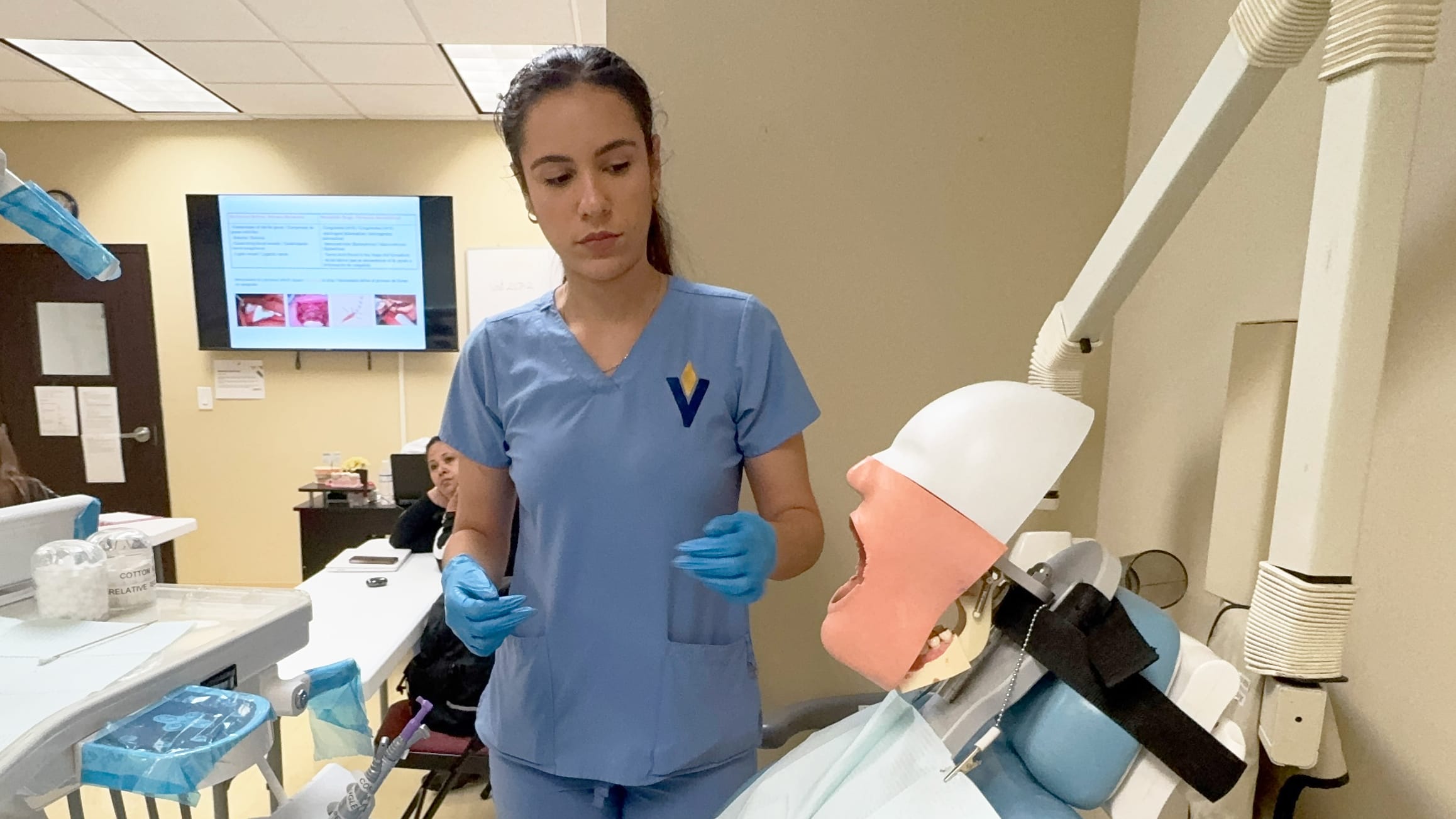
Before working with actual patients, students practice skills in simulated laboratory spaces equipped with dental operatories, typodont mannequins, and digital X-ray units. Lab coursework covers:
- Mixing and handling restorative materials (amalgams, composite resins, glass ionomer cements).
- Taking alginate impressions and pouring, trimming, and finishing plaster models.
- Positioning radiographic sensors using parallel and bisecting-angle techniques.
- Sterilizing and packaging handpieces, cassettes, and surgical instruments.
Clinical Externship Rotations
The practical phase of training involves an externship placement at a licensed dental clinic in Dallas or the surrounding metroplex. Under the direct supervision of experienced RDAs and practicing dentists, externs transition from simulated environments to real-world patient care.
Students complete between 100 and 300 hours of direct patient interaction, performing chairside four-handed dentistry, taking digital radiographs, delivering post-operative instructions, and maintaining electronic health records (EHR).
Comparing Dallas Dental Assistant Programs
The following table summarizes key features across the primary program types available in the Dallas area:
| Program Type | Typical Duration | Accreditation Body | Estimated Tuition Range | Primary Advantage |
|---|---|---|---|---|
| Community College Certificate | 9–12 Months | CODA / Regional (SACSCOC) | $2,500 – $5,000 (In-District) | Low tuition; eligible for federal financial aid and DANB CDA exam. |
| Community College Associate Degree | 2 Years | CODA / Regional (SACSCOC) | $5,500 – $9,000 (In-District) | Broader academic foundation; easier credit transfer to dental hygiene degrees. |
| Private Vocational Diploma | 8–10 Months | Institutional (ACCSC / ABHES) | $12,000 – $18,000 | Flexible scheduling, frequent start dates, dedicated career placement aid. |
| Accelerated Weekend Program | 8–12 Weeks | TSBDE Course Approval | $3,000 – $5,000 | Rapid entry into entry-level positions; minimal schedule conflict. |
Texas Board Requirements for RDA Registration
Completing a dental assistant training program is a key step toward earning your credential, but candidates must independently complete state licensing steps through the Texas State Board of Dental Examiners (TSBDE) to secure an active RDA license.
Required Examination Components
To earn the RDA designation in Texas, applicants must successfully pass a state-approved registration examination that evaluates knowledge in three vital areas:
- Radiology: Principles of radiation safety, exposure techniques, image processing, and digital sensor safety.
- Infection Control: Sterilization methods, barrier protection, surface disinfection, and bloodborne pathogen protocols.
- Jurisprudence: Understanding the Texas Dental Practice Act, legal boundaries of delegated duties, patient privacy laws, and recordkeeping standards.
Many approved Dallas educational programs incorporate the TSBDE-approved RDA examination directly into their final semester coursework.
Background Verification and CPR Certification
In addition to passing the mandatory exam, prospective RDAs in Texas must satisfy administrative safety standards:
- BLS CPR Certification: Applicants must hold a current Basic Life Support (BLS) CPR certification for Healthcare Providers from an approved provider (such as the American Heart Association or American Red Cross).
- Fingerprint Background Check: Applicants must complete a national criminal background check via IdentoGO fingerprinting services as mandated by Texas law.
- TSBDE Application Fee: Submission of the formal RDA application along with required state licensing fees.
Expanded Function Certifications
Once registered, Dallas dental assistants can enhance their employment opportunities by earning specialized function endorsements recognized by TSBDE:
- Nitrous Oxide Monitoring Certification: Requires completing a board-approved course covering physiology, sedation monitoring, and emergency response procedures.
- Pit and Fissure Sealant Certification: Available to RDAs who complete mandatory clinical hours and classroom instruction in preventive sealants.
Program Costs, Supplies, and Financial Aid Options
Understanding total program costs helps prospective students select an option that aligns with their personal budget and financial goals.
Tuition Structure Across School Types
Tuition varies substantially based on institutional oversight. Public institutions like Dallas College offer lower tuition rates for Dallas County residents. Private career schools charge higher tuition rates but frequently bundle uniforms, textbooks, testing fees, and toolkits directly into their overall program package.
Ancillary Fees and Equipment Costs
When calculating the total investment needed for a dental assisting education, applicants should account for out-of-pocket operational expenses:
- Medical Equipment & Attire: Clinical scrubs, non-marking clinic shoes, protective eyewear, and lab coats ($150–$300).
- Dental Student Kits: Typodont models, basic hand tools, and safety supplies ($200–$500).
- Health Requirements: Tuberculosis (TB) screening, Hepatitis B immunization series, tetanus updates, and drug screening ($100–$300).
- Licensing & Exam Fees: TSBDE RDA application fees, fingerprinting fees, and CPR certification courses ($150–$250).
Funding and Assistance Pathways
Students attending accredited community colleges or eligible career institutes can access federal financial aid programs by completing the Free Application for Federal Student Aid (FAFSA). Potential funding sources include:
- Federal Pell Grants: Need-based grants that do not require repayment.
- Subsidized and Unsubsidized Direct Loans: Federal student loans with regulated interest rates and flexible repayment schedules.
- Workforce Solutions Greater Dallas: State and regional workforce grants through the Workforce Innovation and Opportunity Act (WIOA) for eligible unemployed or underemployed individuals.
- Institutional Payment Plans: Monthly interest-free installment plans provided directly by training facilities.
Career Opportunities and Advancement in the DFW Metroplex
The Dallas-Fort Worth region features a robust healthcare market with high demand for credentialed dental assistants. Expanding population growth across Dallas, Collin, and Tarrant counties continues to drive demand for pediatric, orthodontic, endodontic, periodontic, and general dental services.
Entry-Level RDA:
- Specialty Assistant (Orthodontics, Oral Surgery, Endodontics)
- Office Management (Front Desk Coordinator, Billing Specialist, Practice Manager)
- Advanced Clinical (Dental Hygienist - Requires AAS Degree & RDH License)
According to data from the U.S. Bureau of Labor Statistics, employment for dental assistants nationwide is projected to grow steadily, driven by an aging population and an increased emphasis on preventive oral care. In the DFW area, competitive compensation packages often include medical benefits, paid time off, and tuition assistance for continuing education.
Starting as an RDA also serves as a common stepping stone toward higher-level careers in healthcare:
- Dental Hygiene Transition: Clinical credits and foundational science courses earned during a CODA-accredited program can help satisfy prerequisites for associate-level Dental Hygiene (RDH) programs.
- Practice Administration: Experienced assistants with strong communication skills frequently transition into office management, treatment coordination, and dental insurance billing roles.
Frequently Asked Questions
How long does it take to become a dental assistant in Dallas?
Program lengths vary by format. Accelerated certificate options take 8 to 12 weeks, traditional diploma programs at vocational schools take 8 to 10 months, and community college certificate programs require 9 to 12 months. An Associate of Applied Science (AAS) degree takes approximately two years of full-time study.
Can I practice as a dental assistant in Texas without state registration?
Yes, but your clinical duties will be strictly limited. Unregistered dental assistants cannot take X-rays, which most employers require. To expose radiographs and perform advanced intraoral tasks, you must earn Registered Dental Assistant (RDA) status through the Texas State Board of Dental Examiners (TSBDE).
Are online dental assistant programs valid in Texas?
Hybrid programs that teach didactic theory online are acceptable, provided they include required hands-on clinical laboratory instruction and externship hours. Fully online programs that lack physical lab components do not provide the practical skills needed to pass hands-on competency checks or meet clinical externship standards.
How much does a dental assistant program cost in Dallas?
In-district tuition at public institutions like Dallas College typically ranges between $2,500 and $5,000. Private vocational schools charge between $12,000 and $18,000, while short-term accelerated weekend programs cost between $3,000 and $5,000.
What is the difference between an RDA and a CDA credential?
An RDA (Registered Dental Assistant) is a mandatory state-level credential issued by the Texas State Board of Dental Examiners (TSBDE) to practice regulated duties within Texas. A CDA (Certified Dental Assistant) is a national credential administered by the Dental Assisting National Board (DANB) that demonstrates advanced competency and requires graduation from a CODA-accredited program or extensive documented work experience.
Next Steps for Prospective Dental Assisting Students
- Define Career Timeline and Budget: Decide whether your schedule requires a rapid 8-week course, a comprehensive 9-month certificate, or a 2-year degree path.
- Verify Program Approvals: Confirm that the school's curriculum prepares you directly for the TSBDE RDA examination and offers hands-on clinical externship placements in Dallas clinics.
- Prepare Admission Requirements: Update required immunizations (Hepatitis B, TB test), obtain your high school diploma or GED transcripts, and enroll in a BLS CPR course.
- Submit the FAFSA or Explore Payment Plans: Identify financial assistance through federal aid programs, local WIOA workforce funding, or institutional payment arrangements before enrollment deadlines.
Image Gallery