Fact-Checking Michael Jackson’s Vitiligo Diagnosis: Evidence and Medical History
Yes, Michael Jackson had vitiligo, a chronic skin condition characterized by the loss of pigment. His diagnosis was officially confirmed by the 2009 autopsy report following his death, which noted patches of depigmentation across his b...
Yes, Michael Jackson had vitiligo, a chronic skin condition characterized by the loss of pigment. His diagnosis was officially confirmed by the 2009 autopsy report following his death, which noted patches of depigmentation across his body. While public speculation often suggested cosmetic intent, medical evidence confirms the change in his appearance was due to this autoimmune disorder.
Contents
Understanding Vitiligo: The Condition Behind the Controversy
To understand the transformation of Michael Jackson’s appearance, one must first understand the clinical nature of vitiligo. Vitiligo is an autoimmune disorder in which the body’s immune system mistakenly attacks and destroys melanocytes, the cells responsible for producing skin pigment (melanin). When these cells die or stop functioning, the skin loses its color, resulting in milky-white patches.
The condition is not contagious or life-threatening, but it carries a significant psychological burden, particularly for individuals with darker skin tones where the contrast is most visible. Vitiligo often follows a "Koebner phenomenon" pattern, where trauma or stress to the skin can trigger new patches. For a global superstar constantly under the heat of stage lights and the scrutiny of cameras, managing such a condition presented unique professional and personal challenges.
By 2026, medical research has further clarified the genetic predispositions associated with vitiligo, noting that it often co-occurs with other autoimmune issues. In Jackson’s case, the progression was universal, eventually affecting nearly his entire body, which dictated his medical and cosmetic choices in the later decades of his life.
The Timeline of Michael Jackson’s Changing Appearance
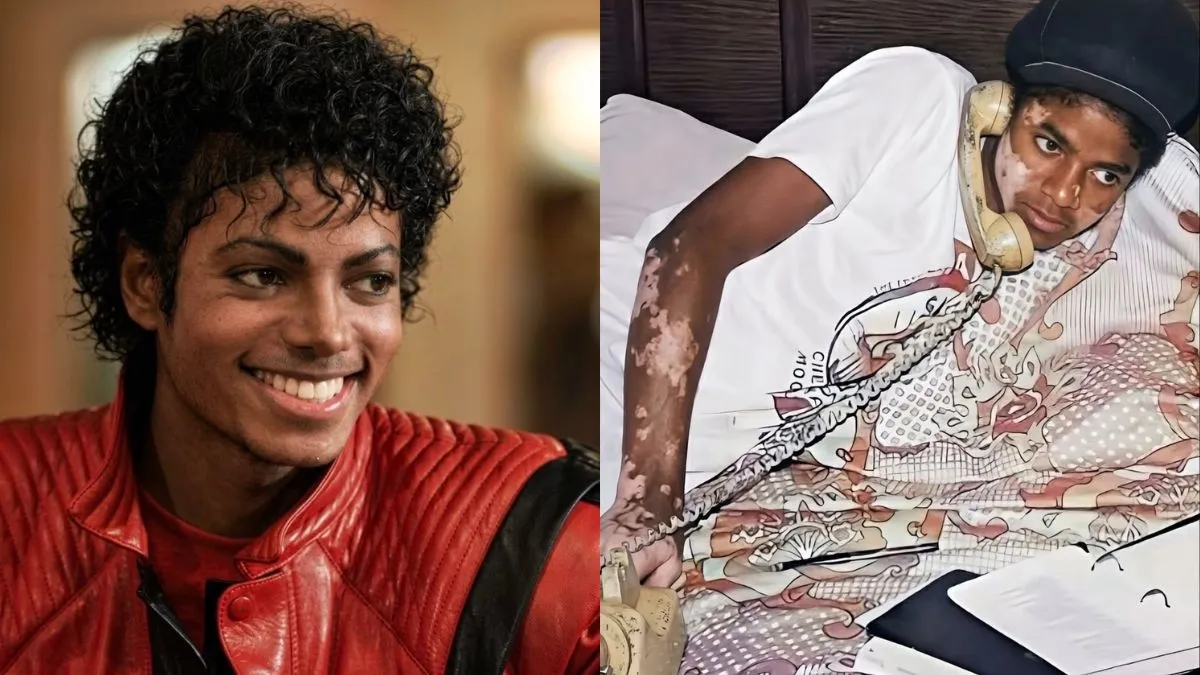
Michael Jackson’s skin color change did not happen overnight; it was a progressive transformation that spanned three decades. Examining his career milestones provides a visual map of the disease’s progression.
The Early 1980s: The Initial Signs
During the Off the Wall (1979) and early Thriller (1982) eras, Jackson’s skin tone was consistent with his heritage. However, according to his longtime makeup artist Karen Faye, patches began appearing on his hands and face during the mid-1980s. Initially, the strategy was to use dark makeup to cover the white patches, maintaining his natural complexion.
The Late 1980s: The Transition Point
By the Bad era (1987), the depigmentation had become more aggressive. The contrast between his original skin tone and the spreading white patches made it increasingly difficult to use dark cover-up. It was during this period that his makeup shifted toward lighter shades. This was not an attempt to "change races" but a practical response to the fact that it is significantly easier to cover remaining dark spots with light makeup than it is to cover large white areas with dark makeup.
The 1990s and Beyond: Universal Vitiligo
By the time of the Dangerous (1991) and HIStory (1995) albums, Jackson appeared almost entirely white. At this stage, he had likely reached a state of "vitiligo universalis," where the majority of his natural pigment was gone. To achieve a uniform look, he utilized FDA-approved depigmenting creams to remove the remaining islands of brown skin.
Medical Evidence: The 2009 Autopsy Report
For decades, skeptics argued that Jackson’s skin color was a result of elective cosmetic bleaching. However, the definitive answer arrived in the aftermath of his death on June 25, 2009. The Los Angeles County Coroner’s Office conducted a thorough autopsy, led by Dr. Christopher Rogers.
The official autopsy report explicitly stated: "Some areas of the skin appear light and others appear dark... consistent with vitiligo." The report noted depigmentation on his chest, abdomen, face, and arms. This medical document serves as the primary forensic evidence debunking the myth that his appearance change was purely a matter of personal preference or "wanting to be white."
Furthermore, the search of Jackson’s home following his death revealed significant quantities of Benoquin (monobenzone) and Hydroquinone. These are prescription-strength topical creams used specifically for the treatment of extensive vitiligo. These medications do not "whiten" skin in the traditional cosmetic sense; they finish the process of depigmentation that the disease has already started, creating an even, albeit pale, skin tone.
The Role of Lupus in Michael Jackson’s Skin Health
Vitiligo was not the only condition affecting Jackson’s skin. He was also diagnosed with discoid lupus erythematosus (DLE). While systemic lupus affects internal organs, discoid lupus is primarily a skin condition that causes inflammation, sores, and scarring.
Jackson’s lupus was particularly evident on his scalp and nose. The scalp issues were exacerbated by the horrific second-degree burns he suffered during the 1984 Pepsi commercial shoot. DLE causes the skin to be extremely sensitive to ultraviolet (UV) light. This explains many of Jackson’s "eccentric" behaviors, such as his frequent use of umbrellas, wide-brimmed hats, and masks when outdoors. Exposure to the sun would not only cause painful lupus flare-ups but would also cause the remaining pigmented areas of his vitiligo-affected skin to darken, making his appearance even more blotchy and difficult to manage with makeup.
Why Did Michael Jackson’s Skin Turn White?
The transition to a white skin tone was a calculated medical decision driven by the severity of his vitiligo. When a patient loses more than 50% of their pigment, dermatologists often recommend depigmentation therapy.
| Aspect | Vitiligo-Induced Depigmentation | Cosmetic Skin Whitening |
|---|---|---|
| Primary Goal | To even out skin tone due to pigment loss. | To lighten the natural complexion for aesthetic reasons. |
| Medical Necessity | Often recommended for "Universal Vitiligo." | Purely elective/cosmetic. |
| Primary Agent | Monobenzone (Benoquin) - Permanent. | Glutathione or mild Hydroquinone - Often temporary. |
| Resulting Appearance | Milky white, lacking all melanin. | Paler version of the original skin tone. |
| Sun Sensitivity | Extreme; no natural protection from UV. | Variable, but generally less than depigmented skin. |
By choosing depigmentation, Jackson was opting for the most efficient way to maintain a uniform appearance. The process involves chemically destroying the remaining melanocytes. While it resulted in a pale complexion, it was a treatment for a disfiguring disease rather than a rejection of his racial identity.
Public Disclosure and the 1993 Oprah Winfrey Interview
Despite his fame, Jackson remained largely silent about his condition until the early 1990s. The mounting tabloid pressure and accusations regarding his race reached a breaking point, leading to his landmark 1993 interview with Oprah Winfrey.
During the live broadcast, which reached an estimated 90 million viewers, Jackson stated: "I have a skin disorder that destroys the pigmentation of my skin. It’s something I cannot help. But when people make up stories that I don’t want to be who I am, it hurts me." He expressed frustration that the media focused on his skin color rather than the medical reality, pointing out that no one criticized people for tanning their skin to become darker.
Despite this public admission, the "bleaching" narrative persisted in pop culture. This highlights the significant stigma surrounding vitiligo and the difficulty the general public had in comprehending such a dramatic physical transformation.
Common Misconceptions and Cultural Impact
The cultural impact of Michael Jackson’s vitiligo cannot be overstated. As one of the most famous Black men in the world, his changing face became a flashpoint for discussions on race, identity, and plastic surgery.
- The "Desire to be White" Myth: Many critics argued that Jackson’s surgeries and skin change were a rejection of his Blackness. However, his family and close associates have consistently noted that he was proud of his heritage and that the skin change was a distressing medical burden.
- The Plastic Surgery Confusion: Jackson did undergo multiple rhinoplasties and other cosmetic procedures. These surgeries often became conflated with his skin condition in the public's mind, leading to the belief that his entire face was a "work of art" rather than a combination of elective surgery and an involuntary autoimmune disease.
- The "Wacko Jacko" Tabloid Persona: The media used his masks and umbrellas—which were medical necessities due to his lupus and vitiligo—to paint him as eccentric or "crazy."
By 2026, the global medical community has used Jackson’s case as a primary example of the psychological effects of vitiligo. Organizations like the Vitiligo Society and the Global Vitiligo Foundation have worked to educate the public, using the high-profile nature of his struggle to bring awareness to the millions of others living with the condition.
FAQ
When was Michael Jackson officially diagnosed with vitiligo?
While he reportedly began noticing symptoms in the early 1980s, he did not publicly disclose the diagnosis until February 1993 during his interview with Oprah Winfrey. His dermatologist, Dr. Arnold Klein, later confirmed that he had diagnosed Jackson with vitiligo and lupus in 1983.
Is vitiligo hereditary in the Jackson family?
Vitiligo can have a genetic component. Michael’s eldest son, Prince Jackson, has been photographed with what appears to be vitiligo patches under his arms, suggesting a hereditary link, although Prince has generally kept his medical life private.
Can vitiligo be cured?
As of 2026, there is no absolute "cure" for vitiligo that restores pigment permanently for everyone, though various treatments like JAK inhibitors, light therapy, and skin grafting can help manage the condition. For Michael Jackson, the condition was so advanced that depigmentation was the only viable way to achieve a uniform skin tone.
Did Michael Jackson use bleaching creams?
Yes, but the context is crucial. He used prescription-strength monobenzone (Benoquin) to depigment his remaining brown skin patches. This is a standard medical treatment for universal vitiligo, not a cosmetic procedure for someone with healthy skin.
Did Michael Jackson's autopsy prove he had vitiligo?
Yes. The autopsy report conducted by the Los Angeles County Coroner in 2009 explicitly confirmed the presence of vitiligo, noting "patchy areas of light and dark skin" on his body. This remains the most definitive proof of his condition.
Final Recommendation
For those researching Michael Jackson’s medical history, it is essential to distinguish between elective cosmetic procedures and involuntary medical conditions. To gain a full understanding of his health, consult the 2009 Los Angeles County Coroner’s Autopsy Report and records from his longtime dermatologist, Dr. Arnold Klein. These primary sources confirm that while Jackson did undergo plastic surgery, the change in his skin color was the result of a documented autoimmune disease. Understanding the severity of vitiligo and lupus provides the necessary context for his use of umbrellas, masks, and depigmentation treatments.
Image Gallery