ISO 14001 2015 Checklist: A Comprehensive Guide to All Shall Statements
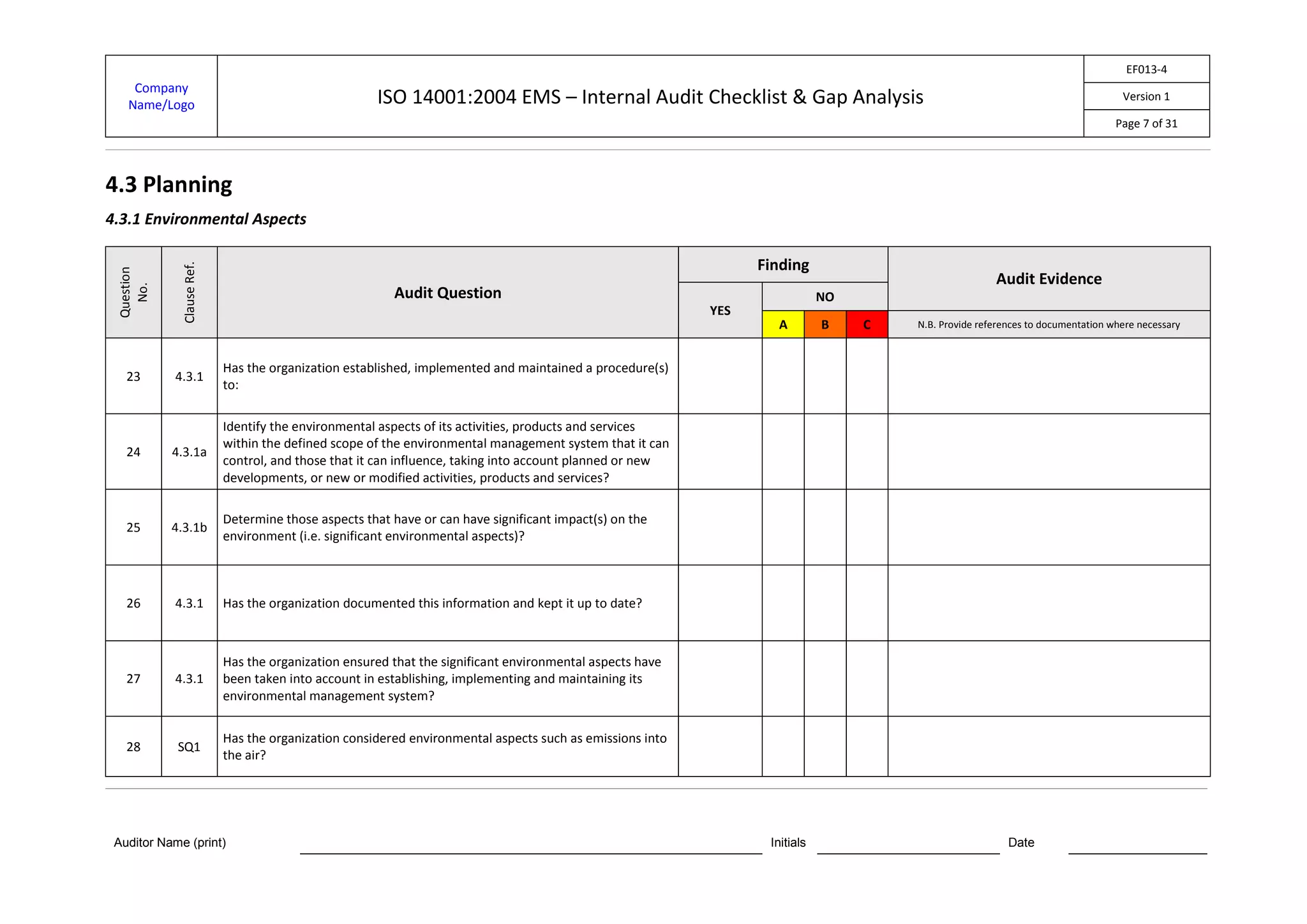
An ISO 14001 2015 checklist of all "shall" statements is a foundational compliance tool for organizations implementing or maintaining an Environmental Management System (EMS). It provides a line-by-line audit of the mandatory requireme...
An ISO 14001 2015 checklist of all "shall" statements is a foundational compliance tool for organizations implementing or maintaining an Environmental Management System (EMS). It provides a line-by-line audit of the mandatory requirements—denoted by the word "shall" in the official ISO standard—necessary to achieve certification, ensure operational sustainability, and minimize environmental risk.
Contents
Understanding the ISO 14001 2015 "Shall" Structure
The ISO 14001:2015 standard is the internationally recognized framework for Environmental Management Systems. Unlike guidelines or best practices, the clauses containing the auxiliary verb "shall" represent strict, auditable requirements. When an auditor from an accredited certification body evaluates your organization, they are assessing evidence that each of these "shall" statements has been addressed.
In total, the 2015 revision contains over 100 individual "shall" requirements spread across ten clauses. These range from high-level leadership commitments in Clause 5 to operational planning in Clause 8 and performance evaluation in Clause 9. For an organization, a checklist of these statements serves as a roadmap to ensure no mandatory element is overlooked, preventing non-conformities during internal audits or external certification assessments.
Prerequisites for EMS Implementation
Before applying an ISO 14001 checklist to your operations, your organization must satisfy a few preliminary conditions. ISO 14001 is a voluntary standard, but once adopted, it requires top-down commitment.
- Organizational Context: You must identify internal and external issues relevant to your purpose that affect your ability to achieve intended outcomes.
- Stakeholder Analysis: Determine the needs and expectations of interested parties (e.g., regulators, local communities, shareholders).
- Scope Definition: Establish the physical and organizational boundaries of your EMS.
- Leadership Commitment: Environmental management cannot be delegated solely to a facilities manager; it requires active engagement from top management.
Breakdown of "Shall" Statements by Clause
To effectively use a checklist, you must understand the distribution of requirements throughout the standard. The following table summarizes the focus areas for each major section where "shall" statements reside.
| Clause | Focus Area | Key "Shall" Requirement Objective |
|---|---|---|
| 4 | Context of the Organization | Determining scope and identifying external/internal issues. |
| 5 | Leadership | Defining environmental policy and assigning roles/authorities. |
| 6 | Planning | Identifying environmental aspects and compliance obligations. |
| 7 | Support | Ensuring resource availability, competence, and awareness. |
| 8 | Operation | Establishing operational controls and emergency preparedness. |
| 9 | Performance Evaluation | Monitoring, measuring, and conducting internal audits. |
| 10 | Improvement | Addressing non-conformity and pursuing continual improvement. |
Operationalizing Your Compliance Checklist
Using a checklist effectively requires more than checking boxes; it requires documentation. For every "shall" statement, you must produce objective evidence that the requirement is satisfied.
1. Evidence Collection
For each requirement, identify which document serves as your "proof." For example, if Clause 5.2 requires a "shall" regarding an environmental policy, your evidence is the signed, approved policy document. If Clause 9.1 requires the monitoring of environmental performance, your evidence might be data logs, spreadsheets, or software reports.
2. Gap Analysis
When you first run your checklist against current operations, you will inevitably find gaps. Prioritize these based on risk. A failure to identify a legal "compliance obligation" (Clause 6.1.3) is a high-risk non-conformity, whereas a minor documentation error in training records (Clause 7.2) is lower risk but still requires correction.
3. Verification and Internal Audit
The checklist should be used periodically—not just before the annual external audit. Use it during your internal audits to ensure the system hasn't drifted. If a process changes, revisit the "shall" statements in Clause 8 to ensure operational controls remain effective.
Common Pitfalls and Troubleshooting
Organizations often struggle with the transition from theoretical compliance to practical application. Here are common areas where the "shall" statements are frequently misinterpreted:
- Over-Documentation: The standard requires "documented information," but it does not require an exhaustive library of procedures for every minor action. Focus on documentation that provides value or is explicitly mandated.
- Neglecting Clause 6.1.2 (Environmental Aspects): A common mistake is focusing only on the "negative" environmental aspects (e.g., waste, emissions). The standard requires a systematic identification of all aspects, including those under abnormal or emergency conditions.
- Lack of Communication: Clause 7.4 requires a communication process. Many organizations establish internal communication channels but forget to establish a process for external communication regarding their environmental performance.
Frequently Asked Questions (FAQ)
Does ISO 14001:2015 require a printed PDF checklist? No, the standard does not mandate a specific format. While a PDF checklist is a popular, portable tool for auditors and managers, you can store your compliance evidence in a digital dashboard, a quality management software platform, or a physical binder. The key is that the evidence must be retrievable and verifiable.
What is the difference between a "shall" and a "should"? In ISO terminology, "shall" indicates a requirement that must be met to claim conformity. "Should" indicates a recommendation, and "may" indicates a permission. Your checklist should focus exclusively on "shall" statements.
How often should I review the "shall" statements? You should conduct a formal internal audit at least annually. However, if your organizational context changes (e.g., you launch a new product line or move facilities), you should revisit the checklist immediately to ensure your environmental aspects and compliance obligations are still valid.
Can I create my own "shall" checklist? Yes. In fact, creating your own checklist based on the official ISO 14001:2015 document is recommended. It allows you to tailor the checklist to your organization’s specific terminology and operational structure. Ensure you reference the original text of the standard to avoid misinterpreting the requirements.
What happens if I cannot fulfill a "shall" statement? If you cannot meet a requirement, you are in a state of "non-conformity." You must document the issue, perform a root-cause analysis, and implement a corrective action to bring the system back into compliance. You cannot claim certification until all mandatory "shall" requirements are satisfied.
Practical Next Actions
- Acquire the Standard: If you do not have it, purchase the official ISO 14001:2015 text directly from the International Organization for Standardization or your national standards body. Do not rely solely on summary PDFs.
- Create a Matrix: Build a spreadsheet where the columns are: Clause Number, Shall Requirement Text, Status (Compliant/Non-Compliant), Evidence/Reference, and Responsible Party.
- Assign Owners: Assign each clause to a specific department head. For example, the HR manager should own the "Competence" (Clause 7.2) requirements, while the Operations Manager should own the "Operational Control" (Clause 8.1) requirements.
- Perform a Mock Audit: Use your checklist to perform a full mock audit at least three months before your scheduled certification audit. This allows time to correct any found gaps.
By systematically addressing every "shall" statement, you not only satisfy the requirements for ISO 14001 certification but also build a robust system that genuinely improves your organization's environmental impact and operational efficiency.
Image Gallery