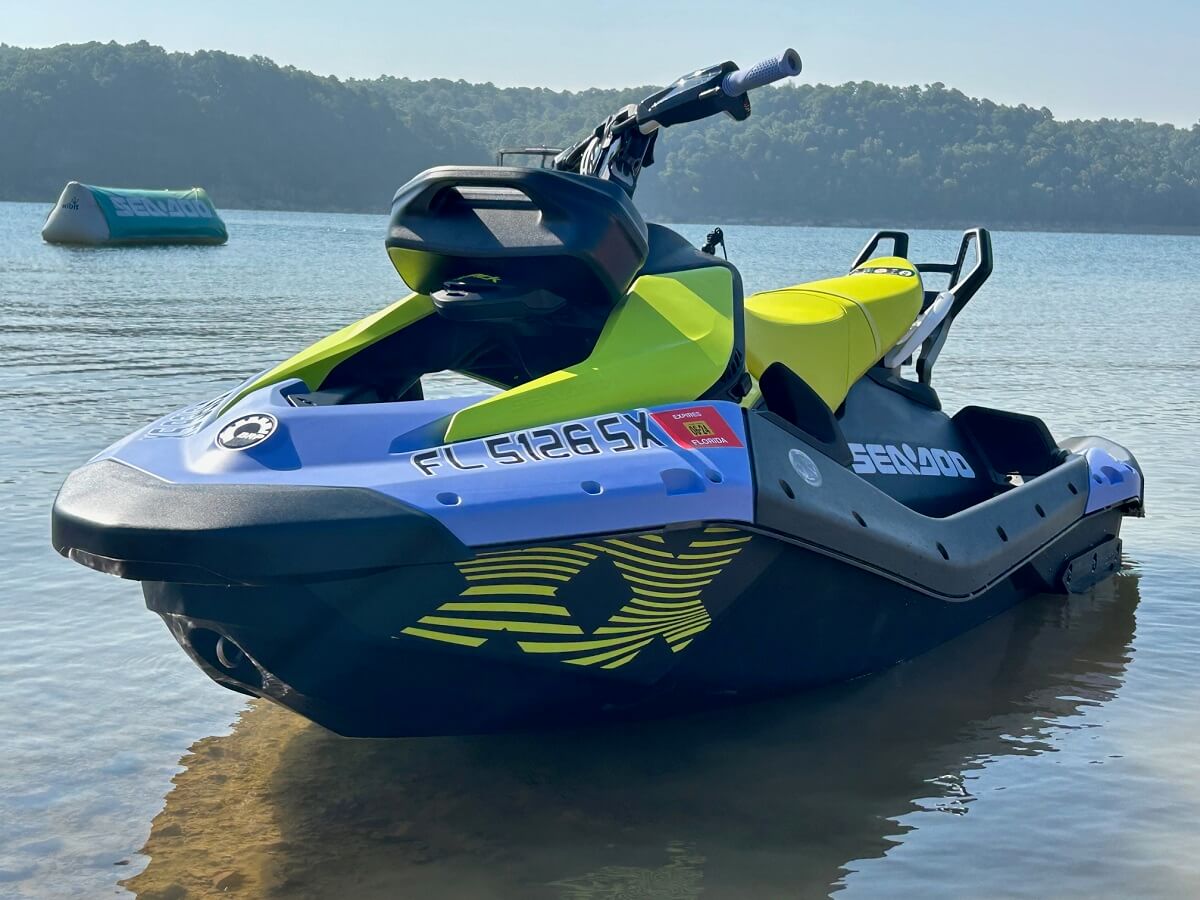
Why the Spark Trixx Top Speed Matters for You
The Sea-Doo Spark Trixx top speed—typically hovering around 40 to 50 mph depending on whether you choose the 60-hp or 90-hp Rotax 900 ACE engine variant—matters because this watercraft is engineered for freestyle agility rather than ra...
The Sea-Doo Spark Trixx top speed—typically hovering around 40 to 50 mph depending on whether you choose the 60-hp or 90-hp Rotax 900 ACE engine variant—matters because this watercraft is engineered for freestyle agility rather than raw offshore velocity. Understanding how this velocity profile impacts handling, fuel efficiency, safety, and recreational performance ensures you choose the right model for your specific on-water riding style.
Contents
Navigating the world of personal watercraft (PWC) often leads buyers to hyper-focus on maximum speed metrics, frequently overlooking how power delivery and hull design interact. The Sea-Doo Spark Trixx occupies a distinct niche in the personal watercraft market. It is not designed to compete with supercharged musclecraft that cross the 70 mph threshold. Instead, its velocity ceiling is intentionally capped to optimize its signature acrobatic capabilities, such as tail stands, spinning, and tight-radius carving.
Evaluating why this performance envelope matters requires a close look at engineering specifications, rider safety, local waterways regulations, and practical operational costs. Whether you are an experienced freestyler or a weekend enthusiast looking for a nimble water toy, examining the mechanics of velocity on the Spark Trixx clarifies what to expect when you pull the throttle.
Engineering and Performance Specifications of the Spark Trixx
To understand the velocity metrics of the Sea-Doo Spark Trixx, you must examine the powerplant hidden beneath its lightweight Polytec hull. The watercraft is available with two distinct engine configurations: the Rotax 900 ACE-60 and the Rotax 900 ACE-90. Both are naturally aspirated, three-cylinder, four-stroke engines designed for maximum reliability and fuel economy rather than brute-force acceleration.
The 60-horsepower variant reaches a top speed of approximately 40 mph (64 km/h), whereas the 90-horsepower variant pushes the envelope closer to 48–50 mph (77–80 km/h under optimal conditions and depending on rider weight and water surface state). While these figures might seem modest compared to high-end performance watercraft, they are meticulously calculated to match the vessel's ultralight dry weight—which starts at roughly 429 pounds (195 kg) for the 2-up model.
| Engine Option | Horsepower | Estimated Top Speed | Dry Weight (Approx.) | Best Suited For |
|---|---|---|---|---|
| Rotax 900 ACE-60 | 60 hp | 40 mph (64 km/h) | 429 lbs (195 kg) | Casual cruising, fuel economy, beginner riders |
| Rotax 900 ACE-90 | 90 hp | 48–50 mph (77–80 km/h) | 448 lbs (203 kg) | Freestyle stunts, aggressive carving, rapid acceleration |
The relationship between weight and velocity dictates the craft's responsiveness. Because the hull utilizes Polytec—a recyclable, low-density, high-impact composite material—the power-to-weight ratio on the 90-hp model delivers instant throttle response. This immediacy is far more critical for executing dynamic maneuvers than maintaining a high terminal velocity across open, choppy water.
How Top Speed Shapes Freestyle Agility and Trick Execution
The primary reason the Spark Trixx top speed matters to potential buyers is its direct correlation with stunt performance. Watercraft designed for triple-digit speeds feature long, heavy hulls optimized for straight-line stability in rough offshore conditions. Conversely, the Spark Trixx features a short, lightweight hull combined with an extended-range Variable Trim System (VTS).
When you engage in freestyle riding—such as tail stands, where the bow points straight up into the air—a massive top speed is actually counterproductive. The 48–50 mph ceiling allows the rider to snap the throttle, manipulate the VTS to direct the pump nozzle upward, and pivot the craft without losing control or dealing with the overwhelming momentum associated with heavier vessels.
Furthermore, the integration of step-up wedges and adjustable handlebars allows the rider to leverage this moderate velocity profile. You can transition smoothly from a low-speed pivot to rapid, responsive acceleration within seconds. If the craft were engineered to reach 65 or 70 mph, the hull geometry would need to be longer and heavier, destroying the playful, skateboard-like maneuverability that defines the Trixx identity.
Practical Implications for Daily Riding and Waterway Regulations
Beyond stunt capabilities, the velocity profile of the Spark Trixx dictates where and how you can safely operate the watercraft on public lakes, rivers, and coastal bays. Many recreational waterways enforce strict speed limits, "no-wake" zones, or horsepower restrictions, particularly in congested coves and near shorelines.
Operating a watercraft with a manageable top speed offers several practical advantages:
- Enhanced Maneuverability in Tight Spaces: Navigating narrow channels, crowded marinas, and busy launch ramps is significantly less intimidating when your maximum velocity is capped at 50 mph, allowing for predictable deceleration and tighter turning radiuses.
- Compliance with Local Ordinances: Many inland lakes limit watercraft speeds to 35 or 45 mph during peak hours, meaning the Spark Trixx operates comfortably within legal thresholds without requiring constant throttle modulation.
- Reduced Fatigue: Fighting the wind resistance and G-forces of a 70+ mph supercharged watercraft takes a heavy toll on your forearms, core, and back. The moderate velocity of the Spark Trixx allows for longer, more comfortable riding sessions without physical exhaustion.
Fuel Efficiency, Maintenance, and Operating Costs
Another vital dimension of the Spark Trixx velocity profile is its impact on your wallet. High-performance, supercharged watercraft demand premium high-octane fuel and consume vast quantities of it in a short span, often burning upwards of 15 to 20 gallons per hour under wide-open throttle.
The naturally aspirated Rotax 900 ACE engines in the Spark lineup are renowned for their exceptional efficiency. Running regular unleaded fuel (87 octane) and consuming a fraction of the fuel per hour compared to their supercharged counterparts, these watercraft keep operational costs remarkably low.
Because the engine is not subjected to the extreme thermal and mechanical stresses of pushing a heavy hull at 70 mph, long-term maintenance requirements are simplified. Routine winterization, oil changes, and spark plug replacements are straightforward, reducing time in the service shop and maximizing your time on the water.
Safety Considerations for Beginners and Intermediate Riders
Safety remains a paramount concern for anyone stepping onto a personal watercraft. High-speed crashes on the water carry severe physical risks, and novice riders frequently overestimate their ability to control a high-velocity vessel when unexpected obstacles or boat wakes appear.
The 48–50 mph threshold of the Spark Trixx provides a forgiving learning curve. While 50 mph on the water is still fast enough to require a properly secured personal flotation device (PFD) and defensive driving awareness, it does not possess the terrifying initial acceleration lag of a tournament-grade performance machine.
However, riders must remain mindful of the craft's lightweight nature. Because the Spark Trixx is remarkably light, it reacts more noticeably to choppy water, crosswinds, and large boat wakes than heavier fiberglass watercraft. Understanding this dynamic ensures you adjust your speed to match water conditions, preventing unexpected rollovers or loss of control during sharp turns.
Comparing the Spark Trixx to Other PWC Categories
To fully appreciate why the Spark Trixx velocity metrics matter, it helps to contextualize the model against other segments of the personal watercraft market. The industry generally categorizes PWC into three distinct tiers: recreation-lite, luxury/touring, and performance/supercharged.
| PWC Category | Average Top Speed | Typical Dry Weight | Primary Use Case |
|---|---|---|---|
| Recreation-Lite (e.g., Spark Standard) | 40–45 mph | 410–425 lbs | Affordable family fun, casual riding |
| Freestyle/Agility (e.g., Spark Trixx) | 40–50 mph | 429–448 lbs | Stunts, acrobatic maneuvers, playful handling |
| Luxury/Touring | 55–65 mph | 800–900+ lbs | Long-distance cruising, stability, comfort |
| High-Performance (Supercharged) | 65–70+ mph | 800–850+ lbs | Offshore racing, maximum acceleration, high-speed thrills |
As this comparison illustrates, choosing a Spark Trixx means deliberately trading away top-end highway speeds on the water in exchange for unmatched agility, lower purchase and operating costs, and specialized freestyle performance.
Frequently Asked Questions
Can you modify a Spark Trixx to go faster?
Yes, aftermarket performance companies offer ECU remaps, intake upgrades, and impeller modifications that can push the 90-hp model past 55 mph. However, modifying the craft to achieve higher speeds can compromise its factory warranty, reduce low-end throttle responsiveness designed for stunts, and alter hull stability during sharp turns.
Is the 60-hp or 90-hp Spark Trixx better for stunts?
The 90-hp model is universally recommended for serious stunt riding. The extra horsepower provides the instant torque required to break the water surface tension during tail stands and power out of sharp 360-degree spins, whereas the 60-hp model can feel underpowered when trying to lift the bow.
How does rider weight affect the Spark Trixx top speed?
Because the Spark Trixx is an ultralight watercraft, total payload weight significantly impacts performance. A heavier rider or carrying a passenger on the 2-up model will noticeably reduce acceleration and shave 2 to 4 mph off the maximum terminal velocity compared to a lighter rider operating solo.
Is the Spark Trixx stable in rough open ocean water?
The Spark Trixx is primarily designed for calm lakes, rivers, and protected coastal bays. While it can handle light chop, its short, lightweight hull is not optimized for rough offshore conditions where heavier touring watercraft excel at cutting through heavy waves smoothly.
Does the Spark Trixx require premium fuel?
No. Both the 60-hp and 90-hp Rotax 900 ACE engines are engineered to run efficiently on standard, 87-octane regular unleaded gasoline, making fuel stops considerably more affordable compared to high-performance supercharged watercraft.
Final Recommendation
When shopping for a personal watercraft, do not let raw top-speed numbers dictate your purchasing decision. If your goal is to blast across open lakes at 70 mph, look toward the performance and luxury segments. However, if you prioritize playful handling, budget-friendly maintenance, fuel efficiency, and the ability to execute freestyle maneuvers, the Sea-Doo Spark Trixx top speed is precisely calibrated to deliver maximum on-water fun without unnecessary complications. Assess your local waterways, test ride both engine variants if possible, and choose the model that aligns with your active riding ambitions.
Image Gallery