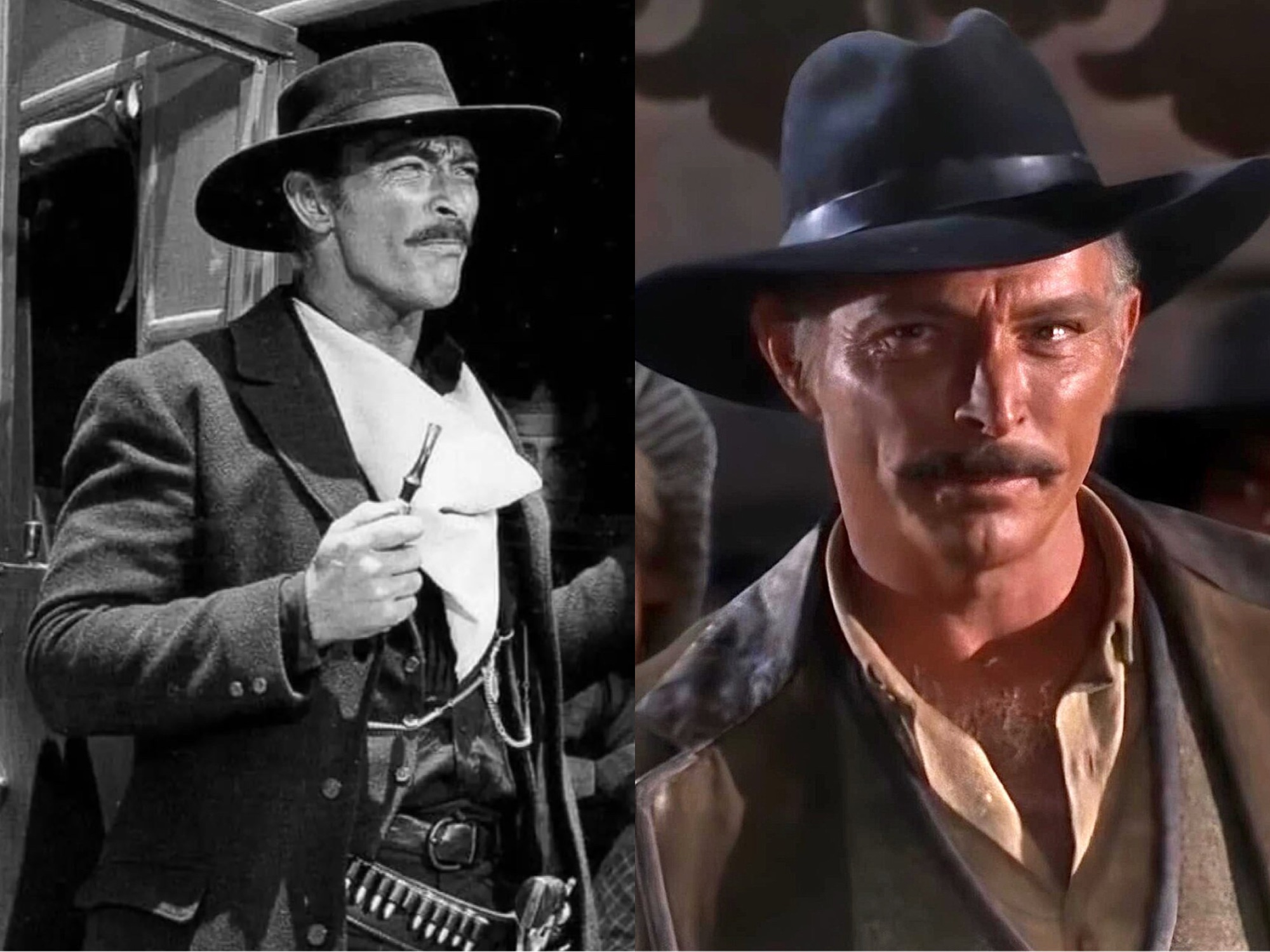
Lee Van Cleef’s Children: A Comprehensive Look at the Family Life of a Cinematic Legend
Lee Van Cleef, the iconic "Bad" from The Good, the Bad and the Ugly, had three children: Alan Van Cleef, Deborah Van Cleef, and David Van Cleef. While he was famous for his piercing gaze and villainous roles, his children grew up large...
Lee Van Cleef, the iconic "Bad" from The Good, the Bad and the Ugly, had three children: Alan Van Cleef, Deborah Van Cleef, and David Van Cleef. While he was famous for his piercing gaze and villainous roles, his children grew up largely out of the Hollywood spotlight, maintaining a private family life.
Contents
Lee Van Cleef remains one of the most recognizable faces in the history of cinema, particularly within the Spaghetti Western genre. Known for his sharp features and the "hawk-like" intensity of his eyes, Van Cleef’s onscreen persona often suggested a man of singular, cold focus. However, behind the cinematic facade of bounty hunters and outlaws was a father and a husband whose family life saw the same highs and lows as his tumultuous career. To understand Lee Van Cleef’s children, one must look at the three distinct eras of his life, marked by his three marriages and the shifting fortunes of his acting profession.
The Early Years and the Marriage to Patsy Ruth Kahle
Lee Van Cleef, born Clarence LeRoy Van Cleef Jr. in 1925, married his first wife, Patsy Ruth Kahle, in 1943. At the time, Van Cleef was far from the international film star he would eventually become. He was a young man serving in the United States Navy during World War II, stationed on minesweepers like the USS Incredible. It was during this period of early adulthood and post-war transition that his first two children were born.
The marriage to Patsy Ruth lasted roughly 15 years, ending in divorce in 1958. This period was characterized by Van Cleef’s early struggles to break into acting after a brief career in accounting and regional theater. For his children, these years represented a time when their father was a working character actor, often cast in small, uncredited roles or as the "heavy" in television Westerns.
Alan Van Cleef
Born in 1947, Alan Van Cleef is the eldest of Lee Van Cleef’s children. Growing up in the late 1940s and 1950s, Alan witnessed the initial rise of his father’s career. During Alan’s childhood, Lee moved the family to California to pursue film work more aggressively. Unlike many "Hollywood brats" of the era, Alan and his siblings were raised with a degree of separation from the industry. Alan has remained remarkably private throughout his adult life, eschewing the acting profession that made his father a household name. As of 2026, biographical records indicate that Alan has maintained a life away from the cameras, occasionally appearing in family retrospectives or providing insights for historical documentaries about his father’s legacy.
Deborah Van Cleef
Born in 1948, Deborah Van Cleef followed shortly after Alan. Her childhood coincided with Lee Van Cleef’s "Golden Age" as a secondary villain in classic American Westerns, such as High Noon (1952). Deborah, like her brother, did not pursue a career in the performing arts. Friends of the family have often noted that Lee was protective of his children’s privacy, a trait that Deborah has honored into her senior years. The stability of her early life was challenged by the heavy workload her father took on to support the family, which often required him to be on location for long stretches.
The Transition Period and Second Marriage to Joan Marjorie Drane
The year 1958 was a turning point for the Van Cleef family. Lee divorced Patsy Ruth Kahle, and that same year, he was involved in a severe car accident that nearly ended his career. The accident resulted in a shattered knee, and doctors told him he would never ride a horse again—a potential death knell for a Western actor. This period of physical recovery and professional decline marked a shift in his family dynamics.
In 1960, Lee Van Cleef married his second wife, Joan Marjorie Drane. It was during this marriage that his third child was born. This era of Van Cleef’s life was one of profound struggle; he was largely unemployed in the film industry and took up work as an interior decorator and house painter to provide for his family.
David Van Cleef
Born in 1960, David Van Cleef is the youngest of Lee’s children. David’s early years were spent in a household that was significantly different from the one Alan and Deborah experienced. During David’s infancy, Lee was struggling to find work. However, when David was approximately five years old, his father’s career underwent a miraculous resurrection. Director Sergio Leone cast Lee Van Cleef in For a Few Dollars More (1965), catapulting him to international superstardom.
As a result, David grew up as the son of a major international star. While his older siblings remembered the "struggling character actor" version of their father, David’s perspective was shaped by his father’s status as a legendary figure in European and American cinema. Despite this, David followed the family trend of avoiding the limelight. He did not seek out the Hollywood lifestyle, choosing instead a path of private citizenship.
The Final Marriage to Barbara Havelone
In 1974, Lee Van Cleef’s marriage to Joan Drane ended in divorce. Two years later, in 1976, he married Barbara Havelone, a concert pianist. This marriage lasted until Lee’s death in 1989. While the couple did not have any children together, Barbara became an integral part of the extended Van Cleef family.
During this final chapter, Lee Van Cleef’s children were adults, establishing their own lives. Barbara and Lee lived in Oxnard, California, and by all accounts, the family remained close. Barbara was instrumental in managing Lee’s health and career during his later years, as he suffered from heart disease. The children remained a supportive presence, though they continued to stay out of the tabloid headlines, a testament to the grounded upbringing Lee and his wives provided.
Comparative Overview of Lee Van Cleef's Family Structure
To better understand the timeline of Lee Van Cleef’s family and the origins of his children, the following table summarizes his marriages and offspring:
| Spouse | Marriage Years | Children | Primary Context of the Era |
|---|---|---|---|
| Patsy Ruth Kahle | 1943–1958 | Alan (b. 1947), Deborah (b. 1948) | Early career; Navy service; High Noon era. |
| Joan Marjorie Drane | 1960–1974 | David (b. 1960) | Career decline, recovery from accident, and the Leone "Renaissance." |
| Barbara Havelone | 1976–1989 | None | International stardom; focus on health and hobby arts. |
Domestic Life vs. Screen Persona
One of the most frequent questions from film historians is how Lee Van Cleef’s children perceived their father’s "mean" screen persona. In various interviews and biographical accounts, it has been noted that Van Cleef was a "gentle giant" at home. He was an avid painter and sculptor, hobbies he often shared with his children and grandchildren.
The intensity seen in films like The Big Gundown or Death Rides a Horse was a professional tool, not a personal trait. His children grew up knowing a man who was deeply committed to his craft but who viewed acting primarily as a means to provide for his family. Because he had experienced significant financial hardship in the early 1960s, he instilled a strong work ethic in Alan, Deborah, and David. He was known to be a "no-nonsense" father, but one who was deeply affectionate and supportive of their choices to stay away from the entertainment industry.
Legacy and Estate Management in 2026
As of 2026, the legacy of Lee Van Cleef is managed with careful consideration for the privacy of his descendants. Because his children chose lives outside of the public eye, there is very little "celebrity gossip" associated with the Van Cleef name. This is a rarity for the family of a star of his magnitude.
The estate of Lee Van Cleef, which includes the rights to his likeness and certain archival materials, has been handled by family representatives with the goal of preserving his historical importance in cinema. Fans of the Spaghetti Western genre continue to celebrate his work through 4K restorations of his films and retrospective screenings at international film festivals. For Alan, Deborah, and David, their father’s legacy is not just one of film reels and posters, but of a man who overcame significant physical and professional adversity to ensure his family was cared for.
Frequently Asked Questions
Did any of Lee Van Cleef’s children become actors?
No, none of Lee Van Cleef’s three children—Alan, Deborah, or David—pursued careers in acting. They chose to lead private lives away from the Hollywood film industry. While they have occasionally participated in documentaries or interviews about their father’s life, they have never sought the spotlight for themselves.
How many times was Lee Van Cleef married?
Lee Van Cleef was married three times. His first wife was Patsy Ruth Kahle (1943–1958), his second was Joan Marjorie Drane (1960–1974), and his third was Barbara Havelone (1976–1989). He had children with his first and second wives.
Are Lee Van Cleef’s children still alive in 2026?
As of 2026, Lee Van Cleef’s children are in their 60s and 70s. While they remain very private, there have been no public reports to the contrary regarding their well-being. They continue to live out of the public eye, primarily in the United States.
Who inherited Lee Van Cleef’s estate?
Upon his death in 1989, his third wife, Barbara Havelone, was a primary beneficiary and manager of his legacy. Over time, the management of his likeness and estate has involved his children and legal representatives to ensure his cinematic contributions are preserved and respected.
Was Lee Van Cleef a "tough" father in real life?
While Lee Van Cleef was known for playing "tough" characters, his family life was reportedly characterized by warmth and creativity. He was a talented artist and a dedicated father who prioritized his family's financial security above Hollywood fame, especially after his career resurgence in the mid-1960s.
Final Recommendation for Fans and Researchers
For those interested in the personal life of Lee Van Cleef and the upbringing of his children, the best approach is to consult authoritative biographies and documentaries rather than tabloid sources. Books such as Lee Van Cleef: A Bio-Bibliography provide a deep dive into his personal history and family structure. To appreciate his legacy as a father and an actor, one should view his films not just as entertainment, but as the work of a man who spent decades perfecting a craft to support his loved ones. If you are looking for more personal anecdotes, the occasional interviews provided by his children for specialized film archives offer the most respectful and accurate glimpses into their lives.
Image Gallery