State Board of Workers’ Compensation Salary and Benefit Calculations Explained
The State Board of Workers’ Compensation (SBWC) does not pay a "salary" in the traditional sense; instead, it oversees the mandatory "indemnity benefits" paid by insurance carriers to injured employees. As of 2026, these benefits are t...
The State Board of Workers’ Compensation (SBWC) does not pay a "salary" in the traditional sense; instead, it oversees the mandatory "indemnity benefits" paid by insurance carriers to injured employees. As of 2026, these benefits are typically calculated as two-thirds (66.67%) of the worker’s average weekly wage, capped at a state-mandated maximum of $800 per week for total disability, provided the injury occurred within the current statutory period.
Contents
Understanding how the State Board of Workers' Compensation handles "salary" requires a distinction between two different perspectives: the compensation paid to injured workers (indemnity benefits) and the actual salaries of the government officials and Administrative Law Judges (ALJs) who staff the Board. For most individuals, the primary concern is how their pre-injury earnings translate into weekly checks while they are unable to work.
The Foundation of Compensation: The Average Weekly Wage (AWW)
The "salary" an injured worker receives is technically a wage replacement benefit. The starting point for every claim is the calculation of the Average Weekly Wage (AWW). This figure is not simply a reflection of your base pay; it is a comprehensive look at your earnings in the period immediately preceding the injury.
The 13-Week Rule
In most jurisdictions governed by a State Board, the AWW is determined by taking the total gross earnings of the employee for the 13 weeks immediately preceding the date of the injury. This total is then divided by 13 to reach the average. Gross earnings include:
- Regular hourly wages or base salary.
- Overtime pay.
- Performance-based bonuses.
- Tips and commissions.
- The value of "perks" such as a provided vehicle or housing, if applicable.
Alternative Calculation Methods
If an employee has not worked for substantially the whole of the 13 weeks prior to the injury, the Board employs alternative methods to ensure fairness. The "Similar Employee" rule allows the Board to look at the wages of a colleague in the same position who has worked those 13 weeks. If no such employee exists, the Board may use the full-time weekly wage the employee was contracted to receive at the time of the accident.
Types of Disability Benefits and Their Limits
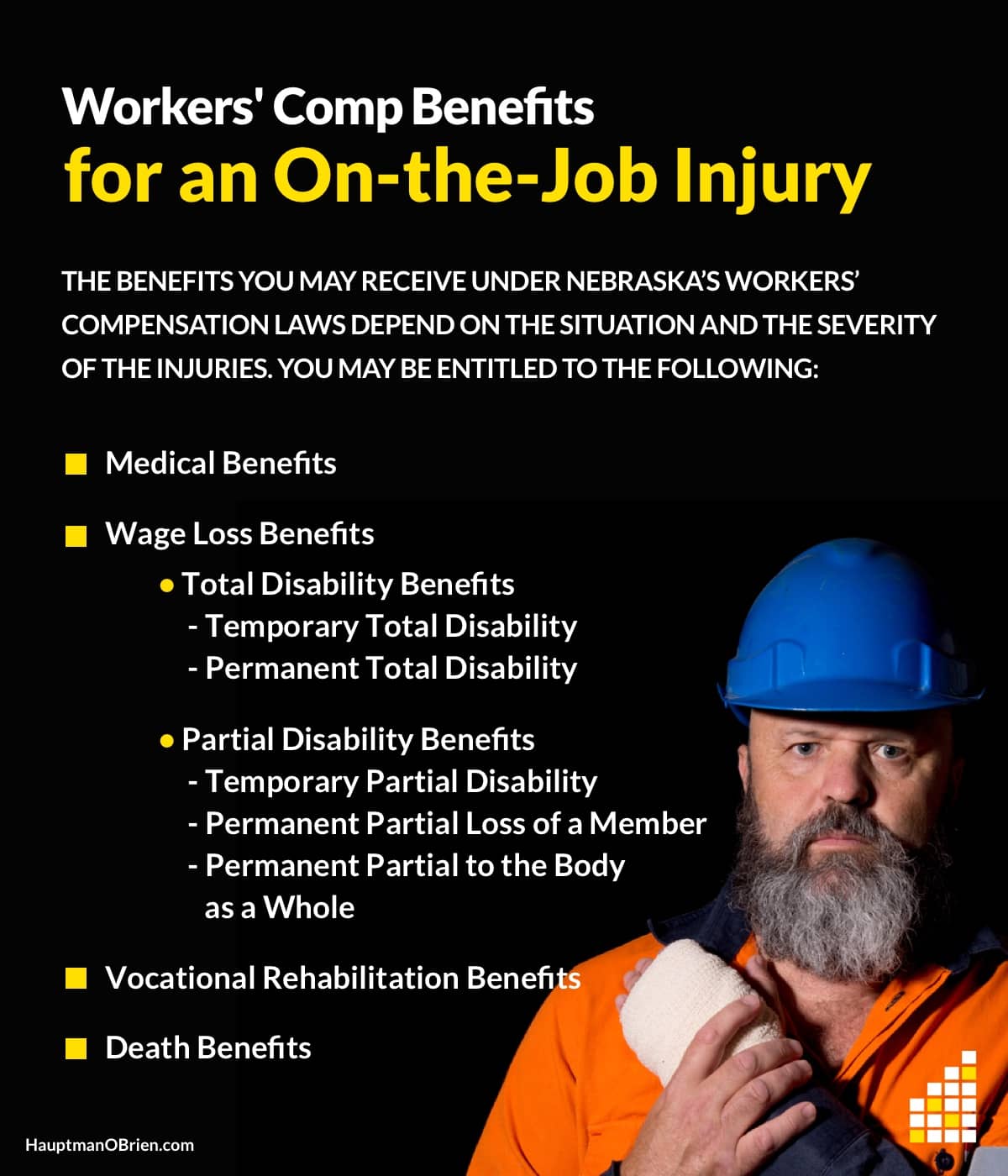
The amount of "salary" replacement provided depends on the severity of the injury and the worker's ability to return to any form of employment. The State Board categorizes these into three primary indemnity types.
Temporary Total Disability (TTD)
TTD is the most common form of benefit. It applies when a doctor determines a worker is completely unable to work for a period of time. Under 2026 guidelines, these benefits are paid at two-thirds of the AWW.
There is a critical ceiling on these payments. For example, if a worker earns $1,500 per week, two-thirds of that is $1,000. However, if the state’s maximum cap is $800, the worker will only receive $800. This cap is adjusted periodically by state legislatures to account for inflation and cost-of-living increases.
Temporary Partial Disability (TPD)
If a worker returns to a "light-duty" job that pays less than their pre-injury salary, they are entitled to TPD benefits. This benefit covers two-thirds of the difference between their old AWW and their new, lower weekly earnings. In 2026, TPD benefits are generally capped at a lower maximum (often around $533 per week in many jurisdictions) and are limited to a specific duration, such as 350 weeks from the date of injury.
Permanent Partial Disability (PPD)
PPD benefits are paid when an injury results in a permanent physical impairment, even if the worker returns to their job. The Board uses a "rating" system provided by a physician. The "salary" paid here is based on a statutory schedule that assigns a certain number of weeks of pay to specific body parts (e.g., a hand, an arm, or the "body as a whole").
2026 Benefit Caps and Statutory Limits
The following table outlines the standard compensation limits overseen by the State Board for injuries occurring in the 2026 period. Please note that these figures are based on the most recent legislative adjustments for standard jurisdictions like Georgia.
| Benefit Category | Calculation Formula | 2026 Weekly Maximum | Maximum Duration |
|---|---|---|---|
| Temporary Total (TTD) | 2/3 of AWW | $800.00 | 400 Weeks (non-catastrophic) |
| Temporary Partial (TPD) | 2/3 of Wage Gap | $533.00 | 350 Weeks |
| Permanent Partial (PPD) | (AWW x 2/3) x Rating | $800.00 | Varies by Body Part |
| Death Benefits | 2/3 of AWW | $800.00 | 400 Weeks (or $320k cap) |
Why is Workers' Comp Only Two-Thirds of My Salary?
A common point of frustration for claimants is the "one-third" reduction in their income. There are two primary reasons why the State Board limits benefits to 66.67% of the gross AWW:
- Tax-Exempt Status: Under the Internal Revenue Code, workers' compensation indemnity benefits are generally not taxable at the federal or state level. Because you are not paying income tax, Social Security, or Medicare taxes on these benefits, the "net" take-home pay often ends up being very close to the net pay you received while working a full salary.
- Incentivizing Return to Work: The legislative intent behind the reduction is to provide a safety net while maintaining a financial incentive for the employee to return to the workforce once they are medically cleared.
Administrative Salaries: What the Board Staff Earns
While the term "salary" usually refers to claimant benefits, some search intent focuses on the employees of the State Board itself. The SBWC is a state agency, and its staff are state employees whose salaries are public record.
Administrative Law Judges (ALJs)
ALJs are the officials who preside over hearings and disputes. As of 2026, an ALJ's salary typically ranges from $115,000 to $170,000 annually, depending on their years of service, jurisdiction, and seniority. They are required to be licensed attorneys and often have significant experience in workers' compensation law before being appointed to the Board.
Board Members and Directors
The executive leadership of a State Board—usually consisting of three members appointed by the Governor—earns salaries that are often aligned with other high-level state department heads. These figures typically range from $160,000 to $200,000 per year.
Support Staff and Mediators
The Board also employs mediators, researchers, and administrative assistants. Mediators, who help resolve cases without a formal hearing, typically earn between $75,000 and $105,000.
Factors That Can Reduce Your Benefit Amount
It is a misconception that once the 2/3 calculation is made, the check remains static. Several factors can legally reduce the "salary" you receive from the insurance company:
- Child Support Liens: Workers' compensation benefits are subject to income withholding for court-ordered child support.
- Social Security Offsets: If you are receiving Social Security Disability Insurance (SSDI), your workers' comp benefits may be "offset" or reduced to ensure the combined total does not exceed 80% of your pre-disability earnings.
- Unemployment Benefits: In many states, you cannot draw full unemployment and full TTD benefits simultaneously; one will typically offset the other.
- Light-Duty Refusal: If your employer offers a "suitable" light-duty job within your medical restrictions and you refuse it, the Board may authorize the insurance carrier to suspend your weekly payments entirely.
How to Dispute an Incorrect Salary Calculation
If you believe your weekly benefit has been calculated incorrectly, you have the right to challenge the insurance carrier’s filing with the State Board.
- Request a Wage Statement (Form WC-6): The insurance company is usually required to file a wage statement showing exactly how they calculated your AWW. You are entitled to a copy.
- Audit Your 13-Week History: Compare the insurance company's numbers with your own pay stubs. Ensure they included bonuses and overtime.
- File a Motion or Hearing Request: If the carrier refuses to adjust the rate, you must file a formal notice (such as a Form WC-14) to request a hearing before an Administrative Law Judge.
- Evidence Submission: At the hearing, you will need to provide documentary evidence (W-2s, pay stubs, or bank deposits) to prove that your "salary" should be higher than what is currently being paid.
Frequently Asked Questions
Is the workers' comp salary calculation based on my gross or net pay?
The calculation is always based on your gross pay (pre-tax earnings). The State Board uses the gross average weekly wage because the resulting benefits are paid to you tax-free, which accounts for the difference between gross and net income.
What happens if I was working two jobs at the time of my injury?
This depends on your specific state's "concurrent employment" laws. In many jurisdictions, if the injury occurred at Job A, you can only include the wages from Job B in your AWW calculation if both jobs are "similar" in nature or if the state law specifically allows for the aggregation of all income.
Does the State Board pay me directly?
No. The State Board of Workers' Compensation is a regulatory and judicial body. The actual "salary" checks are issued by your employer's workers' compensation insurance carrier or a Third-Party Administrator (TPA). The Board only steps in to resolve disputes or enforce payments.
Will my weekly benefit increase if the state raises the maximum cap next year?
Generally, no. Your maximum benefit rate is "locked in" based on the law that was in effect on the date of your injury. Even if the state legislature increases the maximum cap from $800 to $850 in 2027, if you were injured in 2026, your cap remains $800 for the duration of that claim.
Are bonuses included in the salary calculation?
Yes, any performance or production bonuses earned during the 13 weeks prior to the injury should be included in the total gross earnings before dividing by 13. Annual bonuses are sometimes prorated over the entire year to find the weekly value.
Practical Recommendation
If you are beginning a claim in 2026, immediately gather your pay stubs for the four months preceding your injury. Do not rely solely on the insurance company’s calculation of your average weekly wage. Even a small error of $50 in your calculated AWW can lead to a significant loss of income over a multi-year recovery period. If the math does not align with your actual earnings, consult an attorney or contact the State Board's enforcement division to request a formal wage audit.
Image Gallery