Do You Need Scaffolding to Have Solar Panels Installed? Costs, Rules, and Safety in 2026
In 2026, the short answer is almost always yes. For the vast majority of residential and commercial roof-mounted solar installations, scaffolding is a legal and safety requirement. It provides a stable working platform for installers t...
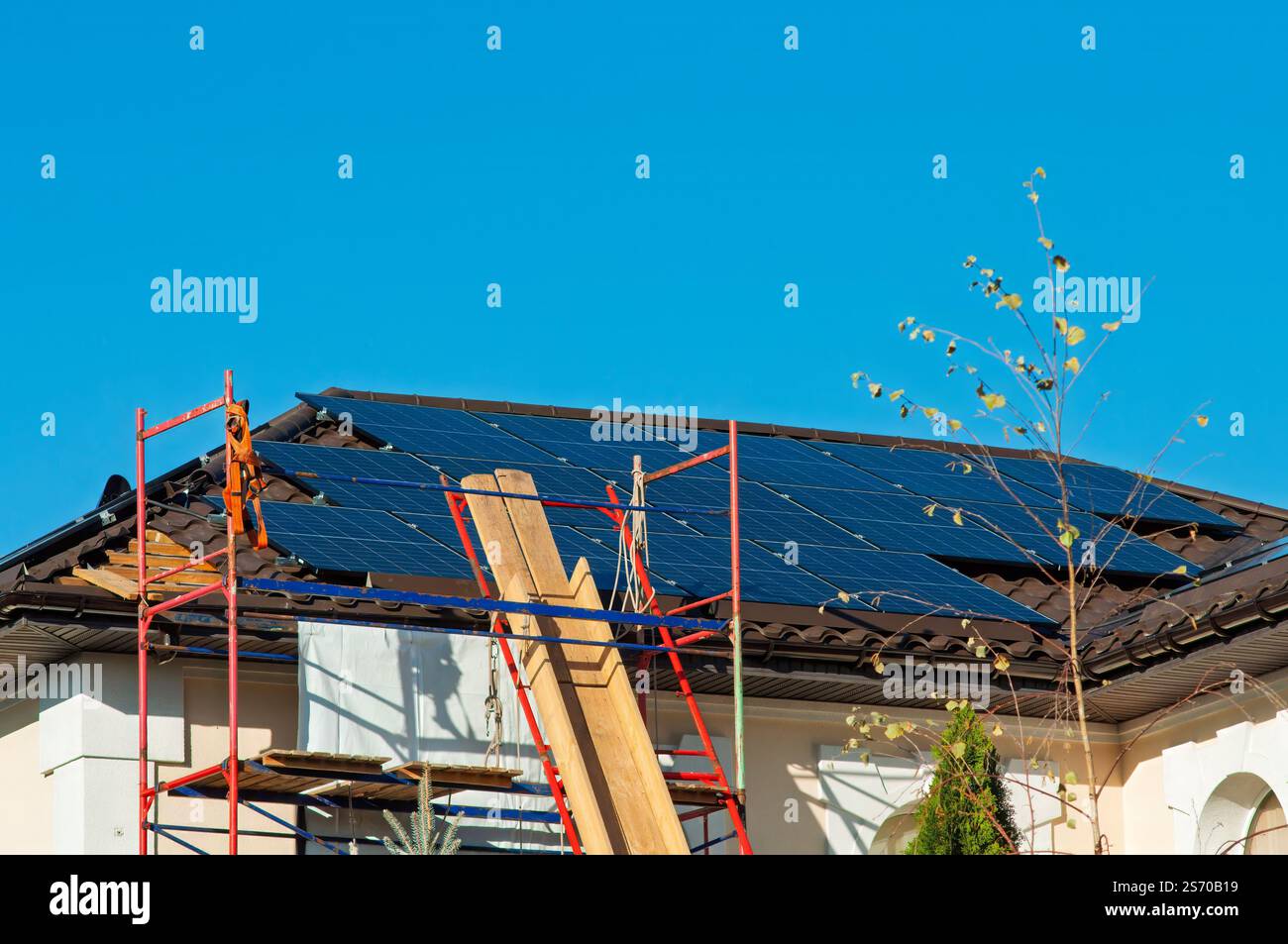
In 2026, the short answer is almost always yes. For the vast majority of residential and commercial roof-mounted solar installations, scaffolding is a legal and safety requirement. It provides a stable working platform for installers to handle heavy panels, prevents life-threatening falls, and ensures compliance with strict modern health and safety regulations.
Contents
As solar technology continues to evolve in 2026, with more efficient and often larger modules becoming the standard, the logistics of installation have become more complex. While some homeowners view scaffolding as an unnecessary additional expense, it is the foundation of a professional, insured, and safe installation process. Understanding why it is used, what it costs, and when exceptions might apply is essential for any property owner planning to transition to renewable energy.
The Legal and Regulatory Framework for Working at Height
The primary reason scaffolding is non-negotiable for most solar projects is the legal framework surrounding "working at height." In many jurisdictions, including the United Kingdom and various European nations, the Work at Height Regulations (such as the 2005 UK directive, which remains the gold standard in 2026) mandate that employers do everything "reasonably practicable" to prevent anyone from falling.
For a solar installation, this typically means providing a collective safeguard. Unlike a harness (which is a personal safeguard and only helps after a fall has occurred), scaffolding prevents the fall from happening in the first place.
Liability and Insurance Risks
If an installer attempts to fit solar panels using only ladders and falls, the consequences for the homeowner can be significant. Most professional solar installation companies carry Public Liability Insurance that is strictly conditional on following safety protocols. If they bypass scaffolding to cut costs and an accident occurs, their insurance may be voided. Furthermore, as the property owner, you have a "duty of care" to ensure that any work carried out on your premises is done safely. Engaging a company that ignores scaffolding requirements could lead to legal complications or delays if local building inspectors or safety officials halt the project.
Why Solar Panels Specifically Require Scaffolding
Solar panels are unique construction components. Unlike a small satellite dish or a minor roof repair, solar modules present specific physical challenges that make ladders or simple towers insufficient.
- Weight and Dimensions: A standard residential solar panel in 2026 typically weighs between 18kg and 25kg (40-55 lbs) and measures roughly 1.7 to 2 square meters. Carrying these up a ladder is physically demanding and balance-breaking. Scaffolding allows installers to pass panels up safely or use integrated hoists.
- Wind Loading: Even on a relatively calm day, a solar panel acts like a sail. A sudden gust of wind can easily pull an installer off a ladder if they are holding a panel. A scaffold platform with secure handrails provides the necessary bracing to manage these forces.
- Duration of Work: Solar installations are not "five-minute jobs." A typical 4kW to 8kW system can take one to two days to mount the rails, run the wiring, and secure the panels. Working on a pitched roof for eight hours requires a level of stability that only a scaffold platform can provide.
- Panel Precision: Solar panels must be aligned perfectly on the mounting rails to ensure maximum efficiency and aesthetic appeal. Having a flat, stable surface to stand on allows installers to use both hands for precision leveling and torque-setting the clamps.
When Can You Avoid Scaffolding?
While scaffolding is the standard, there are specific scenarios in 2026 where alternative access methods are acceptable or even preferred.
Flat Roof Installations
If you have a flat-roofed property or a commercial warehouse, traditional "independent tied scaffolding" (the kind built from the ground up) may not be necessary. If the roof has a permanent, high-quality parapet wall that meets safety height requirements, it may serve as sufficient edge protection. However, if the edge is unprotected, installers will still need to erect temporary edge protection or a perimeter scaffold.
Ground-Mounted Systems
If you are installing solar panels on the ground (common for rural properties with large gardens or "solar farms"), scaffolding is obviously not required. These installations use a frame anchored into the earth, and work is conducted at or near ground level, removing the "at height" risk entirely.
Mobile Elevating Work Platforms (MEWPs)
In some cases, particularly for commercial buildings or unique architectural designs, a "cherry picker" or scissor lift might be used instead of fixed scaffolding. These are often used when the ground below cannot support a scaffold structure or when the installation is very high but concentrated in a small area. However, MEWPs require a licensed operator and can often be more expensive to hire daily than a week of scaffolding.
Low-Level "Bungalow" Installations
For a single-story bungalow where the eaves are very low, a specialized "tower scaffold" or a simplified "Easi-Dec" system might be sufficient. These are quicker to assemble than full-scale scaffolding but still provide a guarded platform that is much safer than a ladder.
Scaffolding Costs and Logistics in 2026
Scaffolding costs are usually factored into your total solar quote, but it is helpful to know the breakdown. In 2026, labor costs and material transport remain the primary drivers of scaffolding pricing.
| Property Type | Estimated Scaffolding Cost (2026) | Typical Duration | Notes |
|---|---|---|---|
| Bungalow (1 Story) | £400 – £700 | 2-3 Days | May use a mobile tower or simplified system. |
| Semi-Detached (2 Stories) | £800 – £1,200 | 3-5 Days | Requires front or rear elevation coverage. |
| Detached House (2 Stories) | £1,000 – £1,800 | 3-5 Days | May require "wrapping" multiple sides for large arrays. |
| 3-Story Townhouse | £1,500 – £2,500 | 5-7 Days | Increased complexity due to height and narrow access. |
| Commercial / Industrial | £3,000+ | Variable | Often involves specialized edge protection and hoists. |
Note: Prices are estimates based on standard 2026 market rates and may vary significantly by region and site complexity.
Why the Cost Varies
- Accessibility: If the scaffolding needs to be built over a conservatory, a narrow alleyway, or a public pavement (which requires a local council permit), the price will increase.
- Duration: Most scaffolders include a "hire period" (usually 2 to 4 weeks). If your solar installation is delayed by weather, you shouldn't see an immediate price hike unless it exceeds the hire period.
- Safety Features: Items like "rubbish chutes," specialized hoists for the panels, or safety netting can add to the total.
Common Mistakes: The Danger of "Ladder-Only" Companies
In 2026, as the solar market remains competitive, you may encounter "cowboy" installers who offer a significantly lower price by promising to install "off the ladder." This should be a major red flag for several reasons:
- Voided Warranties: Some solar panel manufacturers specify in their installation manuals that the panels must be installed according to local safety codes. If a panel is damaged during a "ladder" install (e.g., a micro-crack caused by an installer bumping it against the rungs), your warranty could be voided.
- Incomplete Inspection: It is much harder for an installer to properly inspect your roof tiles or flashing for damage when they are clinging to a ladder. This often leads to leaks months after the installation is complete.
- Regulatory Fines: In many regions, health and safety inspectors have the authority to fine both the contractor and, in rare cases, the homeowner if they witness unsafe work practices that endanger the public.
The Installation Process: Integrating Scaffolding
To manage your expectations, here is how the scaffolding timeline usually interacts with your solar installation:
- Site Survey: Your solar provider visits to measure the roof and assess ground conditions for the scaffolding.
- Scaffold Erection: Usually happens 1–2 days before the solar team arrives. You do not need to be home, but the scaffolders will need access to the perimeter of the building.
- Solar Installation: The installers use the platform to quickly and safely mount the system. They will often use the scaffold rails to secure their tools and components.
- Inspection: Once the panels are live, a final check of the roof-work is done from the scaffold.
- Dismantling: The scaffolding is usually removed within 48 hours of project completion.
Frequently Asked Questions
Can I hire my own scaffolding to save money?
You can, but it is generally discouraged. Solar installers often have preferred scaffolding partners who know exactly where the platform needs to be positioned (e.g., just below the eaves) to make the installation efficient. If you hire your own and it is at the wrong height, the installers may refuse to work, leading to double-booking fees.
Does scaffolding damage my driveway or garden?
Professional scaffolders use "sole boards" (thick wooden planks) to distribute the weight of the poles and prevent them from sinking into grass or cracking driveway tiles. In 2026, many companies also use rubberized feet for sensitive surfaces like porcelain paving.
What if I have a conservatory in the way?
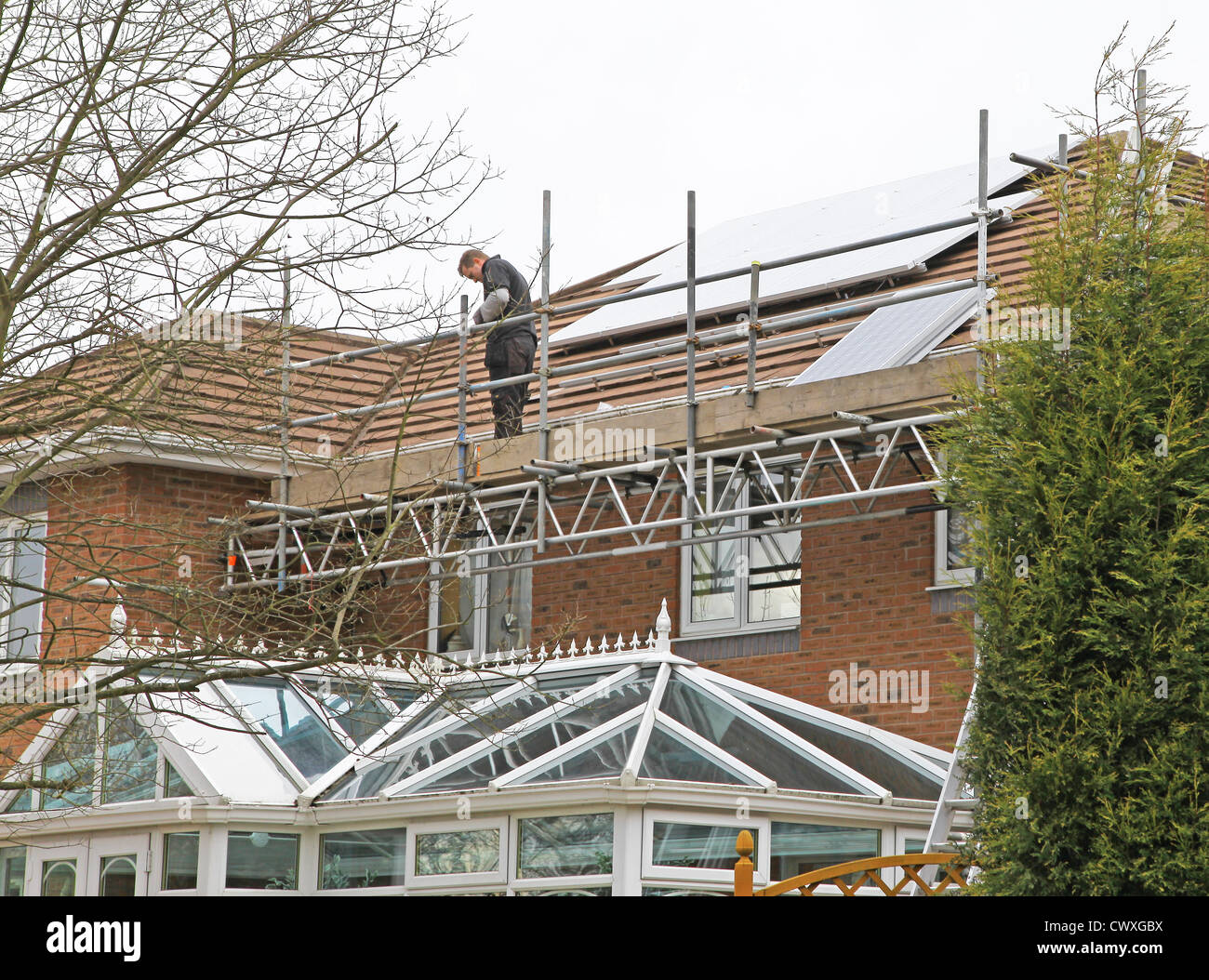
Scaffolders use "bridging" or "spans." They build the structure around the conservatory and use heavy-duty beams to create a platform above it without putting any weight on the conservatory glass or frame. This is a routine procedure but does add to the cost.
Can solar panels be installed using a cherry picker instead of scaffolding?
While possible, it is rarely practical for residential homes. A cherry picker (MEWP) requires a large, flat, stable surface to park on and can block access for neighbors. Furthermore, you cannot easily "pass" panels from a cherry picker to the roof as safely as you can from a scaffold platform.
Is scaffolding required for solar thermal (hot water) panels?
Yes. Solar thermal collectors are often heavier and more fragile than photovoltaic (PV) panels because they contain fluid-filled tubes. The need for a stable working platform is even more critical for these systems.
Final Recommendation
When planning your solar transition in 2026, treat scaffolding as a mandatory safety component, not an optional extra. While it represents a portion of your upfront investment, the protection it offers your property, the installers, and your long-term peace of mind is invaluable. Always ensure your solar quote explicitly includes scaffolding costs, and verify that the scaffolding company is fully insured and qualified. Skipping this step is a risk that simply isn't worth taking in the modern energy landscape.
Image Gallery