How Do I Transfer My IRA to Another Bank? A Step-by-Step Guide
Transferring an Individual Retirement Account (IRA) to another financial institution is a standard process that allows you to consolidate your assets, access different investment products, or take advantage of better fee structures. By...
Transferring an Individual Retirement Account (IRA) to another financial institution is a standard process that allows you to consolidate your assets, access different investment products, or take advantage of better fee structures. By executing a direct "trustee-to-trustee" transfer, you can move your retirement funds without incurring taxes or early withdrawal penalties, ensuring your savings continue to grow tax-advantaged.
Contents
Understanding the Mechanics of an IRA Transfer
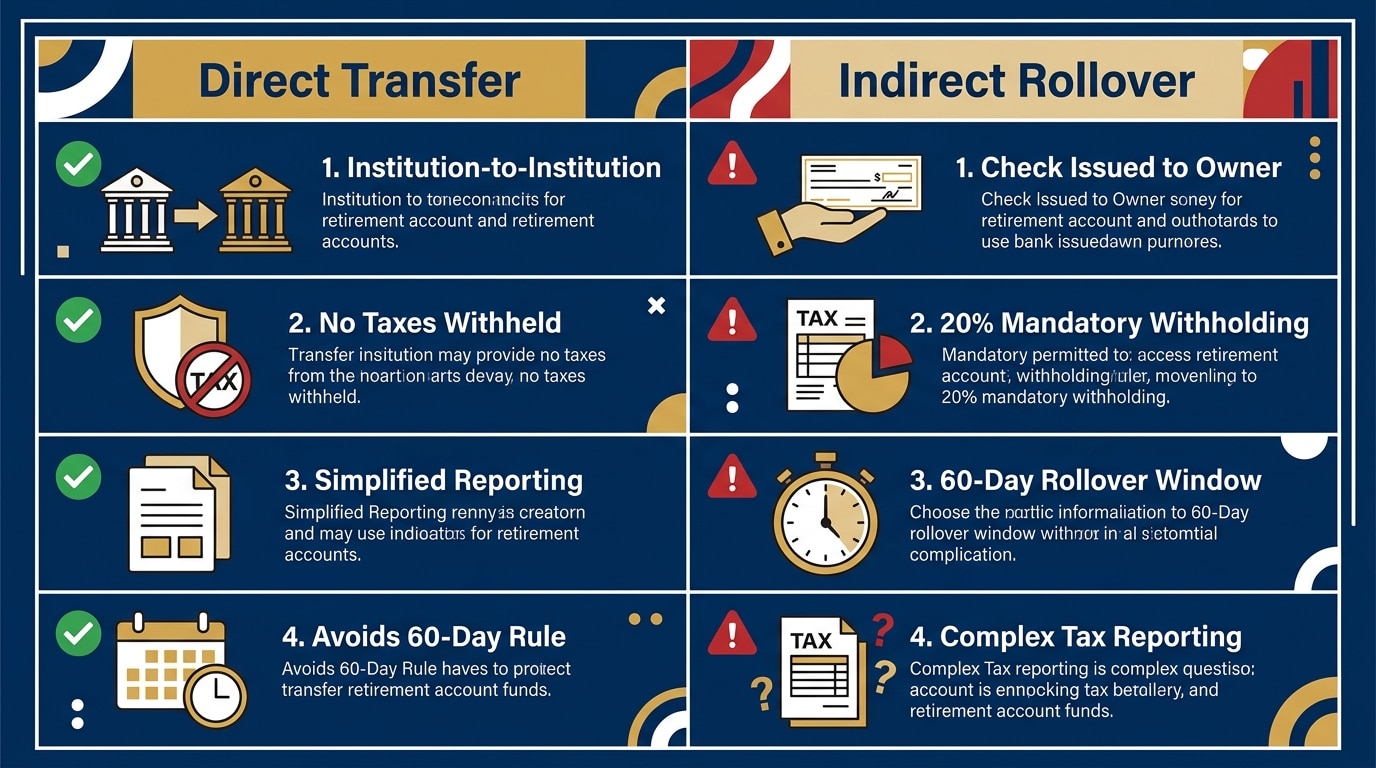
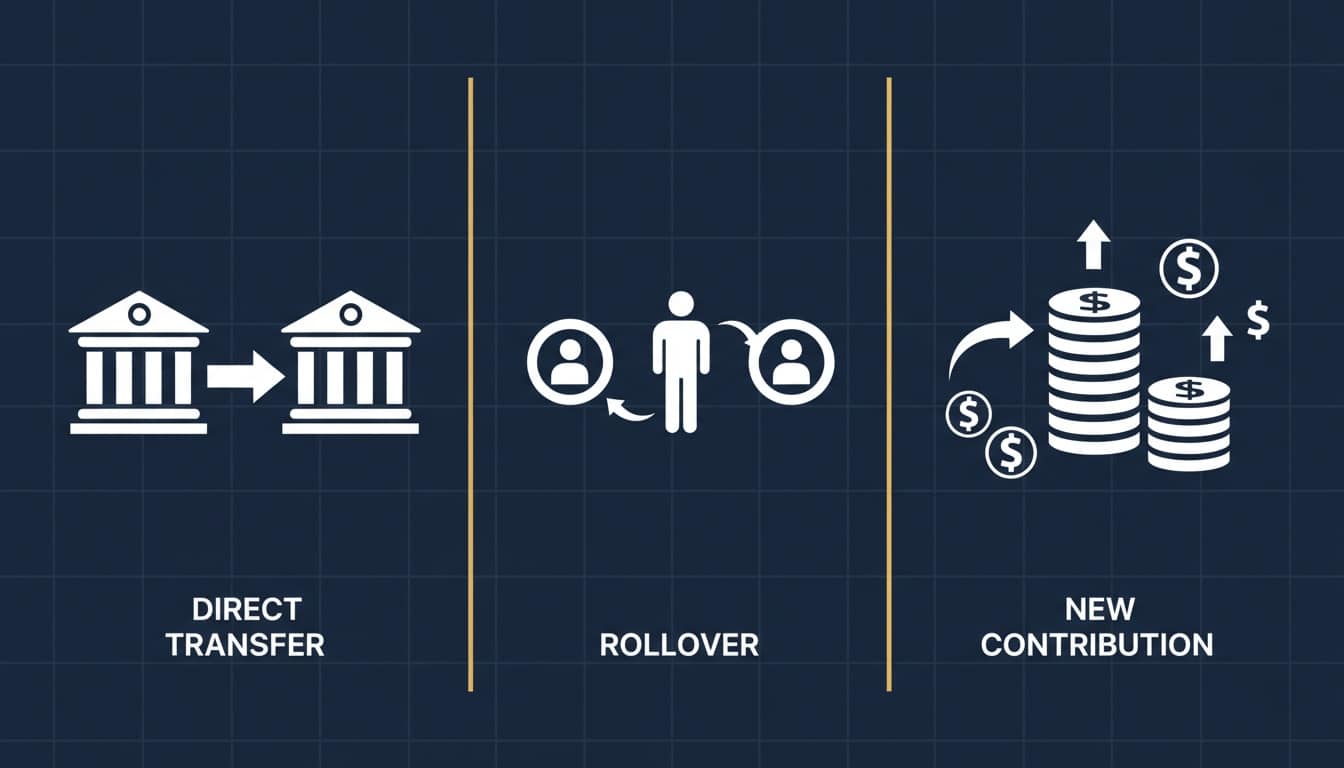
When moving your IRA from one bank to another, the most secure and efficient method is a direct transfer. In a direct transfer, the funds move directly from the custodian of your current account to the custodian of your new account. Because the money is never paid directly to you, the Internal Revenue Service (IRS) does not consider this a distribution. Consequently, it remains tax-neutral, meaning you will not face income tax or the 10% early withdrawal penalty often associated with retirement distributions.
It is critical to distinguish this from an "IRA rollover." While similar, a rollover typically involves receiving a check from your current institution, which you then deposit into your new account within 60 days. While rollovers are legal, they carry higher risks of error—such as accidentally missing the 60-day window or facing mandatory tax withholding—that can lead to significant financial penalties. A direct transfer bypasses these risks entirely.
Phase 1: Preparation and Due Diligence
Before initiating a transfer, verify that your current IRA is eligible for transfer. While most IRAs—including Traditional, Roth, SEP, and SIMPLE IRAs—are portable, specific restrictions may exist if you hold proprietary assets, such as bank-specific certificates of deposit (CDs) that have not yet reached maturity.
- Check for Maturity Dates: If your IRA funds are invested in a CD, withdrawing them before the maturity date may result in an early withdrawal penalty levied by the bank. Calculate if the potential gains at the new institution outweigh the cost of these penalties.
- Review Fee Structures: Contact the new bank to understand their annual maintenance fees, management costs, or account minimums. Conversely, ask your current bank about "account closing fees" or "outgoing transfer fees," which can range from $25 to $100 depending on the institution.
- Open the New Account: You must have an established, open IRA at the destination bank before you can move funds. Ensure the new account is the same type as the old one (e.g., a Roth IRA to a Roth IRA) to maintain proper tax treatment.
Phase 2: The Transfer Process
Once you have selected your new financial institution and opened your account, the administrative process typically follows a standardized path.
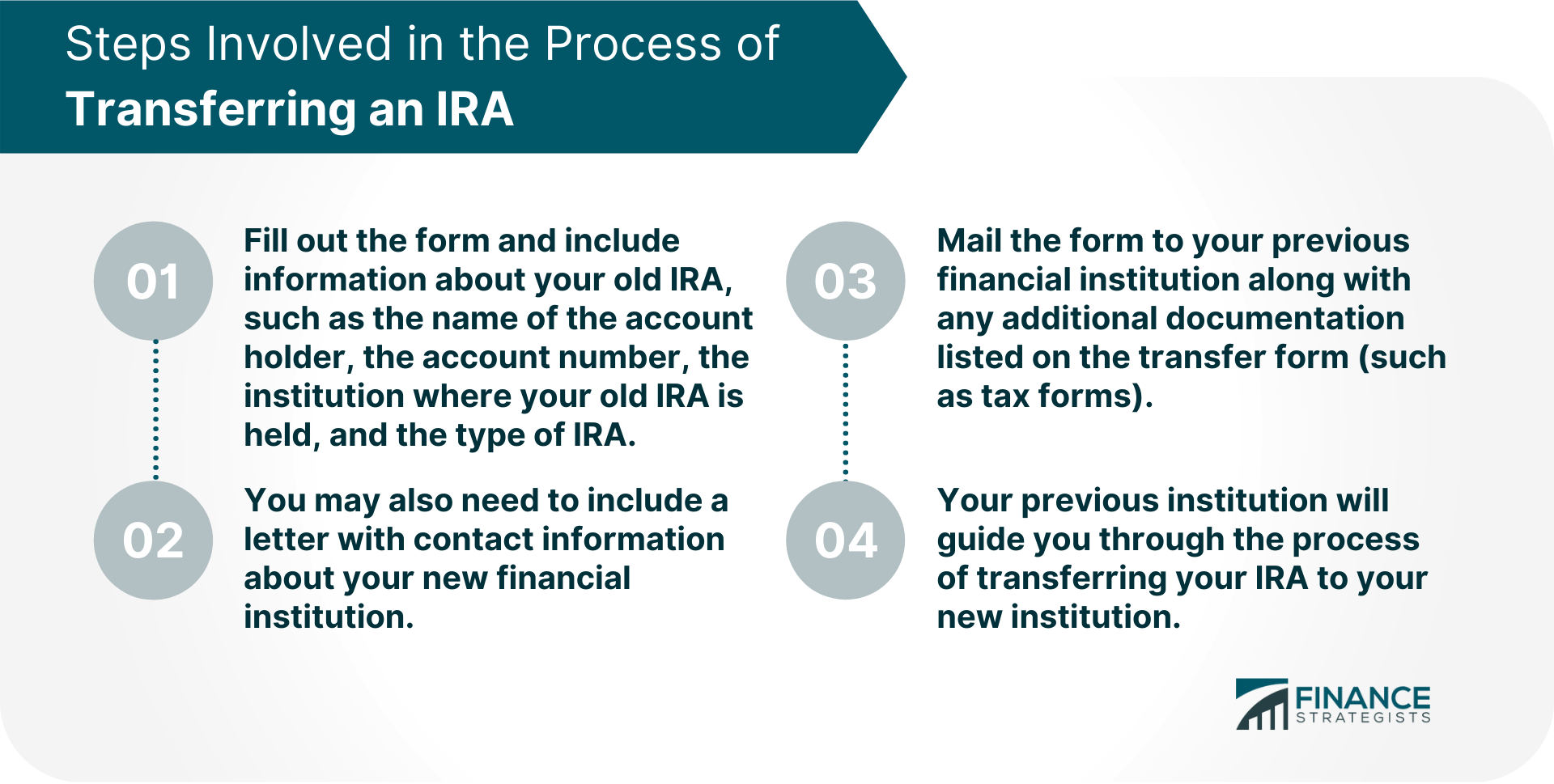
- Request a Transfer Form: Most banks provide a "Transfer of Assets" (TOA) form. You can usually find this on the bank’s website or by visiting a branch. This form authorizes the new bank to contact your old institution and request the transfer on your behalf.
- Provide Account Details: You will need your most recent account statement from the current bank. Ensure you provide the exact account number and the institution's name and contact information.
- Specify Transfer Type: Indicate whether you wish to transfer the entire balance (full transfer) or a specific portion (partial transfer). A full transfer will generally close the account at the old bank once the funds have been liquidated and moved.
- Submission: Submit the signed form to your new bank. They will handle the communication with your current bank to secure the transfer of assets.
Comparison Table: Transfer vs. Rollover
| Feature | Direct Transfer | IRA Rollover |
|---|---|---|
| Asset Movement | Directly between custodians | Funds pass through the owner |
| Tax Reporting | Not reportable as income | Reportable (non-taxable) |
| Frequency | Unlimited | Once per 12-month period |
| Risk of Penalty | Very low | Higher (if 60-day rule is missed) |
Phase 3: Monitoring and Verification
After submitting your request, the transfer process can take anywhere from a few business days to several weeks, depending on the institutions involved and whether your assets are held in cash or securities.
- Liquidating Securities: If your IRA holds stocks, bonds, or mutual funds, you must determine if your new bank can accept those specific assets "in-kind." If they cannot, your old bank will need to sell (liquidate) those assets and send the cash equivalent. This may result in transaction fees and a temporary exit from the market.
- Verification: Once the transfer is complete, confirm with the new institution that the funds have been received. Review your final statement from the old bank to ensure the account was closed as requested and that no residual balance remains.
- Tax Documentation: Keep all records of the transfer. While a direct transfer is not taxable, you may receive a Form 1099-R from your old bank indicating the distribution. This is a standard reporting requirement; the form will typically carry a distribution code that identifies it as a non-taxable direct transfer.
Common Pitfalls and How to Avoid Them
The most common mistake during an IRA transfer is attempting to handle the cash personally. Even if you intend to move the money to the new bank the same day, moving money into a personal checking account creates a taxable event that can trigger IRS audits and penalties. Always insist on a direct, institutional transfer.
Another frequent oversight involves SIMPLE IRAs. If you are participating in a SIMPLE IRA, be aware that there is a two-year waiting period from the date you first participated in your employer’s SIMPLE IRA plan before you can transfer those funds to a traditional IRA or another bank without penalty. Violating this rule can result in significant tax consequences.
Frequently Asked Questions
1. Is there a limit to how many times I can transfer my IRA? No. A direct, trustee-to-trustee transfer does not have a frequency limit. You can perform as many direct transfers as you need to meet your financial goals. This differs from the IRS "once-per-year" rule, which only applies to personal rollovers.
2. Will I lose interest or market exposure during the transfer? If your funds are held in cash, you may be out of the market for a few days while the check clears or the wire transfer processes. If you hold investments, liquidating them to move cash may cause you to miss market movements. If "in-kind" transfers are supported, your securities move without being sold, preserving your position.
3. What if my bank refuses to transfer my assets? Banks generally cannot refuse a transfer request, provided you meet the account requirements. If a delay occurs, it is usually due to missing paperwork or the need to liquidate specific holdings. Request a formal status update from the new bank if the process takes longer than 15 business days.
4. Do I need to contact my current bank before starting? While not strictly required, it is helpful to call your current bank to verify that your account information is up to date and to ask if they require any specific forms beyond the standard TOA form provided by your new institution.
5. Can I transfer a 401(k) using this same process? No. A 401(k) is an employer-sponsored plan. To move a 401(k) to an IRA, you must perform a "direct rollover." The procedures for a 401(k) rollover often involve your former employer’s human resources department and the 401(k) plan administrator, which is a distinct process from an IRA-to-IRA transfer.
Next Actions
Begin your transfer by logging into your new bank's online portal or calling their customer service line to request their specific "Transfer of Assets" package. Gather your latest statement from your current bank to ensure all numbers are accurate. If your account contains complex assets like individual bonds or specialized mutual funds, ask your new bank specifically if those assets can be transferred in-kind to avoid unwanted liquidation.
Image Gallery