Hidehiko Yamane Net Worth in Context: Brand Equity, Evisu Legacy, and Fashion Economics
Hidehiko Yamane’s exact net worth is not publicly disclosed due to the private ownership structure of his business holdings. While online aggregation sites estimate his personal net worth between $10 million and $50 million, evaluating...
Hidehiko Yamane’s exact net worth is not publicly disclosed due to the private ownership structure of his business holdings. While online aggregation sites estimate his personal net worth between $10 million and $50 million, evaluating his wealth in context requires analyzing Evisu’s peak retail turnover, international trademark licensing deals, private equity acquisitions, and his enduring influence on luxury denim craftsmanship.
Contents
Who Is Hidehiko Yamane? The Architect of Modern Premium Denim
Hidehiko Yamane is a Japanese fashion designer, tailor, and entrepreneur best known as the founder of Evisu (originally spelled Ebisu), one of the most influential heritage denim brands in fashion history. Before establishing his global brand, Yamane worked as a buyer for vintage clothing stores in Osaka, Japan. During the late 1980s, he grew dissatisfied with the declining quality of mass-produced commercial jeans. He observed that modern ring-spun denim lacked the texture, slub, and fading characteristics of vintage Levi’s 501 jeans from the 1940s and 1950s.
Driven by a desire to recreate authentic vintage shuttle-loom denim, Yamane acquired obsolete shuttle looms—primarily vintage Toyoda looms—and spent years mastering the production techniques required to weave heavy, dark indigo selvage denim. In 1991, Yamane founded his brand in Osaka, naming it after Ebisu, the Shinto god of fortune and fishermen.
In the early days of the business, production was painstakingly small. Yamane personally hand-painted the brand’s iconic seagull motif (kamome) onto the back pockets of every pair of jeans. The company produced roughly 14 pairs of jeans per day. This meticulous commitment to craft laid the foundation for the "Osaka Five"—a legendary group of five Japanese denim brands (Evisu, Fullcount, Warehouse, Denime, and Studio D'Artisan) that sparked the global raw denim movement.
Deconstructing the Financial Context: Evisu’s Revenue and Growth Trajectory
To understand Hidehiko Yamane’s financial standing, one must examine the rapid commercial expansion of Evisu from a niche Osaka atelier into an international streetwear titan. The financial trajectory of the brand can be divided into three distinct economic phases:
1. The Artisan Era (1991–1998)
During its initial years, Evisu operated on a high-margin, low-volume business model. Yamane targeted denim purists willing to pay premium prices for Japanese shuttle-loom selvage denim. Because production was capped by the availability of vintage looms and skilled artisans, demand quickly surpassed supply. The brand established a reputation for uncompromising quality, allowing Yamane to command price points significantly higher than conventional denim manufacturers.
2. Global Expansion and Pop-Culture Adoption (1999–2006)
By the late 1990s, European distributors recognized Evisu’s potential in urban fashion markets. The brand expanded beyond Japan, opening flagship boutiques in London, Paris, Tokyo, and New York. During the early 2000s, Evisu experienced unprecedented commercial growth when it was adopted by major figures in hip-hop and global pop culture, including Jay-Z, Beyoncé, Lil Wayne, and Young Jeezy. Jay-Z famously reference the brand in song lyrics, propelling Evisu into a global status symbol.
During this peak commercial era, Evisu generated tens of millions of dollars in annual international revenue. The brand expanded its product catalog from core selvage denim into full apparel lines, footwear, and accessories, drastically increasing wholesale volume across Europe, North America, and Asia.
3. Licensing, Reorganization, and Equity Liquidation (2006–Present)
As Evisu grew into a multi-million-dollar global enterprise, the financial and operational structure shifted. Managing a massive international supply chain required external corporate management and licensing structures. This period marked a transition from a founder-led artisan workshop to a complex web of regional licensing deals and corporate holding entities.
[Osaka Atelier (1991)] ➔ [Global Hip-Hop Craze (2000s)] ➔ [Licensing & PE Acquisition (2017)] (14 pairs/day craft) (Tens of millions turnover) ($40M Global IP Valuation)
Publicly Reported Net Worth Estimates vs. Private Business Reality
Estimating the net worth of private fashion founders is inherently complex. Unlike executives at publicly traded conglomerates like LVMH or Fast Retailing, Yamane’s private corporate holdings in Japan are not subject to public financial reporting.
The online estimates claiming a net worth of $10 million to $50 million reflect speculative calculations based on historical brand valuations rather than verified liquid assets. A realistic contextual evaluation requires examining key financial events throughout Yamane's career:
- Corporate Tax Proceedings (2006): In 2006, Japanese financial regulators and tax authorities investigated Evisu and Yamane regarding unreported corporate income totaling hundreds of millions of yen over several fiscal years. This public legal record confirmed that Evisu was generating substantial profits, but it also led to corporate restructurings and financial settlements in Japan.
- Sale of International Brand Rights: The most significant financial milestone in Evisu’s corporate history was the decoupling of its Japanese domestic operations from its global trademark rights. International investors acquired rights to distribute and scale the Evisu brand across Europe, America, and mainland China.
- Private Equity Buyout (2017): In 2017, China-backed private equity firm IDG Capital acquired the global trademark rights for Evisu for approximately $40 million. This acquisition consolidated the international brand under Evisu Group Limited. While Yamane had already stepped back from managing daily global operations, trademark transactions of this scale reflect the massive enterprise value built around his original brand identity.
Financial Comparison: Japanese Heritage Brands and Founder Equity
Hidehiko Yamane’s business model represents a distinct path within the Japanese streetwear and denim boom of the 1990s and 2000s. Comparing Evisu’s growth trajectory with contemporary Japanese brand founders highlights how different corporate strategies affect overall brand equity and founder wealth.
| Founder & Brand | Peak Market Era | Primary Business Model | Key Financial/Equity Milestones | Primary Revenue Drivers |
|---|---|---|---|---|
| Hidehiko Yamane(Evisu) | Late 1990s–2000s | Artisanal shuttle-loom denim expanding to global fashion licensing | Global brand rights buyout valued at ~$40M (2017); domestic boutique operations retained | Premium selvage denim, hand-painted heritage apparel, licensing royalties |
| NIGO (Tomoaki Nagao)(A Bathing Ape) | Late 1990s–2000s | Limited-edition streetwear, footwear drops, lifestyle merchandise | Sold 90% stake in BAPE to Hong Kong retail group I.T for ~$2.8M (2011) | Graphic hoodies, Bapesta sneakers, corporate brand collaborations |
| Shinsuke Takizawa(Neighborhood) | 2000s–Present | Independent Japanese luxury streetwear & subculture apparel | Privately owned; highly controlled independent domestic and wholesale distribution | High-end leather jackets, technical outerwear, Japanese denim |
| Hiroshi Fujiwara(Fragment Design) | 1990s–Present | Intellectual property (IP) licensing and design consultancy | Zero manufacturing overhead; direct royalty revenue model | Brand collaborations (Nike, Moncler, Maserati, Tag Heuer) |
The Secondary Market and Vintage Asset Value of Yamane-Era Denim
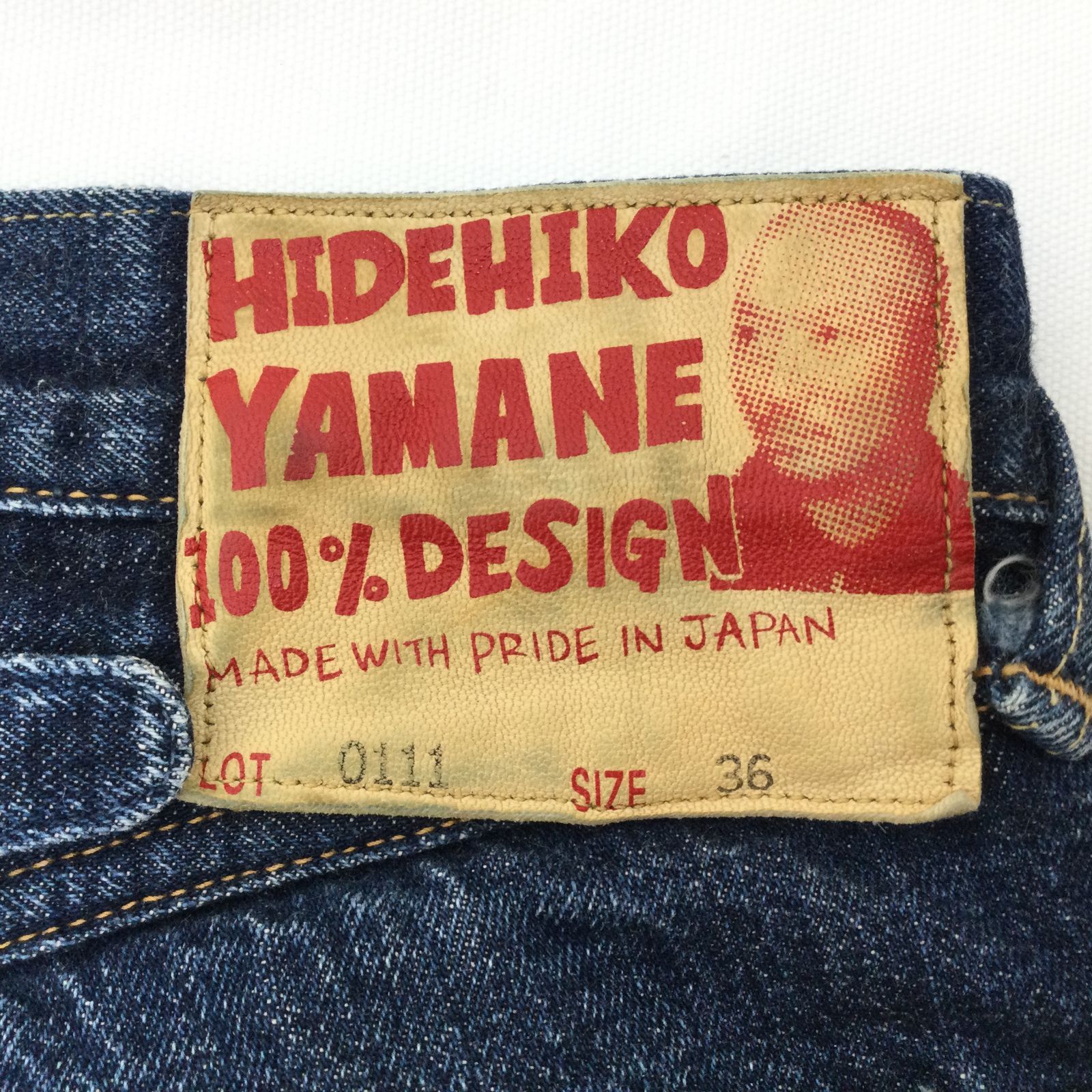
A critical element of Yamane's financial context is the value preserved in his physical creations. Early "Yamane-era" Evisu denim—specifically pieces hand-painted or signed by Yamane himself between 1991 and 2002—has transitioned from everyday workwear into high-value archival apparel.
In the secondary menswear market, early Evisu pieces woven on original Toyoda looms using vintage shuttle techniques command prices ranging from $300 to over $2,000 depending on condition, selvedge detail, and hand-painted motifs.
Key attributes driving secondary market value include:
- No. 1 Special Denim: Unsanforized heavy denim woven on low-tension shuttle looms, highly prized by collectors for intense indigo fading.
- Hand-Painted Gull Logos: Jeans personally painted by Yamane or his original Osaka apprentices, as opposed to later mass-printed screen prints.
- Custom Yamane Deluxe Pieces: Tailored outerwear and bespoke garments produced under Yamane’s secondary lines.
This thriving secondary market reinforces the core value of Yamane's intellectual property. Even when mass-market fashion trends evolved, the intrinsic value of early Yamane productions remained exceptionally high among collectors.
Side Ventures and Personal Hobbies turned Luxury Niche Businesses
Hidehiko Yamane’s financial approach has always been tied to his personal lifestyle and hobbies. Rather than reinvesting exclusively in mass apparel manufacturing, Yamane funneled capital into niche artisan passion projects:
- Dowluck (Surface Fishing Tackle): Yamane is an avid topwater bass fisherman. He founded Dowluck, a Japanese luxury fishing tackle brand. Dowluck produces handcrafted wooden fishing lures, vintage-style baitcasting reels, and custom bamboo rods. Dowluck products are sold at premium price points, catering to specialized collectors and outdoor enthusiasts across Japan.
- Yamane Deluxe & Evisu Golf: Yamane created specialized sub-brands focused on traditional English tailoring, heritage workwear suits, and high-end golf apparel. These ventures catered to affluent Japanese customers seeking bespoke styling outside of casual denim.
By diversifying into high-end lifestyle crafts, Yamane built small, profitable enterprises with virtually no marketing overhead, supported entirely by devoted brand loyalists.
Key Factors Influencing Yamane’s Overall Net Worth
When placing Hidehiko Yamane’s wealth into professional perspective, several economic factors stand out:
- Private Equity Realization: The sale and licensing of Evisu global trademark rights generated substantial capital liquidity separate from physical retail operations.
- Domestic Asset Ownership: Yamane’s historical ownership of commercial real estate and retail boutiques across Japan ( Osaka, Tokyo, Kyoto) provided physical asset stability.
- Protection Against Fast-Fashion Volatility: Because Yamane retained control over niche sub-brands and domestic artisan operations, his personal wealth was partially insulated from corporate fast-fashion downturns.
- Artisan Autonomy: Unlike fashion founders who sell 100% of their business to corporate conglomerates and exit entirely, Yamane maintained personal freedom to design, fish, and craft apparel on his own terms.
Frequently Asked Questions
What is Hidehiko Yamane’s estimated net worth?
Hidehiko Yamane's net worth is estimated between $10 million and $50 million. Because his holdings and domestic Japanese businesses are privately held, exact figures are not available in public financial registers. His wealth stems from Evisu’s global growth, international trademark licensing deals, and real estate holdings.
How did Evisu become a multi-million dollar brand?
Evisu grew through a combination of traditional Japanese shuttle-loom denim craftsmanship and global pop-culture adoption. In the late 1990s and early 2000s, high-profile international hip-hop artists adopted the brand, driving explosive wholesale and retail expansion across Europe, North America, and Asia.
Does Hidehiko Yamane still own Evisu?
Yamane founded and grew Evisu, but the global trademark rights to the brand were later acquired by international private equity groups, including a major buyout by IDG Capital in 2017. Yamane stepped back from managing daily global brand operations while remaining an iconic figure in domestic Japanese denim culture.
What is the "Osaka Five"?
The "Osaka Five" refers to five Japanese denim brands—Evisu, Fullcount, Warehouse, Denime, and Studio D'Artisan—that spearheaded the Japanese selvage denim revolution in the late 1980s and early 1990s. Founded in Osaka, these brands focused on replicating vintage American manufacturing methods using shuttle looms and natural indigo dyes.
Why are early Evisu jeans worth so much on the resale market?
Early Evisu jeans produced in the 1990s and early 2000s were crafted on rare Toyoda shuttle looms using unsanforized selvage denim and featured hand-painted logos by Hidehiko Yamane or his core apprentices. Their historical significance, durability, and unique fading characteristics make them highly valuable to vintage menswear collectors.
Lessons in Brand Equity from Japanese Heritage Denim
Hidehiko Yamane’s career demonstrates how prioritizing uncompromised craftsmanship can create immense long-term brand equity. By focusing on low-volume, high-quality production, Yamane created a brand identity strong enough to transition from a small Osaka workshop into a multi-million-dollar global fashion staple.
For entrepreneurs and fashion business analysts, Yamane’s legacy proves that original intellectual property—symbolized by a simple, hand-painted seagull—can generate decades of commercial value across licensing, vintage resale, and international corporate acquisitions.
Image Gallery