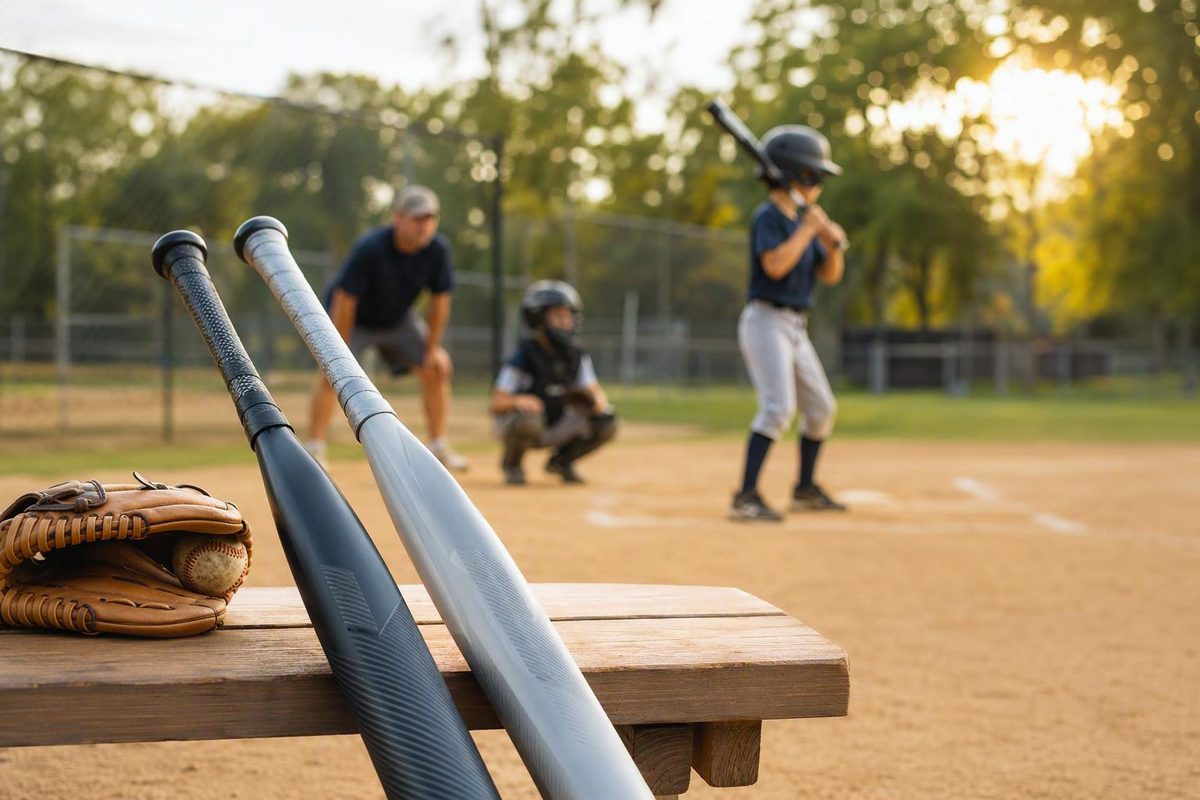
Understanding the 12U Bat Rules for Youth Baseball
Navigating 12U youth baseball bat rules requires understanding specific governing body standards, drop weight ratios, barrel diameters, and certification stamps like USA Baseball or USSSA. Because different leagues enforce varying regu...
Navigating 12U youth baseball bat rules requires understanding specific governing body standards, drop weight ratios, barrel diameters, and certification stamps like USA Baseball or USSSA. Because different leagues enforce varying regulations, selecting the correct equipment ensures player compliance, safety, and official game eligibility.
Contents
Youth baseball equipment standards can present a confusing landscape for parents, coaches, and players alike. As children advance into the 12U division—typically comprising players aged 11 and 12—the rules governing legal bats shift significantly compared to younger coach-pitch or tee-ball divisions. Understanding these regulations is essential before purchasing new equipment, as stepping into the batter's box with an illegal bat can result in penalties, game protests, or player disqualification.
Major youth baseball organizations implement distinct specifications regarding length-to-weight ratios, barrel widths, and manufacturing materials. Familiarity with how these guidelines intersect prevents costly purchasing mistakes and ensures your young athlete plays with maximum confidence and full league compliance.
The Governing Bodies and Their Regulatory Roles
Youth baseball is not governed by a single monolithic entity. Instead, it is divided among several national and international organizations, each writing its own rulebook. While they share the common goal of maintaining player safety and competitive balance, their equipment standards can differ drastically.
The primary organizations governing 12U youth baseball include:
- USA Baseball (USABat): The national governing body for the sport in the United States, representing Little League, Babe Ruth, Cal Ripken, PONY, and Dixie Youth.
- USSSA (United States Specialty Sports Association): A prominent governing body for travel baseball and weekend tournament play.
- NFHS / NCAA: While high schools and colleges use different standards (such as BBCOR), understanding how youth rules bridge into high school play matters for 12U players nearing the transition.
- Little League Baseball: Operates under USA Baseball standards but enforces specific regional and tournament guidelines regarding bat construction and composite materials.
Before buying a bat, always verify the specific league your child is playing in. A bat certified for weekend USSSA travel tournaments is frequently illegal in a local Little League or Cal Ripken league, and vice versa.
Decoding Bat Specifications: Drop Weight, Barrel Size, and Length
To fully understand 12U bat rules, you must master the fundamental terminology used by manufacturers and league officials. Three primary metrics define every youth baseball bat: length, weight, and barrel diameter.
The Meaning of "Drop Weight"
The drop weight—or length-to-weight ratio—is a numerical representation calculated by subtracting the bat's weight in ounces from its length in inches. For example, a 30-inch bat that weighs 20 ounces has a drop of -10.
In 12U play, drop weights typically range from -5 to -10, depending on the league. Lighter drop weights (-10) offer faster swing speeds, while heavier drop weights (-5 or -8) generate more force upon contact, mimicking the transition toward high school BBCOR standards (-3).
Barrel Diameter Restrictions
Barrel diameter refers to the thickest part of the bat where the ball makes contact. For decades, 2 5/8-inch barrels were standard, but 2 1/4-inch and 2 3/4-inch barrels have also played major roles in youth baseball history. Modern 12U rules strictly regulate barrel size based on the governing body's certification standard, with 2 5/8 inches being the dominant legal size across almost all major organizations.
Length and Material Composition
Bat lengths for 12U players generally range from 28 inches to 32 inches, selected based on the player's height and weight. Materials fall into three categories: one-piece aluminum alloys, two-piece hybrid designs, and composite bats. League rules rarely restrict materials outright, but they strictly regulate how those materials perform, requiring specific stamps to verify performance compliance.
USA Baseball (USABat) Standard Rules for 12U
Adopted in 2018, the USABat standard was created by USA Baseball to level the playing field and replicate the performance of wood bats in aluminum and composite models. If your child plays in Little League, Babe Ruth, Cal Ripken, PONY, or AABC, they must use a bat bearing the official USABat licensed mark.
| Feature | USA Baseball (USABat) Standard |
|---|---|
| Permitted Barrel Diameters | 2 5/8 inches (primarily) |
| Required Certification Stamp | "USABat" Holographic Stamp |
| Typical Drop Weights in 12U | -10, -8, -5 |
| Governing Leagues | Little League, Cal Ripken, Babe Ruth |
Under the USABat standard, bats are tested using the Bat-Ball Coefficient of Restitution (BBCOR) protocol to ensure their performance ceiling matches that of a traditional wood bat. Consequently, even composite bats certified under this standard exhibit controlled trampoline effects.
- Key Rule Detail: All USABat-certified bats feature a prominent, rectangular certification mark near the taper of the bat handle. Umpires routinely inspect this mark before games. Unstamped bats, or bats bearing older, outdated stamps, are immediately declared illegal.
USSSA Travel Ball Rules for 12U
Travel baseball operates under a distinctly different philosophy than traditional recreational leagues. Governed largely by USSSA, travel ball prioritizes high-level competition, and its equipment rules reflect this by allowing higher-performing bats.
For 12U USSSA play, bats must bear the 1.15 BPF (Bat Performance Factor) USSSA thumbprint stamp.
- Barrel Specifications: USSSA permits 2 5/8-inch and 2 3/4-inch barrel diameters for 12U play. The larger 2 3/4-inch barrel—often referred to as "Big Barrel"—provides a massive sweet spot, making it extremely popular in travel tournament circuits.
- Drop Weight Requirements: In 12U USSSA play, players frequently utilize -10, -8, or -5 drop weights. As players mature physically during their 12-year-old season, many coaches recommend transitioning to a -8 or -5 to prepare for middle school and high school play.
- Wood Bat Exception: Traditional unfinished wood bats are universally accepted across all 12U organizations and do not require regulatory certification stamps, provided they meet dimensional and weight restrictions for the age group.
Comparing USA Baseball vs. USSSA Standards
Confusing USA Baseball and USSSA rules is the most common mistake parents make when purchasing a youth bat. A bat legal in one organization can be entirely illegal in another.
| Comparison Metric | USA Baseball (USABat) | USSSA Travel Ball |
|---|---|---|
| Governing Organizations | Little League, PONY, etc. | USSSA Tournaments |
| Required Stamp | USABat Logo | 1.15 BPF Thumbprint |
| Max Barrel Size | 2 5/8 inches | 2 3/4 inches |
| Performance Profile | Wood-like performance | Enhanced trampoline |
Failing to check league rules before purchase can result in wasted money. For example, if a player dual-participates in both a spring Little League team and a weekend USSSA travel team, they will likely need two different bats unless they choose a dual-certified model (though true dual-certified bats are rare under current manufacturing protocols, as USABat and USSSA maintain mutually exclusive testing methods).
Transitioning to BBCOR: Preparing for Middle and High School
As players approach the conclusion of their 12U and subsequent 13U/14U seasons, they face the ultimate youth baseball equipment milestone: the transition to the NFHS-approved BBCOR (-3) standard.
High school rules mandate that any bat used in official competition must feature the BBCOR (Bat-Ball Coefficient of Restitution) certification stamp and a strict -3 drop weight. For a 12-year-old playing in advanced 12U open tournaments or preparing for Junior High play, introducing a BBCOR bat can be a significant physical adjustment.
- The Weight Challenge: Moving from a lightweight -10 USABat (e.g., 30 inches / 20 ounces) to a -3 BBCOR bat (e.g., 30 inches / 27 ounces) adds seven full ounces to the bat.
- Strategic Transitioning: Many 12U coaches recommend having strong players transition to a -8 or -5 bat late in their 12U year to build core and wrist strength gradually before facing mandatory BBCOR requirements.
Common Mistakes to Avoid When Buying a 12U Bat
Purchasing a youth baseball bat involves more than picking a favorite color or brand name. Avoiding common pitfalls protects your investment and prevents game-day complications.
- Buying Based on Age Instead of League: Do not assume a bat labeled "Youth" or "12U" is legal everywhere. Always check the specific league rulebook.
- Ignoring Counterfeits and Damaged Stamps: Purchasing used bats online carries risks. If the USABat or USSSA stamp is faded, scratched, or missing, umpires will reject the bat during pre-game inspections.
- Sizing Up Too Early: Buying a bat that is too long or too heavy "so the player can grow into it" destroys swing mechanics, leads to casting, and decreases bat speed. Bat sizing should be based on current height and weight.
- Overlooking League Crackdowns: Leagues periodically ban specific models due to manufacturing defects or performance recalibrations. Always cross-reference your intended purchase against the official banned bat lists maintained by USA Baseball and USSSA.
Practical Steps for Choosing the Right Bat
To ensure you select the optimal bat for your 12U player while maintaining strict rule compliance, follow this structured evaluation process:
- Step 1: Identify the Primary League. Confirm whether your child will play exclusively recreational ball (USABat) or travel tournament ball (USSSA).
- Step 2: Measure for Proper Sizing. Have the player stand upright, place the bottom of the bat at the center of their chest, and reach their arm straight out. If their fingertips touch the tip of the bat, the length is appropriate. Alternatively, use standard height-and-weight sizing charts provided by major sporting goods manufacturers.
- Step 3: Test Swing Mechanics. Have the player take dry swings. If they drop their shoulder, wrap the bat excessively, or struggle to control the barrel path, the drop weight is too heavy.
- Step 4: Verify Certification Marks. Inspect the physical bat before final purchase to ensure the required holographic or embossed stamp is clearly visible and intact on the taper or handle.
Frequently Asked Questions
Can a 12-year-old use a wood bat in USABat leagues?
Yes. Unfinished and certified wood bats are legal across virtually all youth baseball organizations, including Little League and USSSA, provided they meet standard age-specific length and barrel requirements. They do not require an official certification stamp.
What happens if a player steps up to the plate with an illegal bat?
If an opposing team notices and appeals before the next pitch is thrown, the batter is declared out, and any advancement by runners caused by the batted ball is nullified. The illegal bat is immediately removed from the game.
Are 2 3/4-inch barrel bats legal in Little League?
No. Little League International, which operates under the USA Baseball standard, restricts barrel diameters to a maximum of 2 5/8 inches. Any bat featuring a 2 3/4-inch barrel is illegal in Little League play.
How can I check if a specific bat model is currently banned?
Both USA Baseball and USSSA maintain updated, searchable databases of approved and decertified bats on their official websites. Checking these lists before purchasing a used bat online is strongly recommended.
Do tee-ball bats work for 12U players?
No. Tee-ball bats are specifically engineered for low-velocity contact with lightweight balls used by children aged 4 to 6. Using a tee-ball bat in a 12U game against pitching speeds exceeding 40-50 mph will cause the bat to dent, shatter, or fail instantly.
Conclusion
Understanding 12U bat rules comes down to knowing your league, verifying certification stamps, and selecting the correct drop weight and barrel size for your player's physical development. By confirming whether your organization mandates USA Baseball or USSSA standards, you can invest in equipment that guarantees game eligibility and enhances performance. Prioritize proper sizing and rule compliance to ensure your young athlete steps into the batter's box with confidence every game day.
Image Gallery