How to Read the Clock in Seattle: Understanding Pacific Time, Local Geography, and Chronological Navigation
Reading the clock in Seattle requires understanding the Pacific Time Zone, seasonal daylight saving adjustments, and how local geographic landmarks and cultural practices shape daily scheduling in the Pacific Northwest. Introduction to...
Reading the clock in Seattle requires understanding the Pacific Time Zone, seasonal daylight saving adjustments, and how local geographic landmarks and cultural practices shape daily scheduling in the Pacific Northwest.
Contents
Introduction to Timekeeping in the Pacific Northwest
Timekeeping in Seattle, Washington, follows the Pacific Time Zone, a standard geographic demarcation used along the western coast of North America. For residents, commuters, travelers, and remote collaborators, reading the clock in Seattle means accurately translating hours, minutes, and seasonal shifts into practical actions. While reading a standard 12-hour or 24-hour clock face is universally understood, the context of when that time occurs and how it impacts daily life involves navigating distinct regional time zones, daylight adjustments, and local transit rhythms.
Understanding time in this major metropolitan area requires more than glancing at a digital display or an analog watch. It demands an awareness of coordinated universal time offsets, seasonal daylight transitions, and the unique tempo of a city shaped by tech industries, maritime commerce, and Pacific Rim connections. This guide breaks down the mechanics of Pacific Time, practical considerations for scheduling across time zones, and tips for staying synchronized in Washington State's largest city.
The Foundation of Pacific Time
Seattle operates on Pacific Standard Time (PST) during the winter months and Pacific Daylight Time (PDT) during the spring, summer, and early autumn. This section explores the technical parameters of the zone and its official designation.
Pacific Standard Time (PST) and Pacific Daylight Time (PDT)
The Pacific Time Zone is formally defined as an offset from Coordinated Universal Time (UTC).
- Pacific Standard Time (PST): Observed from the first Sunday in November until the second Sunday in March. During this period, Seattle is eight hours behind Coordinated Universal Time (UTC-8).
- Pacific Daylight Time (PDT): Observed from the second Sunday in March until the first Sunday in November. During this period, clocks are advanced by one hour, placing Seattle seven hours behind Coordinated Universal Time (UTC-7).
These shifts are mandated by federal guidelines under the Uniform Time Act, though state legislatures across the United States—including Washington—frequently debate moving to permanent daylight saving time. However, any transition to permanent daylight saving time requires federal statutory approval from the United States Congress, meaning the biannual clock change remains the standard operational reality.
Comparison of Seasonal Time Shifts in Seattle
| Season / Period | Time Zone Designation | UTC Offset | Practical Impact on Daylight |
|---|---|---|---|
| Late Fall to Early Spring | Pacific Standard Time (PST) | UTC-8 | Shorter daylight hours; sunset occurs as early as 4:20 PM in December. |
| Mid-Spring to Early Fall | Pacific Daylight Time (PDT) | UTC-7 | Extended daylight hours; sunset extends past 9:00 PM in June and July. |
Chronological Navigation: Analog vs. Digital Time in Seattle
Whether viewing the classic analog clock faces embedded in historic Seattle architecture—such as the historic station clocks or municipal buildings—or checking a smartphone, the fundamental mechanics of reading the time remain consistent. However, the cultural and structural environment of Seattle influences how time is consumed.
The 12-Hour and 24-Hour Systems
- The 12-Hour Clock: Widely used in everyday conversation, retail settings, and local transit schedules. Designations such as AM (ante meridiem) and PM (post meridiem) divide the day.
- The 24-Hour Clock (Military Time): Frequently utilized by emergency services, healthcare providers, maritime operations on Puget Sound, and aviation facilities at Seattle-Tacoma International Airport (SEA). Reading 14:30, for instance, corresponds directly to 2:30 PM local time.
Architectural Timepieces in Seattle
Seattle features several notable public clocks that serve as temporal landmarks for pedestrians and commuters:
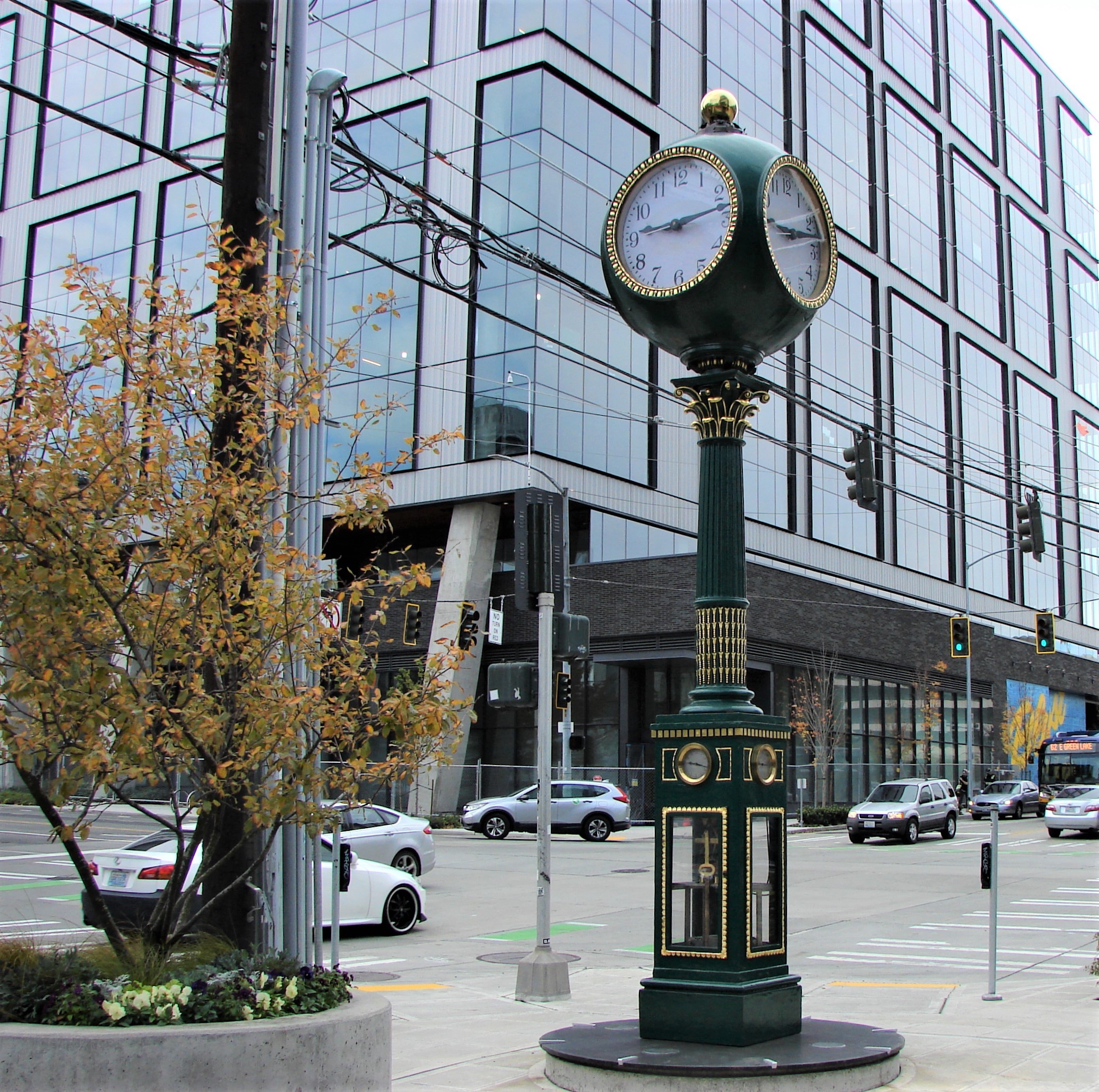
- The Pioneer Square Pergola Clock: A historic cast-iron street clock located in the Pioneer Square neighborhood, serving as both a functional timepiece and a symbol of the city's late 19th-century urban development.
- King Street Station Clocks: Restored interior and exterior clocks that manage the daily flow of Amtrak and Sounder commuter rail passengers.
Coordinating Across Time Zones from Seattle
Because Seattle serves as a major global hub for technology, aerospace, logistics, and international trade, reading the clock often involves calculating time differences with domestic and international partners.
Domestic Time Zone Conversions
When coordinating meetings or communications from Seattle to other parts of the United States:
- Eastern Time (ET): Seattle is 3 hours behind (e.g., 9:00 AM PST in Seattle is 12:00 PM EST in New York).
- Central Time (CT): Seattle is 2 hours behind (e.g., 10:00 AM PST is 12:00 PM CST in Chicago).
- Mountain Time (MT): Seattle is 1 hour behind (e.g., 11:00 AM PST is 12:00 PM MST in Denver).
- Alaska Time (AKST/AKDT): Seattle is 1 hour ahead of Alaska (e.g., 1:00 PM PST in Seattle is 12:00 PM AKST in Anchorage).
- Hawaii-Aleutian Time (HST): Seattle is 2 or 3 hours ahead of Hawaii, which does not observe daylight saving time.
International Time Conversions
Seattle shares close economic and cultural ties with Pacific Rim nations and Europe:
- Asia-Pacific: Cities like Tokyo (JST) are 16 to 17 hours ahead of Seattle, while Beijing (CST) is 15 to 16 hours ahead, depending on the time of year and daylight saving adjustments.
- Europe: London (GMT/BST) is typically 8 hours ahead of Seattle during standard time and 8 hours ahead during British Summer Time.
Practical Scheduling and Transit Timekeeping
In a dense urban environment featuring multi-modal transportation networks—including light rail (Link Light Rail), ferries (Washington State Ferries), and commuter buses (Sound Transit and King County Metro)—reading the clock correctly is essential for daily transit.
Transit Schedules and Real-Time Tracking
- Fixed-Schedule Timetables: Published departure times on transit signs follow local Pacific Time. Commuters must verify whether a schedule reflects standard time or daylight saving time during transition weekends.
- Real-Time Digital Feeds: Digital displays at transit stations synchronize automatically via Network Time Protocol (NTP), ensuring that countdown clocks for arriving trains and buses reflect accurate local minutes.
Business Hours and Institutional Norms
- Standard corporate business hours in Seattle typically run from 8:00 AM or 9:00 AM to 5:00 PM Pacific Time.
- Due to the prevalence of software development and remote work infrastructure, asynchronous communication is common, yet synchronous deadlines are strictly anchored to Pacific Time standards.
Frequently Asked Questions
Does Washington State observe Daylight Saving Time?
Yes. Washington State currently observes biannual time changes, shifting to Pacific Daylight Time in March and returning to Pacific Standard Time in November. While the state legislature has passed measures to adopt permanent daylight saving time, federal law prevents individual states from enacting this change without congressional authorization.
How many hours behind is Seattle compared to London?
Seattle is typically 8 hours behind London, United Kingdom. However, because the United States and the United Kingdom transition between standard and daylight saving time on different dates in spring and autumn, there are brief periods—usually lasting a few weeks—where the difference narrows to 7 hours or widens to 9 hours.
What time zone does Seattle-Tacoma International Airport (SEA) use?
Seattle-Tacoma International Airport operates entirely on Pacific Time (PST/PDT). All flight schedules, boarding passes, and air traffic control operations are synchronized with local Pacific Time, though aviation logs and international flight manifests also reference Coordinated Universal Time (UTC).
How can I ensure my digital clocks update automatically in Seattle?
Most modern smartphones, computers, and connected devices utilize Network Time Protocol (NTP) to synchronize time automatically based on your detected geographic location or selected time zone setting (America/Los_Angeles). Ensure that "Set Time Zone Automatically" or "Use Location Services for Time Zone" is enabled in your device settings.
What is the earliest sunset time of the year in Seattle?
Due to Seattle's northern latitude (approximately 47.6° N), winter days are notably short. The earliest sunset occurs in early December, happening around 4:20 PM local Pacific Standard Time, while the summer solstice brings daylight past 9:10 PM.
Conclusion and Next Actions
Reading the clock in Seattle is straightforward once you account for Pacific Time offsets, seasonal daylight transitions, and your specific scheduling context. Whether you are managing cross-country meetings, catching a Washington State Ferry across Puget Sound, or setting an analog wristwatch, always confirm your device settings reflect the correct America/Los_Angeles time zone. For precise synchronization, rely on NTP-enabled digital devices and double-check official transportation schedules during spring and autumn time-change weekends.
Image Gallery