How Leading Companies Use Design Thinking to Drive Enterprise Innovation
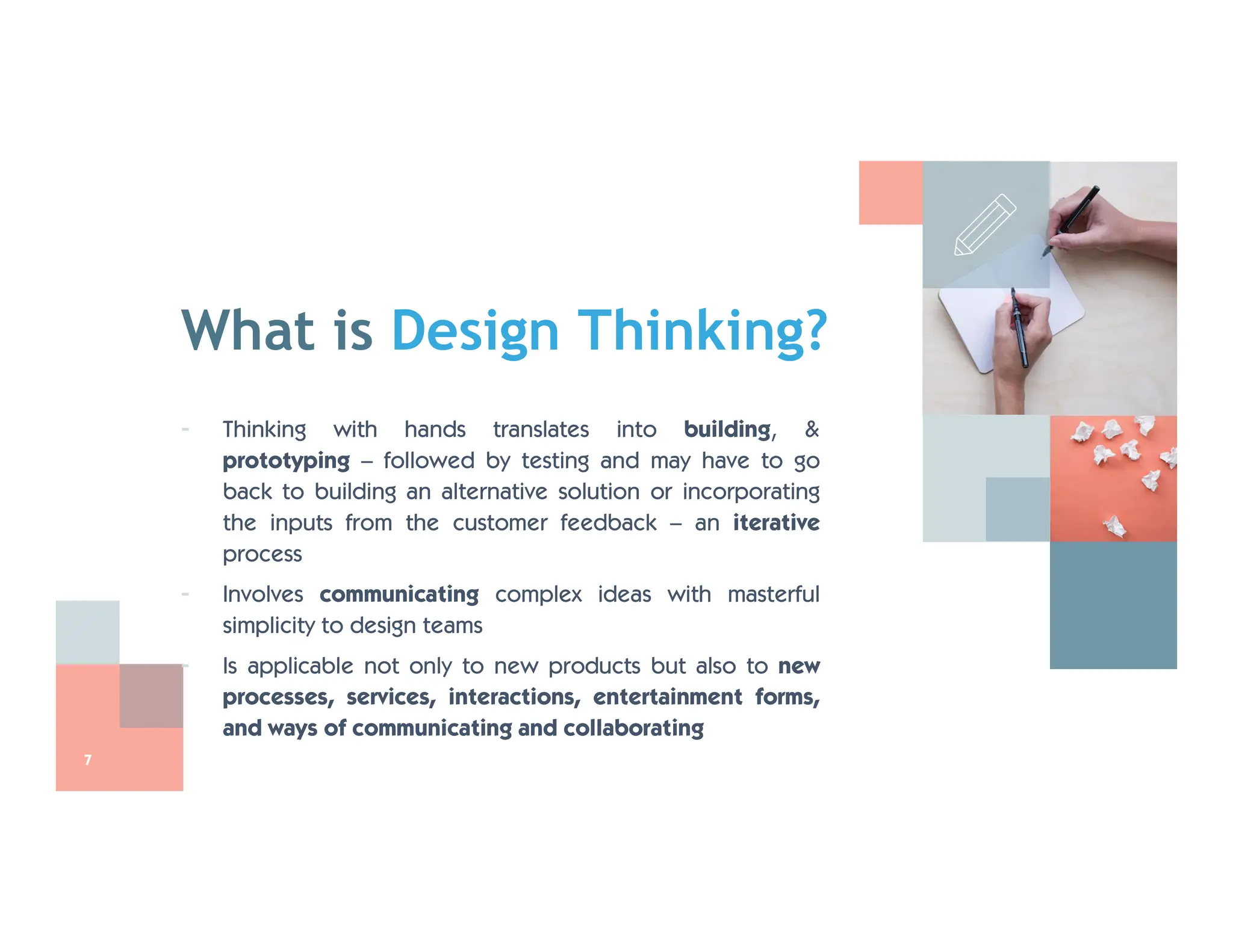
Design thinking is an iterative, human-centered methodology that leading global companies use to solve complex business challenges, lower product development risk, and create customer-focused solutions. By prioritizing user empathy, st...
Design thinking is an iterative, human-centered methodology that leading global companies use to solve complex business challenges, lower product development risk, and create customer-focused solutions. By prioritizing user empathy, structured ideation, rapid prototyping, and continuous testing, enterprises translate ambiguous customer needs into profitable digital products, services, and operational processes.
Contents
The Strategic Value of Enterprise Design Thinking
For decades, corporate strategy relied heavily on inside-out planning—building products based on engineering capabilities or executive intuition and then searching for a market. Design thinking reverses this dynamic by placing the human experience at the center of business decision-making.
When enterprise organizations embed design thinking into their organizational culture, they bridge the gap between technical feasibility, economic viability, and human desirability. This shift addresses several systemic challenges common in modern organizations:
- Reducing Financial and Technical Risk: Building full-scale software features or physical products based on unverified assumptions is costly. Design thinking emphasizes low-fidelity prototyping early in the development cycle, allowing teams to fail fast and cheaply before allocating major capital.
- Breaking Down Siloed Operations: Traditional corporate structures separate product management, engineering, marketing, and customer support. Design thinking workshops unite cross-functional stakeholders around shared customer journey maps and problem statements.
- Accelerating Time-to-Market: By focusing on core user pain points and eliminating unnecessary features during the ideation stage, companies streamline their product roadmaps and deliver essential functionality to market faster.
- Driving Quantifiable ROI: Research consistently demonstrates that design-led organizations outperform market benchmarks. A landmark study by McKinsey & Company tracking design practices across global organizations revealed that companies scoring in the top quartile of the McKinsey Design Index generated 32% higher revenue growth and 56% higher total returns to shareholders compared to their industry peers over a five-year period.
Prominent Corporate Design Thinking Frameworks
While the core principles of design thinking remain constant, major corporations often adapt standard models to suit enterprise scale, governance, and technology stacks.
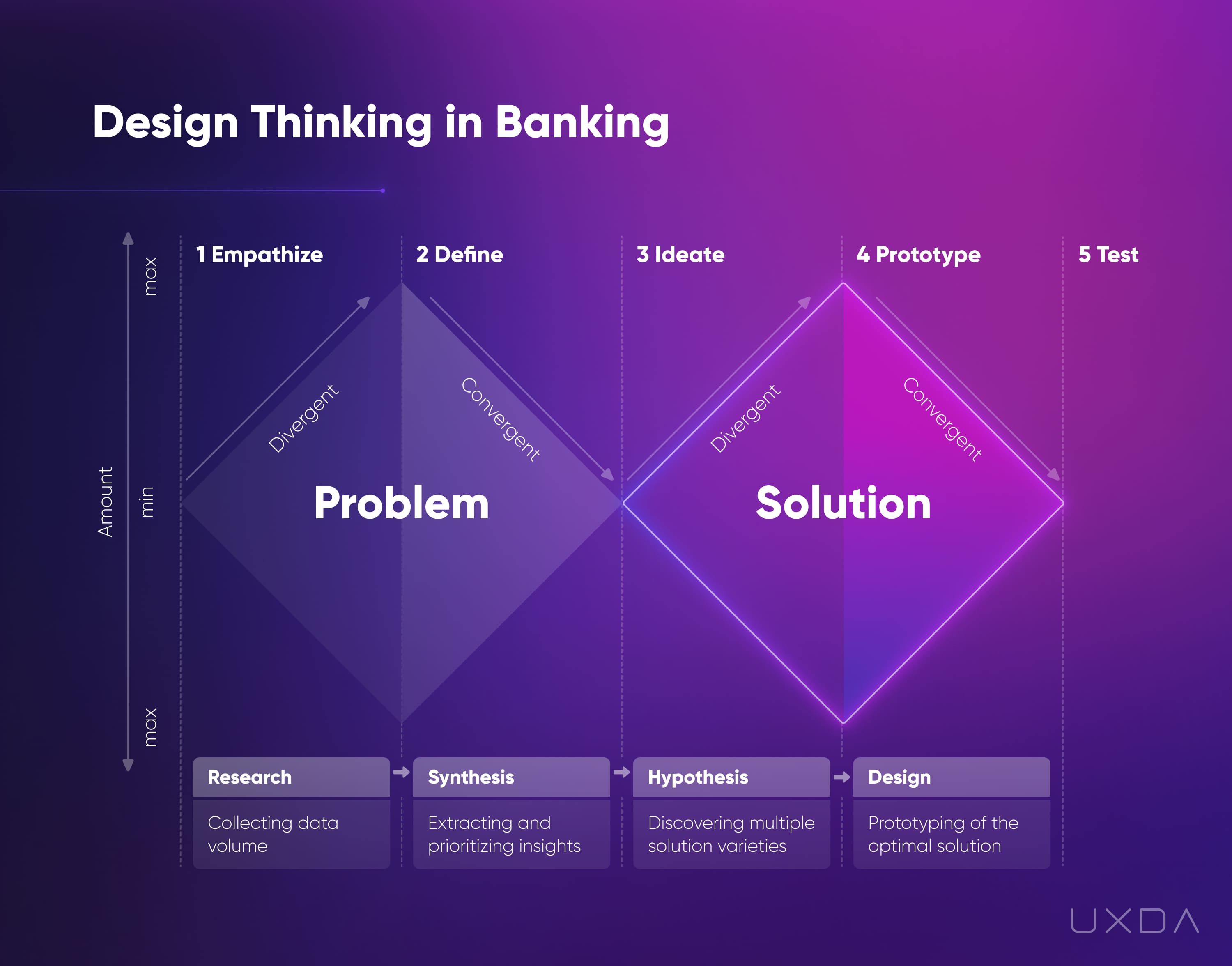
Core Design Thinking Progression
- EMPATHIZE & DEFINE: The Problem
- IDEATE & PROTOTYPE: The Solution
- TEST & ITERATE: With Users
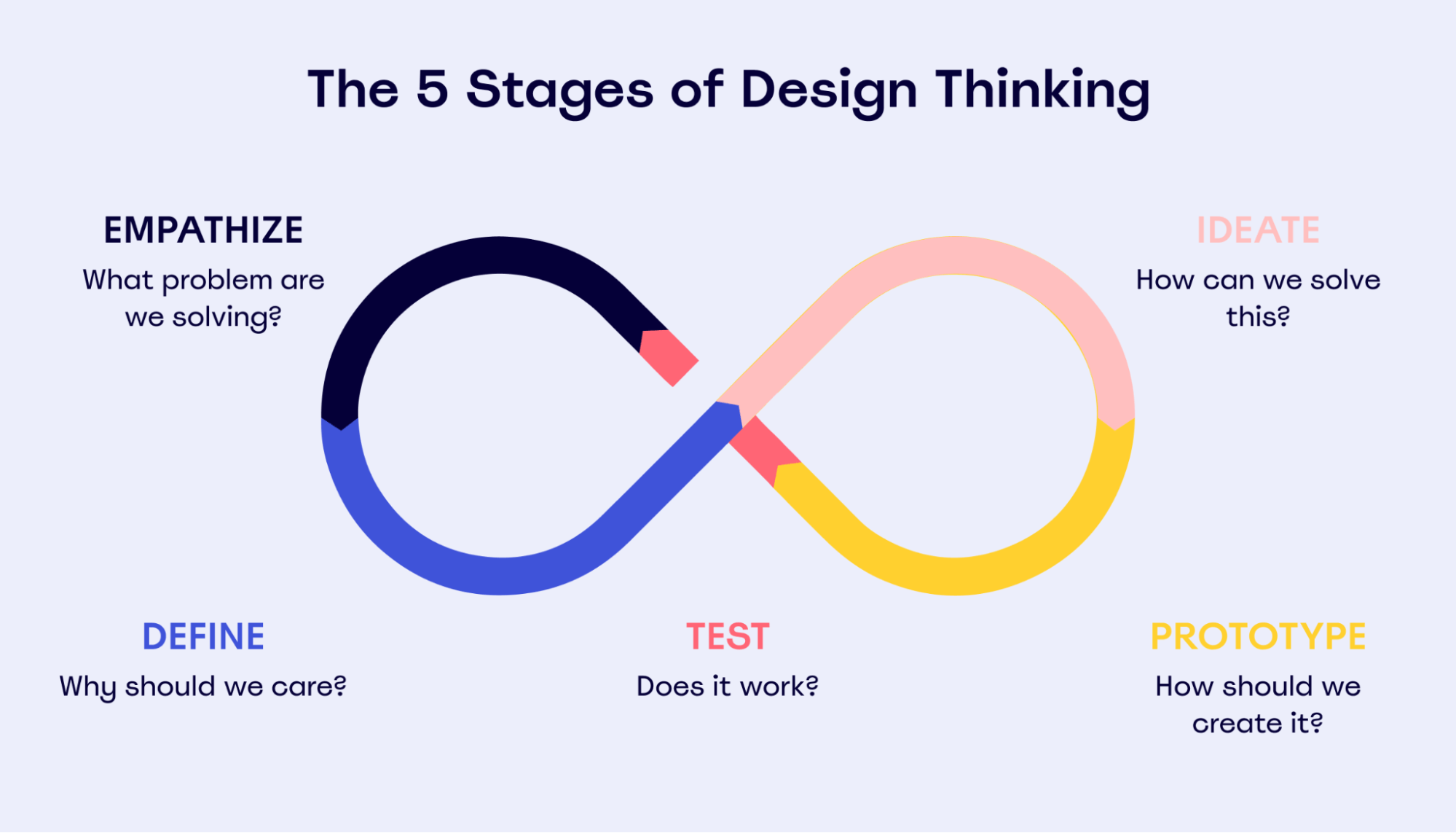
The Stanford d.school 5-Stage Model
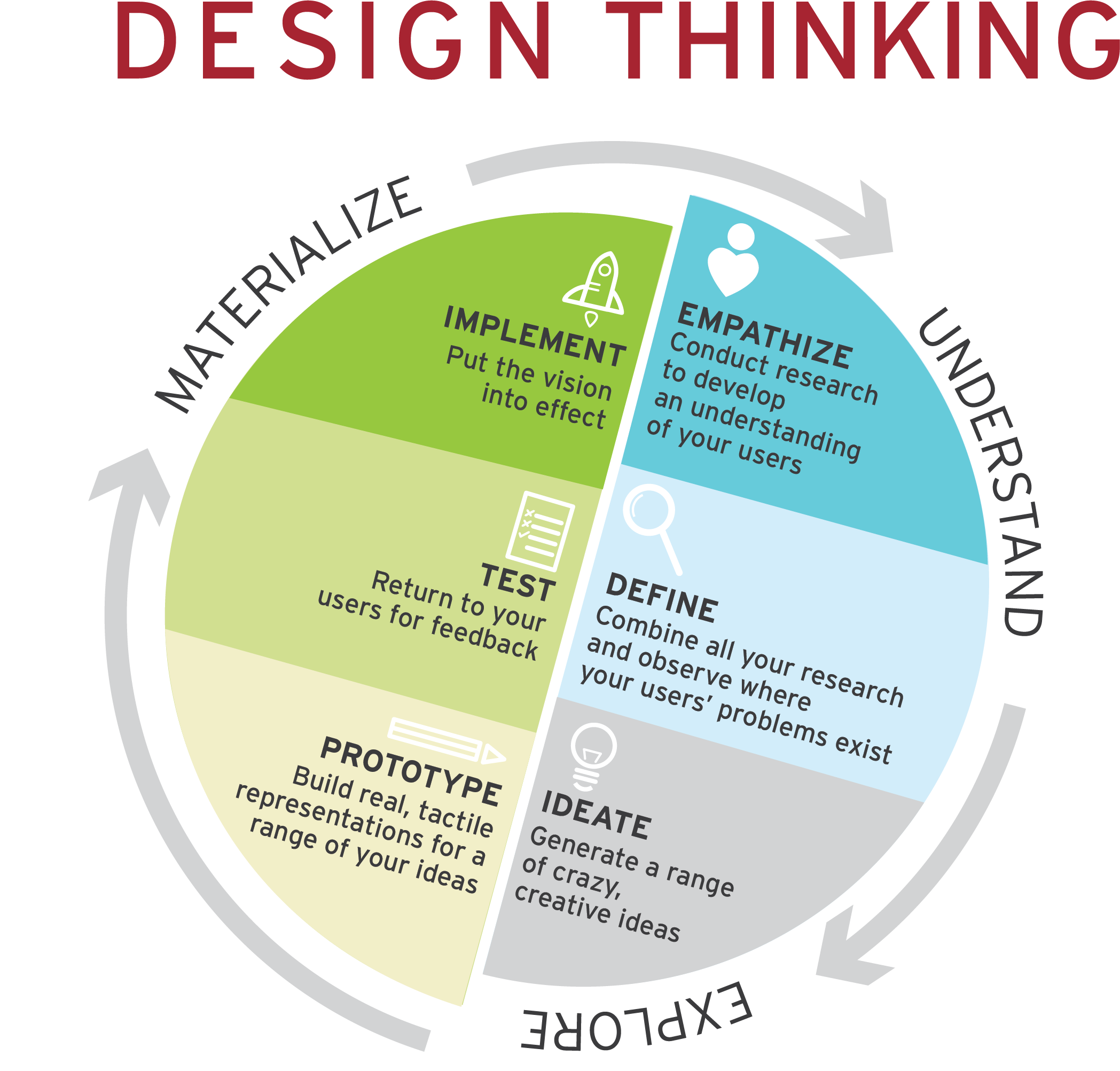
The classic foundation developed by the Hasso Plattner Institute of Design at Stanford University consists of five non-linear stages:
- Empathize: Researching user needs through direct observation, interviews, and immersive experiences.
- Define: Synthesizing research into clear, user-centric problem statements (often framed as "How Might We" questions).
- Ideate: Generating a wide range of creative ideas through unconstrained brainstorming techniques.
- Prototype: Building physical or digital representations of selected concepts.
- Test: Validating prototypes with real users to gather feedback and refine initial assumptions.
IBM Enterprise Design Thinking
To apply design principles across hundreds of global product teams and thousands of software engineers, IBM adapted the traditional model into Enterprise Design Thinking. Designed specifically for complex B2B systems, IBM’s model centers on The Loop—a continuous cycle of Observe, Reflect, and Make.
IBM introduced three enterprise-specific tools within this framework:
- Hills: User-centric statements of intent that frame a project's target outcome, owner, and deadline (e.g., "A sales representative can configure a complex enterprise server quote in under 15 minutes without manual validation").
- Playbacks: Structured alignment sessions where cross-functional teams present current prototypes to stakeholders and end users to maintain project clarity.
- Sponsor Users: Real external clients or end users who commit to participating directly in project reviews throughout the development process.
How Industry Leaders Deploy Design Thinking
Examining how market leaders apply design thinking demonstrates its practical adaptability across diverse sectors, including software, financial services, consumer goods, and hospitality.
Corporate Implementation Models
| Company | Focus Area | Primary Method / Innovation |
|---|---|---|
| IBM | Enterprise Software | The Loop, Hills, Playbacks |
| Airbnb | Experience Design | Storyboarding User Journeys |
| SAP | Business Systems | AppHaus Co-Innovation Spaces |
| PepsiCo | Consumer Products | Integrated Brand & Packaging |
1. IBM: Scaling Across Global Teams
IBM invested heavily in scaling design thinking across its workforce by training over 300,000 employees and establishing dozens of design studios worldwide. A study conducted by Forrester Consulting evaluated IBM's Enterprise Design Thinking framework and discovered that design-led teams cut product definition time by up to 75%, reduced overall project risk, and achieved an estimated 301% ROI by accelerating development and decreasing wasted engineering hours.
2. Airbnb: Transforming the Business Model Through Empathy
During its early stages, Airbnb struggled with low revenue in major markets. Co-founders Brian Chesky and Joe Gebbia analyzed user behavior and realized that host-provided property photographs were poor and uninviting.
Instead of writing more algorithm code, the team visited host properties in New York, spent time with hosts, and re-photographed listings using high-quality cameras. This empathetic intervention doubled weekly revenue in the target market, proving to the leadership team that human intuition and qualitative field research must complement quantitative data analysis.
3. SAP: Humanizing Business Software Architecture
Enterprise resource planning (ERP) software is traditionally criticized for complex user interfaces. SAP addressed this challenge by creating the SAP AppHaus network—dedicated spaces designed specifically for co-innovation with customers.
SAP embeds design thinking into its system design process, resulting in the SAP Fiori design system. Fiori transformed rigid, transactional ERP screens into intuitive, role-based user experiences across mobile and desktop interfaces, significantly lowering training costs for enterprise customers.
4. PepsiCo: Design-Led Brand Transformation
Former PepsiCo CEO Indra Nooyi integrated design into the core of the company's corporate hierarchy by appointing its first Chief Design Officer. PepsiCo used design thinking to rethink product interaction from initial point-of-sale displays to packaging ergonomics.
This effort led to innovations like Pepsi Spire touch-screen beverage dispensers and tailored packaging design for diverse global consumer groups, driving double-digit organic growth across updated product lines.
Comparing Enterprise Methodologies: Design Thinking, Agile, and Lean UX
Enterprise product teams rarely use design thinking in isolation. Instead, high-performing organizations integrate design thinking with Agile development and Lean UX methodologies to cover the end-to-end product lifecycle.
Methodology Integration Architecture
- DESIGN THINKING: "Discover the right problem to solve"
- LEAN UX: "Validate hypotheses with minimum risk"
- AGILE: "Build the solution incrementally"
| Dimension | Design Thinking | Lean UX | Agile Development |
|---|---|---|---|
| Primary Objective | Identify user pain points & discover the right problem | Test business hypotheses & product assumptions quickly | Deliver working software iteratively and efficiently |
| Focus Stage | Discovery & Concept Phase | Definition & Validation Phase | Execution & Delivery Phase |
| Core Artifacts | Journey Maps, Persona Profiles, Empathy Maps | Minimum Viable Products (MVPs), Wireframes | User Stories, Backlogs, Code Sprints |
| Primary Metric | User satisfaction, problem clarity, concept novelty | Hypothesis validation rate, experiment speed | Sprint velocity, release frequency, code quality |
| Key Roles | Design Researchers, UX Strategists, Product Leaders | Product Managers, UX Designers, Technical Leads | Scrum Masters, Developers, QA Engineers |
Understanding these distinctions helps organizations build a unified strategy: Design Thinking determines what to build, Lean UX tests if the solution works, and Agile governs how to build it efficiently.
Practical Roadmap for Implementing Enterprise Design Thinking
Scaling design thinking within a large organization requires intentional change management. Below is an actionable roadmap designed for enterprise leaders looking to implement or refresh their organization's design strategy.
Implementation Strategic Roadmap
- Executive Alignment & Strategy Sponsorship
- Cross-Functional Pilot Execution (The "Hill" Framework)
- Dedicated Infrastructure & Co-Creation Hubs
- Metrics Integration & Operational Governance
Step 1: Secure Executive Alignment and Establish Sponsorship
Before launching enterprise-wide training, secure explicit sponsorship from executive leadership (such as CPO, CTO, or CIO). Frame design thinking as a business performance strategy focused on risk mitigation and revenue growth rather than an aesthetic exercise.
Step 2: Launch Targeted Pilot Projects
Select high-visibility, mid-complexity pilot projects to test the methodology. Avoid using design thinking on small, trivial tasks or existing mission-critical systems undergoing active crisis management. Define explicit "Hills" for the pilot teams so success criteria remain clear.
Step 3: Form Cross-Functional Pods
Structure pilot teams around multidisciplinary pods. A standard pod should include a product manager, lead software engineer, UX researcher/designer, and subject-matter experts from marketing, compliance, or customer success. This cross-functional alignment prevents technical or regulatory surprises late in product cycles.
Step 4: Build Rapid Prototyping Infrastructure
Equip teams with collaboration and prototyping tools like Miro, Figma, or physical workshop supplies. Establish clear guidelines that prioritize low-fidelity prototypes (sketches, interactive wireframes, role-playing scripts) over functional code during early exploration.
Step 5: Establish Governance and Operational Metrics
Measure progress by tracking operational metrics such as discovery phase duration, the number of direct user interactions per sprint, prototype validation speed, and long-term customer adoption rates.
Common Enterprise Pitfalls and How to Avoid Them
Even well-resourced organizations encounter friction when scaling human-centered design principles. Recognizing common pitfalls early helps preserve project momentum.
Falling into "Innovation Theater"
A common mistake occurs when companies host high-energy brainstorming workshops with sticky notes and whiteboards but fail to integrate output into product roadmaps. Design thinking workshops must transition directly into actionable user stories, user validated wireframes, and engineering backlogs. Without execution, workshops degrade into "innovation theater."
Isolating Design Teams from Technical Engineering
When enterprise design groups operate as insulated internal agencies, they risk creating polished product concepts that engineering teams cannot build within current architecture constraints or budget limits. Engineering leads must participate in empathy sessions and ideation workshops from day one.
Over-Reliance on Quantitative Data at the Expense of Qualitative Context
Data analytics engines provide clarity on what users do within software, but rarely explain why users behave that way. Over-relying on quantitative telemetry leads companies to optimize flawed processes. High-performing organizations balance quantitative analytics with qualitative field research and customer interviews.
Treating Design Thinking as a Rigid, Linear Checklist
Design thinking is naturally flexible and non-linear. Teams must feel empowered to return to the empathy stage if user feedback refutes their initial hypothesis during prototype testing. Rigid adherence to a linear process defeats the primary goal of rapid iteration.
Frequently Asked Questions
Which major companies rely heavily on design thinking?
Global enterprises across multiple sectors actively use design thinking, including IBM, Apple, SAP, PepsiCo, Airbnb, Nike, Capital One, GE Healthcare, and Intuit. These organizations embed human-centered design across product design, internal service design, and corporate strategy.
How does design thinking differ from Agile methodology?
Design thinking focuses on identifying user problems and discovering creative, human-centered solutions. Agile focuses on delivering software solutions incrementally through short, disciplined work cycles (sprints). Companies frequently use design thinking during early project discovery and integrate Agile during software execution.
What is IBM’s Enterprise Design Thinking model?
IBM Enterprise Design Thinking is a framework designed specifically to scale design methodology across large enterprise environments. Its core model is The Loop (Observe, Reflect, Make), supported by three primary practices: Hills (outcome-driven project goals), Playbacks (stakeholder alignment milestones), and Sponsor Users (real clients embedded in the design validation loop).
How do enterprises measure the ROI of design thinking?
Companies measure ROI by tracking metrics such as reduced product cycle times, lower development costs (by catching design flaws before writing production code), increased customer retention rates, higher Net Promoter Scores (NPS), and faster feature adoption rates among active users.
Can non-technology and B2B companies use design thinking effectively?
Yes. Design thinking is equally effective in B2B context, service industries, financial institutions, and healthcare systems. Any organization that delivers services, designs operational processes, or interacts with human customers benefits from systematic empathy research, problem reframing, and prototype testing.
Next Steps for Transforming Your Enterprise Design Culture
To introduce or strengthen design thinking within your organization, start with practical, incremental actions:
- Conduct a Design Maturity Audit: Assess how customer research currently informs your organization's product planning and technology investments.
- Train Cross-Functional Champions: Send mixed teams—comprising product owners, senior engineers, and business analysts—through structured enterprise design workshops.
- Embed Real Customers into Design Cycles: Establish a formal Sponsor User program to ensure your development teams gain direct feedback from actual users every two to four weeks.
- Standardize Collaborative Tooling: Deploy unified digital whiteboarding and rapid prototyping platforms across remote, hybrid, and co-located teams to maintain momentum.
Image Gallery