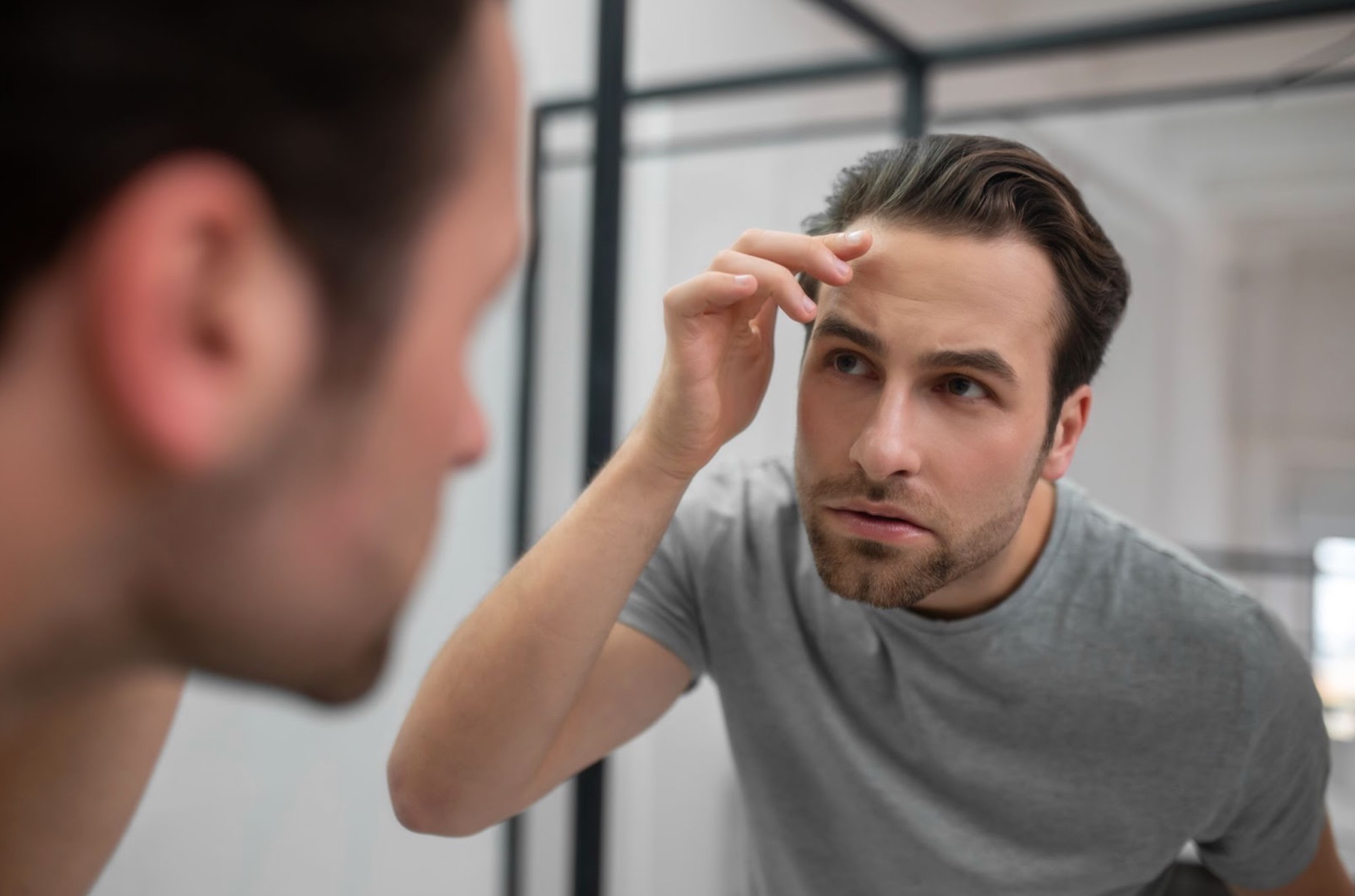
The Rock Hairline Myth vs. Fact: Why Dwayne Johnson Shaved His Head
Dwayne "The Rock" Johnson did not lose his hair overnight to a medical mystery or a failed surgical procedure. Instead, his signature bald head is the result of a deliberate style choice driven by natural hairline recession, hair textu...
Dwayne "The Rock" Johnson did not lose his hair overnight to a medical mystery or a failed surgical procedure. Instead, his signature bald head is the result of a deliberate style choice driven by natural hairline recession, hair texture preferences, and an iconic personal brand transformation that began in the late 2000s.
Contents
The Origins of "The Rock" Hairline Myth
For decades, public interest in Dwayne Johnson's physical evolution has generated widespread rumors regarding his hairline. Because Johnson transitioned from a full head of hair during his early professional wrestling career to a completely shaved scalp as a global box-office star, internet culture filled the visual gap with speculation.
The primary myths surrounding Johnson's scalp fall into three major categories:
- The Sudden Alopecia Myth: Claims that Johnson suffered from rapid, unexplained hair loss or an autoimmune condition that destroyed his hair follicles within months.
- The Botched Cosmetic Surgery Myth: Rumors alleging that Johnson underwent an unsuccessful Follicular Unit Extraction (FUE) or Follicular Unit Transplantation (FUT) hair transplant that forced him to shave his scalp clean.
- The Total Inability to Grow Hair: The belief that Johnson is physiologically incapable of sprouting hair on his scalp due to genetic hairlessness.
These narratives persist largely because public figures rarely address aesthetic changes openly. However, Johnson's hair transition was documented across hundreds of televised wrestling events, film roles, and public appearances, providing a clear visual record that refutes these exaggerated claims.
Fact-Checking Dwayne Johnson's Hair Loss Timeline
To understand the reality behind Johnson's hairline, one must examine his public appearances across three distinct decades. His hair history demonstrates a standard pattern of age-related hairline maturation combined with androgenetic alopecia (male pattern baldness).
- 1996–1999: High Fade & Curly Afro (Rocky Maivia Era)
- 2000–2004: Tapered Buzz Cut & Receding Temples (Attitude Era / Early Hollywood)
- 2005–2009: Shorter Crop & Norwood Class 3 Transition (Mid-2000s Films)
- 2010–Present: Completely Shaved Scalp & Clean Aesthetic Signature
The Early Wrestling Years (1996–1999)
When Johnson debuted in World Wrestling Entertainment (WWE) under the ring name Rocky Maivia in 1996, he wore a voluminous, naturally curly high fade. As his character evolved into "The Rock" during the late 1990s, he shortened his style into a sleek taper cut with long sideburns. During this era, his temporal peaks were full, though his juvenile hairline was already beginning to mature.
The Hollywood Transition (2000–2007)
As Johnson shifted into feature films such as The Scorpion King (2002) and The Rundown (2003), subtle changes became apparent. His temporal corners began receding inward, moving from a juvenile baseline to a classic Norwood Scale Type 2 and eventually Type 3 pattern. During movies like Gridiron Gang (2006) and Game Plan (2007), Johnson maintained a very close buzz cut to minimize the visual contrast between his receding temples and denser crown hair.
The Full Shave Decision (2010–Present)
By 2010, around the filming of Fast Five, Johnson abandoned close-cropped buzz cuts entirely in favor of a daily razor shave. This aesthetic choice coincided with a major physical rebrand, elevating his image into the action-hero powerhouse recognized worldwide today.
Johnson directly addressed his hair choice in 2017 with a viral, humorous post on social media. He explained that his decision was not driven purely by complete baldness, but by a combination of hairline recession and personal frustration with his natural hair texture, which he jokingly described as a cross between an Afro and a llama's hair. He clarified that shaving his head was simply easier and looked significantly better than managing an unpredictable hairline.
Myth vs. Fact Breakdown
The table below contrasts common public misconceptions about Dwayne Johnson's hair with established historical records and medical realities.
| Myth | Claimed Cause / Narrative | Fact & Medical Reality | Visual / Historical Evidence |
|---|---|---|---|
| Botched Hair Transplant | Johnson underwent a failed FUE/FUT procedure that left visible scarring, forcing a shaved head. | False. There are no linear FUT donor scars or FUE dot patterns visible on his shaved scalp in high-definition photography. | Clean, uniform scalp skin across the occipital donor zone. |
| Sudden Alopecia Universalis | An autoimmune reaction caused total body and scalp hair loss over a short period. | False. Johnson displays normal facial hair growth (bearded and stubble looks) and natural body hair. | Frequent appearance of facial stubble and visible follicle shadow when un-shaved for 48+ hours. |
| Pure Choice, Zero Hair Loss | He has a perfect juvenile hairline and shaves purely for movie roles. | False. Photos from 2004–2008 show natural temporal recession (Norwood 3 pattern) consistent with androgenetic alopecia. | Visible recession of temporal points in mid-2000s film roles like Southland Tales. |
| Performance Enhancer Baldness | Anabolic compounds were the sole reason for his hair line recession. | Partial Myth. While exogenous hormones can accelerate follicle miniaturization in genetically susceptible men, genetic predisposition to DHT sensitivity remains the primary driver. | Gradual temporal recession typical of male pattern hair loss seen in men without athletic backgrounds. |
| Shaving Alters Hair Follicles | Daily shaving destroyed his hair roots permanently so he can no longer grow hair. | False. Shaving cuts hair shafts at the skin surface and has zero impact on subcutaneous follicle biology or growth rates. | Consistent dark hair shadow across the temporal and crown regions when shaving is delayed. |
The Medical Reality: Androgenetic Alopecia and Male Pattern Baldness
Understanding Johnson's hair transformation requires an analysis of the biological mechanisms behind male hair loss. What Johnson experienced is the standard progression of androgenetic alopecia, a hereditary condition affecting over 50 percent of men by age 50.
The Role of Dihydrotestosterone (DHT)
Male pattern baldness is primarily governed by the interaction between circulating androgenic hormones and genetically susceptible hair follicles.
Enzymatic Conversion: The enzyme 5-alpha reductase converts circulating testosterone into dihydrotestosterone (DHT).
Follicular Miniaturization: In men with inherited genetic sensitivity, DHT binds to androgen receptors located in hair follicles across the temporal corners, hairline, and vertex (crown).
Shortened Anagen Phase: DHT causes the growth phase (anagen) of the hair cycle to shorten while lengthening the resting phase (telogen). Over successive cycles, the hair shaft becomes progressively thinner, shorter, and less pigmented—a process known as miniaturization.
Permanent Inactivation: Without clinical intervention, affected follicles eventually stop producing terminal hairs entirely, leaving only unpigmented vellus hairs or smooth scalp tissue.
Testosterone (5-Alpha Reductase) -> Dihydrotestosterone (DHT)
Binds to Sensitive Follicles
Progressive Miniaturization
Hairline Recession
The Norwood Scale Progression
Dermatologists and hair restoration specialists classify male hair loss using the Norwood Scale. Johnson's historical photographs track a standard trajectory along this diagnostic framework:
- Norwood Type 1: Minimal or no temporal recession (Johnson in 1996).
- Norwood Type 2: Subtle triangular recession at the temporal points, typical of adult hairline maturation (Johnson in 2000).
- Norwood Type 3: Deeper temporal recession extending back past a line drawn 2 cm anterior to the external auditory meatus (Johnson in 2005).
- Norwood Type 4 / 3-Vertex: Noticeable temporal recession accompanied by thinning hair across the mid-scalp (Johnson in 2008).
Rather than fighting further progression with extensive medical regimens, surgical hair transplants, or concealment cosmetics, Johnson chose total cranial shaving—a strategy increasingly adopted by public figures.
Shaving vs. Restoration: Why High-Profile Men Choose the Shave
When faced with Norwood Class 3 or Class 4 hair loss, men generally have two primary pathways: restoration or acceptance and shaving. Johnson's choice reflects practical and aesthetic considerations common to men in high-visibility professions.
Surgical and Medical Hair Restoration Limitations
Hair restoration techniques such as Follicular Unit Extraction (FUE) harvest donor hair from the dense back and sides of the head to transplant into thinning areas. While effective for many, surgical solutions present distinct trade-offs:
- Donor Supply Constraints: Men with thick body frames, broad skulls, or high genetic hair loss velocity may lack sufficient donor density to create a thick, low hairline.
- Ongoing Maintenance Requirements: Medical therapies such as oral finasteride or topical minoxidil require lifetime adherence to prevent non-transplanted native hair from continuing to miniaturize.
- Downtime and Recovery: Surgical hair transplants require weeks of healing and months of growth delay before final results are visible, which can conflict with tight film shooting schedules.
The Aesthetic Advantage of the Shaved Scalp
For an action star, maintaining a clean, close-shaved head offers several structural advantages:
- Symmetry and Proportions: A shaved head emphasizes muscular facial geometry, jawline definition, and broad shoulder width.
- Consistency: Daily razor maintenance ensures an identical visual appearance across months of long movie shoots and publicity tours.
- Zero Styling Friction: Eliminates dependence on hairpieces, concealer powders, or specialized lighting setups designed to hide thinning spots on camera.
Scalp Care and Grooming Lessons from the Clean-Shaved Look
Dwayne Johnson's transition popularized the modern "bald and bearded" look. Achieving a clean, healthy scalp aesthetic requires a dedicated skin care routine rather than simply abandoning hair care products.
Daily Scalp Routine:
- Exfoliate
- Precision Shave
- Hydrate
- Broad-Spectrum Sun Protection (SPF 30+)
1. Exfoliation and Preparation
The scalp contains a high density of sebaceous glands. Without hair to absorb natural oils, dead skin cells and sebum can accumulate, leading to clogged pores or folliculitis.
- Use a gentle chemical exfoliator containing salicylic acid (BHA) 2–3 times per week to dissolve oil inside pores.
- Warm water or a hot steam towel before shaving softens hair stubble and reduces mechanical skin friction.
2. Strategic Shaving Technique
- Blade Choice: Multi-blade rotary electric head shavers or high-quality safety razors provide smooth results depending on skin sensitivity.
- Grain Direction: Shave with the grain (the direction hair grows) first to prevent ingrown hairs and razor burn. Pass lightly against the grain only if necessary for an ultra-smooth finish.
- Lubrication: Always use a slick, non-foaming shaving cream or gel enriched with soothing botanicals like aloe vera or glycerin.
3. Hydration and Moisture Barrier Repair
Shaving removes the top layer of stratum corneum along with hair. Post-shave care is essential to restore the skin barrier:
- Apply an alcohol-free splash or serum featuring niacinamide, panthenol, or hyaluronic acid to soothe micro-irritations.
- Follow with a lightweight, non-comedogenic matte moisturizer to prevent excess shine throughout the day.
4. UV Protection (Crucial Step)
A shaved scalp receives direct solar radiation, significantly increasing the risk of photoaging, sun spots, and skin cancers like basal cell carcinoma or melanoma.
- Apply a broad-spectrum SPF 30 or higher sunscreen daily to the entire scalp.
- Reapply every two hours during prolonged outdoor exposure or heavy perspiration.
- Select broad-spectrum zinc oxide or titanium dioxide formulas with a dry-touch matte finish to eliminate unwanted grease.
Frequently Asked Questions
Did Dwayne Johnson ever get a hair transplant?
There is no evidence, photographic proof, or clinical indication that Dwayne Johnson ever received a hair transplant. High-resolution images of his scalp reveal no linear scarring (from FUT) or micro-dot scarring (from FUE) in the donor regions behind the ears or occipital bone. His shaved head is an aesthetic lifestyle choice made to handle natural hairline recession and difficult hair texture.
Why did Dwayne Johnson stop growing his hair?
Johnson stopped growing his hair because of a combination of progressive male pattern hairline recession (androgenetic alopecia) and personal frustration with his hair's natural, frizzy texture. He publicly noted that shaving his head completely provided a far cleaner, sharper, and more manageable appearance than attempting to style thinning, uneven hair.
Can anabolic steroids cause a receding hairline like Dwayne Johnson's?
Exogenous anabolic compounds can accelerate hair loss in men who carry genetic sensitivity to DHT. However, steroids themselves do not cause androgenetic alopecia out of nowhere; they amplify existing genetic predispositions by increasing systemic androgen levels that interact with scalp receptors. Men without the genetic trait for androgenetic alopecia rarely experience classic pattern baldness, regardless of hormone levels.
Does shaving your head make hair grow back thicker?
No. Shaving hair has zero effect on hair thickness, growth rate, or follicle density. Razors slice hair shafts at the surface of the skin, creating a blunt edge that may feel temporarily coarse as it pokes through the epidermis. Follicle biology is governed entirely by subcutaneous cell division, hormones, and genetics.
What is the best way to prevent shine on a shaved head?
To manage excess shine on a bare scalp, wash daily with a gentle face cleanser rather than harsh body soaps that strip natural oils and trigger compensatory sebum production. Follow cleansing with an oil-free, matte-finish moisturizer containing ingredients like silica or starch derivatives that absorb light and surface moisture throughout the day.
Practical Action Plan for Managing Hairline Changes
If you are experiencing hairline recession or contemplating shaving your head, follow this structured decision process:
- Assess the Norwood Pattern: Consult a board-certified dermatologist to determine if your hair loss is standard androgenetic alopecia or an underlying condition like telogen effluvium or alopecia areata.
- Evaluate Clinical Options Early: If preserving hair is your priority, discuss FDA-approved medical interventions (such as topical or oral minoxidil and 5-alpha reductase inhibitors like finasteride) with your physician before significant follicle miniaturization occurs.
- Test the Buzz Cut First: Before committing to a smooth razor shave, cut your hair down to a #1 or #0 guard. This allows you to evaluate your head shape, facial proportions, and temporal hairline comfort without immediate daily razor upkeep.
- Invest in Proper Scalp Care: If you commit to shaving your head, acquire a dedicated routine comprising a smooth-gliding razor, an alcohol-free post-shave balm, matte moisturizer, and a dedicated SPF 30+ sunscreen.
Image Gallery