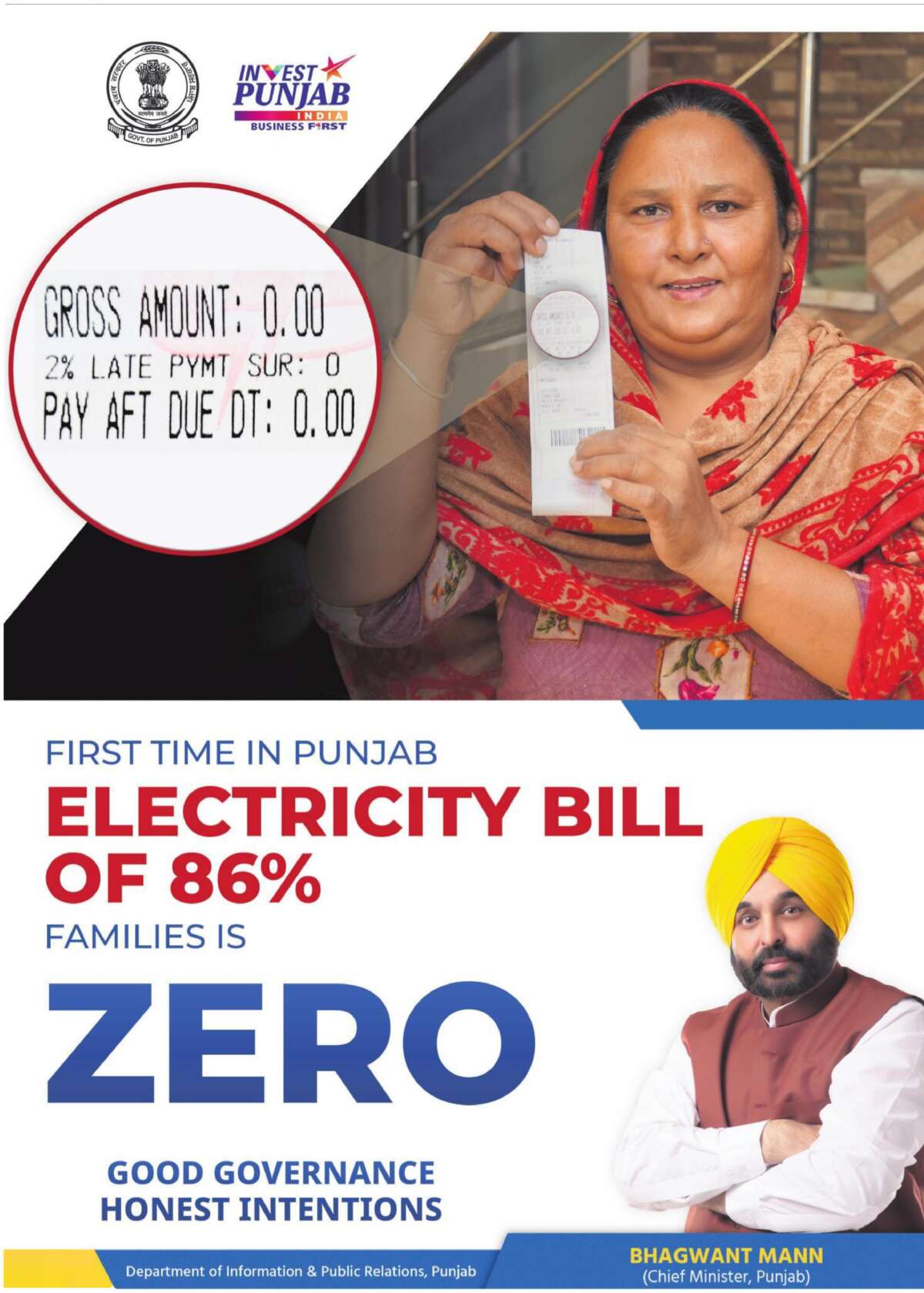
Deconstructing "Zero Bill" Solar Ads: How Promises Work and What You Really Pay
Solar advertisements promising "zero electric bills" or "free solar panels" are frequently misleading marketing tactics. While residential solar energy systems significantly reduce electricity consumption charges through net metering,...
Solar advertisements promising "zero electric bills" or "free solar panels" are frequently misleading marketing tactics. While residential solar energy systems significantly reduce electricity consumption charges through net metering, homeowners almost always retain monthly utility grid connection fees, seasonal power shortfalls, and loan or lease obligations, making true zero-cost energy rare.
Contents
The Mechanics Behind "Zero Bill" Advertising Claims
Residential solar marketing campaigns often feature headlines declaring that homeowners can completely eliminate their monthly power bills. These claims rely on a simplification of how utility billing interacts with distributed solar generation.
When a rooftop photovoltaic (PV) system generates electricity, that power immediately supplies the home's operational loads. When generation exceeds instantaneous home demand, excess power flows back to the electrical grid. Under a billing structure known as Net Energy Metering (NEM), the local utility credits the homeowner for the excess electricity exported to the grid.
Marketing agencies leverage net metering by calculating total annual generation and matching it against total annual energy consumption. If a proposed solar array is projected to produce 10,000 kilowatt-hours (kWh) per year and the home consumes 10,000 kWh per year, advertisers market the proposal as a "100% offset" or a "zero bill" solution.
However, an offset in total energy production does not equal an offset in total financial liability. Utility bill structures separate electricity usage from grid access fees, administrative costs, and local taxes. While solar panels offset the volumetric charge for kilowatt-hours consumed, they rarely eliminate the fixed structural costs required to remain connected to the regional power grid.
Why Your Utility Bill Will Rarely Be Zero
Understanding why monthly electric statements persist even after installing a robust rooftop solar array requires examining utility pricing structures, credit valuation systems, and seasonal weather patterns.
- Typical Utility Bill:
- Volumetric Usage Charge: Offset by Solar Net Metering
- Fixed Basic Service Fee: REMAINS (Grid connection requirement)
- Infrastructure Riders: REMAINS (Non-bypassable charges)
- Local Taxes & Surcharges: REMAINS (Based on account status)
1. Mandatory Fixed Grid Connection Fees
Virtually all investor-owned utilities, municipal power providers, and electric cooperatives charge a basic monthly service fee. This fixed charge covers line maintenance, transformer upkeep, billing administration, and emergency restoration services. Because your home relies on the grid to draw power when the sun is not shining (such as at night), utilities require this base fee regardless of how much energy your solar array exports. Depending on your service territory, mandatory connection charges typically range from $10 to $35 per month.
2. Non-Bypassable Charges and Infrastructure Riders
In many jurisdictions, public utility commissions allow electric companies to assess non-bypassable charges (NBCs). These charges fund public benefit programs, low-income energy assistance, environmental remediation, and nuclear decommissioning. NBCs are billed on every kilowatt-hour of electricity delivered from the grid to the home, and net metering credits cannot be used to offset them.
3. Shifts in Net Metering Tariffs (NEM 3.0 and Net Billing)
Historically, early net metering rules (NEM 1.0 and NEM 2.0) credited exported solar electricity at full retail rates. Under retail net metering, one exported kWh could offset one imported kWh dollar-for-dollar.
However, utilities across the United States have widely transitioned to net billing tariffs. A prominent example is California's NEM 3.0 structure, implemented by the California Public Utilities Commission (CPUC), which reduced export credit values by roughly 75%. Under net billing models:
- Solar electricity sent to the grid during midday is credited at wholesale or avoided-cost rates (often $0.03–$0.05 per kWh).
- Electricity imported from the grid during evening peak hours is charged at retail rates (often $0.30–$0.50 per kWh).
This discrepancy means exporting excess daytime energy no longer generates enough financial credit to cancel out evening energy usage, leaving homeowners with a monthly balance even if total generation equals total usage.
4. Time-of-Use (TOU) Rate Structures
Under Time-of-Use rate plans, electricity prices fluctuate based on demand. Peak hours generally occur in the late afternoon and early evening when solar generation drops off. If a home imports electricity during expensive peak windows and exports surplus energy during cheap off-peak hours, the financial credit balance will not cover consumption costs.
5. Seasonal Generation Deficits
Solar arrays produce significantly more energy in late spring and summer than in late fall and winter. During months with shorter daylight hours or prolonged cloud cover, homes draw heavily from the grid. If net metering credits do not roll over indefinitely—or if the utility liquidates excess credits at low wholesale cash values at annual true-up dates—homeowners face substantial winter utility bills.
Deceptive Solar Advertising Tactics to Avoid
The Federal Trade Commission (FTC) Consumer Advice warns against common deceptive tactics used in digital advertisements, social media campaigns, and door-to-door sales pitches. Recognizing these claims helps protect consumers from predatory contracts.
| Deceptive Ad Claim | Actual Reality |
|---|---|
| "Government Free Solar Grant" | Tax Credit (requires tax liability) |
| "Zero Electric Bills Ever" | Fixed fees & TOU rates still apply |
| "No Upfront Cost System" | 20-25 Year Lease or Financing Loan |
Misrepresenting the Federal Investment Tax Credit (ITC)
Advertisements often promise "free solar via government grants" or state that the "government will pay you to switch." These ads refer to the Residential Clean Energy Credit under Section 25D of the Internal Revenue Code. Detailed guidance on the IRS Residential Clean Energy Credit confirms that this incentive is a non-refundable tax credit, not a cash grant or direct payment.
- It allows homeowners who purchase a system to deduct 30% of the system installation cost from their federal income tax liability.
- It does not provide direct cash to consumers who lack federal tax liability.
- It does not apply to solar leases or Power Purchase Agreements (PPAs); in those cases, the third-party owner receives the tax benefit.
Substituting Utility Bills for Financing Payments
Promotions claiming "No More Energy Bills" often hide the fact that the utility bill is simply replaced by a long-term loan payment, lease payment, or PPA invoice. While a homeowner's direct electric bill may decrease, their overall monthly energy expenditure (Utility Bill + Solar Financing Payment) may remain equal or even increase if the system is mis-sized or financed at high interest rates.
Urgent "Local Grid Initiative" Advertisements
Lead-generation websites frequently run ads stylized as urgent public notices, claiming that homeowners in specific zip codes must apply before "government solar programs close." These notices are typically unregistered marketing fronts designed to collect personal contact information and sell it to aggressive sales organizations.
Comparing Solar Financial Structures and Real-World Costs
Evaluating solar options requires comparing total monthly obligations across different financing models rather than focusing solely on the utility bill statement.
| Financial Option | Upfront Equipment Ownership | Monthly Utility Bill Expectation | Solar Payment Required | Key Financial Considerations & Hidden Costs |
|---|---|---|---|---|
| Outright Cash Purchase | Homeowner directly owns the PV system | Low (Fixed connection charges + potential peak/winter usage) | None ($0) | High upfront capital cost; homeowner retains full benefit of tax credits and system equity. |
| Solar Financing Loan | Homeowner owns system upon loan maturity | Low (Fixed connection charges + grid usage) | Fixed monthly loan payment (typically 10–25 years) | High financing fees (dealer fees) can be hidden in total loan principal; high interest rates affect overall return. |
| Solar Lease | Third-party installer or lender owns system | Reduced usage charge + fixed connection fees | Fixed monthly lease payment | Annual escalators (1%–3.9% rate increases) can raise monthly costs over time; home sales require buyer lease transfer. |
| Power Purchase Agreement (PPA) | Third-party developer owns system | Reduced usage charge + fixed connection fees | Variable payment based on per-kWh solar production | Charges apply to every kWh produced by panels, even if home does not consume it; subject to annual price escalators. |
| "Zero Bill" Ad Offer | Usually a Lease or PPA disguised in marketing | Varies (Fixed fees and net billing shortfalls remain) | Hidden lease/loan agreement added to billing | Misleads consumer into trading one bill for two separate monthly expenses (Utility + Solar Financing). |
Regulatory Actions and Legal Protections for Consumers
Federal and state regulators actively police predatory solar marketing tactics. The FTC enforces Section 5 of the FTC Act, which prohibits deceptive or unfair commercial practices. State Attorneys General across multiple jurisdictions have brought actions against solar companies that misrepresent financial savings, fabricate government affiliations, or enforce contracts without proper statutory cooling-off periods.
- Consumer Protection Framework:
- FTC Section 5 (Deceptive Marketing)
- State AG Enforcement (Contract Disclosures)
- SEIA Code of Conduct (Ethical Industry Rules)
The SEIA Business Code, published by the Solar Energy Industries Association, establishes ethical standards for consumer transactions. Key industry guidelines require that solar quotes clearly delineate:
- Total gross cost versus net cost after tax incentives.
- Clear disclaimers that tax credit availability depends on individual financial situations.
- Realistic year-one utility bill savings calculations based on documented historical utility rate data.
- Specific disclosure of fixed utility connection charges that will remain post-installation.
If a contractor presents a agreement stating that your total energy liability will be zero without accounting for fixed utility fees, they may be operating in violation of standard trade practice frameworks.
Step-by-Step Guide to Evaluating a Solar Proposal
To verify whether a solar proposal offers genuine financial benefit, follow this evaluation protocol before signing any agreement.
- Step 1: Audit 12 Months of Utility Bills
- Step 2: Isolate Fixed vs. Volumetric Charges
- Step 3: Review Local Net Metering Rules (NEM 2.0 vs NEM 3.0 / Net Billing)
- Step 4: Audit Solar Equipment Production Estimates (kWh)
- Step 5: Calculate Total Monthly Liability (Utility Base Fee + Solar Payment)
Step 1: Analyze Your Historical Utility Bills
Collect 12 to 24 consecutive months of electric bills. Identify your annual energy usage in kilowatt-hours (kWh) and note how your consumption fluctuates between summer and winter. Determine your utility's exact rate structure:
- Are you on a flat rate or Time-of-Use (TOU) pricing?
- What is the mandatory monthly basic service charge listed on your bill?
Step 2: Verify Local Net Metering Policies
Contact your utility directly or consult their public tariff schedules to determine net metering terms:
- Does the utility credit exported power at full retail value or an avoided-cost net billing rate?
- Does the utility reset accumulated solar generation credits annually (true-up), and what is the cash cash-out value for surplus credits?
Step 3: Audit System Sizing and Degradation Calculations
Verify that the installer’s solar production estimate matches local solar resource parameters. The national standard tool for modeling system performance is the NREL PVWatts Calculator, managed by the National Renewable Energy Laboratory. Input your address, roof pitch, system size, and tilt to cross-check the contractor's estimated annual output. Make sure the proposal accounts for natural panel degradation (typically 0.5% loss in production per year).
Step 4: Examine Financing Terms and Dealer Fees
If financing your solar installation, request an itemized truth-in-lending disclosure:
- Ask for the cash price of the system versus the financed price. High dealer fees are often built into low-interest solar loans, raising the overall purchase price significantly.
- Check solar leases and PPAs for annual escalator clauses. An annual escalator of 2.9% compounding annually will increase your monthly payment over a 25-year contract.
Step 5: Compute Your Net Monthly Liability
Use this formula to determine your actual anticipated monthly energy expenditure:
$$\text{Total Monthly Energy Liability} = \text{Fixed Utility Service Fee} + \text{Estimated Residual Grid Usage Charges} + \text{Monthly Solar Financing Payment}$$
If the combined sum exceeds your current average monthly electric bill, the proposed project will not produce positive cash flow, regardless of promotional statements.
Frequently Asked Questions
Can a residential solar system ever produce a $0 electric bill?
In rare cases, yes. A zero-dollar electric bill (or a credit balance) can occur under favorable retail net metering structures (NEM 1.0/2.0) if your system generates enough excess electricity credits to offset fixed connection fees and non-bypassable charges. However, under modern net billing tariffs, fixed grid fees and reduced export credit values make a true $0 bill nearly impossible for most grid-tied homeowners.
What happens to excess solar electricity generated during the day?
Excess electricity automatically flows onto the local distribution grid to supply nearby homes. Your electric meter tracks these exported kilowatt-hours. Depending on your utility’s policy, your account receives net energy credits that offset current usage or roll over to offset future power bills.
Is the 30% federal solar tax credit paid to me as a check?
No. The Federal Residential Clean Energy Credit is a non-refundable tax credit applied against your total income tax liability when filing IRS Form 5695. It reduces the amount of tax you owe dollar-for-dollar. If your total tax liability is lower than the credit amount, the unused portion can roll forward to subsequent tax years, but it does not result in a direct refund check from the government.
What is the difference between a solar lease and an outright purchase?
When you purchase a system outright (or with a solar loan), you own the physical equipment, receive all tax incentives directly, and increase your home's asset value. Under a solar lease or Power Purchase Agreement (PPA), a third-party finance company owns the solar panels installed on your roof. You pay the company a monthly fee to use the equipment or purchase the power generated, while the owner claims tax credits and financial depreciation benefits.
What should I do if I signed a contract based on deceptive zero-bill promises?
Under federal law (the FTC Cooling-Off Rule), consumers often have three business days to cancel sales agreements made at their home or away from the seller’s primary place of business. If that window has passed, review the contract's cancellation clause, consult your state's Consumer Protection Division within the Attorney General's office, or seek formal legal counsel regarding potential misrepresentation or disclosure violations.
Practical Action Steps Before Committing
Before moving forward with any rooftop solar installation:
- Obtain at least three independent quotes from licensed, certified electrical contractors or established local solar installers rather than relying on digital lead generators.
- Review your energy usage trends over the past 12 to 24 months to ensure the proposal is accurate to your historical patterns.
- Check the math independently using tools like the U.S. Department of Energy Going Solar Guide to understand baseline performance expectations.
- Never sign an agreement under high-pressure tactics or based on verbal promises. Ensure every representation regarding savings, utility bill reductions, and financing terms is written explicitly into the primary contract text.
Image Gallery