Mexico City Net Worth: GDP, Private Wealth, and Financial Valuation
Mexico City does not possess a single "net worth" figure in the traditional balance-sheet sense of a private corporation or individual. However, its overall economic valuation is measured through its Gross Metropolitan Product (GMP), a...
Mexico City does not possess a single "net worth" figure in the traditional balance-sheet sense of a private corporation or individual. However, its overall economic valuation is measured through its Gross Metropolitan Product (GMP), aggregate private wealth, commercial real estate stock, and municipal public asset base. The Greater Mexico City Metropolitan Area generates between $300 billion and $450 billion in nominal annual economic output—accounting for roughly 22% to 25% of Mexico’s total gross domestic product—while hosting an estimated $300 billion to $350 billion in total private wealth held by resident households.
Contents
Defining "Net Worth" for a Global Megacity
Calculating the net worth of a metropolitan area requires evaluating several distinct economic layers rather than relying on a single accounting metric. Municipalities do not consolidate public assets, private equity, personal real estate, and industrial output into one balance sheet. To arrive at a comprehensive valuation of Mexico City (CDMX and its surrounding metropolitan zone), economists and urban analysts evaluate four main financial components:
- Gross Metropolitan Product (GMP): The total monetary value of all goods and services produced within the metropolitan area annually.
- Private Wealth Aggregate: The combined net assets (liquid funds, equities, private business holdings, and real estate) owned by individuals residing in the city.
- Public Infrastructure & Municipal Assets: Sovereign and local state-owned assets, including transport systems, public lands, administrative buildings, and municipal utilities, offset by public municipal debt.
- Commercial Real Estate & Capital Stock: The total value of corporate real estate, industrial parks, and institutional property developments.
Together, these pillars establish Mexico City as the financial powerhouse of Spanish-speaking Latin America, competing directly with São Paulo as the region's top economic center.
Economic Output: Gross Metropolitan Product (GMP)
The primary indicator of Mexico City's economic strength is its annual output. According to data from the Instituto Nacional de Estadística y Geografía (INEGI) and regional economic studies, Mexico City proper (the federal entity of CDMX) generates approximately 15% to 17% of Mexico’s national GDP. When including the contiguous municipalities of the State of Mexico (Estado de México) and Hidalgo that form the Zona Metropolitana del Valle de México (ZMVM), that contribution rises to nearly a quarter of the country’s total economic activity.
- Valle de México Metropolitan Area (ZMVM)
- Mexico City Proper (CDMX): ~15% - 17% National GDP
- State of Mexico (Edomex): ~8% - 10% National GDP
- Combined Output: ~22% - 25% of Mexico's GDP
Key Economic Drivers
- Financial and Corporate Services: Mexico City hosts the Bolsa Mexicana de Valores (BMV) and BIVA stock exchanges, the Banco de México (Banxico) headquarters, and the regional hubs of major multinational banks such as BBVA México, Banorte, CitiBanamex, and HSBC.
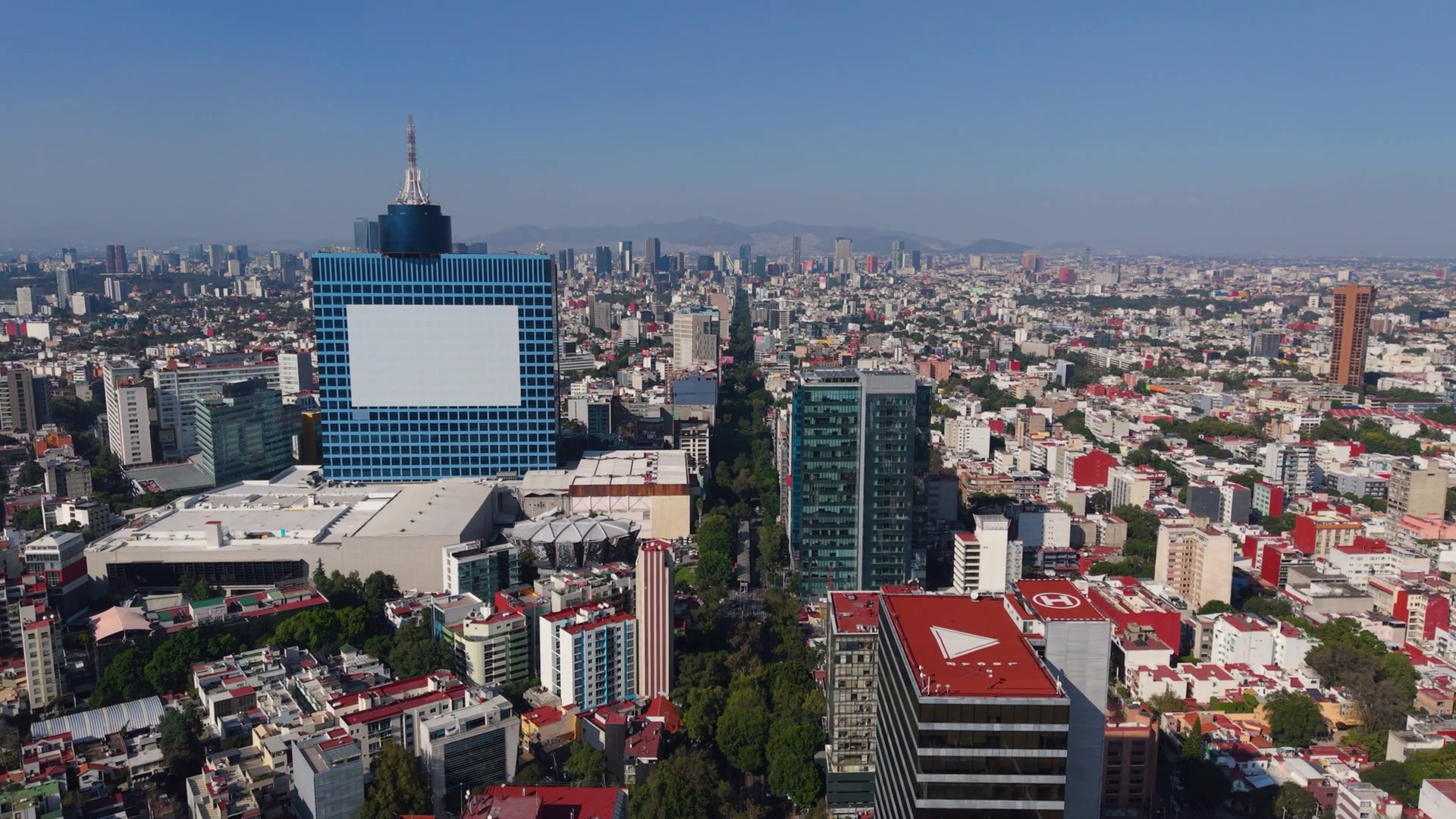
- Telecommunications and Media: The city serves as the corporate capital for telecommunications giants like América Móvil and media conglomerates such as Grupo Televisa.
- Commerce and Logistics: High-density consumer markets, retail corporate offices, and central distribution hubs supply the 22+ million residents of the valley.
- High-Tech and Professional Services: A rapidly growing fintech sector, IT consulting services, legal firms, and corporate consulting practices operate predominantly out of central business corridors.
Private Wealth Concentration in Mexico City
While GDP measures annual flow, private wealth measures accumulated capital. Private wealth reports from institutions like New World Wealth and Henley & Partners consistently rank Mexico City as one of the two wealthiest cities in Latin America, alongside São Paulo.
The total private wealth held by residents of Mexico City is estimated at $300 billion to $350 billion USD. This concentration of capital is supported by a significant population of High-Net-Worth Individuals (HNWIs)—defined as individuals with net assets of $1 million USD or more—and a notable concentration of billionaires.
Wealth Enclaves and Real Estate Values
Private wealth in Mexico City is heavily concentrated in specific neighborhoods, where real estate values command high prices per square meter:
- Polanco & Reforma Social: Known for luxury retail along Avenida Presidente Masaryk, diplomatic residences, and high-end residential towers.
- Lomas de Chapultepec & Bosques de las Lomas: Traditional strongholds of Mexico's corporate and industrial elites, characterized by expansive private estates and secure residential compounds.
- Santa Fe: Developed initially as a master-planned corporate center, Santa Fe holds a significant concentration of high-rise luxury condominiums, private universities, and corporate headquarters.
- Pedregal de San Ángel & Jardines en la Montaña: Established residential areas in the southern sector of the city, historically popular among political figures and legacy business families.
- Condesa, Roma, and Juarez: Historic central neighborhoods experiencing sustained capital appreciation, driven by domestic investment, international relocation, and commercial redevelopment.
Municipal Budget, Public Assets, and Liabilities
To understand the net worth of the government entity itself—the Gobierno de la Ciudad de México—one must examine municipal revenues, asset ownership, and outstanding debt obligations.
The CDMX Operating Budget
The annual budget of Mexico City, overseen by the Secretaría de Administración y Finanzas de la CDMX, operates at roughly 300 billion to 330 billion Mexican Pesos (MXN) (approximately $15 billion to $18 billion USD, depending on prevailing exchange rates). Unlike many U.S. cities that rely almost entirely on local property taxes, CDMX maintains a distinct financial arrangement where it collects local property taxes (predial) and payroll taxes while receiving significant federal transfers through the national revenue-sharing system.
Public Asset Base
The government of Mexico City controls extensive public infrastructure assets:
- Transportation Systems: The Sistema de Transporte Colectivo (STC) Metro, operating 12 lines spanning over 200 kilometers, represents one of the largest public transport capital assets in North America. Additional transit assets include the Metrobús network, Cablebús systems, and municipal light rail.
- Real Estate and Public Land: The city owns major public parks (such as the 686-hectare Bosque de Chapultepec), public administrative buildings, historical monuments, and civic centers.
- Water and Utility Networks: The local water distribution infrastructure (SACMEX), public lighting networks, and urban road networks represent billions of dollars in replacement cost value, though they require continuous maintenance capital expenditure.
Public Debt Management
Mexico City maintains a structured municipal debt burden, monitored by global credit rating agencies (such as Fitch Ratings, Moody's, and S&P Global). The city's public debt typically balances around 90 billion to 100 billion MXN (roughly $5 billion USD). CDMX consistently holds one of the highest sovereign-adjacent credit ratings in Mexico due to its strong local tax collection capabilities and conservative debt-to-GDP ratios.
Mexico City Financial Metrics Breakdown
The following table summarizes the primary economic indicators, financial estimates, and structural figures that define Mexico City's economic scale.
| Economic Indicator | Estimated Value (USD / MXN) | Primary Sector / Component | Economic Significance |
|---|---|---|---|
| Nominal GDP (CDMX Proper) | ~$230 Billion – $270 Billion USD | Financial Services, Tech, Retail, Media | Accounts for ~15-17% of Mexico’s national economic output. |
| Nominal GDP (Metropolitan - ZMVM) | ~$350 Billion – $450 Billion USD | Commerce, Manufacturing, Corporate Hubs | Represents ~22-25% of Mexico’s total national economy. |
| Total Resident Private Wealth | ~$300 Billion – $350 Billion USD | Real Estate, Equities, Private Enterprise | Highest concentration of HNWIs in Spanish-speaking Latin America. |
| Annual CDMX Public Budget | ~$15 Billion – $18 Billion USD (~300B MXN) | Municipal Services, Transit, Public Safety | Largest municipal operating budget in Central America. |
| Direct Municipal Debt | ~$4.5 Billion – $5.5 Billion USD (~95B MXN) | Public Works Infrastructure Finance | Maintained at low debt-to-output ratios with strong credit ratings. |
| Prime Commercial Real Estate Value | ~$40 Billion+ USD | Santa Fe, Reforma, Insurgentes Corridors | Over 7 million square meters of Class A and A+ office space. |
Nearshoring, Fintech, and Investment Growth
Mexico City’s economic trajectory is influenced by broad macroeconomic trends, notably the expansion of nearshoring manufacturing across Mexico and the rise of central financial technology hubs.
Corporate Headquarters Effect
While physical manufacturing plants established under nearshoring initiatives are located primarily in northern and central states (such as Nuevo León, Coahuila, and Querétaro), the management, legal structuring, financial advisory, and international trade operations are overwhelmingly anchored in Mexico City. Corporate offices along the Paseo de la Reforma and Insurgentes Sur corridors have seen steady demand for prime Class A office space as multinational firms set up regional oversight units.
- Nearshoring Economic Cascade:
- Northern/Central Manufacturing Hubs (Monterrey, Saltillo, Querétaro): Produce Industrial Goods
- Mexico City Corporate Ecosystem (Reforma, Polanco, Santa Fe): Captures Financial, Legal & Administrative Services Output
The Venture Capital and Fintech Boom
Mexico City has emerged as a major venture capital capital in Latin America. Thousands of startups—particularly in cross-border payments, neobanking, digital logistics, and e-commerce—have established headquarters in neighborhoods like Roma Norte, Juarez, and Condesa. Companies such as Kavak, Clara, and Konfío point to CDMX's status as a top innovation engine, attracting billions in foreign direct investment (FDI) from international venture funds.
Structural Challenges Impacting Economic Valuation
Evaluating Mexico City's long-term economic prospective requires examining systemic operational costs and liabilities that offset its growth:
- Water Infrastructure Stress: The Sistema Cutzamala, a complex network of reservoirs and pumping stations supplying water to the Valley of Mexico, requires multi-billion-dollar infrastructure modernization. Water management challenges represent both a public budget burden and a risk factor for commercial developments.
- Informal Economy Size: A substantial portion of Mexico City's working population operates within the informal sector. While informal trade contributes to liquidity and local consumption, it limits municipal tax revenue collection and distorts per-capita productivity figures.
- Seismic and Environmental Vulnerability: Located on a historical lakebed within an active seismic zone, Mexico City must allocate substantial continuous expenditure toward structural retrofitting, earthquake early-warning systems, and emergency preparedness infrastructure.
Frequently Asked Questions
Is Mexico City the wealthiest city in Latin America?
In terms of total Gross Metropolitan Product (GMP) and private wealth concentration, Mexico City and São Paulo, Brazil, alternate for the top position depending on real exchange rates. Mexico City leads Spanish-speaking Latin America by a wide margin in corporate headquarters, capital markets volume, and overall private wealth aggregate.
What is the difference between Mexico City's GDP and its net worth?
GDP measures annual economic production—the total flow of goods and services produced in a year ($250B+ USD for CDMX proper). Net worth, by contrast, represents the total accumulated asset value minus liabilities, including private resident wealth ($300B–$350B USD), commercial real estate stock, and municipal public infrastructure.
Which areas hold the highest concentration of private wealth in Mexico City?
The highest concentrations of residential and commercial wealth are in Polanco, Lomas de Chapultepec, Bosques de las Lomas, Santa Fe, and Pedregal de San Ángel. Central commercial hubs such as Paseo de la Reforma and Avenida de los Insurgentes hold the highest concentrations of institutional real estate assets.
How does nearshoring impact Mexico City’s economic baseline?
Even though physical factories are often built in industrial border regions, nearshoring increases demand in Mexico City for specialized financial services, legal representation, corporate real estate, logistics management, and executive housing, indirectly expanding the city's commercial asset base and services GDP.
What is the financial status of Mexico City's municipal debt?
Mexico City maintains a relatively conservative fiscal policy with a total public debt of around 90 to 100 billion MXN (approximately $5 billion USD). The city holds strong investment-grade domestic credit ratings due to solid local tax revenues and predictable federal budget transfers.
Strategic Summary for Analysts and Investors
To evaluate Mexico City's net financial standing, analysts should view the economy through three distinct metrics rather than searching for a single balance-sheet value:
- For Macroeconomists: Focus on the $350B–$450B USD Gross Metropolitan Product of the broader Valley of Mexico (ZMVM), which accounts for nearly a quarter of national GDP.
- For Private Wealth and Real Estate Investors: Focus on the $300B–$350B USD in private resident wealth concentrated across key enclaves (Polanco, Santa Fe, Lomas), alongside high-performing Class A commercial office corridors.
- For Credit and Public Policy Experts: Focus on the ~300B MXN annual operating budget managed by the municipal government, supported by low debt-to-GDP ratios relative to comparable global megacities.
Image Gallery