Possessing a Workers' Compensation Certificate: A Complete Guide for Businesses and Contractors
Possessing a workers' compensation certificate proves that a business maintains active insurance coverage to protect employees against workplace injuries and occupational illnesses. Issued by an insurance carrier or authorized broker,...
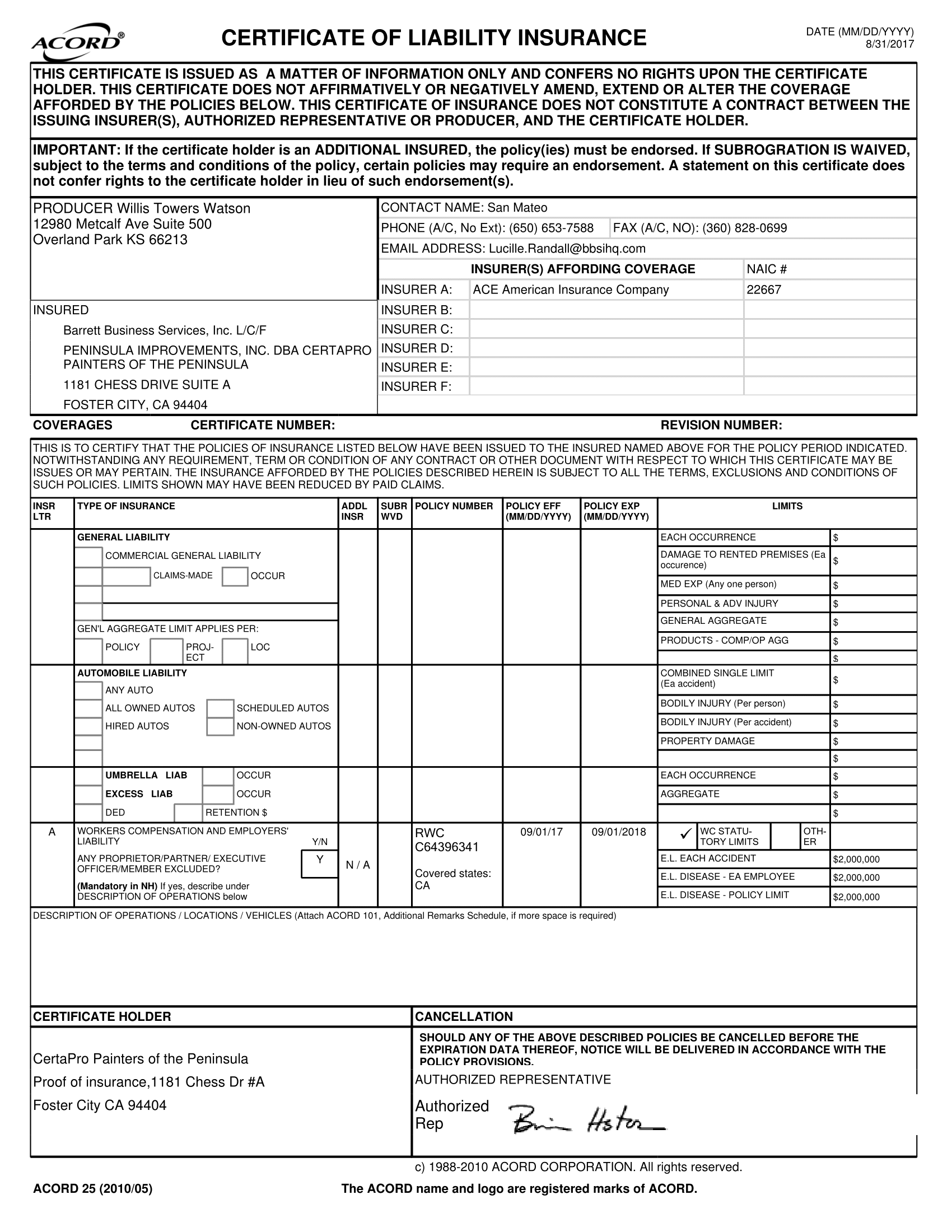
Possessing a workers' compensation certificate proves that a business maintains active insurance coverage to protect employees against workplace injuries and occupational illnesses. Issued by an insurance carrier or authorized broker, this document—often provided on a standardized Certificate of Insurance (COI) form—serves as formal verification for clients, general contractors, and regulatory agencies that a company complies with statutory insurance mandates.
Contents
What Is a Workers' Compensation Certificate?
A workers' compensation certificate is an official document issued by an insurance carrier or licensed insurance agency that verifies the existence of an active workers' compensation insurance policy. While the insurance policy itself is a lengthy, legally binding contract containing full terms, conditions, and exclusions, the certificate is a concise, one- or two-page summary designed for third-party review.
In commercial transactions, hiring managers, project owners, and general contractors routinely demand proof of coverage before allowing a contractor or vendor to begin work. Possessing this certificate demonstrates that the business has secured financial protection for its workforce in accordance with state statutory requirements.
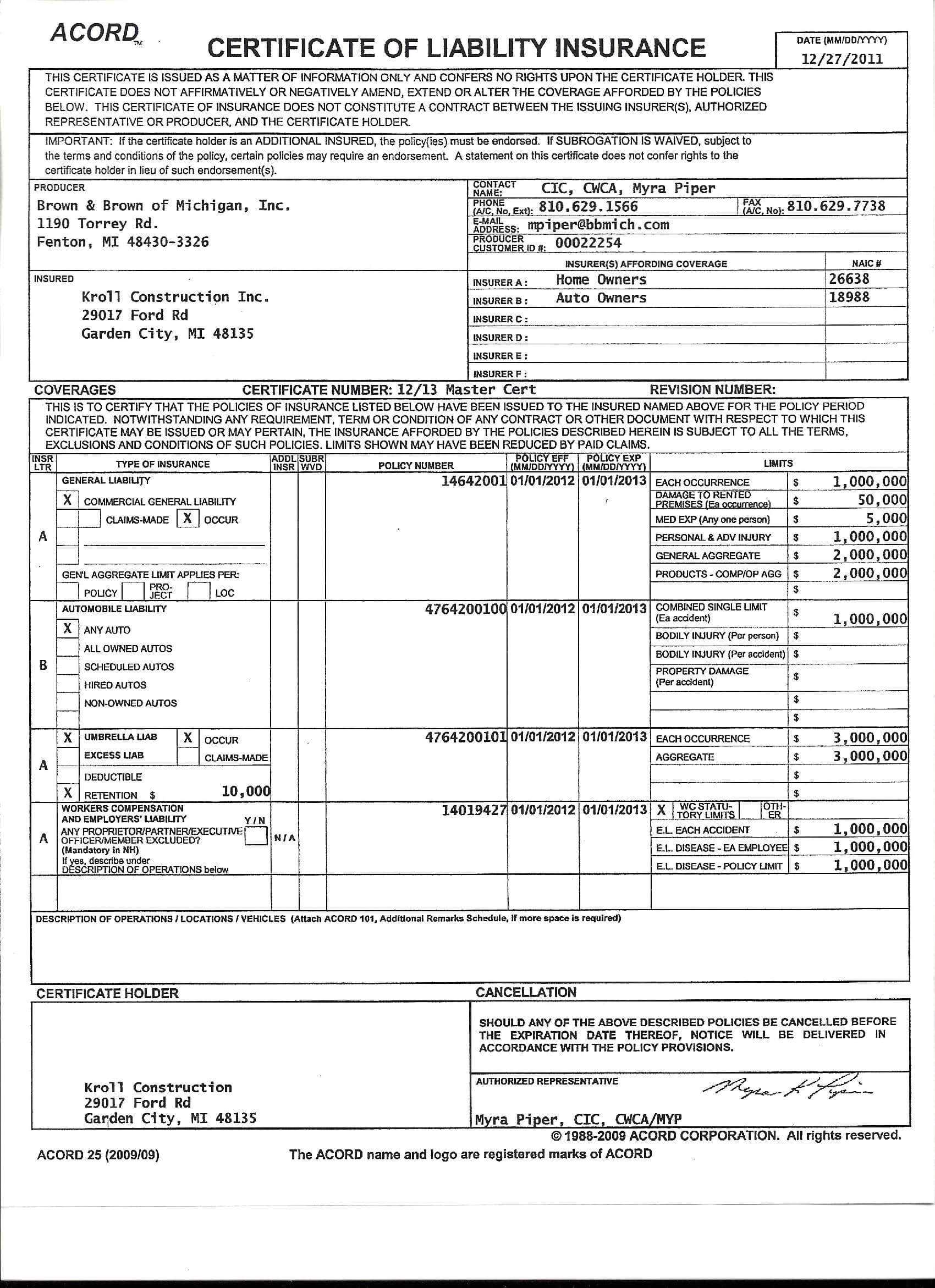
In the United States, the most widely recognized standard format for this document is the ACORD 25 Certificate of Liability Insurance, though some state agencies and private entities issue state-specific certificates of compliance or coverage.
- CERTIFICATE OF INSURANCE (COI)
- PRODUCER: Insurance Agency Name & Contact
- INSURED: Named Business / Contractor
- INSURER: Licensed Insurance Carrier (NAIC #)
- COVERAGE DETAILS:
- Policy Number
- Effective Date & Expiration Date
- Part 1: Statutory Workers' Compensation Limits
- Part 2: Employer's Liability Limits (Accident / Disease)
- CERTIFICATE HOLDER: Third-Party Requesting Proof
Key Distinctions: Certificate vs. Policy
It is essential to distinguish between possessing an actual insurance policy and holding a certificate of insurance:
- The Insurance Policy: The actual contract between the employer and the insurance carrier. It outlines premium calculations, specific policy endorsements, audit conditions, and explicit legal duties of both parties.
- The Certificate of Insurance: An informational document generated for a third party (the "certificate holder"). It confers no rights upon the certificate holder unless specific contractual endorsements—such as a Waiver of Subrogation—are formally attached to the policy itself.
Why Possessing a Workers' Compensation Certificate Is Critical
For modern business operations, possessing an up-to-date workers' compensation certificate is both a legal safeguard and an operational necessity.
- Possessing a Valid Workers' Comp COI
- Legal & State Compliance
- Prevents Stop-Work Orders
- Avoids Statutory Fines
- Contractual Financial Access
- Bids on Commercial Projects
- Fulfills Client Contracts
- Audit & Risk Shielding
- Prevents Uninsured Subcontractor Premium Charges During Audit
- Legal & State Compliance
1. Statutory Compliance and Legal Mandates
In nearly every U.S. state, employers are legally required to carry workers' compensation coverage once they hire a minimum number of employees (often starting at one employee, though threshold rules vary in states like Georgia, Alabama, or Florida). Operating without valid coverage can lead to severe penalties, including civil fines, criminal charges, and judicial stop-work orders that halt business operations immediately.
2. Contractual Requirements and Bids
General contractors and enterprise clients almost universally require sub-contractors and service providers to submit a workers' compensation certificate prior to site entry or contract execution. Without a valid certificate, a business is typically disqualified from bidding on commercial projects, government RFPs, or residential subcontracts.
3. Risk Mitigation for Hiring Entities
When a general contractor hires an uninsured subcontractor whose worker suffers an injury on site, state law often holds the general contractor liable for medical expense payments and disability benefits. Requiring and verifying a subcontractor's certificate of insurance shifts primary liability to the subcontractor’s insurance carrier, insulating the principal enterprise from unexpected claims.
4. Preventing Audit Adjustments and Cost Penalty Spikes
During annual workers' compensation premium audits, insurance auditors inspect payments made to independent contractors and subcontractors. If a business owner cannot produce a valid certificate of insurance for every subcontractor utilized during the policy year, the auditor reclassifies those subcontractors as uninsured payroll. Consequently, the hiring company faces steep, retroactive premium adjustments.
Essential Elements Found on a Workers' Comp Certificate
To ensure a workers' compensation certificate satisfies legal and contractual standards, administrators must verify that specific fields are fully populated and accurate.
| Field Name | Details Displayed |
|---|---|
| Producer Information | Name, address, and phone number of insurance agency. |
| Named Insured | Exact legal entity name and primary business address. |
| Insurer / Carrier | Name of underwriting carrier and NAIC identifier. |
| Policy Period | Exact effective date and future expiration date. |
| Coverage Part 1 | Statutory Workers' Compensation limits (State law). |
| Coverage Part 2 | Employer's Liability limits (Accident/Disease/Policy). |
| Certificate Holder | Entity requesting proof (Name and legal address). |
| Special Endorsements | Waiver of Subrogation or Notice of Cancellation notes. |
Insured Name and Entity Structure
The legal business name listed on the certificate must exactly match the legal entity executing the commercial agreement. If a company operates under a "Doing Business As" (DBA) name, both the corporate entity and DBA must appear on the certificate to prevent coverage disputes.
Carrier Name and NAIC Number
The issuing insurer must be explicitly identified along with its National Association of Insurance Commissioners (NAIC) number. General contractors frequently check the carrier's financial stability rating through agencies like A.M. Best to ensure the insurer possesses adequate capital reserves.
Policy Number and Effective Dates
The policy period defines the timeframe during which coverage applies. A certificate is only valid for work performed between the policy’s effective date and expiration date. If a project extends beyond the expiration date, a renewal certificate must be requested and reviewed immediately.
Policy Limits: Part 1 and Part 2
Workers' compensation policies consist of two distinct protective layers:
- Part 1: Statutory Workers' Compensation: Covers mandatory state benefits for medical care, temporary/permanent disability, and vocational rehabilitation. This section rarely has a fixed dollar limit, as coverage pays according to state statutory schedules.
- Part 2: Employer's Liability: Protects the employer against common-law lawsuits alleging negligence outside the scope of statutory workers' compensation benefits. Standard liability limits typically appear as:
- $100,000 / $500,000 / $100,000 (Bodily Injury by Accident / Bodily Injury by Disease Policy Limit / Bodily Injury by Disease Each Employee)
- $500,000 / $500,000 / $500,000
- $1,000,000 / $1,000,000 / $1,000,000 (Common requirement for enterprise or industrial construction jobs)
Certificate Holder Block
The lower section of the ACORD 25 form identifies the certificate holder—the third party requesting proof of coverage. Listing a company as a certificate holder establishes a record with the agency, though it does not automatically modify policy conditions unless accompanied by formal policy endorsements.
How to Obtain and Maintain a Workers' Compensation Certificate
Obtaining a workers' compensation certificate is a straightforward operational process for businesses maintaining active coverage.
- Step 1: Secure Policy
- Step 2: Request Certificate via Broker/Portal
- Step 3: Define Certificate Holder Details
- Step 4: Verify Endorsements (e.g., Waiver)
- Step 5: Receive & Issue COI to Client
Step 1: Bind an Active Workers' Compensation Policy
Before a certificate can be generated, a business owner must purchase a workers' compensation policy through an insurance carrier, commercial agent, or state insurance fund. Policy pricing is determined by industry risk classification codes, projected annual payroll, and historical claims experience (Experience Modification Rate, or EMR).
Step 2: Submit a Certificate Request
Once the policy is bound, the business owner can request a certificate through:
- Online Client Portals: Most modern commercial brokerages offer self-service portals allowing policyholders to generate custom certificates instantly.
- Direct Broker Request: Emailing or calling the insurance producer with specific project contract requirements.
Step 3: Provide Certificate Holder and Endorsement Requirements
When submitting a request, provide the broker with:
- Legal name and address of the entity requesting the certificate.
- Specific contract liability limits required by the project.
- Special endorsement specifications, such as a Waiver of Subrogation in favor of the certificate holder or specific notice periods for cancellation.
Step 4: Review and Transmit
Review the generated document for accurate spellings, active policy dates, and proper coverage limits before forwarding the PDF directly to the hiring entity or general contractor.
Policy Endorsements and Exemptions
Understanding supplementary policy clauses and exemption options is critical when evaluating a workers' compensation certificate.
| Term | Operational Meaning & Impact |
|---|---|
| Waiver of Subrogation | Insurer yields right to recover claim costs paid from a negligent third party. |
| Sole Proprietor Exclude | Business owner opts out of coverage; policy covers employees only. |
| Ghost Policy | Zero-employee policy securing statutory proof without active payroll coverage. |
| Exemption Certificate | State-issued document confirming legal exemption from carrying coverage. |
Waiver of Subrogation
A Waiver of Subrogation is a common endorsement required in commercial construction and facility management contracts. Under standard subrogation rights, if an insurer pays benefits to an injured worker, the insurer can sue a negligent third party (such as the project owner or general contractor) to recover those costs.
When a Waiver of Subrogation endorsement is attached to the policy and indicated on the certificate, the insurer surrenders its right to seek recovery from the designated certificate holder.
Sole Proprietor and Officer Exclusions
In many state jurisdictions, sole proprietors, business partners, limited liability company (LLC) members, and corporate officers can legally elect to exclude themselves from workers' compensation coverage.
When reviewing a certificate, verify whether executive officers are included or excluded. If a working business owner excludes themselves and suffers an injury on a client's site, their personal health insurance or the hiring contractor's insurance may become embroiled in litigation regarding secondary liability.
Ghost Policies
A "Ghost Policy" is a specialized workers' compensation policy purchased by self-employed individuals or sole proprietors who have no employees. It satisfies contractual requirements demanding a certificate of insurance while excluding the owner from benefits.
If a sole proprietor with a ghost policy subsequently hires casual labor or subcontractors without reporting payroll, those secondary workers remain uninsured—exposing hiring general contractors to unexpected audit liabilities.
Certificate Verification: Best Practices for Hiring Entities
Relying on a fraudulent, expired, or altered certificate exposes businesses to unnecessary financial and legal liability. Implementing an established verification framework prevents administrative oversights.
- COI Verification Audit Process
- Step A: Verify Dates & Names
- Check active status against project timeline
- Step B: Cross-Reference State
- Verify via state rating bureau portal
- Step C: Direct Broker Contact
- Confirm direct authenticity with producer
- Step A: Verify Dates & Names
1. Cross-Reference Dates and Names
Verify that the named insured matches the contractor’s legal corporate filings exactly and ensure the project schedule falls entirely within the active policy dates. Set calendar triggers 30 days prior to policy expiration to request updated renewal certificates.
2. Validate Direct Issue
Require certificates to be transmitted directly from the contractor's insurance broker or carrier rather than accepting hand-edited PDF files provided directly by sole proprietors or small subcontractors.
3. Check State Regulatory Databases
Many state workers' compensation boards or rating bureaus (such as the NCCI or state-specific administrative agencies) maintain online public lookup databases. Compliance officers can input a contractor's name or Federal Employer Identification Number (FEIN) to confirm whether policy coverage is active, canceled, or non-renewed.
4. Review Cancellation Clauses
Standard ACORD 25 certificates include language stating that the issuing insurer will endeavor to notify certificate holders of early policy cancellation in accordance with policy terms. However, because the certificate is an informational document, hiring entities seeking guaranteed cancellation notification should request a formal policy endorsement.
Comparison: Workers' Comp Certificate Options
The following comparative table details the primary mechanisms used by contractors and businesses to demonstrate coverage or compliance:
| Mechanism | Primary Purpose | Ideal For | Key Risk / Limitation |
|---|---|---|---|
| Standard Workers' Comp COI | Validates active policy covering full employee workforce. | Businesses with direct employees, trade contractors, staff agencies. | Lapses if premiums are unpaid; requires ongoing tracking. |
| COI with Waiver of Subrogation | Prevents insurer from seeking damages from hiring client. | General contractors, enterprise commercial projects, municipal jobs. | May carry additional insurer endorsement fees per project. |
| State Exemption Certificate | Confirms legal authorization to operate without insurance. | Sole proprietors, single-member LLCs with zero employees. | Does not cover hired workers or casual laborers added mid-project. |
| Ghost Policy COI | Fulfills bidding requirement for uninsured sole operators. | Independent contractors working solo on commercial job sites. | Void if secondary workers are brought onto the job site. |
Frequently Asked Questions
What should I do if a subcontractor's certificate expires during a project?
Stop work or hold payment retainage until the subcontractor provides an updated, valid certificate showing uninterrupted coverage. Allowing an uninsured subcontractor to remain active on site exposes the principal entity to financial liability for injuries and premium penalties during annual audits.
Does possessing a workers' compensation certificate mean I am protected from lawsuits?
Possessing a policy (reflected by the certificate) generally activates the "exclusive remedy" doctrine under state law. This doctrine establishes that statutory workers' compensation benefits are an employee's sole remedy against their employer for work-related injuries, preventing workers from suing their employer for workplace negligence in most circumstances.
Is an ACORD 25 certificate legal proof of insurance in every state?
While the ACORD 25 form is accepted across most private commercial transactions in all 50 states, certain municipal agencies or state programs mandate state-specific forms (such as New York's C-105.2 or U-26.3 forms) to satisfy statutory administrative requirements.
Can an independent contractor use a personal health policy instead of a workers' comp certificate?
No. Personal health insurance policies contain explicit exclusions for occupational or workplace-related injuries. A personal health policy will not pay medical claims resulting from work activities and does not satisfy statutory employer requirements or commercial contract conditions.
How much does it cost to get a workers' compensation certificate?
Insurance agencies typically issue standard certificates of insurance to policyholders at no additional charge once the base policy is active. However, requesting custom policy endorsements, such as specific Waiver of Subrogation endorsements or dedicated Primary/Non-Contributory wording, may incur small processing fees or policy premium adjustments.
Practical Guidance and Action Steps
To ensure complete legal compliance and smooth commercial contracting, organizations should adhere to this administrative workflow:
- For Employers and Contractors: Secure an active workers' compensation policy as soon as your state's hiring threshold is met. Set up automated online client portal access through your brokerage to generate customized certificates instantly whenever bidding on prospective projects.
- For General Contractors and Project Managers: Establish a structured Certificate of Insurance (COI) tracking workflow. Never permit a vendor or subcontractor to cross a job site threshold without verifying direct delivery of an active certificate from the issuing agent.
- For Executive Leadership: Review officer exclusion forms annually during policy renewals. Ensure leadership coverage matches project liability demands, legal structures, and corporate risk tolerance.
Disclaimer: Workers' compensation insurance statutes, coverage exemptions, and certificate requirements vary significantly across legal jurisdictions. Consult a qualified commercial insurance broker or legal counsel to ensure compliance with relevant state laws.
Image Gallery