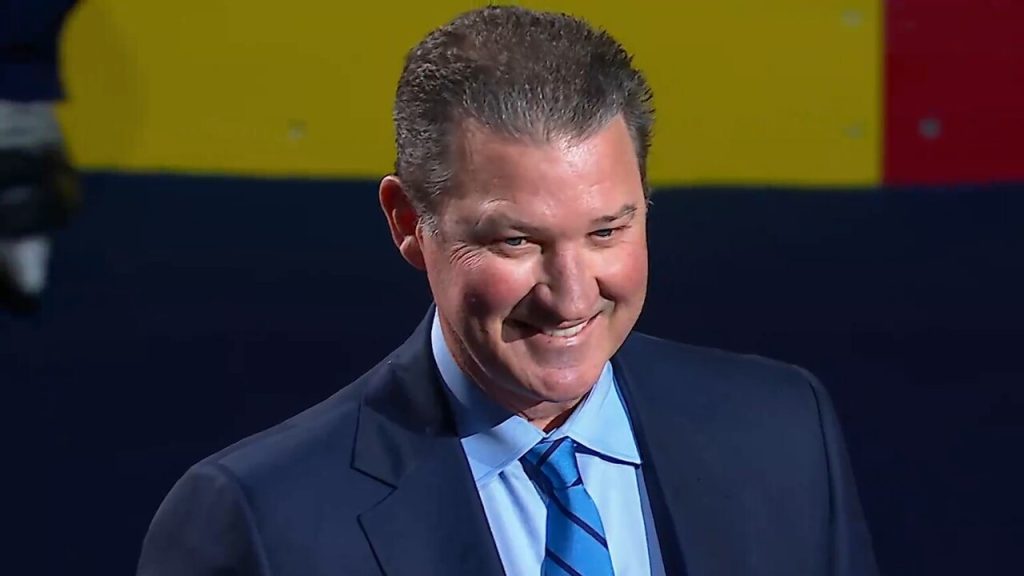
Mario Lemieux’s Net Worth and Financial Journey: From Ice Legend to Business Magnate
As of 2026, Mario Lemieux’s net worth is estimated to be approximately $200 million. His financial journey represents one of the most successful transitions in professional sports history, evolving from a generational hockey talent int...
As of 2026, Mario Lemieux’s net worth is estimated to be approximately $200 million. His financial journey represents one of the most successful transitions in professional sports history, evolving from a generational hockey talent into a shrewd owner of the Pittsburgh Penguins franchise, eventually overseeing its multi-billion-dollar sale.
Contents
The Foundation: NHL Career Earnings
Mario Lemieux’s path to financial independence began on the ice. Drafted first overall by the Pittsburgh Penguins in 1984, Lemieux quickly became the face of the National Hockey League (NHL). During his playing career, which spanned from 1984 to 2006 (with significant hiatuses due to health issues, including Hodgkin’s lymphoma), Lemieux commanded top-tier salaries.
While the salary cap environment of the 1980s and 1990s differs vastly from 2026 standards, Lemieux’s contracts were significant for their time. Throughout his tenure, he earned an estimated $90 million in direct hockey-related compensation. However, his most vital financial move occurred during the team's period of insolvency in the late 1990s, rather than through his playing salary alone.
The Pivot: Acquiring the Pittsburgh Penguins
The defining moment of Lemieux’s financial life occurred in 1999. The Pittsburgh Penguins had filed for Chapter 11 bankruptcy, leaving the team with approximately $90 million in debt. Lemieux, who was owed nearly $30 million in deferred salary, made the audacious decision to convert his unpaid earnings into equity in the franchise.
By leading an investment group to purchase the team, Lemieux assumed a massive financial risk. He took over a struggling organization that was losing money and played in an aging arena, the Civic Arena. This move was not merely an investment; it was an attempt to save his legacy and the franchise itself from relocation. Over the next two decades, Lemieux’s leadership—paired with the drafting of Sidney Crosby in 2005—transformed the Penguins from a bankrupt entity into one of the NHL’s most valuable and profitable franchises.
Strategic Asset Management and Value Appreciation
Lemieux’s brilliance as a businessman was his ability to align on-ice success with off-ice commercial growth. Under his ownership, the Penguins:
- Secured a New Arena: The construction of PPG Paints Arena, which opened in 2010, significantly increased the franchise’s revenue streams through luxury suites, naming rights, and modern concessions.
- Global Branding: By fostering a winning culture, the franchise capitalized on international TV deals and merchandise sales, moving from a niche market entity to a global brand.
- Successful Exit: In 2021, Lemieux and his partner Ron Burkle agreed to sell the Pittsburgh Penguins to Fenway Sports Group (FSG). The deal was reportedly valued at roughly $900 million. This sale represents the culmination of his financial journey, turning a $30 million bad debt into an ownership stake worth hundreds of millions.
Comparative Financial Milestones
The following table highlights the trajectory of Lemieux’s financial status relative to key events in his career and ownership lifecycle.
| Event | Timeframe | Financial Impact/Status |
|---|---|---|
| NHL Entry Draft | 1984 | Beginning of high-level career earnings |
| Bankruptcy Acquisition | 1999 | Conversion of $30M debt into ownership equity |
| Arena Opening (PPG Paints) | 2010 | Massive increase in annual franchise revenue |
| FSG Franchise Sale | 2021 | Exit valuation estimated at ~$900M |
| Current Net Worth | 2026 | Estimated personal wealth of ~$200M |
Diversification and Wealth Retention
Beyond the Penguins, Lemieux has focused on wealth preservation and passive income. Through the Mario Lemieux Foundation, he has remained active in philanthropy, which provides tax benefits while contributing to his personal brand equity. He has also been involved in various real estate ventures and private equity investments.
Unlike many athletes who encounter financial instability post-retirement, Lemieux utilized a team-oriented approach to his finances. By partnering with experienced investors like Ron Burkle early in his ownership tenure, he mitigated the risks associated with sole-ownership of a high-capital-intensity professional sports team. This strategy ensured that while he remained the face of the franchise, the heavy lifting of corporate restructuring was shared.
Addressing Financial Volatility
It is important to note that sports ownership is inherently volatile. The transition from active player to owner requires a shift in mindset from earning a salary to managing capital expenditures. Lemieux’s success was not guaranteed; in the early 2000s, the NHL was plagued by economic uncertainty that culminated in the 2004-2005 lockout. Lemieux’s navigation of these league-wide issues—specifically his advocacy for a salary cap—demonstrated a keen understanding of the macro-economic environment of sports. Without the implementation of the salary cap, the Penguins likely would not have reached the valuation they achieved by 2021.
Frequently Asked Questions
1. How did Mario Lemieux save the Pittsburgh Penguins? Lemieux saved the team by converting $30 million in deferred salary into equity during the team's 1999 bankruptcy proceedings. This effectively made him the primary creditor and majority owner, preventing the franchise from folding or relocating.
2. Was Mario Lemieux the sole owner of the Penguins? No. While Lemieux was the public face and controlling owner, he partnered with billionaire investor Ron Burkle and other stakeholders. This partnership was crucial in providing the necessary capital to stabilize the team.
3. Does Mario Lemieux still own the Penguins today? As of 2026, he does not. He sold his majority interest in the team to Fenway Sports Group in 2021, though he retained a minority stake in the organization following the acquisition.
4. How does his net worth compare to other hockey legends? Lemieux’s net worth is among the highest for retired hockey players, primarily due to the equity-based business model he utilized. Most players rely on career earnings and endorsements; Lemieux utilized institutional-level ownership.
5. What is the role of the Mario Lemieux Foundation? The foundation is a philanthropic organization focused on cancer research and patient care. While it is a non-profit, it is a significant part of his public identity and financial planning, helping to manage his legacy and charitable giving.
6. Are there risks to his current financial position? As a private investor with a diversified portfolio, Lemieux faces standard market risks associated with inflation and economic cycles. However, having liquidated his primary ownership interest in the Penguins, his capital is now largely protected in more liquid, diversified assets compared to the concentrated risk of sports team ownership.
Recommendations for Future Financial Planning
For individuals looking to mirror the success of professional athletes turned business owners, the key takeaway from Lemieux’s journey is the importance of equity over salary. Relying solely on a primary income stream leaves one vulnerable to market fluctuations and age-related performance declines.
Instead, seek to turn debt or service obligations into ownership stakes. Whether in a small business context or a large corporate environment, the ability to negotiate "skin in the game" is the most effective path to scaling personal wealth. Before undertaking such risks, ensure you have access to expert legal and financial advisory services, as the transition from an employee to an owner carries significant fiduciary responsibilities and regulatory complexities.
Image Gallery