Riverside Regional Visitation Patterns: A 2026 Guide to Hospital Access and Patient Flow
In 2026, visitation at Riverside Regional Medical Center is managed through a tiered access system designed to balance clinical safety with the essential role of family support. Visitation patterns show peak facility volume occurs betw...
In 2026, visitation at Riverside Regional Medical Center is managed through a tiered access system designed to balance clinical safety with the essential role of family support. Visitation patterns show peak facility volume occurs between 2:00 PM and 6:00 PM daily. Access requires a valid government-issued photo ID and adherence to department-specific guidelines, which prioritize patient recovery and infection control protocols.
Contents
The management of visitation patterns at Riverside Regional Medical Center (RRMC) in Newport News, Virginia, has evolved significantly. As the flagship facility of the Riverside Health System, the medical center serves a diverse regional population, necessitating a sophisticated approach to visitor flow. In 2026, the hospital utilizes an integrated digital guest management system to track real-time occupancy and ensure that the "Healing Environment" initiative is maintained. Understanding these patterns—both the rules established by the administration and the behavioral trends of the public—is essential for any family member, caregiver, or professional visitor navigating the campus.
The Evolution of Regional Visitation Models
Historically, regional hospitals operated on rigid, restricted hours. However, current data-driven models at Riverside Regional emphasize "Patient-Centered Visitation." This shift recognizes that recovery outcomes improve when patients have consistent access to their primary support persons.
The 2026 visitation pattern is characterized by "Flex-Flow" hours. While the facility is technically open to primary support persons 24/7, general visitation is encouraged during specific windows to align with clinical rounding and "Quiet Hours." This hybrid model ensures that the hospital can manage the physical security of the building while remaining accessible to those critical to the patient's care team.
Primary Support Persons vs. General Visitors
A key distinction in 2026 visitation patterns is the classification of the visitor:
- Primary Support Person: One or two designated individuals who are considered part of the care team. They generally have 24-hour access, subject to the patient's condition and unit-specific safety requirements.
- General Visitors: Friends and extended family members who are encouraged to visit during standard daytime and early evening hours.
Standard Visitation Schedules and Unit Variations
Visitation patterns are not uniform across the medical center. High-acuity areas require stricter controls to protect patient privacy and maintain a sterile environment. Below is a breakdown of the 2026 visitation patterns across major departments.
Medical-Surgical and General Care Units
In general care units, the most consistent visitation pattern involves a surge of visitors starting shortly after the lunch hour. To maintain a restorative environment, Riverside Regional enforces "Quiet Hours" from 9:00 PM to 7:00 AM. During this time, overhead paging is minimized, lighting is dimmed, and general visitors are asked to depart, leaving only designated support persons.
Intensive Care and Cardiac Care (ICU/CCU)
Visitation patterns in the ICU are more cyclical, often dictated by the timing of physician rounds. In 2026, Riverside encourages families to avoid the 7:00 AM – 9:00 AM and 7:00 PM – 9:00 PM windows, as these coincide with nursing shift changes and critical hand-off reports. Limiting visitors during these times ensures that vital patient information is transferred without distraction.
Women’s and Children’s Services
The Riverside Pavilion, which houses labor and delivery as well as the Neonatal Intensive Care Unit (NICU), follows the most stringent visitation patterns. For the safety of newborns, all visitors must be screened for seasonal illnesses. The NICU typically operates a "Parents Only" or "Grandparents with Parent" policy to minimize the risk of infection.
| Department | General Visitation Hours | Max Visitors at Bedside | Age Requirements |
|---|---|---|---|
| General Med-Surg | 8:00 AM – 9:00 PM | 2 | None (supervised) |
| ICU / Critical Care | 10:00 AM – 6:00 PM | 2 | 12+ Years |
| Labor & Delivery | 24 Hours (Support) | 3 | Varies by acuity |
| Inpatient Rehab | 4:00 PM – 9:00 PM | 2 | None |
| Behavioral Health | 6:00 PM – 8:00 PM | 1 | 18+ Years |
Behavioral Visitation Trends: Peak Times and Congestion
Analyzing the data from the 2025-2026 fiscal year, specific behavioral patterns emerge regarding when the facility experiences the highest foot traffic. For individuals planning a visit, understanding these trends can significantly reduce wait times at check-in kiosks and improve the ease of parking.
Peak Daily Windows
The heaviest visitation occurs between 2:30 PM and 5:30 PM. This pattern is largely driven by local work schedules and the conclusion of morning clinical procedures. Visitors arriving during this window should expect a 10-to-15-minute wait for guest badge processing at the main entrance or the Tower entrance.
Mid-Week vs. Weekend Patterns
Contrary to expectations, Tuesday and Wednesday often see higher visitation volumes than Saturdays. This is frequently attributed to the high volume of scheduled surgeries occurring early in the week, drawing families to the surgical waiting areas. Weekends tend to have a steadier, more spread-out flow of visitors throughout the day.
Seasonal Fluctuations
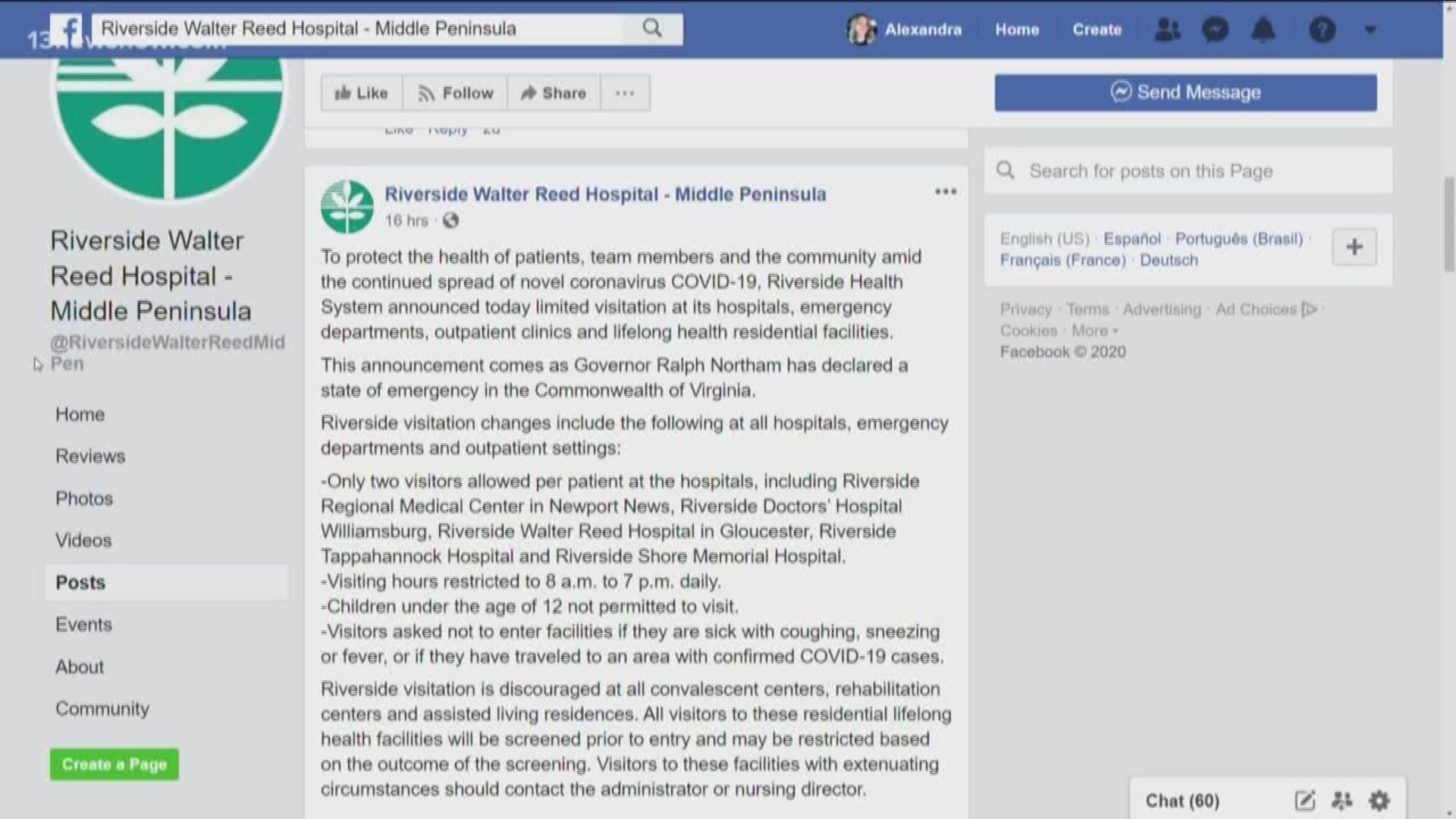
In accordance with Virginia Department of Health guidelines, Riverside Regional may adjust visitation patterns during "Respiratory Virus Season" (typically November through March). During these months, patterns shift toward higher restriction, which may include mandatory masking and the exclusion of visitors under the age of 12 from certain high-risk units.
Digital Access and Guest Management Systems
By 2026, Riverside Regional has fully integrated the Riverside GuestPass system. This digital platform has altered traditional visitation patterns by allowing visitors to pre-register before arriving at the Newport News campus.
Pre-Registration Process
Visitors can use the Riverside health app to upload their identification and receive a QR code. Upon arrival, scanning this code at a lobby kiosk prints a temporary guest badge immediately. This technology has successfully decentralized the "lobby bottleneck" that was common in previous years.
Verification and Security
Security remains a cornerstone of regional visitation patterns. Every visitor is screened against internal safety databases. In 2026, the use of "Smart Badges" allows the hospital to monitor the location of visitors within the building. If a visitor enters a restricted area or stays significantly past the designated hours for their unit, the system alerts the nursing station and security personnel.
Environmental and Logistical Considerations
The physical layout of Riverside Regional Medical Center influences how visitation patterns manifest. With multiple specialized towers and pavilions, the "path of least resistance" often dictates where congestion occurs.
Parking and Shuttle Logistics
The main parking garage and the surface lots near the J. Clyde Morris Boulevard entrance are the primary nodes of arrival. Visitation patterns indicate that the main garage reaches 95% capacity by 10:30 AM on weekdays due to a mix of outpatient appointments and inpatient visitors. The hospital provides a shuttle service from the overflow lots, which runs on a 10-minute cycle during peak visitation hours.
The Role of Common Areas
Because bedside visitation is often limited to two people, the hospital's common areas—such as the Terrace Café and the various garden courtyards—see high utilization. These spaces act as "buffer zones" where larger families can rotate in and out of the patient’s room without violating bedside occupancy limits.
Guidelines for Professional and Clergy Visitors
Professional visitation patterns (legal counsel, social workers, and clergy) differ from family patterns. Riverside Regional grants credentialed clergy members extended access to support the spiritual needs of patients. Similarly, legal professionals must coordinate with the Patient Advocacy office to ensure that visits do not interfere with necessary medical interventions or the patient's "Quiet Hours" for rest.
Frequently Asked Questions
What identification is required for visitation at Riverside Regional?
In 2026, all visitors aged 18 and older must present a valid government-issued photo ID, such as a driver's license, passport, or military ID. This information is scanned into the guest management system to generate a time-stamped visitor badge that must be worn visibly at all times while on the hospital campus.
Are there restrictions on what I can bring to a patient?
Yes. Visitation patterns are often interrupted by the delivery of prohibited items. Balloons must be Mylar (not latex) due to allergy risks. In high-acuity units like the ICU or Oncology, fresh flowers and plants are often prohibited because they can harbor mold and bacteria that are dangerous to immunocompromised patients. It is always recommended to check with the specific nursing station before bringing food or gifts.
How does the hospital handle visitation for end-of-life care?
Riverside Regional maintains a "Compassion Policy" for patients in end-of-life situations. In these cases, standard visitation patterns and hour restrictions are waived. The clinical team works with the family to allow as many visitors as safely possible, providing larger waiting areas and spiritual support services to accommodate the family's needs regardless of the time of day.
Can children visit patients at Riverside Regional?
Children are generally permitted to visit, provided they are supervised by an adult who is not the patient. However, in 2026, specific units like the NICU or Behavioral Health have age minimums (typically 12 or 18 years old). During peak flu and respiratory virus seasons, the medical center may implement temporary age restrictions across all units to protect vulnerable populations.
Is there a limit on how long a visitor can stay?
For general visitors, the stay should conclude by the start of "Quiet Hours" at 9:00 PM. For designated Primary Support Persons, there is no strictly enforced time limit, although the hospital encourages support persons to go home and rest periodically to ensure they are capable of assisting with the patient's transition back to home care.
Strategic Recommendations for Visitors
To ensure a productive and stress-free visit to Riverside Regional Medical Center in 2026, visitors should adopt the following practices:
- Use the App: Pre-register through the Riverside Health portal to bypass manual check-in lines, especially if arriving during the 2:00 PM – 4:00 PM peak.
- Coordinate with the Support Person: Before traveling to the regional center, check with the patient’s Primary Support Person to ensure the patient is not scheduled for surgery, imaging, or therapy during your intended visit.
- Observe the Two-Visitor Rule: To prevent clinical interference and maintain patient privacy, adhere to the limit of two people at the bedside. Use the cafeteria or outdoor seating areas for larger group gatherings.
- Prioritize Hand Hygiene: Use the sanitizing stations located at the entrance of every patient room both when entering and exiting to support the hospital’s infection control patterns.
By aligning personal visitation habits with the established operational patterns of Riverside Regional, visitors can contribute to a safer, more efficient healing environment for all patients in the Newport News region.
Image Gallery