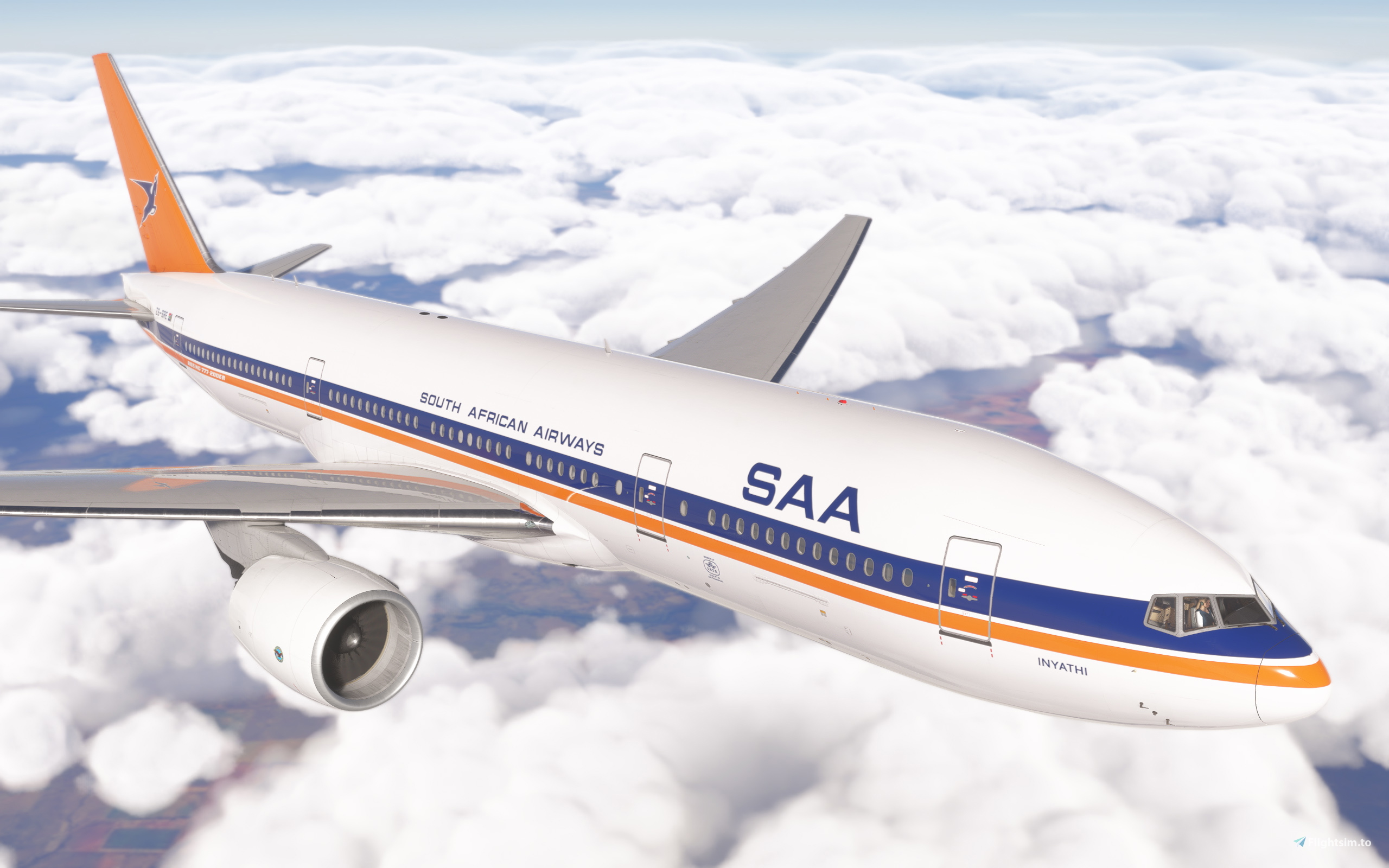
Boeing 777 Variants and Their Roles: A Comprehensive Guide to the Triple Seven Family
The Boeing 777 family consists of several distinct variants designed to bridge the gap between medium-sized wide-bodies and the massive 747. Ranging from the original 777-200 to the ultra-efficient 777X, these aircraft serve diverse ro...
The Boeing 777 family consists of several distinct variants designed to bridge the gap between medium-sized wide-bodies and the massive 747. Ranging from the original 777-200 to the ultra-efficient 777X, these aircraft serve diverse roles including high-capacity domestic hops, ultra-long-haul transoceanic routes, and heavy-lift global logistics.
Contents
Since its entry into service in 1995, the Boeing 777—commonly known as the "Triple Seven"—has become the backbone of long-haul aviation. As of 2026, it remains the world’s most successful twin-engine wide-body aircraft. Its design philosophy centered on "Working Together," a process where Boeing consulted airlines and passengers to create an aircraft that maximized efficiency while maintaining high passenger comfort. By eliminating the need for three or four engines on long routes, the 777 revolutionized airline economics through Extended-range Twin-engine Operational Performance Standards (ETOPS).
The First Generation: 777-200 and 777-200ER
The 777-200 was the inaugural member of the family, specifically designed to replace older wide-bodies like the DC-10 and L-1011. While it set the stage for the glass cockpit and fly-by-wire technology that would define the line, its role was primarily limited to medium-to-long-range flights that did not require extreme endurance.
The 777-200ER (Extended Range), however, was the variant that truly established the Triple Seven's dominance. Launched in 1997, the ER featured a significantly higher maximum takeoff weight (MTOW) and increased fuel capacity. This allowed airlines to fly routes like London to Los Angeles or Tokyo to San Francisco with a twin-engine aircraft for the first time with high reliability.
The role of the 200ER was to provide a "hub-to-point" solution. It allowed carriers to bypass massive hubs and fly directly to secondary cities without the fuel penalties associated with four-engine jets. Even in 2026, many 777-200ERs continue to serve secondary long-haul markets, though many have transitioned into their final years of service as newer, more efficient models take over.
The Stretched Capacity: 777-300
The 777-300 was developed as a "747-100/200 replacement." By stretching the fuselage of the -200 by approximately 33 feet, Boeing created an aircraft that could carry up to 550 passengers in a single-class configuration.
The primary role of the 777-300 was high-density, shorter-range routes. It became a favorite for Japanese domestic carriers and regional Asian routes where passenger volume was high but the distance did not require the massive fuel tanks of the ER versions. Because it lacked the range of its siblings, its market was more niche, focusing on regional efficiency rather than trans-global endurance. It paved the way for the more successful 777-300ER by proving that a twin-engine aircraft could handle the physical dimensions and passenger loads previously reserved for "Jumbo Jets."
The Industry Standard: 777-300ER
The 777-300ER (Extended Range) is arguably the most successful long-haul aircraft in history. Combining the stretched fuselage of the -300 with the massive power of the General Electric GE90-115B engines, it redefined what a commercial airliner could do.
Its role in the global aviation ecosystem is that of the "flagship workhorse." For many of the world's leading airlines—such as Emirates, Qatar Airways, and American Airlines—the 777-300ER replaced the Boeing 747-400. It offers roughly the same capacity but with a 20% to 30% reduction in fuel burn and maintenance costs.
Technically, the 300ER introduced raked wingtips to improve aerodynamic efficiency and a reinforced landing gear to handle its 775,000-pound MTOW. It remains the standard by which all other long-haul aircraft are measured, serving the world's busiest "trunk" routes between major global finance and travel hubs.
The Ultra-Long-Range Specialist: 777-200LR
Known as the "Worldliner," the 777-200LR was designed for a very specific role: connecting any two cities on Earth with a single flight. In 2005, it set a world record for the longest non-stop flight by a commercial airliner, flying from Hong Kong to London the "long way" (eastbound) for over 22 hours.
The 777-200LR features additional fuel tanks in the rear cargo hold and the same powerful engines as the 300ER. Its role is highly specialized, serving ultra-long-haul (ULH) routes such as Dubai to Houston or Delhi to San Francisco. Because it is optimized for range rather than pure passenger volume, it is often configured with fewer seats to stay under weight limits for extreme distances. While fewer were built compared to the 300ER, its existence forced competitors to develop their own ULH variants, such as the Airbus A350-900ULR.
Global Logistics and the 777 Freighter (777F)
The 777 Freighter is the world's largest and longest-range twin-engine cargo aircraft. Based on the 777-200LR airframe but utilizing the engines and systems of the 300ER, it was designed to replace aging MD-11F and 747-200F freighters.
The role of the 777F is critical to the "just-in-time" global supply chain. With a payload capacity of approximately 102 metric tonnes and a range of nearly 5,000 nautical miles, it allows cargo operators like FedEx, UPS, and DHL to fly heavy loads across the Pacific or Atlantic without intermediate fuel stops. This reliability and efficiency have made it the preferred choice for heavy-lift logistics, especially as global e-commerce continues to demand faster delivery times.
The Next Generation: The 777X Series
As of 2026, the aviation world is centered on the 777X, comprising the 777-8 and the 777-9. This generation introduces the GE9X engine and a high-aspect-ratio composite wing. The most striking feature is the folding wingtips, which allow the aircraft to have a massive wingspan for flight efficiency while still fitting into standard airport gates designed for the original 777.
The 777-9: The New Flagship
The 777-9 is the largest twin-engine jet ever built. Its role is to serve as the definitive replacement for both the 777-300ER and the remaining 747-8i passenger fleets. With a capacity for 426 passengers in a typical three-class layout, it offers unprecedented seat-mile costs. Airlines use the 777-9 on their highest-demand routes where maximizing passenger numbers per flight is the priority.
The 777-8 and 777-8F
The 777-8 is the successor to the 200LR, focusing on extreme range and efficiency. Its role is to tackle the "final frontier" of aviation: routes exceeding 18 hours of flight time with a full payload. Parallel to this is the 777-8F, the next-generation freighter designed to meet new international CO2 emission standards while providing more volume than the current 777F.
Technical Specifications Comparison
| Variant | Typical Seating (3-Class) | Max Range (nmi) | Engine Type | Primary Role |
|---|---|---|---|---|
| 777-200 | 305 | 5,240 | PW4000 / Trent 800 / GE90 | Medium-haul / Domestic |
| 777-200ER | 301 | 7,065 | PW4000 / Trent 800 / GE90 | Long-haul Transoceanic |
| 777-300 | 368 | 6,005 | PW4000 / Trent 800 | High-capacity Regional |
| 777-300ER | 392 | 7,370 | GE90-115B | Global Flagship Trunk Routes |
| 777-200LR | 317 | 8,555 | GE90-110B / -115B | Ultra-Long-Haul |
| 777F | Cargo (102t payload) | 4,970 | GE90-110B | Heavy Global Logistics |
| 777-9 | 426 | 7,285 | GE9X | High-capacity Next-Gen |
| 777-8 | 384 | 8,745 | GE9X | Ultra-Long-Haul Next-Gen |
Operational Advantages and ETOPS
The various roles of the 777 variants are underpinned by ETOPS (Extended-range Twin-engine Operational Performance Standards). Before the 777, twin-engine aircraft were restricted in how far they could fly from an emergency diversion airport. The 777 was the first aircraft to be designed for ETOPS-180 from day one.
Over the decades, this has been extended. Modern 777-300ERs and the 777X family operate under ETOPS-330 rules. This means the aircraft can fly on routes that are up to 330 minutes (5.5 hours) away from the nearest suitable airport on a single engine. This capability is what allows the 777-200LR and 777-8 to perform their roles on remote routes over the South Pacific or the Arctic, where diversion airports are scarce.
The 777's Impact on Cabin Innovation
Beyond its technical variants, the Triple Seven's role has been to push the boundaries of passenger experience. It was the first Boeing aircraft to feature the "Signature Interior," characterized by curved panels and indirect lighting, which was later adapted for the 747-8 and 737 Next Generation.
In the 2026 landscape, the 777X variants have introduced "787-style" features to the 777 line, including larger windows, higher cabin humidity, and lower cabin altitude. These improvements are designed to reduce jet lag on the long-duration flights that the 777-8 and 777-9 are intended to fly.
FAQ
What is the difference between a 777-300 and a 777-300ER?
The 777-300 is an older, shorter-range aircraft primarily used for high-density regional flights. The 777-300ER is an "Extended Range" version equipped with much more powerful GE90 engines, larger fuel tanks, and structural reinforcements, allowing it to fly nearly 1,400 nautical miles further than the base -300 model.
Why does the 777X have folding wingtips?
The 777X features a massive composite wing designed for maximum lift and efficiency. However, this wingspan is too wide for most standard airport gates (Category E). By folding the last 11 feet of each wingtip upward after landing, the aircraft can use existing airport infrastructure without requiring expensive terminal modifications.
Is the Boeing 777 still being produced in 2026?
Yes, but the production focus has shifted. While the original "Classic" passenger variants (-200ER, -300ER) have mostly ended their production runs, Boeing continues to produce the 777 Freighter and has ramped up full-scale production of the 777-9 and 777-8 passenger and freighter models.
Which Boeing 777 variant has the longest range?
The Boeing 777-8 is currently the range leader in the family, designed to fly up to 8,745 nautical miles. It surpassed the previous record-holder, the 777-200LR, by utilizing more advanced materials and more fuel-efficient GE9X engines.
How does the 777 freighter compare to the 747 freighter?
The 777F is a twin-engine aircraft that is more fuel-efficient than the four-engine 747-400F or 747-8F. While it cannot carry as much total weight or accommodate oversized "nose-loading" cargo like the 747, it offers significantly lower operating costs for standard palletized freight, making it more profitable for most scheduled cargo routes.
Recommended Next Steps
For aviation professionals or enthusiasts looking to understand the current state of the wide-body market, the next logical step is to compare the performance of the 777-9 against its primary competitor, the Airbus A350-1000. Understanding the fleet transition plans of major carriers—many of whom are currently retiring 777-300ERs in favor of 777-9s—provides a clear picture of the future of long-haul travel. Additionally, tracking the development of the 777-8F will provide insights into how the global air cargo market is evolving to meet new environmental regulations.
Image Gallery