Where to Stay Near Lucerne, Switzerland: The Ultimate Neighborhood and Accommodation Guide
Choosing where to stay near Lucerne depends heavily on whether you want a vibrant urban atmosphere near the medieval Old Town, a quiet alpine retreat overlooking Lake Lucerne, or a strategic transport hub for day trips into Central Swi...
Choosing where to stay near Lucerne depends heavily on whether you want a vibrant urban atmosphere near the medieval Old Town, a quiet alpine retreat overlooking Lake Lucerne, or a strategic transport hub for day trips into Central Switzerland. Lucerne combines historic Swiss architecture with stunning lake-and-mountain vistas, making its surrounding districts drastically different in terms of accessibility, vibe, and pricing.
Contents
Understanding the Lucerne Region: City vs. Lakeside vs. Mountains
Deciding where to stay requires balancing your itinerary goals against Swiss transportation realities. Lucerne functions as a major railway nexus, connecting directly to the Gotthard pass routes, Zurich, and Bern. However, the immediate municipality divides cleanly into distinct architectural and cultural pockets.
The Altstadt (Old Town) places travelers directly amid painted guild houses, covered wooden bridges, and cobblestone squares. Crossing the Reuss River leads to the Neustadt (New Town), which offers modern urban comforts, bustling shopping streets, and proximity to the main railway station (Luzern Bahnhof). Beyond the urban core, the surrounding lake basin (Vierwaldstättersee) and nearby mountain villages provide tranquil alternatives away from city foot traffic.
When evaluating accommodations, consider whether you prefer walking to museums and restaurants or waking up to unhindered views of Mount Pilatus or Mount Rigi. Travelers with cars should note that inner-city parking in Lucerne is limited and expensive, making lakeside or suburban hotels with complimentary parking spaces a practical alternative.
Best Neighborhoods in Lucerne Proper
Staying directly inside or adjacent to the city center minimizes transit times and maximizes dining and sightseeing flexibility.
Altstadt (Old Town)
The historic heart of Lucerne is entirely pedestrianized, housing landmarks like the Chapel Bridge (Kapellbrücke) and the Musegg Wall. Accommodations here consist largely of historic boutique hotels, family-run inns, and converted heritage buildings.
- Vibe: Lively, historic, highly romantic, and culturally dense.
- Best For: First-time visitors, architecture enthusiasts, and couples seeking a traditional European city break.
- Considerations: Cars cannot enter the Altstadt; expect to roll luggage over cobblestones from nearby parking garages or the station. Rooms in historic properties may lack modern elevators or air conditioning.
Neustadt (New Town)
Located south of the Reuss River, the Neustadt district developed primarily during the late 19th and 20th centuries. It features wide boulevards, contemporary architecture, diverse international restaurants, and the Lucerne Culture and Congress Centre (KKL).
- Vibe: Cosmopolitan, practical, energetic, and urban.
- Best For: Business travelers, rail commuters, and visitors prioritizing modern hotel amenities.
- Considerations: It lacks the fairy-tale charm of the Old Town, but makes up for it with functional convenience and proximity to transit infrastructure.
Inseli and Bahnhof District
Positioned right next to the Luzern railway terminal and Lake Lucerne's ferry docks, this micro-district serves as the ultimate logistical base.
- Vibe: Transit-focused, bustling, and highly efficient.
- Best For: Day-trippers relying entirely on the Swiss Federal Railways (SBB) and lake steamers.
- Considerations: Can experience higher pedestrian and traffic noise during peak commuting hours.
Scenic Lakeside Alternatives Near Lucerne
If urban density holds little appeal, the shores of Lake Lucerne offer picturesque villages and resort hotels connected to the city via scenic boat routes and regional buses.
Weggis and Vitznau
Situated on the northern shore of the lake at the foot of Mount Rigi, Weggis and Vitznau offer a Mediterranean microclimate and classic Swiss resort luxury. Mark Twain famously praised Weggis for its idyllic beauty.
- Access: Easily reached via a 40-minute lake steamer from Lucerne or local bus lines.
- Highlights: Vitznau hosts the historic cogwheel railway scaling Mount Rigi, while Weggis features a cable car leading to Rigi Kaltbad.
- Best For: Wellness travelers, hikers, and those seeking luxury lakeside spa resorts.
Küssnacht am Rigi
Located at the northwestern arm of the lake (known as Lake Zug and Lake Lucerne proximity), Küssnacht offers a quieter residential atmosphere while remaining closely tied to the regional rail network.
- Highlights: Rich in William Tell folklore (Hohle Gasse) and featuring quiet lake promenades.
- Best For: Budget-conscious travelers looking for lower accommodation rates than inner-city Lucerne.
Alpine and Mountain Stays Near Lucerne
For travelers prioritizing dramatic alpine panoramas and immediate access to hiking trails, staying up in the surrounding mountains provides an unforgettable alpine experience.
Mount Pilatus (Krienseregg or Pilatus Kulm)
Staying on Mount Pilatus means sleeping above the cloud line. While Krienseregg offers a forested, family-friendly environment mid-mountain, staying at Pilatus Kulm places you at the 2,132-meter summit.
- Access: Aerial cableway from Kriens (accessible via local bus from Lucerne) or the world's steepest cogwheel railway from Alpnachstad (operational May to November).
- Considerations: Once the final cable car or train descends in the late afternoon, dining and entertainment options are restricted to the mountain hotel restaurants.
Bürgenstock Resort
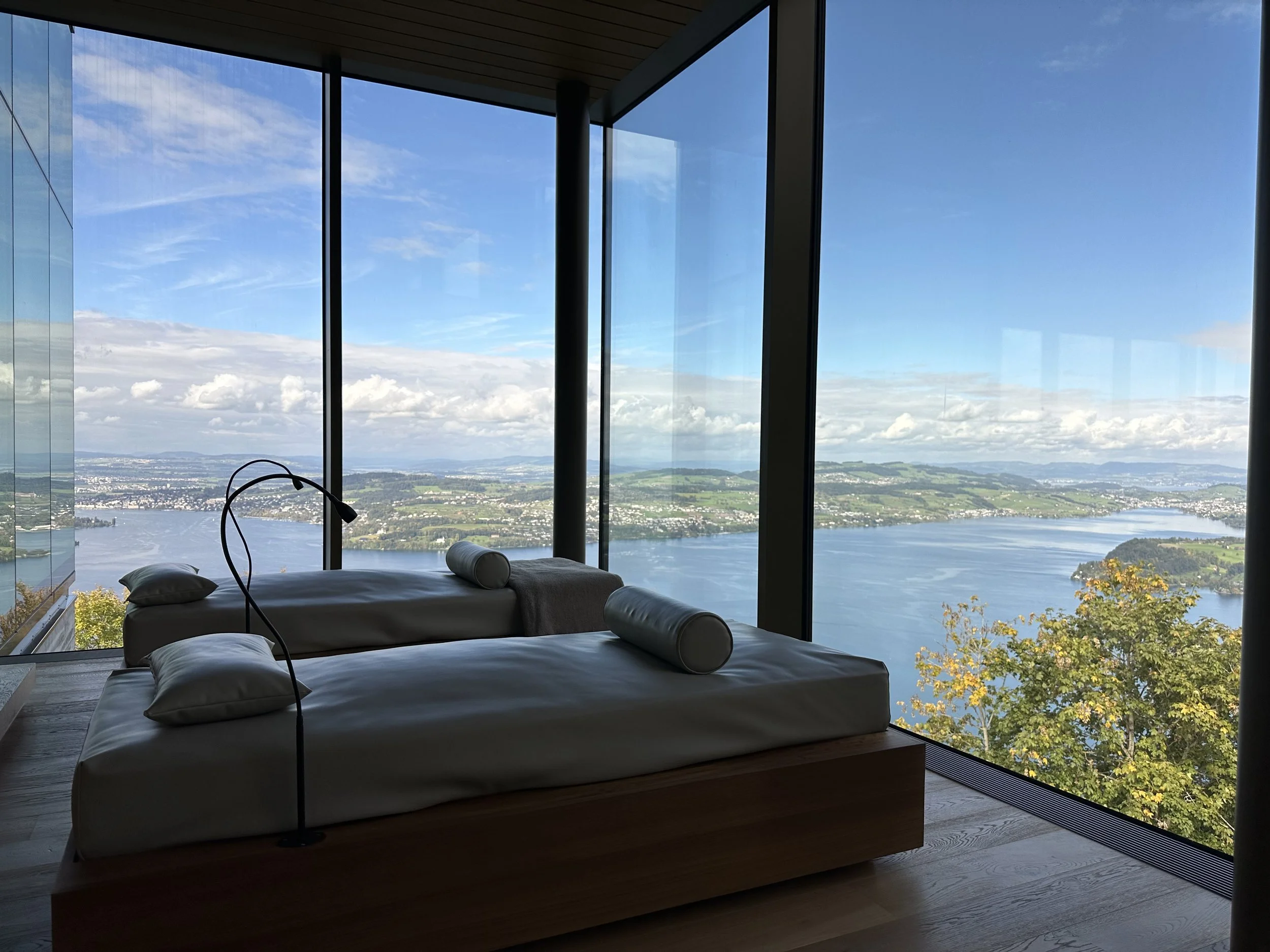
Perched on a dramatic cliff 500 meters above Lake Lucerne, the Bürgenstock peninsula is an ultra-luxury enclave featuring high-end wellness facilities and the famous Hammetschwand Lift.
- Access: Accessible via private shuttle boat from Lucerne followed by the historic Bürgenstock funicular railway, or by road.
- Best For: Luxury travelers, wellness retreats, and exclusive getaways.
Accommodation Comparison Table
| Area / District | Vibe & Setting | Best For | Typical Price Range | Transit Access to Lucerne |
|---|---|---|---|---|
| Altstadt (Old Town) | Historic, pedestrian, charming | Sightseers, couples, culture lovers | High | Walkable / 5-10 min stroll |
| Neustadt (New Town) | Urban, modern, convenient | Business travelers, shoppers | Moderate to High | Walkable / Central Station adjacent |
| Weggis / Vitznau | Lakeside resort, scenic, relaxed | Relaxed holidays, hikers, spa guests | High | 40 min by boat / 30 min by bus |
| Küssnacht am Rigi | Quiet town, traditional | Budget-conscious, families | Moderate | 15-20 min by regional train |
| Bürgenstock Resort | Ultra-luxury, cliffside panorama | Luxury travelers, wellness seekers | Very High | 30 min (Boat + Funicular) |
Practical Factors to Consider Before Booking
Selecting the right place to stay involves evaluating several operational realities unique to the region:
- The Swiss Travel Pass: If you plan to stay slightly outside Lucerne in places like Weggis or Stans, purchasing a Swiss Travel Pass covers unlimited travel on trains, buses, and boats, neutralizing the distance factor.
- Seasonal Operations: Mountain hotels (such as those on Pilatus or Rigi) and certain lakeside ferry routes operate on reduced schedules or close entirely during winter shoulder seasons (typically November and March/April). Always verify transport operating dates before booking remote alpine lodging.
- Tourist Tax (Kurtaxe): Swiss municipalities charge a mandatory overnight tourist tax per person, per night. In exchange, hotels usually issue a Visitor Card offering free local public transit within Lucerne and discounts on regional cable cars.
Frequently Asked Questions
Is it better to stay in Lucerne city center or by the lake?
Staying in the city center suits travelers who want immediate access to museums, restaurants, and the train station for daily excursions. Staying by the lake in towns like Weggis or Vitznau offers a more relaxed, scenic resort atmosphere ideal for unwinding, though it requires factoring in boat or bus travel times to reach urban attractions.
Do I need a car when staying near Lucerne?
A car is unnecessary and often a liability if you stay within Lucerne city center due to expensive parking and strict traffic zones. However, having a car can be advantageous if you stay in rural hillside villages or plan extensive road trips through the Central Swiss Alps.
How far is Mount Pilatus from Lucerne city center?
Mount Pilatus is located just 10 kilometers southwest of Lucerne. You can reach the base station in Kriens via a 10-minute local bus ride from Lucerne station, making it an easy half-day or day trip without needing to stay overnight on the mountain.
What is the best area to stay for easy train travel?
The Bahnhof district and Neustadt areas immediately surrounding Luzern railway station offer the most convenient access for travelers relying heavily on the Swiss rail network to connect to Zurich, Interlaken, or Bern.
Recommended Next Steps
Begin your planning by mapping out your primary daily activities—whether that involves riding alpine cogwheel railways, touring historic museums, or relaxing by the water. Once your itinerary priorities are clear, check hotel cancellation policies and verify public transport or mountain railway timetables for your specific travel dates to ensure seamless connectivity.
Image Gallery