What to Do When Mold Remediation Did Not Work: Causes, Testing, and Solutions
If mold remediation did not work, the primary cause is almost always an unaddressed moisture source or incomplete containment and removal during the initial restoration process. Persistent mold growth, lingering musty odors, or unmitig...
If mold remediation did not work, the primary cause is almost always an unaddressed moisture source or incomplete containment and removal during the initial restoration process. Persistent mold growth, lingering musty odors, or unmitigated health symptoms indicate active contamination. Resolving this requires independent environmental testing, locating hidden water leaks, and enforcing warranty or insurance coverage for proper re-remediation.
Contents
Why Mold Remediation Fails: The Root Causes
Discovering that mold has returned after paying for professional remediation is frustrating and potentially hazardous to your property and health. Remediation fails when contractors focus solely on visible mold growth while ignoring the fundamental underlying conditions that allow fungal spores to thrive. Understanding the specific breakdown in the remediation process helps property owners take corrective action.
Unresolved Moisture Sources
Mold spores exist naturally in indoor and outdoor environments, but they cannot germinate or colonize without water. The single most common reason remediation fails is the failure to identify and eliminate the primary moisture source. Common unaddressed moisture entry points include:
- Hidden Plumbing Leaks: Micro-leaks behind drywall, under subflooring, or inside supply lines that continually feed moisture into building materials.
- Elevated Indoor Relative Humidity: Indoor humidity levels consistently above 50% create an environment where mold can grow on organic materials without a liquid water leak.
- Roof and Exterior Building Envelope Leaks: Flashing failures, compromised shingles, or unsealed window frames that allow rainwater intrusion.
- Foundation Seepage: High water tables or inadequate perimeter drainage that forces ground water through concrete slabs or foundation walls via capillary action.
If structural drying is incomplete—or if a leak continues after the cleanup—mold spores will recolonize the affected area within 24 to 48 hours.
Poor Containment and Cross-Contamination
During standard professional mold remediation, technicians must establish physical containment barriers using polyethylene sheeting and run continuous negative air pressure equipment equipped with High-Efficiency Particulate Air (HEPA) filtration. If the contractor fails to seal critical barriers, fails to set up proper negative pressure, or operates compromised air scrubbers, microscopic mold spores and dust-borne fragments escape the work area. This cross-contaminates unaffected areas of the home, such as adjacent bedrooms, living spaces, or the central Heating, Ventilation, and Air Conditioning (HVAC) system.
Incomplete Removal of Affected Porous Materials
A critical error in failed remediation projects is attempting to clean or spray porous organic materials instead of physically removing them. Fungal hyphae (the root structures of mold) penetrate deep into porous substrates like drywall, ceiling tiles, unsealed wood, carpet padding, and insulation.
Topical applications of biocides, antimicrobial sprays, or bleach may kill surface growth or bleach the mold's color, but they leave subterranean hyphae alive. Once the chemical application dries, remaining moisture allows the mold root structure to regenerate visible colonies. According to guidelines from the U.S. Environmental Protection Agency (EPA), porous materials heavily contaminated with mold must be physically removed and discarded, rather than surface-treated.
Lack of Independent Post-Remediation Verification (PRV)
Remediation projects frequently fail when contractors perform their own self-policing without third-party verification. When the company performing the cleanup also conducts the final clearance testing, a clear conflict of interest exists. Without rigorous Post-Remediation Verification (PRV) conducted by an independent Indoor Environmental Professional (IEP), hidden residual contamination or elevated spore counts are easily overlooked.
Identifying the Signs of Failed Mold Remediation
Recognizing the early warning signs of failed remediation allows property owners to intervene before structural damage spreads or indoor air quality degrades further.
1. Visible Regrowth or Discoloration
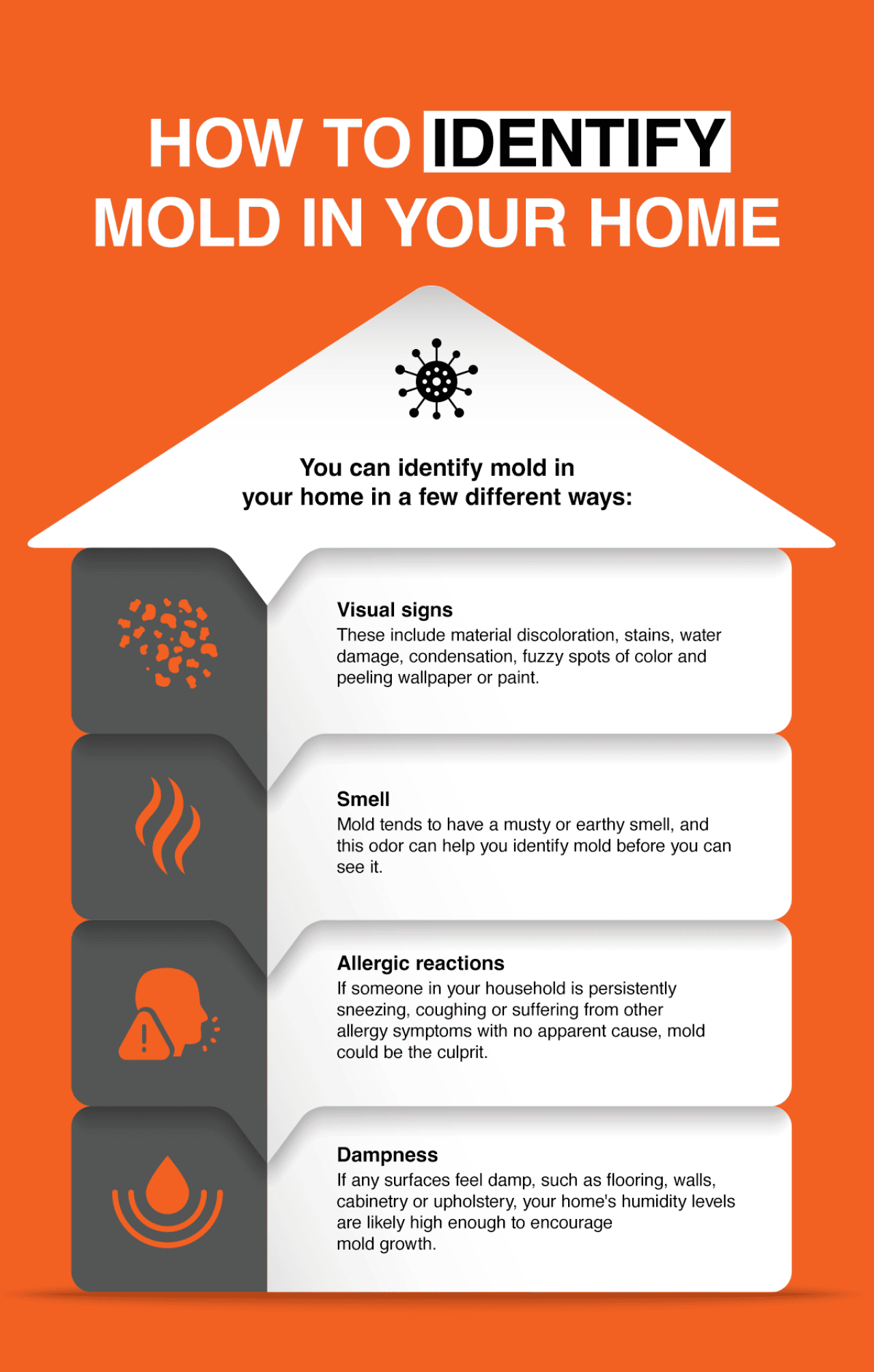
The most obvious indicator of failure is the recurrence of visible fungal growth on walls, baseboards, joists, or personal items. Regrowth may appear as black, green, white, or yellow powdery patches. Even light discoloration on newly installed drywall or replacement trim signals ongoing moisture and active microbial activity.
2. Persistent Earthy or Musty Odors
Mold produces gaseous byproducts known as Microbial Volatile Organic Compounds (MVOCs) as it metabolizes organic matter. A sharp, musty, or damp odor indicates active mold growth, even if the mold is hidden behind walls, inside HVAC ductwork, or beneath flooring. While chemical odors from encapsulants or antimicrobial sprays may linger for a few days post-remediation, persistent musty smells indicate unresolved contamination.
3. Chronic or Worsening Health Symptoms
Occupants sensitive to indoor allergens or mold toxins may continue to experience physical symptoms after an unsuccessful cleanup. According to health guidance from the Centers for Disease Control and Prevention (CDC), common health indicators associated with ongoing indoor mold exposure include:
- Upper respiratory congestion, sneezing, and persistent coughing.
- Eye irritation, redness, or watery eyes.
- Unexplained skin rashes or hives.
- Asthma exacerbations or difficulty breathing.
- Chronic fatigue or headaches that improve when leaving the building.
If occupants' health symptoms persist or intensify after remediation, indoor air quality remains compromised.
4. High Moisture Content in Building Materials
Using moisture meters, restoration experts measure the percentage of wood moisture equivalent (%WME) or relative moisture levels in drywall. If structural wood framing retains a moisture content above 16% to 19%, conditions remain conducive to fungal growth. Drywall moisture levels exceeding standard equilibrium baseline values confirm that active drying was not completed or a leak remains active.
Technical Standards for Remediation: The ANSI/IICRC S520 Standard
Professional mold remediation in North America is governed by technical standards established by industry consensus organizations. The benchmark standard is the ANSI/IICRC S520 Standard for Professional Mold Remediation, published by the Institute of Inspection, Cleaning and Restoration Certification (IICRC).
The S520 standard categorizes indoor spaces into three distinct conditions of fungal activity:
- Condition 1 (Normal Ecology): An indoor environment that may contain normal background levels of settled spores and fungal fragments, consistent with outdoor air, without active mold growth.
- Condition 2 (Settled Spores): An indoor environment contaminated with settled spores or fungal fragments that arose from indoor growth, but where active growth is not currently occurring on surfaces.
- Condition 3 (Actual Growth): An indoor environment characterized by the presence of active or dormant mold growth on building materials, contents, or structures.
The explicit goal of professional mold remediation is to return a Condition 3 or Condition 2 environment to Condition 1. If a contractor leaves settled spores uncleaned or fails to eliminate active growth, the project has failed to meet S520 compliance standards.
Furthermore, S520 dictates that physical removal of mold structure (retaining structural integrity where possible while removing non-structural porous items) is the primary remediation methodology. Reliance on gaseous treatments, fogging, or ozone generators as a substitute for physical removal violates accepted professional standards.
Evaluating Failed Remediation Scenarios
The table below outlines common failure modes, their primary indicators, verification methods, and recommended corrective actions.
| Failure Mode | Key Indicators & Symptoms | Verification Method | Corrective Action Required |
|---|---|---|---|
| Unaddressed Water Leak | Water staining, structural dampness, rapid mold regrowth within 48 hours | Pin/pinless moisture meters, infrared thermal camera inspection | Repair plumbing or envelope leak; perform structural drying down to target %WME |
| Cross-Contamination | Mold spores or odors appearing in unimpacted rooms or HVAC vents | Spore-trap air sampling and surface tape sampling in adjacent zones | Re-contain area; install negative air pressure; HEPA vacuum and air-wash all affected zones |
| Superficial Cleaning | Discoloration recurring through paint/encapsulant; musty MVOC odors | Surface swab/tape lift testing; invasive cavity wall inspection | Demo contaminated porous substrates (drywall, insulation); wire-brush solid wood framing |
| HVAC System Contamination | Musty odor when heating or air conditioning runs; dust accumulation at registers | Duct surface wipe sampling; interior duct camera inspection | Mechanically clean ductwork to industry standards; replace contaminated duct insulation |
| Incomplete Structural Drying | Warped subflooring, cupping hardwood, high relative humidity (>60%) | Relative humidity hygrometers, deep-probe moisture readings | Install commercial dehumidification and air movers; monitor daily until baseline achieved |
Step-by-Step Action Plan When Remediation Fails
When faced with a failed mold remediation job, property owners must follow a structured, documented protocol to protect their financial investment and physical health.
Step 1: Document All Evidence Thoroughly
Before disturbing the work area, build an exhaustive documentation file:
- Take clear, high-resolution photographs and videos of visible mold regrowth, water stains, and damaged materials.
- Maintain a timeline log of when remediation was completed, when odors or symptoms returned, and all dates of contractor communication.
- Gather all original contract documents, scopes of work, invoices, payment receipts, and contractor warranties.
Step 2: Hire an Independent Indoor Environmental Professional (IEP)
Do not call the original remediation company to perform testing. Hire an independent Indoor Environmental Professional (IEP), Certified Industrial Hygienist (CIH), or Certified Mold Inspector (CMI) who has no financial relationship with any remediation company.
The IEP will perform an objective assessment, including:
- Airborne spore-trap sampling comparing indoor spore concentrations to outdoor baseline samples.
- Surface tape lift or swab sampling to identify specific fungal genera (such as Stachybotrys, Aspergillus, Penicillium, or Cladosporium).
- Thermal imaging using infrared cameras to detect cold spots indicative of moisture behind walls.
- Moisture mapping of structural timbers, subfloors, and drywall.
The IEP will issue a formal Post-Remediation Verification (PRV) Report establishing why the initial cleanup failed.
Step 3: Address the Water Source First
Do not commence secondary mold cleaning until the underlying water source is 100% repaired. If a plumbing pipe is weeping inside a cavity, hire a licensed plumber. If a roof flashing is leaking, engage a roofing contractor. If high humidity is the issue, install dedicated whole-house dehumidification systems. Mold remediation without water control is guaranteed to fail.
Step 4: Contact the Original Contractor and Review Warranties
Review your original contract for workmanship guarantees, scope of work commitments, and warranty clauses. Send a formal written notice to the remediation contractor via certified mail or documented electronic communication. Include:
- A copy of the independent IEP's failure report.
- Photographic proof of mold recurrence.
- A request for remediation under their workmanship warranty or a demand for a refund to cover secondary remediation by another firm.
Many reputable remediation companies carry Contractors Pollution Liability (CPL) insurance and will re-do work that fails clearance at no additional charge if the failure resulted from procedural error.
Step 5: Coordinate with Property Insurance
If the initial remediation was funded through a property insurance claim (such as a covered pipe burst or storm damage), notify your insurance adjuster immediately.
- Reopening a Claim: If the contractor failed to properly dry or clean the structure, the claim may be reopened under the original date of loss, or a supplemental claim may be filed.
- Contractor Negligence Claims: If the restoration company caused secondary damage or cross-contamination through negligence, their liability carrier may be responsible for secondary repairs.
Note: Property insurance policies often contain specific sub-limits for mold coverage (such as $5,000 or $10,000 caps). Consult a licensed public adjuster or property insurance attorney to clarify coverage limitations in your jurisdiction.
Step 6: Execute Corrective Remediation with a Certified Specialist
Select a new, accredited mold remediation company. Verify that the new contractor:
- Maintains active certification through the IICRC (such as an Applied Microbial Remediation Technician) or recognized environmental safety boards.
- Holds proper state-level licensing where required.
- Carries comprehensive General Liability and Contractors Pollution Liability insurance.
- Agrees in writing to adhere strictly to ANSI/IICRC S520 guidelines and pass independent clearance testing before receiving final payment.
Legal and Contractual Recourse Considerations
When facing significant financial losses due to failed remediation, property owners have several legal and contractual pathways to evaluate:
- Breach of Contract: If the contractor omitted critical agreed-upon steps in the Scope of Work (such as HEPA vacuuming, structural drying, or installing containment), they may be in breach of contract.
- Workmanship Warranties: Most professional restoration contracts include a limited warranty guaranteeing that the area will pass clearance testing. Read warranty language carefully for exclusion clauses regarding new water leaks.
- Licensing Board Complaints: In jurisdictions that require explicit mold remediation licensing (such as Florida, Texas, New York, or Louisiana), property owners can file administrative complaints with state licensing boards for substandard work or regulatory violations.
- Legal Counsel and Dispute Resolution: For substantial property damage or severe health impacts, consulting a construction defect or insurance attorney can clarify options regarding mediation, arbitration, or litigation.
Disclaimer: Legal rules, insurance policy structures, and licensing regulations vary significantly by jurisdiction. This article provides general technical and procedural guidance and does not constitute formal legal advice.
Frequently Asked Questions
How long after mold remediation should mold return if the job failed?
If an active moisture leak remains or structural drying was incomplete, mold can return in as little as 24 to 48 hours. If containment failed and settled spores were left uncleaned in high-humidity conditions, visible mold or strong odors typically reappear within 1 to 3 weeks following the completion of work.
Can I fix failed professional mold remediation by spraying bleach or mold killer?
No. Household bleach and topical chemical sprays are ineffective for failed structural remediation. Bleach consists primarily of water and sodium hypochlorite; the water penetrates porous materials while the chlorine remains on the surface, potentially feeding root structures beneath. Furthermore, dead mold spores and fungal fragments retain allergenic properties. Physical removal of contaminated materials and HEPA vacuuming are required under industry standards.
Who pays for secondary cleanup if mold remediation fails?
Responsibility depends on the cause of failure and contract terms. If the original contractor failed to follow professional standards (ANSI/IICRC S520) or breached their scope of work, their warranty or Contractors Pollution Liability insurance should cover the re-remediation. However, if mold returned due to a new or unrepaired water leak that was outside the contractor's scope of work, the property owner or their property insurance policy is responsible for costs.
Is it normal to smell mold immediately after professional remediation?
No, it is not normal. While brief chemical or damp odors from encapsulants and cleaning agents may linger for 24 to 48 hours, a persistent musty or earthy smell indicates active microbial volatile organic compounds. This is a strong indicator of unaddressed mold behind surfaces, contaminated HVAC ductwork, or incomplete drying.
How do I legally prove that a mold remediation contractor did substandard work?
Proving substandard work requires objective third-party documentation. Hire an independent Indoor Environmental Professional (IEP) or Certified Industrial Hygienist (CIH) to perform a Post-Remediation Verification inspection. The IEP's written report—featuring airborne spore samples, moisture meter readings, infrared images, and documented deviations from ANSI/IICRC S520 guidelines—serves as formal evidence for insurance claims, warranty demands, or legal proceedings.
Summary and Practical Next Actions
When mold remediation fails, taking swift, methodical action prevents further health risks and structural deterioration. Do not attempt quick topical fixes or re-hire the same contractor without an independent evaluation.
Your Immediate Action Checklist:
- Stop the Moisture: Ensure all plumbing, roof, and perimeter leaks are completely repaired, and run dehumidifiers to maintain indoor humidity below 50%.
- Engage an Independent Inspector: Hire a certified IEP or CIH with no financial ties to remediation companies to conduct comprehensive air quality and surface testing.
- Formally Notify Parties: Submit the independent testing failure report to the original contractor and your insurance carrier in writing to trigger warranty or claim provisions.
- Require PRV Clearance: Require any replacement contractor to sign a contract stipulating that final payment is contingent upon passing independent Post-Remediation Verification testing.
Image Gallery