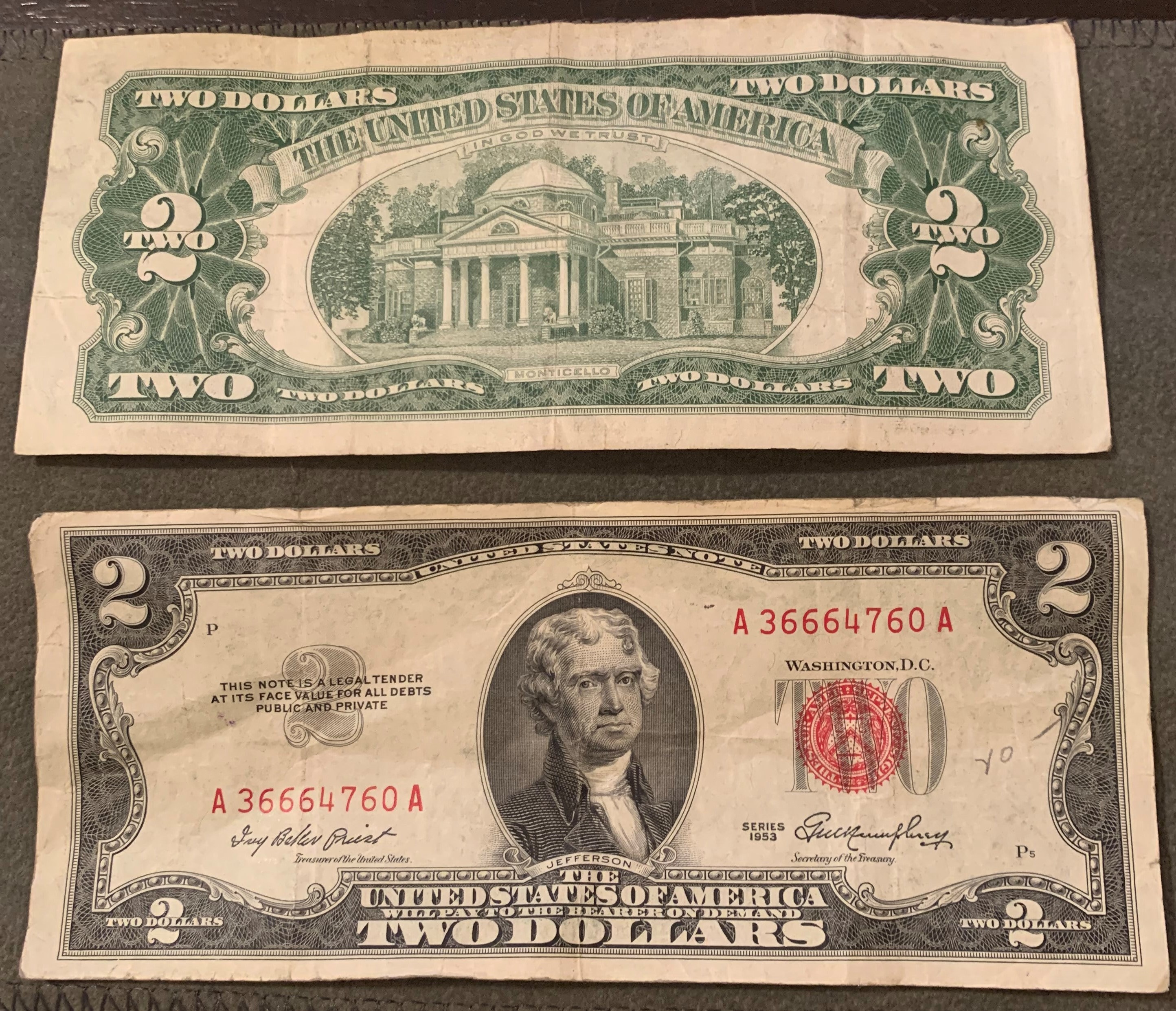
1953B 2 Dollar Bill Red Seal Value: Pricing, History, and Grading Guide
The value of a 1953B 2 dollar bill red seal typically ranges from $3 to $10 in circulated condition, while crisp, uncirculated notes can sell for $15 to $50 or more. Values fluctuate based on the paper quality, serial number, centering...
The value of a 1953B 2 dollar bill red seal typically ranges from $3 to $10 in circulated condition, while crisp, uncirculated notes can sell for $15 to $50 or more. Values fluctuate based on the paper quality, serial number, centering, and whether the note features a rare star designation or printing anomaly.
Contents
Understanding the Series 1953B Legal Tender Note
The Series 1953B United States Note, commonly recognized by its distinctive red Treasury Seal and red serial numbers, holds a special place in American currency history. Before the introduction of Federal Reserve Notes as the dominant form of paper money, United States Notes (or Legal Tender Notes) were backed directly by the United States government credit rather than silver or gold reserves.
The letter suffix "B" following the 1953 series year indicates a minor modification to the plate signatures or layout during production. For the 1953B series, these notes feature the signatures of Ivy Baker Priest as Treasurer of the United States and Robert B. Anderson as Secretary of the Treasury. The face of the bill prominently displays Thomas Jefferson, while the back features the classic engraving of Jefferson’s Virginia home, Monticello, without the famous "IN GOD WE TRUST" motto (which was not added to the back of two-dollar bills until the 1976 series).
Decoding Red Seal Characteristics and Variations
Identifying a genuine 1953B red seal note requires examining specific printing features that separate it from modern currency and older silver certificates.
- Seal Color: A vibrant cherry-red or vermilion Treasury seal stamped on the right side of the portrait.
- Serial Numbers: Matching red serial numbers located on the upper left and lower right of the bill face.
- Motto Absence: The total absence of the national motto "IN GOD WE TRUST" on the reverse side above Monticello.
- Red Seal vs. Blue/Green Seals: Unlike blue seal silver certificates or green seal Federal Reserve Notes, red seal notes were issued under statutory authority to maintain a specific volume of United States currency in circulation.
Grading Scale and Condition Impact on Value
Paper money collecting relies on a strict 70-point grading scale established by organizations like Paper Money Guaranty (PMG) and Professional Coin Grading Service (PCGS). The physical condition of a 1953B 2 dollar bill is the single most critical factor in determining its market value.
| Grade Category | Numerical Range | Physical Characteristics | Estimated Market Value |
|---|---|---|---|
| Circulated (Well Worn) | 12 - 35 | Heavy folds, creases, soiled paper, rounded corners, possible small tears or stains. | $3.00 - $6.00 |
| About Uncirculated (AU) | 50 - 58 | Light handling, minor corner bend, crisp paper texture, no heavy folding creases. | $10.00 - $20.00 |
| Choice Uncirculated (CU) | 60 - 65 | Brand new appearance, sharp corners, original paper brightness, no folds. | $25.00 - $50.00 |
| Gem Uncirculated (GEM) | 66 - 70 | Flawless paper, exceptional centering, pristine preservation, museum quality. | $75.00 - $200.00+ |
Rare Varieties, Star Notes, and Fancy Serial Numbers
While most standard 1953B red seal notes are common due to large printing numbers, certain anomalies and special features drive prices significantly higher among collectors.
Star Notes
If a replacement bill was needed during the printing process to substitute a misprinted sheet, the Bureau of Engraving and Printing used a star at the beginning or end of the serial number. A 1953B Two Dollar Star Note carries a higher collectible premium because fewer were printed compared to standard notes. Depending on condition, a 1953B star note can easily command $20 to $100+.
Fancy Serial Numbers
Collectors actively seek out unique serial number configurations. Notes featuring palindromes (radar notes), low numbers (e.g., 00000123), solid digits (e.g., 77777777), or repeating patterns (repeater notes) command substantial premiums over standard-issue serials, regardless of the series year.
Cutting and Printing Errors
Misaligned cuts, ink smears, double denominations, or cutting folds can transform an ordinary circulated bill into a sought-after error note worth hundreds of dollars to specialized paper money enthusiasts.
How to Properly Handle, Store, and Evaluate Your Bill
Preserving the structural integrity of vintage paper currency is vital for maintaining its financial worth. Improper storage can reduce a crisp note to a heavily worn grade within seconds.
- Avoid Laminating: Never laminate or tape old currency. Doing so permanently destroys the grading potential and ruins the paper value.
- Use Mylar Sleeves: Store bills in PVC-free currency holders, mylar sleeves, or acid-free currency albums to protect them from moisture and oils from human skin.
- Handle with Care: Always pick up notes by their edges, or use clean cotton numismatic gloves to prevent natural skin acids from degrading the cotton-linen paper blend.
- Assess the Lighting: Examine bills under natural daylight or balanced LED spectrum lighting to accurately check for hidden stains, pinholes, or washing.
Comparing Series 1953 Two Dollar Bill Variations
To understand where the 1953B fits within its immediate family, it helps to review the subtle changes introduced across consecutive print runs.
| Series Identifier | Treasury Signatures | Relative Scarcity | Average Value Range (Circulated) |
|---|---|---|---|
| Series 1953 | Priest - Humphrey | Common | $3.00 - $8.00 |
| Series 1953A | Priest - Anderson | Common | $3.00 - $8.00 |
| Series 1953B | Priest - Anderson | Common | $3.00 - $10.00 |
| Series 1963 | Granahan - Dillon | Common | $3.00 - $7.00 |
| Series 1963A | Granahan - Fowler | Common | $3.00 - $7.00 |
Frequently Asked Questions
Are 1953B red seal 2 dollar bills worth a lot of money?
Most standard 1953B red seal two-dollar bills are worth between $3 and $10 in circulated condition. Unless the bill is in pristine uncirculated condition, features a star in the serial number, or boasts a rare fancy serial number, its value remains relatively modest.
Can I still spend a 1953B red seal 2 dollar bill at a store?
Yes, these bills remain legal tender and maintain their face value of two dollars in modern commerce. However, spending a vintage red seal note at a retail store is financially discouraged because collectors will pay more than face value for them.
What does the red seal signify on old paper currency?
The red seal indicates that the note is a United States Note (Legal Tender Note) rather than a Federal Reserve Note or Silver Certificate. These notes were issued directly by the United States Treasury to manage the national money supply.
Why is there no "In God We Trust" motto on the back?
The national motto was not added to the back of the two-dollar bill until the redesign in 1976. Series 1953 notes predate this legislative requirement, displaying only the architectural engraving of Monticello on the reverse.
Should I get my 1953B 2 dollar bill professionally graded?
Professional third-party grading is generally only economically viable for notes evaluated as Choice Uncirculated or Gem Uncirculated, or those featuring rare star numbers and major errors. Grading fees often exceed the market value of typical circulated notes.
How can I tell if my red seal bill is a counterfeit?
Genuine notes feature crisp intaglio printing with raised ink texture, fine micro-detailing in the portrait and borders, and red and blue security fibers embedded in the authentic cotton-linen paper stock rather than printed on the surface.
Final Thoughts on Collecting Vintage Currency
Evaluating a 1953B 2 dollar bill red seal comes down to a careful inspection of its condition, serial number structure, and paper preservation. While these historical notes are rarely worth small fortunes, they remain fascinating pieces of mid-century American financial history. Inspect your notes carefully, protect them in archival sleeves, and consult professional price guides or currency dealers if you suspect you possess a rare star or error variety.
Image Gallery