Is Iceland a Rich Country? Understanding Its Economy and Wealth in 2026
Iceland is objectively a rich country, consistently ranking among the top nations globally for Gross Domestic Product (GDP) per capita and human development. As of 2026, its wealth is driven by a sophisticated mix of renewable energy,...
Iceland is objectively a rich country, consistently ranking among the top nations globally for Gross Domestic Product (GDP) per capita and human development. As of 2026, its wealth is driven by a sophisticated mix of renewable energy, sustainable fisheries, high-tech innovation, and a resilient tourism sector, supported by a robust social welfare system.
Contents
The Economic Indicators of Icelandic Wealth
To determine if a country is "rich," economists typically look at several key metrics. For Iceland, these indicators almost universally point toward high levels of national and individual prosperity. However, the raw numbers require context to understand how that wealth translates into daily life for its approximately 390,000 residents.
Gross Domestic Product (GDP) per Capita
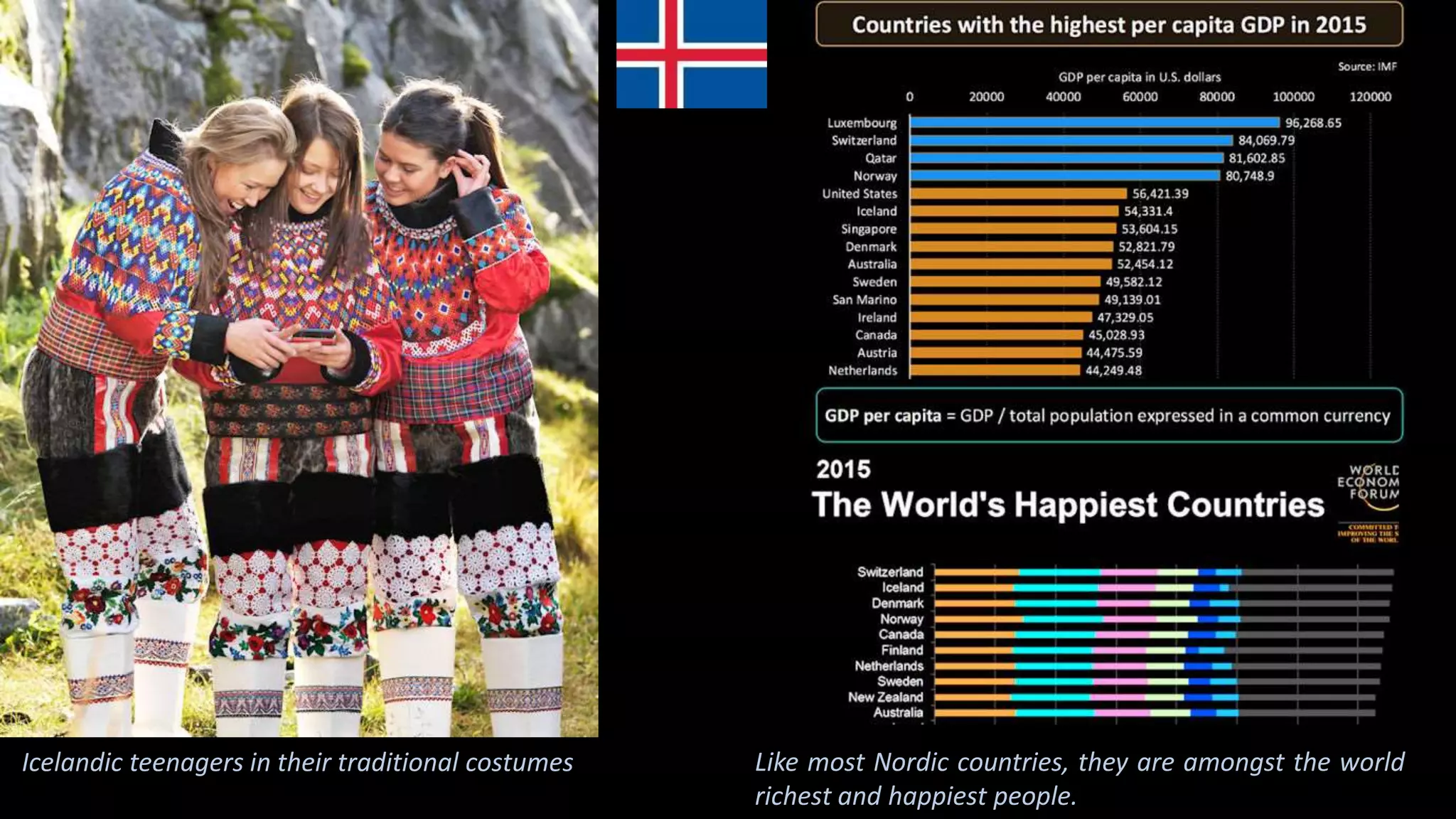
In 2026, Iceland continues to hold a position in the global top ten for GDP per capita. Because the population is small, the high value of its exports—ranging from aluminum and fish to intellectual property in the biotech sector—results in a high dollar amount per person. According to the International Monetary Fund (IMF), Iceland’s GDP per capita often exceeds $75,000 (nominal), placing it in the same league as Switzerland, Norway, and Ireland.
Purchasing Power Parity (PPP)
While nominal GDP is high, Purchasing Power Parity (PPP) provides a more accurate picture of what that money can actually buy. Iceland’s PPP is also high, though it sits slightly lower than its nominal ranking. This is because Iceland is one of the most expensive countries in the world. When adjusted for the cost of living, the "wealth" of an Icelandic citizen is still world-leading, but the high price of goods and services absorbs a significant portion of that income.
Human Development Index (HDI)
Wealth is not just about currency; it is about the quality of life. The United Nations Development Programme consistently ranks Iceland near the top of the Human Development Index. This index measures life expectancy, education levels, and standard of living. Icelanders enjoy one of the highest life expectancies globally, a testament to a well-funded healthcare system and a clean environment, both of which are secondary products of national wealth.
The Pillars of the Icelandic Economy
Iceland’s transition from a poor fishing nation in the early 20th century to a global economic powerhouse in 2026 is a result of strategic resource management. The "richness" of the country is rooted in three primary sectors.
Renewable Energy and Industrial Power
Iceland is unique in that nearly 100% of its electricity and heating comes from renewable sources: geothermal and hydroelectric power. This provides a dual economic advantage. First, it makes the country energy-independent, shielding it from global oil and gas price volatility. Second, it allows Iceland to export "stored energy" in the form of aluminum.
Large-scale aluminum smelting is energy-intensive. Companies relocate to Iceland to take advantage of low-cost, green energy. Furthermore, in 2026, Iceland has become a premier hub for sustainable data centers. The cool climate reduces cooling costs, while the renewable energy grid provides the massive power required for AI processing and global cloud storage.
The Modernized Fishing Industry
While fishing was once a subsistence activity, it is now a high-tech, billion-dollar industry. Iceland utilizes a Transferable Quota System, which ensures that fish stocks (particularly cod) are not over-harvested. This sustainability ensures long-term economic stability. Icelandic companies have also mastered "100% utilization" of the fish, using skins for medical bandages and collagen for cosmetics, significantly increasing the value-add of their primary resource.
The Tourism Sector
Tourism remains the largest contributor to Iceland’s GDP in 2026. Following the global shifts in travel, Iceland has pivoted toward "high-value, low-impact" tourism. By focusing on luxury eco-travel and infrastructure that protects its fragile volcanic landscapes, the country generates massive tax revenue from international visitors. This revenue is often funneled back into public infrastructure, further increasing the nation’s collective wealth.
Wealth Distribution and Social Equality
One of the defining characteristics of Iceland’s wealth is how it is shared. Unlike some nations with high GDP but massive wealth gaps, Iceland maintains a very low Gini coefficient, which measures income inequality.
The Role of Labor Unions
Approximately 90% of the Icelandic workforce belongs to a labor union. These organizations negotiate collective bargaining agreements that ensure high minimum wages and excellent benefits. This means that even "low-skilled" jobs in Iceland provide a living wage that would be considered a middle-class income in many other developed nations.
The Social Safety Net
Icelandic wealth is heavily taxed to fund a comprehensive welfare state. This includes:
- Universal Healthcare: Residents have access to high-quality medical care funded by taxes.
- Education: From primary school through university, education is largely state-funded, ensuring that the workforce remains highly skilled and competitive in the global market.
- Parental Leave: Iceland offers some of the most generous parental leave policies in the world, which supports high labor force participation for both men and women.
The Paradox: Why Does it Feel Expensive?
If Iceland is so rich, why do many visitors and residents feel the financial strain? The "richness" of the country is often offset by the High Cost of Living.
- Import Costs: As an island in the North Atlantic, almost all consumer goods—from vehicles to electronics and fresh produce—must be shipped or flown in.
- Small Market Size: With a population of fewer than 400,000, Iceland lacks the economies of scale found in larger nations.
- High Value-Added Tax (VAT): To fund the social services mentioned above, the government imposes a high VAT on most goods and services, often around 24%.
For a resident, while the salary is high (the average monthly salary in 2026 often exceeds 800,000 ISK), a significant portion goes toward housing and basic necessities. For a tourist, this results in "sticker shock" when purchasing meals or renting vehicles.
Economic Comparison: Iceland vs. The World (2026 Estimates)
| Metric | Iceland | Norway | USA | United Kingdom |
|---|---|---|---|---|
| GDP per Capita (Nominal) | ~$78,000 | ~$92,000 | ~$80,000 | ~$52,000 |
| Gini Coefficient (Inequality) | 24.1 (Low) | 26.2 (Low) | 41.1 (High) | 35.1 (Medium) |
| Renewable Energy Share | ~99% | ~98% | ~22% | ~45% |
| Unemployment Rate | ~3.4% | ~3.6% | ~3.9% | ~4.2% |
Data based on 2026 economic projections and historical trends from Statistics Iceland and the OECD.
Is the Icelandic Króna (ISK) a Weak Link?
Iceland uses its own currency, the Króna. Because the economy is so small, the Króna can be volatile. In times of global economic stress, the currency can fluctuate wildly against the Euro or the US Dollar. While this can make imports more expensive, it also makes Icelandic exports more competitive and boosts the tourism sector. This independent monetary policy is a double-edged sword; it allows the Central Bank of Iceland to manage the local economy but leaves the nation’s "wealth" at the mercy of international exchange rates.
Future Outlook: Challenges to Icelandic Wealth
Despite its current status, Iceland faces challenges in maintaining its wealth through the late 2020s.
- Over-reliance on Tourism: A global downturn or another volcanic eruption can cause tourism revenue to evaporate overnight, as seen in previous decades.
- Climate Change: While Iceland benefits from green energy, the melting of its glaciers and changes in ocean temperatures could threaten its hydroelectric output and fishing stocks.
- Labor Shortages: To sustain its growth, Iceland increasingly relies on foreign labor, which requires careful integration policies to maintain social cohesion.
Frequently Asked Questions
Is there poverty in Iceland? While extreme poverty is virtually non-existent due to the social safety net, "relative poverty" does exist. This primarily affects pensioners, students, and some immigrant populations who struggle with the high cost of housing in the Reykjavik capital area.
Is Iceland richer than the United States? In terms of GDP per capita, Iceland and the US are often comparable. However, Iceland is arguably "richer" in terms of social equity, healthcare access, and environmental quality, whereas the US has higher levels of individual concentrated wealth and technological dominance.
Why are taxes so high in Iceland? Taxes are high to fund the "Nordic Model" of social welfare. This includes free education, subsidized healthcare, and robust public infrastructure. Most Icelanders view this as a "social insurance" rather than a burden, as it reduces the individual's out-of-pocket costs for essential services.
How does Iceland's wealth compare to other Nordic countries? Iceland is very similar to Norway, Sweden, Denmark, and Finland. It generally ranks higher than Finland and Sweden in GDP per capita but slightly lower than Norway, which possesses massive sovereign wealth from North Sea oil.
Can an average person afford to live in Iceland? Yes, because wages are scaled to the cost of living. While a coffee may cost $6–$8, the person serving that coffee is likely earning a wage that allows them to afford housing and healthcare, provided they live within the local economic ecosystem.
Final Recommendation
If you are evaluating Iceland's wealth for investment, relocation, or travel, look beyond the price tags. Iceland's "wealth" is found in its energy security, social stability, and high educational standards. For investors, the focus should be on the green energy and tech sectors. For travelers, budgeting significantly more than a typical European trip is essential. Ultimately, Iceland serves as a premier example of how a small nation can leverage natural resources and social policy to become one of the wealthiest societies on Earth.
Image Gallery