Mastering the AA Dreamliner Journey: Experience, Fleet, and Booking Guide
The American Airlines Dreamliner journey spans long-haul international routes aboard the Boeing 787-8 and 787-9 aircraft, offering passengers advanced cabin architecture, modern seating configurations including Flagship Business and Pr...
The American Airlines Dreamliner journey spans long-haul international routes aboard the Boeing 787-8 and 787-9 aircraft, offering passengers advanced cabin architecture, modern seating configurations including Flagship Business and Premium Economy, and enhanced environmental controls designed to reduce jet lag.
Contents
Introduction to American Airlines and the Boeing 787 Fleet
When planning a long-haul international flight, the choice of aircraft significantly impacts overall comfort, cabin environment, and travel quality. American Airlines operates a substantial fleet of modern widebody aircraft, prominently featuring the Boeing 787 Dreamliner family. Understanding the mechanics of the AA Dreamliner journey requires looking at the specific aircraft variants, cabin layouts, routing strategies, and passenger amenities that define this flagship flying experience.
Ambiguity often arises around which routes feature the Dreamliner versus older Boeing 777 aircraft or partner metal. American Airlines utilizes both the smaller Boeing 787-8 and the stretched Boeing 787-9 variants across its global network, primarily departing from hubs such as Dallas/Fort Worth International Airport (DFW), Chicago O'Hare International Airport (ORD), Miami International Airport (MIA), and New York (JFK). Clarifying which aircraft operates a specific flight requires checking the booking path or flight status tool, as fleet assignments can occasionally shift due to operational scheduling demands.
Fleet Variants: Boeing 787-8 vs. Boeing 787-9
American Airlines divides its Dreamliner operations between two distinct models: the Boeing 787-8 and the Boeing 787-9. While both share the signature aerodynamic features of the Dreamliner family—such as composite fuselages, larger electronically dimmable windows, and lower cabin altitude pressures—their interior layouts and passenger capacities differ notably.
The Boeing 787-8
The Boeing 787-8 is the shorter variant in the fleet, typically configured to carry fewer passengers, making it ideal for secondary long-haul international routes or medium-density transcontinental services.
- Business Class: Usually features 20 or 28 reverse-herringbone or staggered lie-flat suites, depending on the specific sub-fleet configuration.
- Main Cabin Extra & Economy: Offers standard economy seating in a 3-3-3 configuration, which provides a balance of legroom and seat width relative to industry norms.
The Boeing 787-9
The Boeing 787-9 is the larger, stretched version of the aircraft, designed for high-density international trunk routes. It features a higher passenger capacity and introduces American Airlines' dedicated Premium Economy cabin.
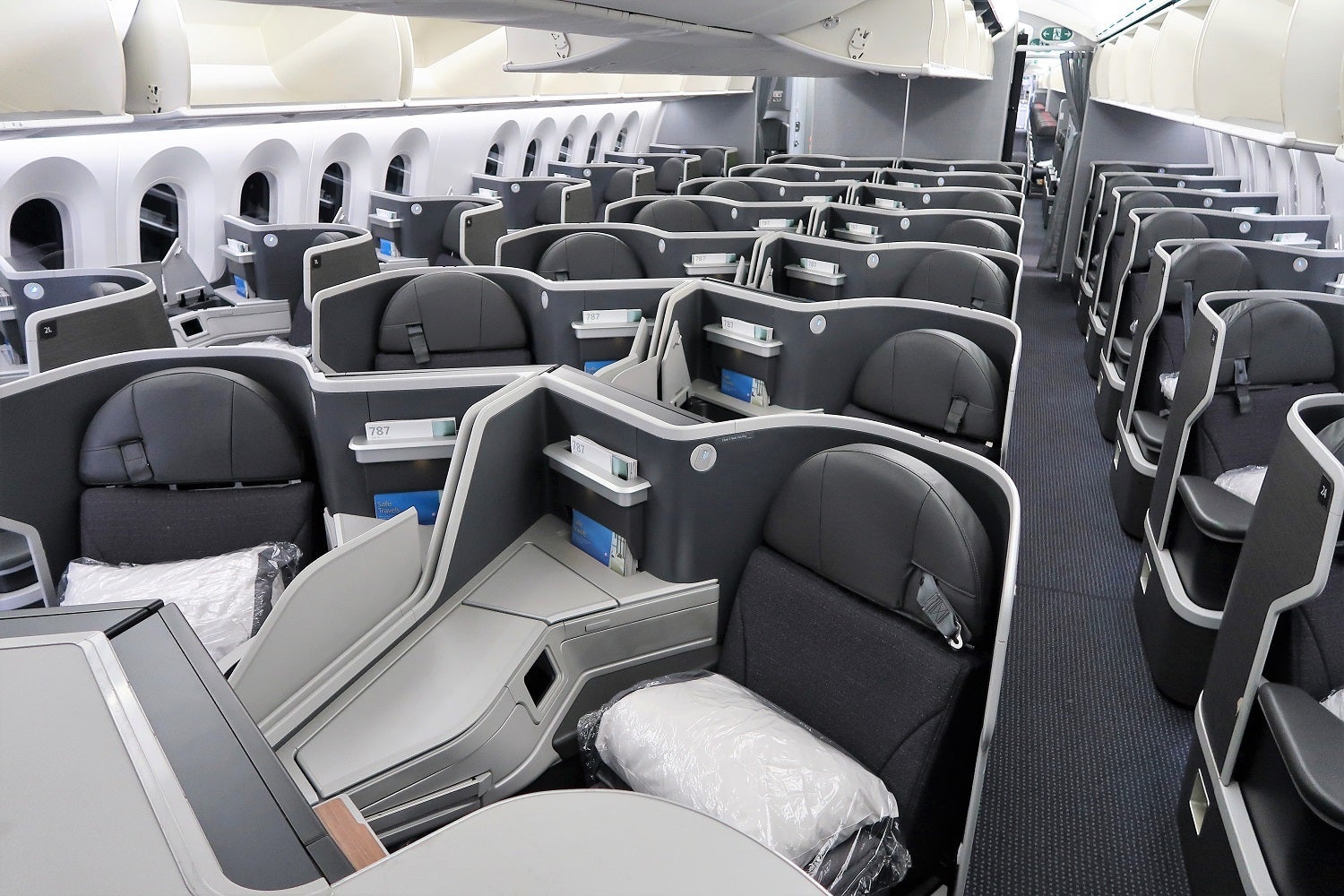
- Flagship Business: Expanded cabin capacity with direct aisle access for every seat.
- Premium Economy: Positioned as a distinct cabin between Business and Main Cabin, featuring wider seats, greater recline, footrests, upgraded dining, and enhanced amenity kits.
- Main Cabin: Standard economy arranged in a 3-3-3 layout, complemented by Main Cabin Extra seats offering additional pitch.
| Aircraft Variant | Typical Total Capacity | Flagship Business Seats | Premium Economy Seats | Main Cabin / Extra Seats | Primary Hubs |
|---|---|---|---|---|---|
| Boeing 787-8 | 204–234 | 20–28 | None or Small Sub-fleet | ~176–206 | DFW, ORD, MIA |
| Boeing 787-9 | 285 | 30 | 21 | ~234 | DFW, LAX, JFK, ORD |
Cabin Classes and Onboard Experience
The passenger experience on the American Airlines Dreamliner journey varies significantly depending on the ticketed cabin class. Across all cabins, the baseline engineering of the Boeing 787 provides a superior environment compared to older generation aircraft, featuring lower cabin altitudes (around 6,000 feet instead of 8,000 feet) and higher humidity levels, which help minimize fatigue and dehydration during multi-hour flights.
Flagship Business
For travelers seeking maximum comfort, Flagship Business provides fully flat-bed seats with direct aisle access. Passengers receive luxury bedding provided by standard partners like sleep brand Casper, noise-canceling headphones, multi-course dining menus paired with curated wines, and access to American Airlines Flagship Lounges prior to departure. The reverse-herringbone or staggered layout ensures privacy and uninhibited movement.
Premium Economy
Introduced broadly on the 787-9 fleet, Premium Economy bridges the gap between standard coach and business class. The physical seat offers a wider footprint, adjustable legrests and footrests, a dedicated armrest, and a larger personal entertainment touchscreen. Passengers also enjoy priority boarding, enhanced meal service served on proper tableware, and amenity kits.
Main Cabin and Main Cabin Extra
The standard economy experience on the Dreamliner utilizes a 3-3-3 seating arrangement. While seat width is constrained by the physical dimensions of the twin-aisle cabin, Main Cabin Extra sections provide additional legroom (typically 3 to 6 inches of extra pitch) along with priority boarding privileges. Personal seatback entertainment screens are standard at every seat, offering an extensive catalog of movies, television shows, and audio channels.
Route Network and Scheduling
American Airlines deploys its Dreamliner fleet strategically across transatlantic, transpacific, and select deep South American routes. High-demand European gateways such as London Heathrow (LHR), Madrid (MAD), and Rome (FCO) frequently see scheduled 787 service, particularly during peak summer travel seasons. Similarly, long-haul Asian routes and Latin American financial capitals utilize the range and efficiency of the aircraft.
Travelers looking to secure a Dreamliner journey should review the aircraft type listed during the booking process on the official American Airlines website or mobile application. Because airline fleet planning is dynamic, schedule adjustments can occur up to the date of departure. Verifying the aircraft assignment close to departure ensures alignment with expected cabin configurations, especially when selecting specific seats in Premium Economy or Business Class.
Practical Booking, Upgrades, and Loyalty Strategies
Securing space on an AA Dreamliner involves understanding fare structures, loyalty tiers within the AAdvantage program, and upgrade mechanics.
AAdvantage Loyalty Points and Status
Frequent flyers can leverage elite status within the American Airlines AAdvantage program to secure complimentary upgrades, priority baggage handling, and preferred seat selection. However, complimentary upgrades are generally restricted to domestic and short-haul international routes; long-haul international flights operated by widebody aircraft like the Dreamliner typically require the use of systemwide upgrades (SWUs), miles plus cash co-pays, or direct cash purchases.
Using Miles for Redemption
AAdvantage miles or partner airline loyalty currencies (such as British Airways Avios or Alaska Airlines Mileage Plan miles) can be redeemed for travel on the Dreamliner. Award availability for Flagship Business class on popular routes requires booking several months in advance, particularly during peak seasonal windows. Flexible travel dates and monitoring partner award space increase the probability of securing premium cabins.
Common Mistakes and Passenger Troubleshooting
Navigating long-haul international travel on widebody aircraft involves avoiding several common pitfalls:
- Assuming Aircraft Permanence: Do not book a specific seat based solely on the aircraft type displayed months in advance without monitoring for potential equipment changes.
- Ignoring Cabin Differences: Ensure you verify whether your specific flight is operated by a 787-8 or 787-9, as the 787-8 lacks a dedicated Premium Economy cabin.
- Overlooking Connection Times: When transiting through massive hubs like DFW or MIA to connect to a Dreamliner international leg, ensure minimum connection times account for customs clearance and terminal transfers.
Frequently Asked Questions
Do all American Airlines Boeing 787 aircraft feature Premium Economy?
No. While the larger Boeing 787-9 variant features a dedicated Premium Economy cabin, the smaller Boeing 787-8 fleet generally does not feature this cabin class, offering only Flagship Business, Main Cabin Extra, and standard Main Cabin seating.
How does the Dreamliner cabin environment reduce jet lag?
The Boeing 787 is constructed from advanced composite materials rather than traditional aluminum, allowing for higher cabin pressure and increased humidity levels. This engineering prevents the severe dehydration and fatigue commonly associated with older aircraft cabins.
Can I use domestic elite status upgrades on an international Dreamliner flight?
No. American Airlines does not offer complimentary elite status upgrades on long-haul international flights operated by widebody aircraft. Upgrades on these routes require systemwide upgrades, mileage awards with applicable co-pays, or paid cash upgrades.
What inflight entertainment options are available on the AA Dreamliner?
Every seat on the American Airlines Dreamliner is equipped with a personal touchscreen monitor providing on-demand movies, television programs, live television channels where available, music, and moving map flight tracking. High-speed satellite Wi-Fi is also available for purchase on most flights.
How can I verify if my flight is operated by a Dreamliner?
During the flight selection process on the American Airlines website or app, click on the flight number link to view the specific aircraft type. You can also monitor your flight status closer to departure using your reservation record locator.
Conclusion and Next Actions
Embarking on the American Airlines Dreamliner journey provides a comfortable, technologically advanced experience for long-haul international travel. To ensure a seamless trip, review your ticketed aircraft variant, select seats aligned with your cabin preference well in advance, and monitor your itinerary for any operational equipment changes prior to departure.
Image Gallery