What Happens When a Non-Spouse Inherits an IRA? Rules, Taxes, and Options
When a non-spouse beneficiary inherits an Individual Retirement Account (IRA), the Internal Revenue Service (IRS) enforces strict distribution, rollover, and tax guidelines that differ significantly from those applied to surviving spou...
When a non-spouse beneficiary inherits an Individual Retirement Account (IRA), the Internal Revenue Service (IRS) enforces strict distribution, rollover, and tax guidelines that differ significantly from those applied to surviving spouses. Under the SECURE Act and subsequent IRS regulations, most non-spouse heirs cannot roll the account into their own IRA and must fully withdraw all assets within 10 years, potentially creating substantial tax liabilities.
Contents
Setting Up an Inherited IRA: Immediate Steps and Account Rules
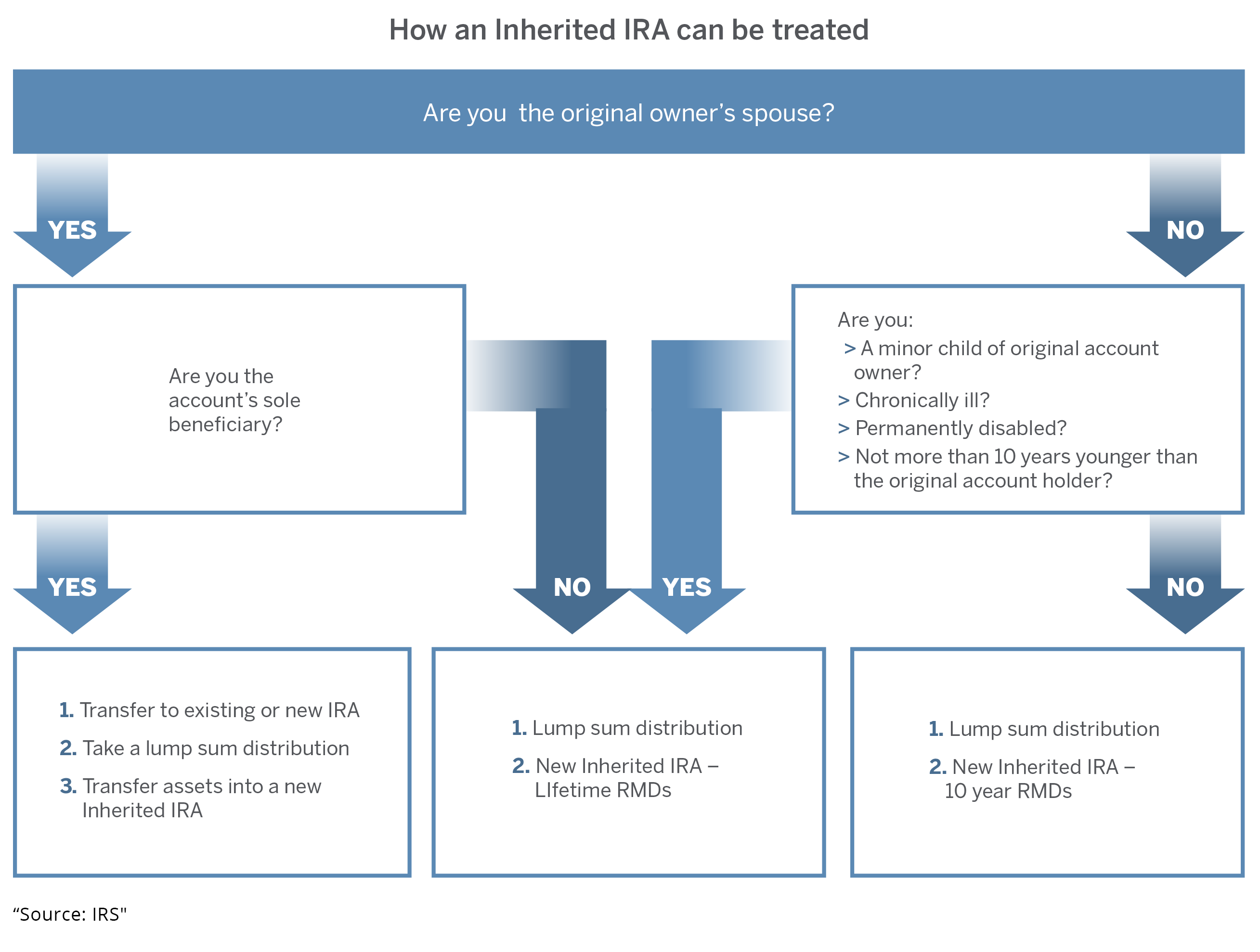
Non-spouse beneficiaries—such as adult children, grandchildren, siblings, or unrelated heirs—cannot move inherited IRA funds directly into their own existing Traditional or Roth IRA. Doing so triggers an immediate, fully taxable distribution of the entire account balance, which cannot be undone.
Instead, the funds must be transferred via a direct trustee-to-trustee transfer into a newly established account known as an Inherited IRA (or Beneficiary IRA).
Proper Titling Requirements
The IRS requires specific account titling to maintain the tax-deferred or tax-free status of the inherited assets. The account title must explicitly list both the deceased owner's name and the beneficiary's name. A standard format required by financial custodians is:
[Name of Deceased Owner] IRA (Deceased [Date of Death]) FBO [Name of Beneficiary], Beneficiary
Account Restrictions
Once the Inherited IRA is established:
- No New Contributions: You cannot make annual contributions (such as regular IRA contributions) into an Inherited IRA.
- No Account Mergers: You cannot combine an Inherited IRA from one decedent with an Inherited IRA from a different decedent (unless inherited from the same person).
- Investment Control: As the beneficiary, you retain full control over how the money is invested within the account (e.g., stocks, bonds, mutual funds, cash equivalents).
- Penalty Exemption: Withdrawals taken from an Inherited IRA are exempt from the standard 10% early withdrawal penalty, regardless of the beneficiary's age. However, standard income taxes still apply to Traditional IRA distributions.
The 10-Year Rule Under the SECURE Act
The passage of the Setting Every Community for Retirement Enhancement (SECURE) Act in 2019—and subsequent IRS clarifications effective through 2026—fundamentally changed inherited IRA rules for non-spouse beneficiaries. The traditional "stretch IRA," which allowed non-spouse heirs to spread withdrawals over their full lifetime, was largely eliminated for individuals inheriting accounts after December 31, 2019.
Under the 10-Year Rule, most designated non-spouse beneficiaries must withdraw all assets from the inherited IRA by December 31 of the tenth year following the year of the original owner's death.
Example Timeline:
- Owner Passes Away: May 14, 2024
- Year 1 Begins: January 1, 2025
- 10-Year Deadline: December 31, 2034 (Account balance must be $0)
The Crucial Distinction: Death Before vs. After the Required Beginning Date (RBD)
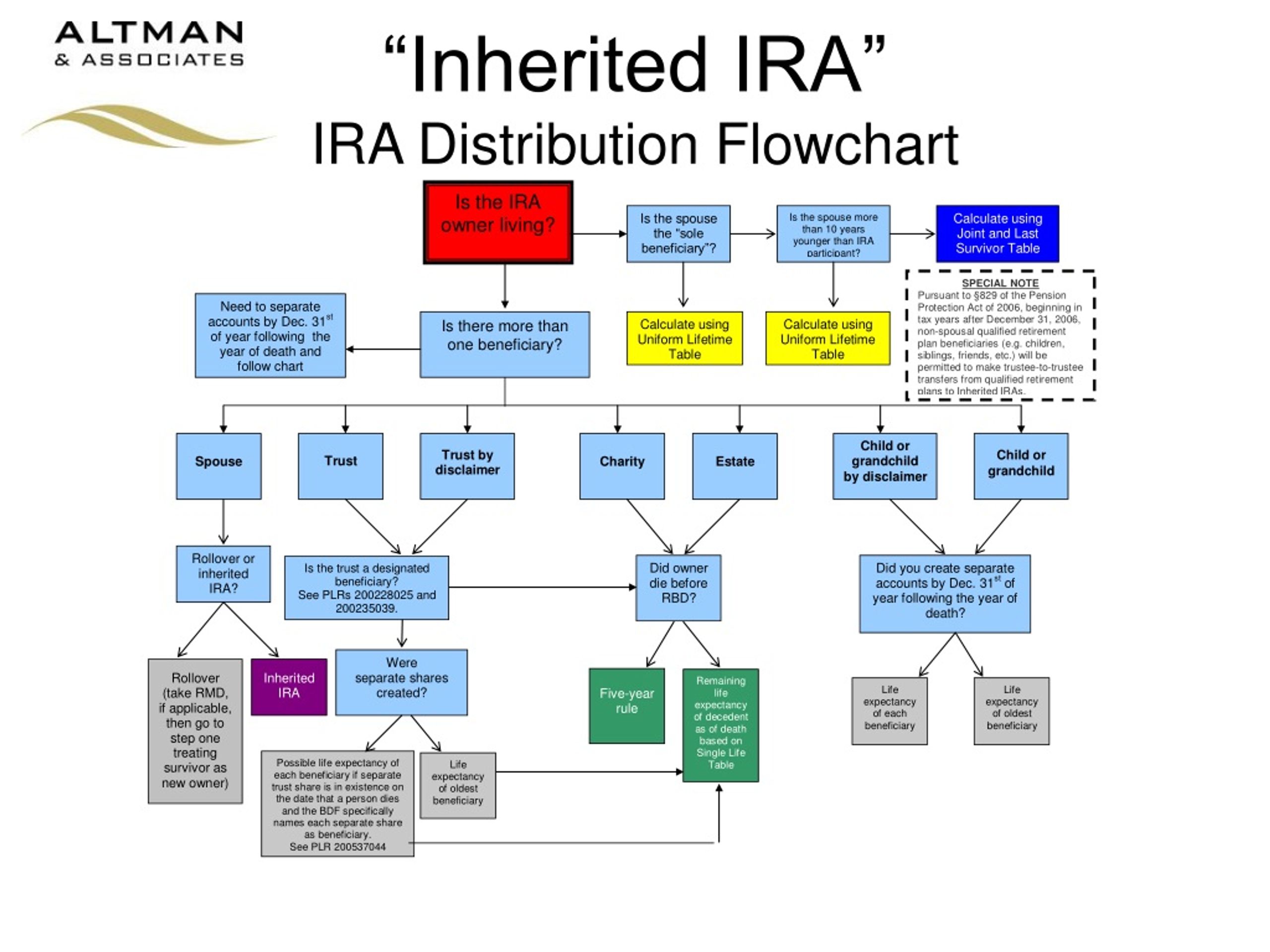
How the 10-year rule applies depends directly on whether the original IRA owner died before or on/after their Required Beginning Date (RBD) for taking Required Minimum Distributions (RMDs).
Did the Deceased Pass Before or On/After Their Required Beginning Date (RBD)?
- BEFORE RBD:
- Flexible withdrawals throughout Years 1–9. Entire balance must be $0 by Dec 31 of Year 10.
- ON OR AFTER RBD:
- Mandatory annual RMDs required in Years 1–9 (based on single life expectancy).
- Entire remaining balance must be $0 by Dec 31 of Year 10.
1. If the Owner Died BEFORE Their Required Beginning Date
If the IRA owner passed away before reaching their required RMD age (age 73 for individuals reaching age 72 after 2022, per SECURE Act 2.0 guidelines):
- No Mandatory Annual RMDs in Years 1–9: The beneficiary is not required to take distributions in any specific year during the 10-year window.
- Flexible Timing: The beneficiary can take withdrawals at any time, in any amount, as long as the entire balance is zero by December 31 of Year 10.
- Tax Strategy Flexibility: This allows beneficiaries to delay withdrawals until lower-income years within the 10-year frame.
2. If the Owner Died ON OR AFTER Their Required Beginning Date
If the IRA owner passed away after RMDs had already commenced:
- Annual RMDs Are Required in Years 1–9: Under final IRS Treasury regulations, the beneficiary must continue taking annual RMDs for years 1 through 9. These annual amounts are calculated using the beneficiary's life expectancy table (or the deceased's remaining life expectancy, whichever is longer).
- Final Depletion in Year 10: Regardless of the annual RMD calculations, the entire remaining balance must be distributed by December 31 of the tenth year.
Eligible Designated Beneficiaries (EDBs): Exceptions to the 10-Year Rule
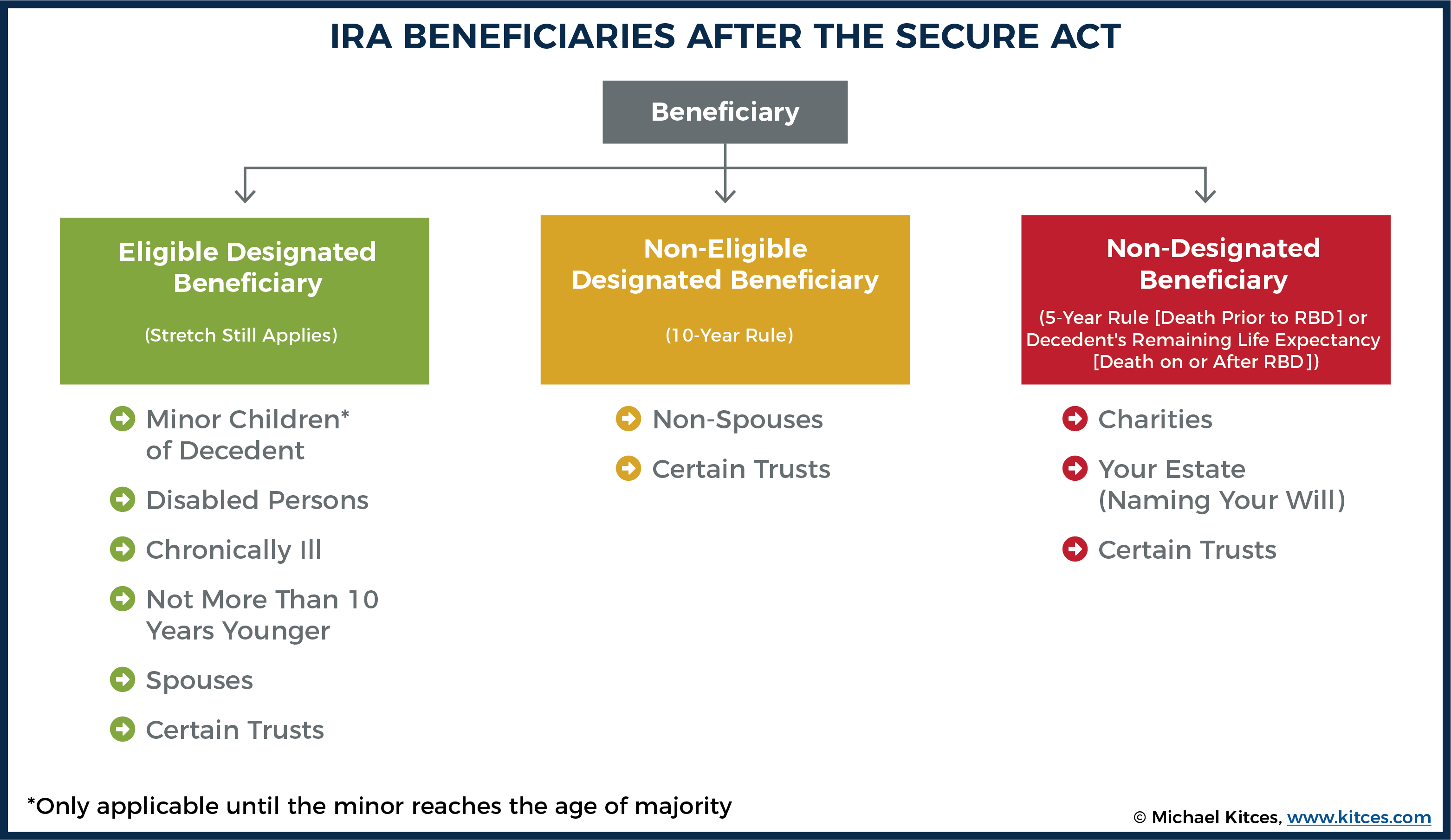
Not all non-spouse beneficiaries are subject to the rigid 10-year liquidation rule. The IRS created a specific category called Eligible Designated Beneficiaries (EDBs). EDB status is determined on the date of the IRA owner's death.
If you qualify as an EDB, you may still use the traditional "life expectancy stretch," taking annual RMDs calculated over your single life expectancy rather than emptying the account in 10 years.
Who Qualifies as an Eligible Designated Beneficiary?
- Disabled Individuals: A beneficiary who meets the IRS definition of severe physical or mental disability (unable to engage in substantial gainful activity) at the time of the account owner's death.
- Chronically Ill Individuals: A beneficiary certified by a licensed health care practitioner as having a long-term illness requiring substantial assistance with activities of daily living.
- Individuals Not More Than 10 Years Younger Than the Deceased: A beneficiary who is older than the deceased, or who is younger by no more than 10 years (e.g., a sibling close in age or a friend of similar age).
- Minor Children of the Deceased IRA Owner: A direct minor child of the account owner (note: grandchildren do not qualify for this exception).
- Important Caveat: The life expectancy stretch for minor children applies only until they reach the age of majority (age 21 for IRS retirement distribution purposes). Upon turning 21, the 10-year rule is triggered, requiring the account to be fully liquidated by December 31 of the year the former minor reaches age 31.
Tax Implications: Traditional vs. Roth Inherited IRAs
The tax treatment of distributions depends on whether the original account was a Traditional IRA or a Roth IRA. Understanding these tax rules is essential for managing overall annual gross income.
Inherited IRA Taxation:
- Traditional IRA:
- Distributions = Taxable Ordinary Income
- No early withdrawal penalty
- Strategy: Spread over 10 yrs to reduce bracket jumps
- Roth IRA:
- Distributions = Tax-Free* (No income tax liability)
- Mandatory 10-year rule applies
- Strategy: Hold until Year 10 to maximize tax-free growth
- *Assuming 5-year holding requirement met
Inheriting a Traditional IRA
Distributions from an inherited Traditional IRA are taxed as ordinary income to the beneficiary in the calendar year the withdrawal is received.
- Tax Bracket Exposure: Taking a massive lump-sum withdrawal can push the beneficiary into a significantly higher federal and state income tax bracket.
- No 10% Early Withdrawal Penalty: Inherited IRA withdrawals are exempt from the standard 10% penalty, regardless of the heir's age.
- State Taxes: Distributions are generally subject to state income taxes depending on where the beneficiary resides at the time of withdrawal.
Inheriting a Roth IRA
Inherited Roth IRAs offer major tax advantages, but they are still subject to distribution timelines:
- Tax-Free Distributions: Withdrawals of both earnings and contributions are 100% free from federal income tax, provided the original account owner satisfied the IRS 5-year aging rule for the Roth IRA.
- 10-Year Rule Applies: Non-spouse Roth IRA beneficiaries (who are not EDBs) must empty the account by the end of the 10th year following the owner's death.
- No Annual RMDs in Years 1–9: Because original Roth IRA owners are not subject to lifetime RMDs, the deceased owner is always treated as dying before their required beginning date. Therefore, non-spouse Roth beneficiaries never have mandatory annual distributions during years 1 through 9.
- Optimal Growth Strategy: Financial advisors generally recommend leaving funds inside an inherited Roth IRA untouched until Year 10, allowing the investments to compound tax-free for the maximum permissible timeframe before taking a single tax-free distribution.
Comparison of Non-Spouse Inherited IRA Rules
The table below outlines how distribution timelines, annual RMD requirements, and tax treatments vary depending on the beneficiary classification and the type of IRA inherited.
| Beneficiary Type | Account Type | Owner Died Before RBD? | Annual RMDs (Years 1–9)? | Final Liquidation Deadline | Taxability of Withdrawals |
|---|---|---|---|---|---|
| Non-EDB (Adult child, grandchild, sibling >10 yrs younger) | Traditional IRA | Yes | No | Dec 31 of 10th Year | Taxable as ordinary income |
| Non-EDB | Traditional IRA | No (On/After RBD) | Yes (Based on single life expectancy) | Dec 31 of 10th Year | Taxable as ordinary income |
| Non-EDB | Roth IRA | N/A (Always treated as Before RBD) | No | Dec 31 of 10th Year | Tax-free (if 5-year rule met) |
| Eligible Designated Beneficiary (EDB) (Disabled, Chronically ill, <10 yrs younger) | Traditional IRA | Yes | No (or Life Expectancy) | Lifetime Stretch | Taxable as ordinary income |
| Eligible Designated Beneficiary (EDB) | Traditional IRA | No | Yes (Life Expectancy) | Lifetime Stretch | Taxable as ordinary income |
| Minor Child of Deceased | Traditional IRA | Yes / No | Varies (Life Expectancy until 21) | Dec 31 of year child turns 31 | Taxable as ordinary income |
Critical Mistakes to Avoid When Inheriting an IRA
Navigating inherited retirement accounts involves complex tax laws. Committing procedural errors can result in unintended tax bills and hefty IRS penalties.
1. Attempting a Direct Rollover into Your Own IRA
Non-spouse heirs cannot roll inherited IRA funds into their personal traditional or Roth IRAs. Doing so constitutes an improper rollover, resulting in the IRS treating the entire sum as a fully taxable distribution in the current year, alongside potential excess contribution penalties if deposited into your personal IRA.
2. Missing Annual RMDs (When Owner Died On/After RBD)
If the deceased owner was already subject to annual RMDs, the beneficiary must take annual RMDs in years 1 through 9 under the 10-year rule. Failing to take a required distribution results in an IRS excise tax penalty on the undistributed amount under Internal Revenue Code Section 4974.
3. Taking an Unnecessary Lump-Sum Distribution in Year 1
Unless immediate cash is required, taking an immediate full withdrawal of a large inherited Traditional IRA can cause severe tax damage. Spreading distributions across multiple tax years can help keep you in lower federal income tax brackets.
Scenario: $500,000 Inherited Traditional IRA
- Lump-Sum Withdrawal (Year 1):
- $500,000 added to current salary: Pushes beneficiary into top federal tax bracket (up to 37%).
- Result: Significant, immediate tax bill.
- Strategic Distribution (Spread over 10 Years):
- ~$50,000/year added to current income: Keeps beneficiary within lower tax brackets (e.g., 22% or 24%).
- Result: Substantial long-term tax savings.
4. Ignoring the Income in Respect of a Decedent (IRD) Deduction
If the deceased owner's overall estate was large enough to pay federal estate taxes, non-spouse beneficiaries inheriting a Traditional IRA may be entitled to an itemized tax deduction for federal estate taxes paid on the inherited IRA assets. This is known as the Income in Respect of a Decedent (IRD) deduction under IRC Section 691(c).
Step-by-Step Action Plan for Non-Spouse Beneficiaries
If you have recently inherited an IRA, follow this structured process to preserve tax benefits and ensure regulatory compliance:
- Obtain Official Documentation: Request multiple certified copies of the original IRA owner's death certificate, which will be required by the financial institution holding the account.
- Identify the Account Type and Beneficiary Designation: Confirm whether the inherited account is a Traditional, Roth, SEP, or SIMPLE IRA, and verify whether you are listed as a primary designated beneficiary or a contingent beneficiary.
- Determine the Original Owner's RMD Status: Establish whether the deceased owner passed away before or after their Required Beginning Date (and whether they took their full RMD in the year of death).
- Establish an Inherited IRA Account: Contact a brokerage or financial custodian to set up a properly titled Inherited IRA via direct trustee-to-trustee transfer.
- Determine Your Beneficiary Status (EDB vs. Non-EDB): Determine whether you qualify for the life expectancy stretch as an Eligible Designated Beneficiary or if you are bound by the SECURE Act 10-year rule.
- Formulate a Distribution Strategy: Consult with a Certified Public Accountant (CPA) or fee-only financial planner to model distribution scenarios over the allowable timeframe to minimize total income tax exposure.
Frequently Asked Questions
Can a non-spouse beneficiary cash out an inherited IRA immediately?
Yes. A non-spouse beneficiary can withdraw the entire balance as a lump-sum payout at any time. However, for a Traditional IRA, the entire amount will be treated as ordinary income in the year of withdrawal, potentially causing a significant tax liability.
What happens if I inherit a Roth IRA as a non-spouse?
An inherited Roth IRA is still subject to the 10-year rule for non-spouse beneficiaries (unless you qualify as an Eligible Designated Beneficiary). However, distributions are completely tax-free as long as the account met the 5-year holding rule established by the original owner. Additionally, annual RMDs are not required during years 1 through 9.
What happens if there are multiple beneficiaries named on the IRA?
If an IRA names multiple non-spouse beneficiaries, the account can be split into separate Inherited IRAs for each individual. To use their own age and distribution rules independently, beneficiaries must complete the division of the account by December 31 of the year following the year of the owner's death.
Are withdrawals from an inherited IRA subject to the 10% early withdrawal penalty?
No. Withdrawals taken by a beneficiary from an Inherited IRA are explicitly exempt from the IRS 10% penalty for early distributions, even if the beneficiary is under age 59½. Standard income taxes still apply to Traditional IRA withdrawals.
What happens if a non-spouse beneficiary dies before the 10 years are up?
If a non-spouse beneficiary dies during the 10-year distribution period, the successor beneficiary does not get a new 10-year period. The successor beneficiary must step into the shoes of the primary beneficiary and completely empty the inherited account within the original 10-year deadline.
Next Steps and Professional Guidance
Inheriting an IRA introduces complex tax obligations and strict federal compliance timelines. Because small errors in account titling or withdrawal planning can trigger high tax penalties, your immediate next step should be to request official account statements, determine the original owner's birth date and date of death, and consult a qualified tax advisor or financial planner before initiating any account transfers or cash withdrawals.
Image Gallery