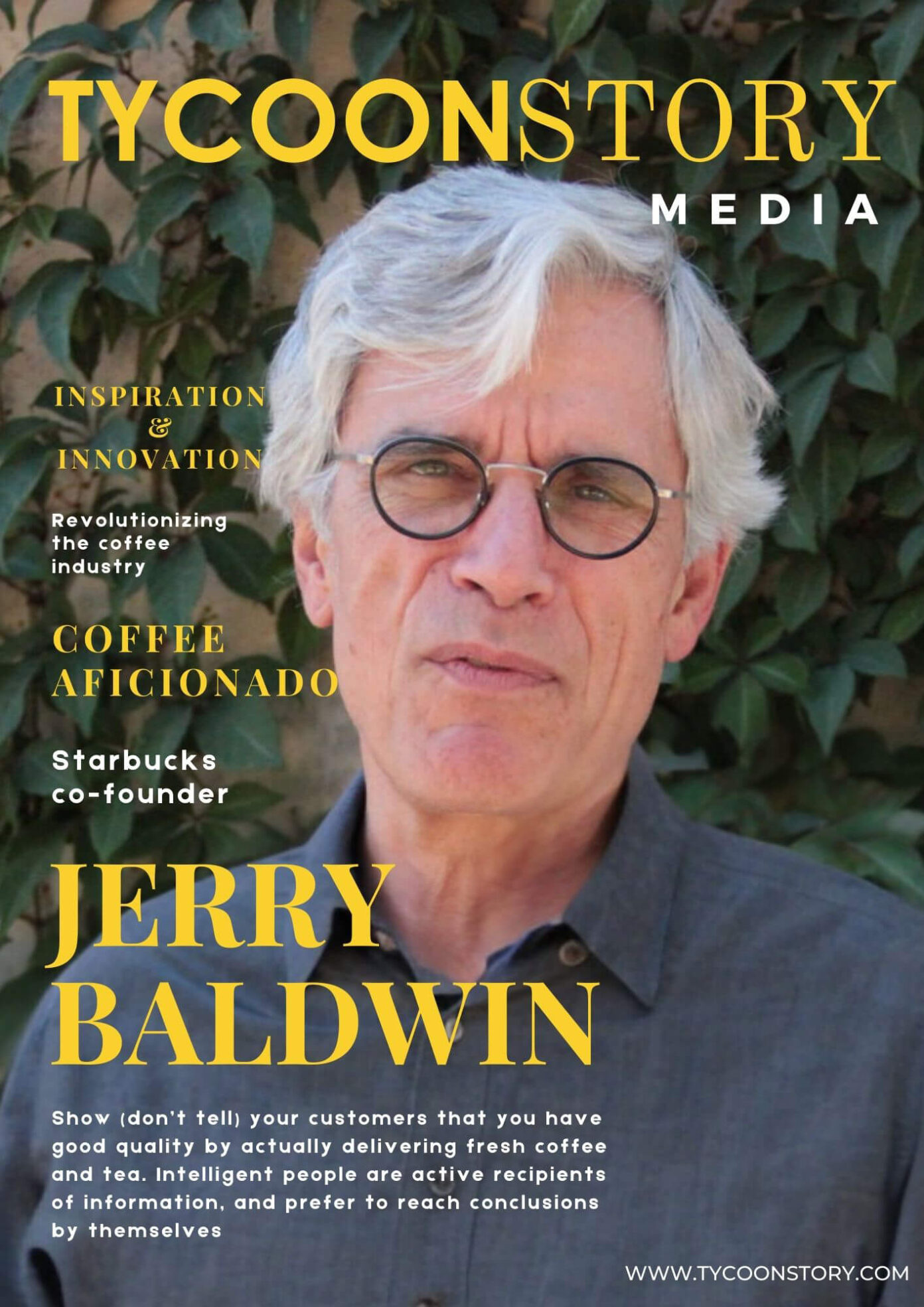
Jerry Baldwin Net Worth: A Detailed Analysis of the Starbucks Co-Founder’s Wealth and Legacy
Jerry Baldwin’s estimated net worth sits between $100 million and $300 million. As a co-founder of Starbucks in 1971 and the long-time owner, CEO, and Chairman of Peet’s Coffee & Tea, Baldwin built his wealth through pioneering early s...
Jerry Baldwin’s estimated net worth sits between $100 million and $300 million. As a co-founder of Starbucks in 1971 and the long-time owner, CEO, and Chairman of Peet’s Coffee & Tea, Baldwin built his wealth through pioneering early specialty coffee enterprises, strategic corporate equity sales, and subsequent investments in specialty agriculture and winemaking.
Contents
Who Is Jerry Baldwin?
Jerry Baldwin is an American entrepreneur, businessman, and coffee industry pioneer best known for co-founding Starbucks alongside Gordon Bowker and Zev Siegl in 1971. Originally working as an English teacher, Baldwin transitioned into business after learning the art of gourmet coffee roasting directly from Alfred Peet, the founder of Peet's Coffee & Tea in Berkeley, California.
Baldwin served as the original Chief Executive Officer of Starbucks, establishing its early reputation for roasting high-quality, dark-roast coffee beans. Unlike the modern global enterprise known for handcrafted espresso beverages and drive-thrus, Baldwin's early Starbucks focused strictly on selling whole-bean coffee, tea, and roasting equipment.
His decisions during the 1980s fundamentally reshaped the American coffee landscape. Under his guidance, Starbucks expanded across the Pacific Northwest, ultimately leading to the strategic acquisition of Peet's Coffee & Tea in 1984 and the subsequent sale of the Starbucks retail brand to Howard Schultz in 1987.
The Founding of Starbucks and Early Business Operations
In the late 1960s, specialty coffee was virtually non-existent in the United States. Most Americans consumed mass-market, canned coffee produced from low-grade beans. Inspired by Alfred Peet’s gourmet roasting techniques in Berkeley, Baldwin, Bowker, and Siegl pooled their resources to introduce high-grade Arabica coffee beans to Seattle.
Each of the three founders contributed $1,350, supplemented by a $5,000 bank loan, to open the first Starbucks store in Seattle's historic Pike Place Market in April 1971. During its first year of operation, Starbucks purchased green coffee beans directly from Peet’s Coffee before purchasing its own commercial roaster and developing proprietary dark-roast blends.
Initial Capital (1971):
- 3 Founders ($1,350 each)
- Bank Loan ($5,000)
- Total Startup Investment: $9,050
Throughout the 1970s and early 1980s, Starbucks grew into a profitable regional business with multiple locations in the Seattle area. As CEO, Baldwin maintained a strict focus on product quality and traditional bean sales, resisting pressure to turn the stores into fast-casual coffee houses.
Buying Peet's Coffee and Selling Starbucks to Howard Schultz
The pivotal turning point in Jerry Baldwin's career and wealth trajectory occurred between 1984 and 1987 through two major transactions involving Peet's Coffee & Tea and Starbucks.
The Acquisition of Peet's Coffee (1984)
In 1984, Alfred Peet decided to sell his business, Peet's Coffee & Tea. Recognizing Peet as his primary mentor and the benchmark for dark-roast quality, Baldwin led Starbucks in acquiring Peet's four retail stores and roasting operations in Northern California.
Managing both brands simultaneously created financial and operational complexities. Baldwin found himself dividing leadership duties between Seattle and San Francisco, attempting to grow two distinct regional specialty coffee companies.
The Sale of Starbucks to Howard Schultz (1987)
Howard Schultz joined Starbucks in 1982 as Director of Retail Operations and Marketing. After visiting Milan, Italy, Schultz envisioned converting Starbucks from a whole-bean retailer into an Italian-style espresso bar chain. Baldwin and the existing leadership team rejected this vision, preferring to keep the brand focused on bulk bean sales and traditional roasting practices.
When Schultz left Starbucks to start his own café venture, Il Giornale, Baldwin decided to restructure the company's assets. In 1987, Baldwin and his partners agreed to sell the Starbucks store locations, roasting plant, and brand name to Howard Schultz’s investment group for $3.8 million.
Following the sale, Baldwin retained ownership of Peet’s Coffee & Tea, relocating his primary operations to California and relinquishing all future rights and equity in Starbucks. While Starbucks later became a global giant worth over $100 billion, Baldwin’s decision secured the foundational capital that would drive the immense growth of Peet's Coffee over the next three decades.
Growth of Peet's Coffee & Tea and the 2012 Corporate Buyout
After divesting from Starbucks, Jerry Baldwin focused entirely on scaling Peet’s Coffee & Tea. He served as CEO from 1984 until 2001 and retained his role as Chairman of the Board of Directors until 2012.
Taking Peet's Public (2001)
Under Baldwin’s leadership, Peet’s expanded from a small Bay Area business into a national specialty coffee supplier. In January 2001, Peet's Coffee & Tea completed an initial public offering (IPO) on the NASDAQ stock exchange under the ticker symbol PEET. The public offering provided liquidity, established market valuation, and capitalized the company's expansion into grocery store distribution networks across the United States.
The $1 Billion Acquisition by JAB Holding Company (2012)
In July 2012, German private investment conglomerate JAB Holding Company (Joh. A. Benckiser) agreed to acquire Peet’s Coffee & Tea in an all-cash transaction valued at approximately $1 billion ($73.50 per share).
| Transaction Phase | Year | Estimated Enterprise Value | Key Impact on Wealth |
|---|---|---|---|
| Starbucks Launch | 1971 | $9,050 initial seed funding | Established equal equity ownership among founders |
| Peet's Purchase | 1984 | Undisclosed cash purchase | Acquired iconic Bay Area brand and operations |
| Starbucks Sale | 1987 | $3.8 million | Sold Starbucks brand and retail stores to Howard Schultz |
| Peet's IPO | 2001 | Public NASDAQ listing (PEET) | Provided stock liquidity and broad institutional valuation |
| JAB Acquisition | 2012 | ~$1 billion cash buy-out | Realized substantial payout for major equity holders |
As a founder, significant shareholder, and Chairman of the Board leading up to the transaction, Baldwin received a major cash payout from the buy-out. This event consolidated his private wealth, elevating his financial standing into the multi-million-dollar tier.
Detailed Breakdown of Jerry Baldwin’s Financial Portfolio
While private individual net worth figures are not published in public corporate disclosures, evaluating Baldwin's major asset sales, equity stakes, and post-coffee business ventures provides a clear picture of his overall financial profile.
Primary Wealth Drivers:
- 1987 Sale of Starbucks Assets ($3.8M base transaction)
- Peet's Coffee Ownership & 2012 JAB Cash Buyout
- J. Baldwin Wines & Sonoma Valley Real Estate Assets
- Private Equity Investments & Agriculture Holdings
1. Corporate Equity and Liquidation Events
The majority of Baldwin's liquidity originates from his long-term ownership in Peet's Coffee & Tea. Unlike founders who sell off early equity to venture capitalists, Baldwin managed Peet's through its growth phase and retained equity up to and through the 2012 buyout by JAB Holding Company.
2. J. Baldwin Wines and Agricultural Holdings
Following his retirement from active corporate management in the coffee industry, Baldwin transitioned into winemaking. Together with his wife, Jane Baldwin, he founded J. Baldwin Wines, producing estate-grown Zinfandel and Syrah in the Moon Mountain District of Sonoma Valley, California.
The estate includes prime agricultural land in Northern California. Real estate holdings in California's wine regions represent a significant, appreciating asset class within his private portfolio.
3. Industry Directorships and Advisory Roles
Baldwin has served in executive leadership roles across multiple industry trade institutions, including:
- Specialty Coffee Association of America (SCAA): Serving as Director and President, helping establish standards for specialty roasting.
- International Coffee Organization (ICO): Participating in global policy, supply chain standards, and trade discussions.
- Coffee Quality Institute (CQI): Supporting education and quality standards in origin countries.
Comparing the Wealth: Jerry Baldwin vs. Howard Schultz
A common question regarding Jerry Baldwin's net worth is how it compares to that of Howard Schultz, who bought Starbucks from Baldwin in 1987.
Howard Schultz transformed Starbucks into a global corporate empire with tens of thousands of stores worldwide, amassing a net worth estimated in the billions. By contrast, Jerry Baldwin chose a different strategic path, focusing on controlled growth, bean quality, and boutique operations with Peet's Coffee.
Strategic Path Comparison:
Jerry Baldwin:
- Focus on Product Quality
- Regional & Grocery Scale
- Private Buyout ($1B)
- $100M–$300M Net Worth
Howard Schultz:
- Focus on Global Scaling
- Global Retail Franchise
- Public Corporation
- Multi-Billion Net Worth
While Schultz’s financial assets far surpass Baldwin’s in scale, Baldwin’s career represents one of the most successful outcomes in specialty food and beverage history, yielding high enterprise valuations while retaining focus on quality craftsmanship.
Key Financial Lessons from Jerry Baldwin's Career
Investors, entrepreneurs, and business managers can draw practical financial and strategic lessons from Jerry Baldwin’s career decisions:
- Prioritize Long-Term Enterprise Value over Quick Sales: Baldwin maintained ownership of Peet's for nearly three decades before the 2012 buyout, allowing compound organic growth and institutional distribution to build substantial equity value.
- Focus on Core Expertise: Rather than diluting his focus across multiple competing business models, Baldwin chose to sell Starbucks to focus exclusively on Peet's when managing both became operational overhead.
- Diversify into Tangible Real Estate and Agricultural Assets: Baldwin reinvested capital into Northern California real estate and estate winemaking, protecting wealth against market volatility through hard physical assets.
Frequently Asked Questions
What is Jerry Baldwin's estimated net worth?
Jerry Baldwin's net worth is estimated to be between $100 million and $300 million. His wealth stems primarily from his founding stake in Starbucks, his long-term equity holding and executive role at Peet's Coffee & Tea, and his subsequent investments in real estate and viticulture.
Did Jerry Baldwin found Starbucks?
Yes. Jerry Baldwin co-founded Starbucks in Seattle in 1971 alongside Gordon Bowker and Zev Siegl. He served as the company's first Chief Executive Officer.
Why did Jerry Baldwin sell Starbucks to Howard Schultz?
In 1987, Baldwin and his partners decided to focus their operational resources entirely on Peet's Coffee & Tea, which they had acquired in 1984. Managing both growing companies was challenging, and Baldwin preferred Peet's traditional roasting model over Schultz's vision for Italian-style retail coffee houses.
How much did Peet's Coffee sell for in 2012?
Peet's Coffee & Tea was acquired by JAB Holding Company in July 2012 for approximately $1 billion ($73.50 per share) in an all-cash private deal.
What business does Jerry Baldwin own today?
Following his retirement from Peet's Coffee, Baldwin established J. Baldwin Wines, producing small-lot Zinfandel and Syrah wines from his estate vineyard in the Moon Mountain District of Sonoma Valley, California.
Conclusion and Next Actions
Jerry Baldwin's net worth reflects a lifetime of strategic decision-making in the specialty coffee and agriculture industries. By founding Starbucks, acquiring Peet's Coffee, and stewarding Peet's through its IPO and ultimate billion-dollar private buyout, Baldwin secured a lasting financial legacy while defining the modern specialty coffee movement.
For entrepreneurs looking to emulate Baldwin's strategic approach:
- Evaluate Brand Equity: Focus on product distinction and quality control before attempting rapid market scaling.
- Assess Portfolio Alignment: When managing multiple business entities, consider divesting non-core assets to double down on higher-conviction opportunities.
- Plan Long-Term Liquidity: Understand how corporate structures, IPOs, and strategic private acquisitions unlock concentrated founder equity over time.
Image Gallery