Sound Engineering Degree Programs: What They Offer, Core Curriculum, and Career Pathways
Sound engineering degree programs provide structured academic and practical training in the art, science, and technology of audio recording, signal processing, live sound reinforcement, acoustics, and media post-production. These acade...
Sound engineering degree programs provide structured academic and practical training in the art, science, and technology of audio recording, signal processing, live sound reinforcement, acoustics, and media post-production. These academic pathways range from technical diplomas and associate degrees to full bachelor's and graduate degrees, offering prospective audio engineers the theoretical foundation and practical studio experience necessary to navigate a rapidly evolving media landscape.
Contents
Understanding what sound engineering programs offer helps prospective students evaluate curriculum depth, studio facility quality, technological specialization, and career outcomes across music production, film, video games, broadcasting, and acoustic design.
What Do Sound Engineering Degree Programs Offer?
At their core, sound engineering degree programs combine rigorous STEM fundamentals—such as physics, electronics, and digital signal processing (DSP)—with creative artistic applications in audio recording, mixing, and sound design. Rather than relying solely on self-directed learning, structured degree programs offer students direct access to high-end hardware, professional recording facilities, industry-standard software ecosystems, and mentorship from experienced sound engineers.
A comprehensive audio engineering degree program typically provides:
- Comprehensive Theoretical Education: Instruction in acoustic principles, wave mechanics, psychoacoustics, electrical engineering principles, and audio signal flow.
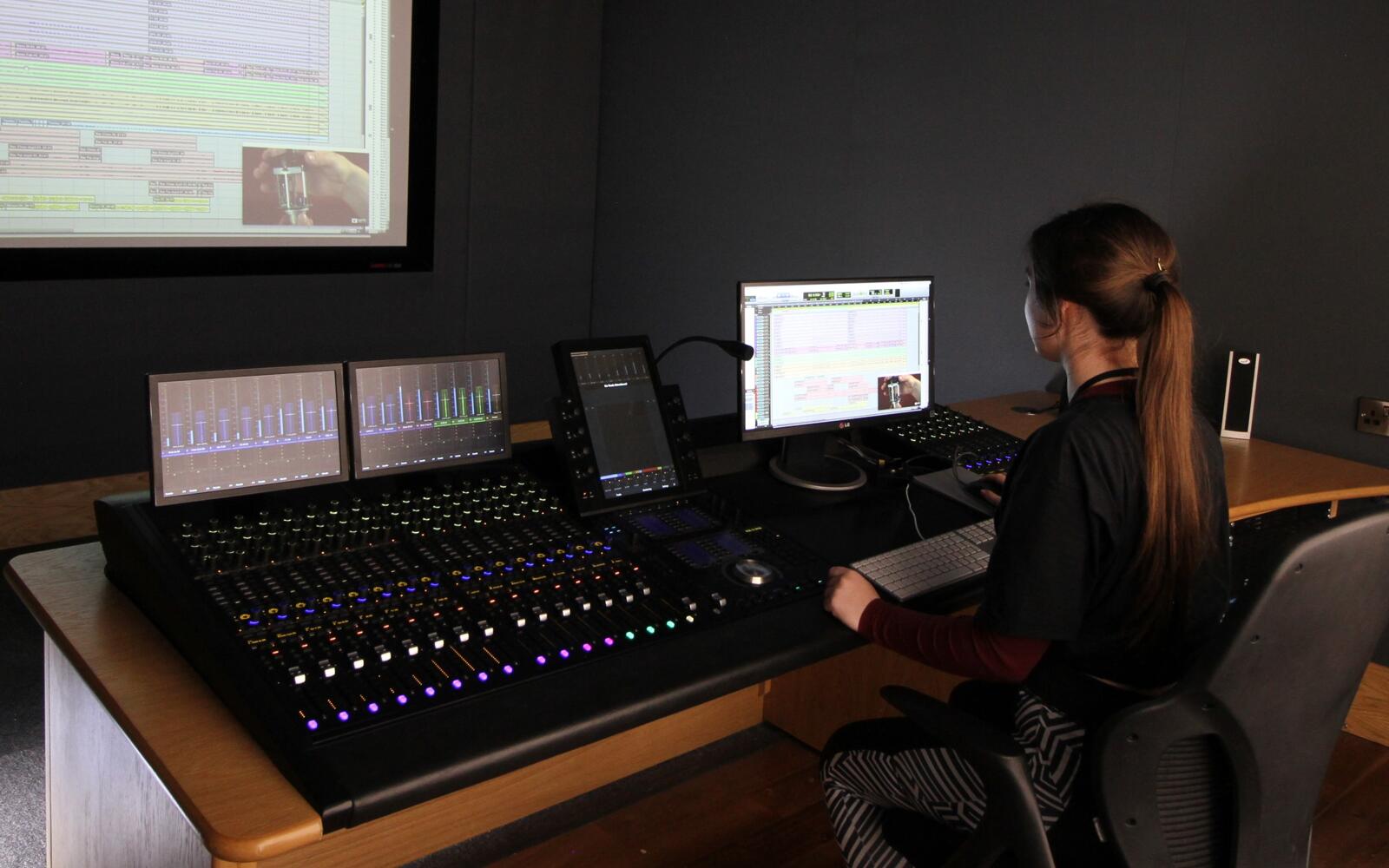
- Hands-on Studio Access: Direct experience operating professional analogue and digital mixing consoles (such as Solid State Logic, Neve, and API), outboard processors, high-end microphones, and immersive monitoring systems.
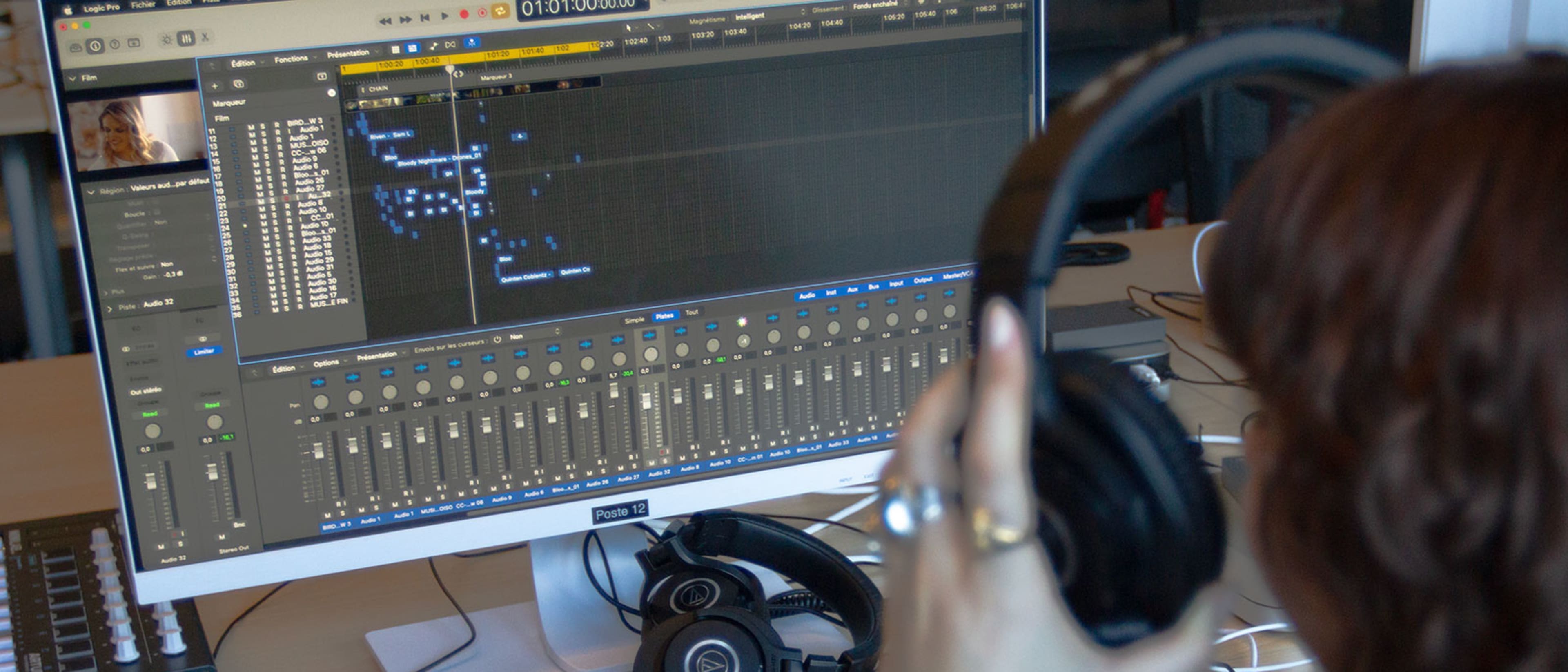
- Industry-Standard Software Training: Advanced mastery of Digital Audio Workstations (DAWs) including Avid Pro Tools, Apple Logic Pro, Ableton Live, Wwise, and Fmod.
- Specialized Track Customization: Options to concentrate on music production, film and television post-production, game audio implementation, spatial audio (Dolby Atmos), live sound system engineering, or architectural acoustics.
- Portfolio and Capstone Projects: Structured opportunities to graduate with a professional audio portfolio, commercial credits, and fully realized capstone recording or sound design projects.
- Industry Connections and Internships: University partnerships with recording studios, post-production facilities, game studios, software developers, and audio hardware manufacturers.
Degree Levels and Academic Pathways in Sound Engineering
Higher education institutions offer sound engineering programs tailored to different career objectives, time commitments, and technical backgrounds. Choosing the right degree level depends on whether a student aims for entry-level technician work, creative studio production, software development, or acoustic research.
- Sound Engineering Educational Pathways
- Associate Degrees (A.A.S. / A.S.)
- Focus: Applied Technical Skills, Live Sound, Assistant Engineering (2 Years)
- Bachelor's Degrees (B.S. / B.M. / B.F.A.)
- Bachelor of Science (B.S.): Technical, Audio Electronics, DSP, Acoustics
- Bachelor of Music (B.M.): Music Production, Composition, Recording Artistry
- Bachelor of Fine Arts (B.F.A.): Sound Design for Film, Theatre, and Interactive Media
- Graduate Degrees (M.S. / M.F.A.)
- Focus: Advanced DSP, Spatial Audio Research, Architectural Acoustics, Pedagogy
- Associate Degrees (A.A.S. / A.S.)
Associate of Applied Science (A.A.S.) in Sound Engineering
- Typical Duration: 2 years (60–64 credit hours)
- Primary Focus: Operational proficiency and practical technician skills.
- Curriculum Highlights: Basic signal flow, microphone placement, DAW operation, introductory mixing, and live sound setup.
- Best For: Students seeking immediate entry into live sound production, studio assistant roles, or audiovisual (AV) installation.
Bachelor of Science (B.S.) or Bachelor of Music (B.M.) in Audio Engineering
- Typical Duration: 4 years (120–128 credit hours)
- Primary Focus: Comprehensive balance of theoretical science, digital technology, critical listening, and artistic production.
- Curriculum Highlights: Advanced acoustics, electronics, digital signal processing, spatial audio mixing, mastering, surround sound for post-production, interactive audio for gaming, and portfolio development.
- Best For: Students aspiring to become lead recording engineers, sound designers, game audio implementers, post-production mixers, or acoustic consultants.
Master of Science (M.S.) or Master of Fine Arts (M.F.A.) in Audio Technology
- Typical Duration: 1.5–2 years (30–48 graduate credit hours)
- Primary Focus: Advanced research, software development, sound design theory, or academic instruction.
- Curriculum Highlights: Algorithmic audio processing, spatial acoustics modeling, advanced psychoacoustics, immersive media research, and thesis execution.
- Best For: Experienced engineers, computer scientists entering audio development, spatial audio specialists, and future university educators.
Core Curriculum Breakdown: What You Will Learn
While specific course titles vary by institution, accredited sound engineering degree programs cover several core technical domains.
| Acoustics & Physics | Audio Signal Processing |
|---|---|
| • Wave Propagation• Room Modes & Isolation• Psychoacoustics & Hearing | • Analog Preamps & EQ• DSP Algorithms & Filters• Spatial Audio & Atmos |
| Recording & Studio Ops | Post-Production & Media |
| • Microphone Technique• Console Signal Flow• Stereo & Immersive Mixing | • Foley & Sound Design• ADR & Dialogue Editing• Game Audio Implementation |
1. Acoustics and Psychoacoustics
Acoustics forms the foundational science of sound engineering. Students examine how sound waves behave in physical spaces, covering wave reflection, absorption, diffraction, room modes, and sound isolation techniques. Psychoacoustics explores human auditory perception—how the human brain interprets sound pressure levels, frequency masking, spatial localization, and pitch. Understanding psychoacoustics is crucial for mastering stereo imaging, surround sound, and immersive 3D spatial formats like Dolby Atmos.
2. Audio Signal Flow and Analog Systems
A fundamental skill taught in university studios is mastering audio signal flow. Students learn how microvolt-level microphone signals pass through preamplifiers, equalization (EQ) circuits, dynamic processors (compressors, limiters, gates), mixing buses, and digital converters. Programs emphasize working on classic analog mixing consoles to build an intuitive understanding of routing, gain staging, and harmonic saturation before translating these principles into software environments.
3. Digital Audio Workstations (DAWs) and Digital Signal Processing (DSP)
Digital Signal Processing forms the technical spine of modern audio recording. Coursework covers analog-to-digital conversion (ADC), sample rates, bit depth, Nyquist-Shannon sampling theorem, quantization error, and latency management. Practical lab work ensures deep operational fluency across leading software platforms:
- Avid Pro Tools: Industry standard for recording, editing, and film post-production.
- Logic Pro and Ableton Live: Heavily utilized for music production, MIDI sequencing, and electronic music composition.
- Wwise and Fmod: Audio middleware engines used to integrate sound effects and dynamic music systems into video game engines like Unreal Engine and Unity.
4. Studio Recording and Microphone Techniques
Recording modules teach students how to capture instruments and vocal performances with accuracy and creative intent. Concepts include selecting transducer types (dynamic, condenser, ribbon), polar patterns (cardioid, omnidirectional, figure-8), stereo miking arrays (X/Y, ORTF, Mid-Side, Blumlein), and phase alignment across multi-microphone setups (such as drum kits and orchestral ensembles).
5. Mixing, Mastering, and Spatial Audio Engineering
Advanced coursework focuses on turning multi-track recordings into polished, commercially competitive audio masters.
- Mixing: Dynamic control, spectral balancing with parametric EQ, spatial placement via panning and reverb, and parallel compression.
- Mastering: Finalizing audio for commercial distribution, loudness normalization standards (LUFS), peak limiting, metadata embedding, and format optimization (streaming platforms, vinyl, broadcast).
- Spatial and Immersive Audio: Configuring channel-based surround sound (5.1, 7.1) and object-based spatial audio (Dolby Atmos, Binaural rendering) for VR, film, and next-generation music streaming.
Specializations Offered in Audio Engineering Programs
To prepare students for specific sectors within the entertainment and tech industries, degree programs often offer distinct concentration tracks.
Music Production and Sound Recording
Focused on commercial music creation, track arranging, artist direction, vocal tuning, and mixing across diverse musical genres. Students in this track spend extensive hours running live tracking sessions in multi-room studio complexes.
Sound Design for Film, Television, and Visual Media
Prepares students for narrative post-production environments. Students learn Automated Dialogue Replacement (ADR), Foley recording, sound effects creation, dialogue editing, sound re-recording mixing, and sync-to-picture workflows compliant with broadcast loudness standards (such as ATSC A/85 and EBU R128).
Game Audio and Interactive Media Engineering
Combines sound design with basic coding and audio middleware implementation. Students study linear versus non-linear sound architecture, building adaptive audio assets, procedural audio generation, dynamic soundscapes, and state-driven game music systems.
Live Sound Reinforcement and Event Technology
Tailored for concert touring, theatrical productions, corporate AV, and house of worship audio. Students learn front-of-house (FOH) and monitor mix operation, line-array speaker system design, acoustic measurement software (such as Smaart), wireless frequency coordination, and digital audio networking protocols (Dante, Ravenna, AVB).
Audio Hardware Electronics and DSP Development
A technical engineering pathway integrated with computer science and electrical engineering departments. Students learn audio circuit design, microcontrollers, embedded systems coding (C++), and VST plugin development (JUCE framework) for building software audio processors and virtual instruments.
Technical Facilities and Gear Access
One of the main reasons students pursue an accredited sound engineering degree rather than informal training is direct access to high-end facility infrastructure. Prospective students should carefully examine a school's studio inventory.
| Category | Details |
|---|---|
| Hardware Consoles | • SSL Duality / AWS | Neve Genesys / 88RS | API Legacy AXS |
| Acoustic Facilities | • Live Rooms with Variable Acoustics | Isolated Vocal Booths• Dolby Atmos 7.1.4 Certified Control Rooms | Anechoic Chambers |
| Outboard Signal Processors | • Tube Compressors (LA-2A) | FET Limiters (1176) | Tube EQs (Pultec) |
| Microphones & Monitoring | • Neumann, AKG, Royer, Coles, Sennheiser• ATC, Barefoot, Genelec, PMC Active Studio Monitors |
A well-equipped academic institution typically provides:
- Large-Format Consoles: Solid State Logic (SSL), Rupert Neve Designs, or API analog and hybrid desks.
- Immersive Audio Suites: Dolby Atmos 7.1.4 spatial monitoring environments equipped with calibrated loudspeakers (e.g., Genelec, PMC, or Neumann).
- Microphone Lockers: Access to industry-standard studio transducers such as Neumann U87/KM184, AKG C414, Royer R-121, Sennheiser MD421, and Coles 4038 ribbon mics.
- Vintage Outboard Processing: Hardware processors like Teletronix LA-2A, Universal Audio 1176, Pultec EQP-1A, and Empirical Labs Distressor units.
- Acoustically Treated Spaces: Purpose-built live recording rooms, vocal isolation booths, mastering suites, and anechoic test chambers engineered with tuned bass traps, diffusers, and floating floors.
Comparison of Sound Engineering Degree Pathways
The following table provides a breakdown comparing the primary sound engineering degree options available at accredited higher education institutions.
| Degree Type | Program Length | Core Curriculum Focus | Hands-on Studio Hours | Primary Career Outcomes | Technical Depth Level |
|---|---|---|---|---|---|
| Associate of Applied Science (A.A.S.) | 2 Years | Applied audio ops, basic DAW recording, live sound setups | High (Practical Focus) | Live Sound Tech, Assistant Engineer, AV Specialist | Intermediate (Operational) |
| Bachelor of Science (B.S.) | 4 Years | Audio signal processing, acoustics, digital systems, mixing, spatial audio | Balanced (Theory + Practice) | Studio Engineer, Game Audio Designer, Audio DSP Developer | High (STEM & Technical) |
| Bachelor of Music (B.M.) | 4 Years | Music theory, recording technology, music production, composition | High (Creative Focus) | Music Producer, Commercial Recording Engineer, Composer | Moderate-High (Music & Audio) |
| Bachelor of Fine Arts (B.F.A.) | 4 Years | Sound design, film post-production, Foley, dialogue editing, ADR | High (Media Focus) | Film Sound Designer, Re-recording Mixer, Post-Production Lead | Intermediate-High (Creative/Media) |
| Master of Science (M.S.) | 1.5–2 Years | Advanced DSP algorithms, architectural acoustics, immersive spatial audio | Specialized (Research & Labs) | Senior Audio Developer, Acoustic Consultant, University Professor | Advanced (Theoretical & Code) |
Institutional Accreditation and Industry Recognition
When evaluating sound engineering programs, accreditation ensures that the curriculum meets rigorous academic and professional quality standards.
Key Accreditation Bodies
- National Association of Schools of Music (NASM): The primary accrediting agency in the United States for higher education music and music-related technology programs. NASM accreditation ensures that the faculty, facility equipment, student-to-studio ratios, and curricular balance meet recognized national standards.
- Regional Accreditation: Ensures that general education credits earned within the degree can transfer smoothly to other accredited colleges and universities.
Professional Affiliations and Software Certification
Leading university audio departments frequently hold institutional partnerships with major industry audio organizations and software developers:
- Audio Engineering Society (AES): Universities with active AES Student Chapters provide students with direct access to research papers, technical conventions, industry conferences, and networking opportunities with practicing engineers.
- Avid Learning Partners (ALP): Many accredited degree programs embed official Avid Pro Tools User and Operator Certification exams into their standard course curriculum, allowing students to graduate with nationally recognized professional credentials alongside their diploma.
What to Expect: Prerequisites and Portfolio Requirements
Admission requirements for sound engineering degree programs vary depending on whether the program is housed within an engineering school, a media college, or a music conservatory.
Entry Requirements
- High School Diploma or Equivalent: Standard baseline requirement including high school transcripts and general GPA evaluation.
- Mathematics and Science Foundation: Bachelor of Science (B.S.) programs often require prior coursework in algebra, trigonometry, and basic physics.
- Audition or Music Proficiency (B.M. Programs): Programs granting a Bachelor of Music degree usually require a live performance audition on a primary instrument or voice, along with basic music theory testing.
- Portfolio Submission (B.S. / B.F.A. / M.S.): Applicants are frequently required to submit a creative audio portfolio containing 2–4 representative work samples. This can include multi-track musical mixes, original sound design stems for short film clips, game audio demos, or electronic music compositions accompanied by detailed documentation of the student's operational role.
Career Options and Industry Outlook
Graduates holding a sound engineering degree enter a versatile media market spanning entertainment, telecommunications, gaming, hardware manufacture, and software development.
| Music & Recording Studio | Film & Broadcast Media |
|---|---|
| • Lead Recording Engineer• Music Producer• Mastering Engineer | • Sound Re-recording Mixer• ADR / Dialogue Editor• Foley Artist & Mixer |
| Gaming & Interactive | Corporate & Acoustics |
| • Game Audio Implementer• Interactive Sound Designer• Technical Audio Director | • Architectural Acoustic Consultant• Audio Hardware / DSP Code |
Potential Industry Roles
- Recording and Mix Engineer: Manages studio recording sessions, captures musical performances, and balances audio multi-tracks for commercial music releases.
- Sound Designer for Visual Media: Creates original sound effects, atmospheric textures, and synth elements for feature films, animated projects, television shows, and streaming media.
- Game Audio Implementer / Technical Audio Director: Integrates audio assets into interactive software engines using middleware (Wwise, Fmod) and code scripts (C#, C++).
- Live Sound FOH / System Engineer: Designs, tunes, and operates large-scale public address (PA) sound reinforcement systems for live music tours, festivals, and venue installations.
- Acoustical Consultant: Analyzes physical architecture to optimize room sound absorption, sound isolation, noise mitigation, and speech intelligibility for performance halls, recording studios, and commercial buildings.
- Audio DSP Developer: Writes code and designs algorithms for digital signal processing software, hardware units, microcontrollers, plug-ins, and audio software tools.
Frequently Asked Questions (FAQ)
Do I need to play a musical instrument to major in sound engineering?
It depends on the specific degree track. A Bachelor of Music (B.M.) program almost always requires instrumental or vocal proficiency and a performance audition. However, a Bachelor of Science (B.S.) or Bachelor of Fine Arts (B.F.A.) in sound engineering or audio technology focuses primarily on physics, acoustics, electronics, and digital audio systems; these programs typically do not require formal instrument performance capabilities.
What is the difference between Audio Engineering and Music Production?
Audio engineering focuses primarily on the technical and physical aspects of sound—microphones, signal flow, acoustics, digital electronics, mixing mechanics, and editing. Music production encompasses both technical recording and creative artist direction, including song arrangement, instrumentation choices, composition, and guiding an artist's studio performance. Many modern degree programs combine both fields into a hybrid curriculum.
Can I complete a sound engineering degree online?
While foundational coursework in acoustics, digital audio theory, audio history, and music business can be completed through online accredited programs, high-level recording techniques and multi-track studio mixing traditionally require physical access to acoustically treated rooms, specialized mixing consoles, and professional microphone collections. Some institutions offer hybrid formats where online study is paired with short, intensive on-campus studio residencies.
What software platforms will I learn in a university audio program?
Most university audio engineering programs standardize instruction on Avid Pro Tools, as it remains the dominant standard for professional recording studios and film post-production facilities. Additionally, programs frequently teach Apple Logic Pro, Ableton Live, Wwise, Fmod, and audio restoration software such as iZotope RX. Programs focused on audio hardware or plugin creation also teach C++ programming and frameworks like JUCE.
Is a sound engineering degree worth the investment compared to being self-taught?
A sound engineering degree provides structured technical fundamentals—such as advanced acoustics, psychoacoustics, signal flow, and digital signal processing—that are difficult to master entirely through self-directed online tutorials. Furthermore, university degree programs provide direct access to high-end multi-million dollar recording complexes, industry-standard equipment, mandatory professional internships, and structured networking pipelines that significantly accelerate career placement in competitive creative industries.
Final Guidance for Prospective Students
When choosing a sound engineering degree program, align your educational selection with your specific long-term career outcome:
- Audit the Studio Infrastructure: Prioritize programs that offer direct, unhindered studio booking access to large-format consoles, calibrated listening environments, and extensive microphone inventories early in the curriculum, rather than reserving gear exclusively for graduate students.
- Review Accreditation and Curriculum Balance: If your goal is software engineering or acoustic design, ensure the curriculum includes calculus, physics, and computer science modules alongside studio labs. For music recording, verify that the program holds NASM accreditation.
- Inspect Faculty Industry Background: Look for institutions whose faculty members maintain active commercial credits in mixing, sound design, game audio implementation, or acoustic research.
- Evaluate Capstone and Internship Requirements: Select programs that mandate a practical internship with a verified media production facility and require a completed professional audio portfolio prior to graduation.
Image Gallery