Understanding Local and Global Issues: Interconnections, Analytical Frameworks, and Strategic Solutions
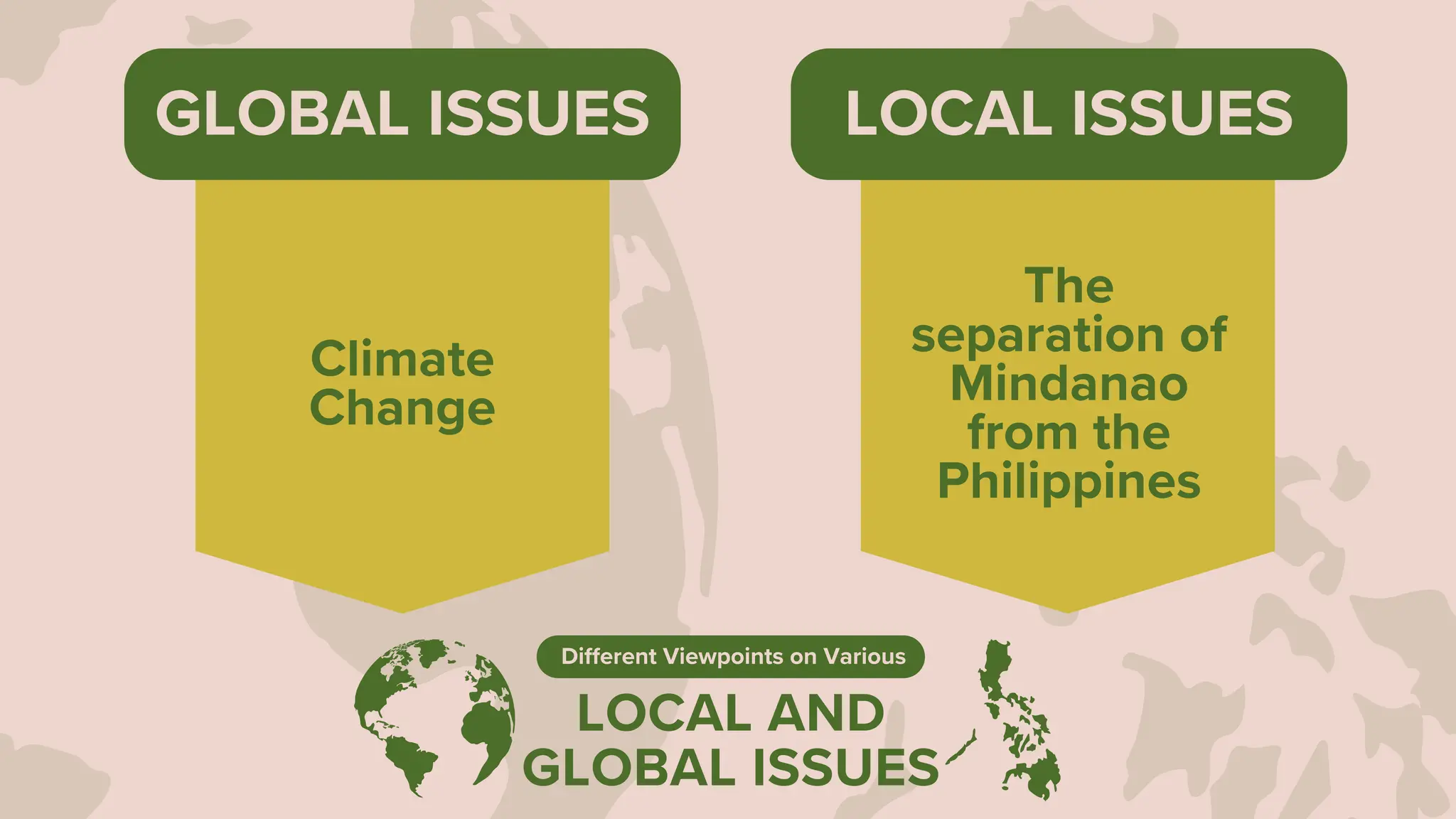
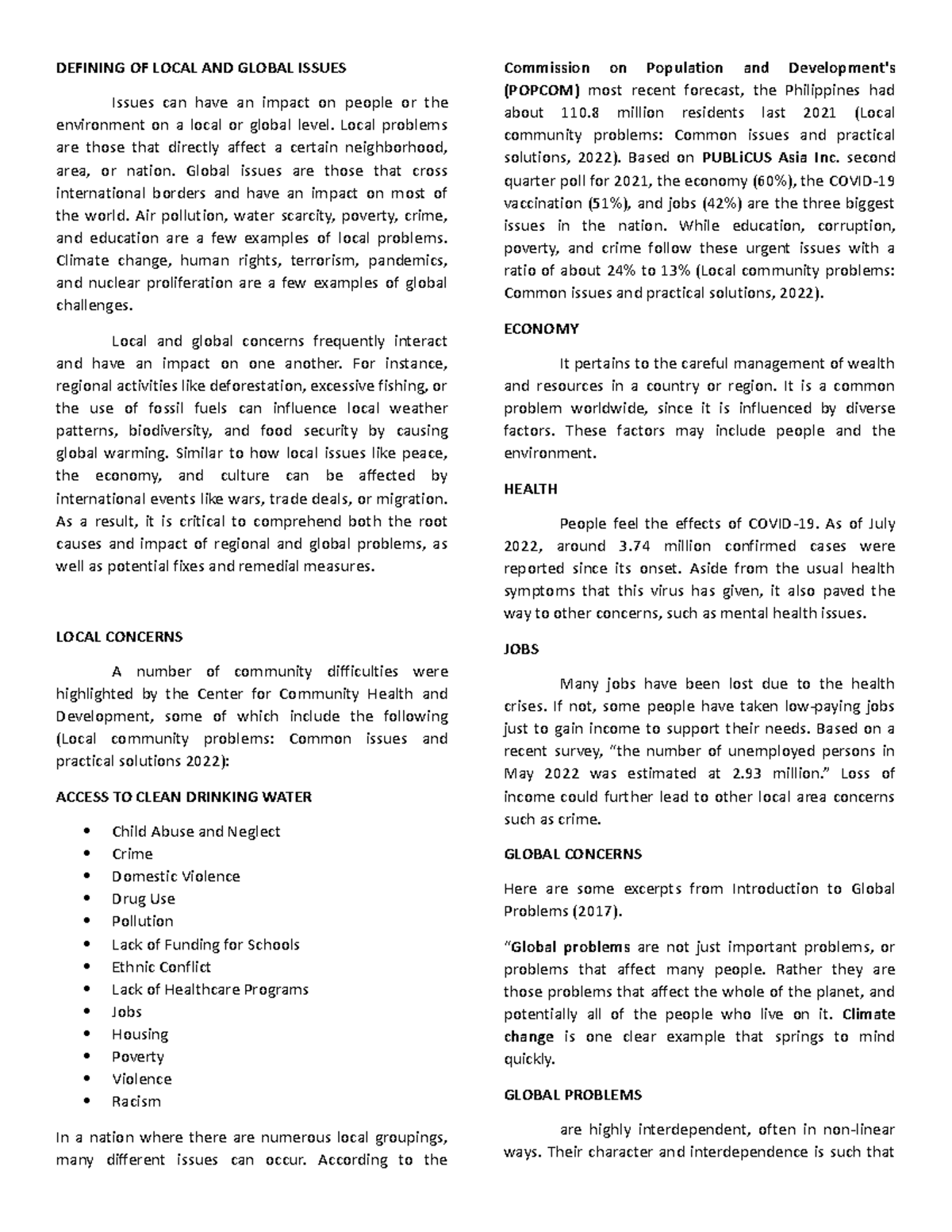
Local and global issues represent interrelated challenges occurring across different geographic and institutional scales. A local issue is a specific problem confined to a defined community, municipality, or region, whereas a global is...
Local and global issues represent interrelated challenges occurring across different geographic and institutional scales. A local issue is a specific problem confined to a defined community, municipality, or region, whereas a global issue transcends national borders, affecting populations, economies, and ecosystems worldwide. Effective solutions require systemic analytical frameworks that connect community actions with international policy structures.
Contents
Defining Local vs. Global Issues: Definitions, Scales, and Boundaries
Distinguishing between local and global issues requires analyzing their geographic scope, governance structures, affected populations, and causal mechanisms. While issues were historically treated as separate phenomena, modern globalization and environmental integration mean localized events frequently produce global repercussions, and international crises routinely manifest as distinct local emergencies.
- GLOBAL LEVEL
- Macro Systems: Planetary Boundaries, International Law, Trade
- NATIONAL / REGIONAL
- Policy Frameworks, Federal Legislation, Resource Allocation
- LOCAL COMMUNITY
- Direct Impacts: Municipal Services, Public Safety, Soil & Water
What Is a Local Issue?
A local issue is a localized operational, social, economic, or environmental challenge directly impacting a specific geographic area or demographic group. Governance over local issues typically falls to municipal governments, regional planning authorities, or civic organizations.
Key characteristics of local issues include:
- Geographic Confinement: The primary physical impact is contained within a neighborhood, city, or district.
- Direct Community Touchpoints: Residents directly experience the issue through municipal service delivery, local environmental conditions, or community economic changes.
- Local Regulatory Oversight: Remediation usually depends on local ordinances, municipal budgets, and regional policy execution.
Examples include municipal waste management bottlenecks, regional groundwater contamination, local housing affordability deficits, and city-level transit congestion.
What Is a Global Issue?
A global issue is a complex problem that crosses sovereign borders, affects widespread populations across multiple continents, and cannot be solved by any single nation acting alone. Governance requires multilateral treaties, international organizations, and standardized cross-border regulatory frameworks.
Key characteristics of global issues include:
- Transnational Impact: Causes and consequences extend across international borders regardless of national sovereignty.
- Systemic Interdependence: Changes in one part of the global system trigger downstream effects in distant regions.
- Multilateral Governance Requirements: Resolution demands international cooperation, such as agreements coordinated by the United Nations or international financial institutions.
Examples include global climate change, international supply chain disruptions, oceanic microplastic accumulation, global financial instability, and cross-border public health crises.
The "Glocal" Dynamics: How Local Action Shapes Global Outcomes
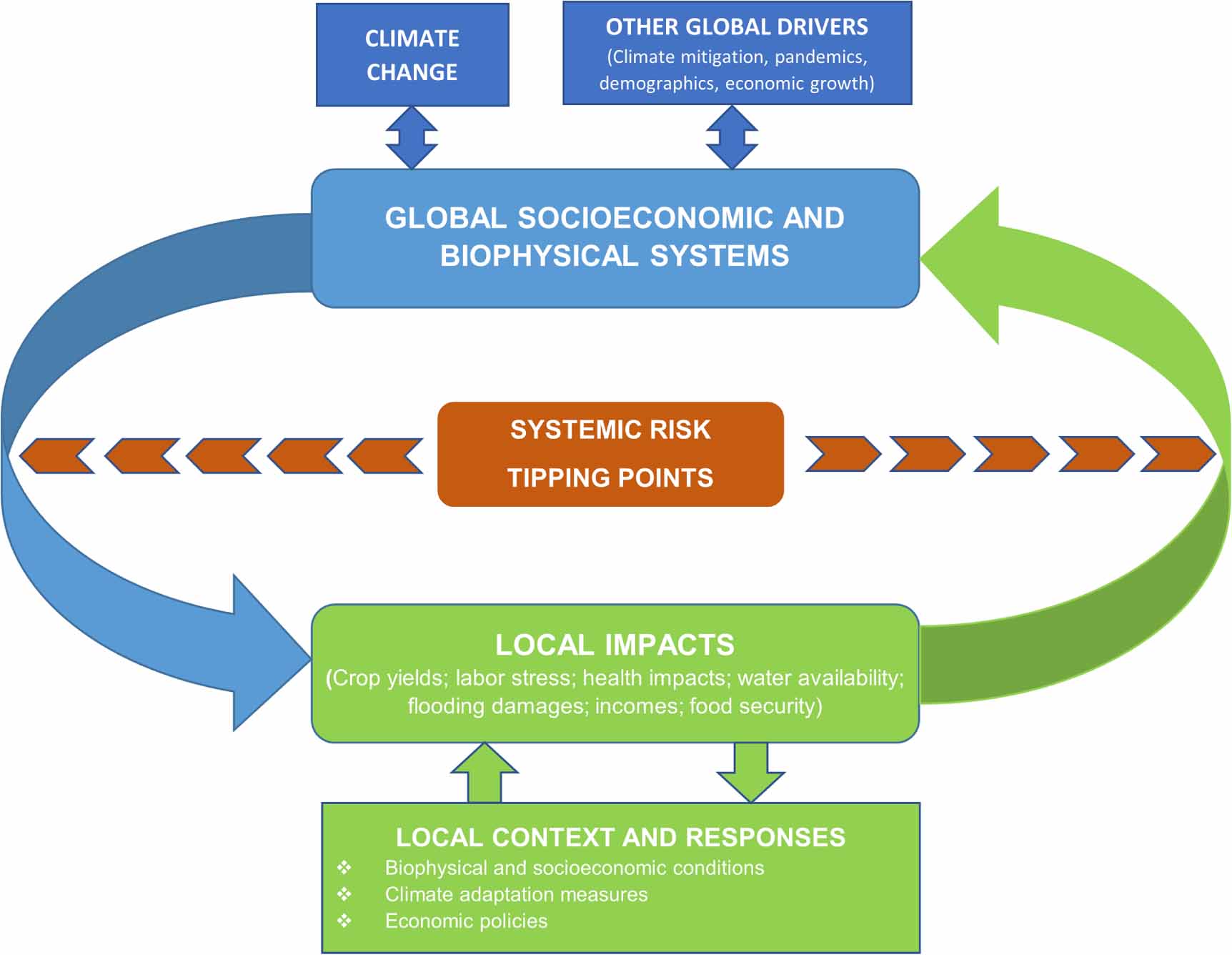
The concept of "glocalization"—a term adapted from sociological and business research—describes how global forces alter local realities and how localized decisions accumulate into global patterns. Understanding this dynamic is essential for designing workable policy interventions and community programs.
- Global Trends (e.g., Climate Shift)
- Impacts: Local Impacts & Costs (e.g., Local Floods)
- Local Impacts & Costs (e.g., Local Floods)
- Triggers: Local Interventions (e.g., Solar Zoning)
- Local Interventions (e.g., Solar Zoning)
- Leads to: Cumulative Escalation (e.g., Global Carbon)
- Cumulative Escalation (e.g., Global Carbon)
- Drives: Global Trends (e.g., Climate Shift)
Bottom-Up Causation: Local Aggregation
Global problems are frequently the cumulative sum of millions of local actions. For example:
- Carbon Footprints: Greenhouse gas emissions originate from local municipal power grids, individual vehicular commutes, and regional agricultural operations. Accumulated globally, these local emissions drive planetary climate disruption.
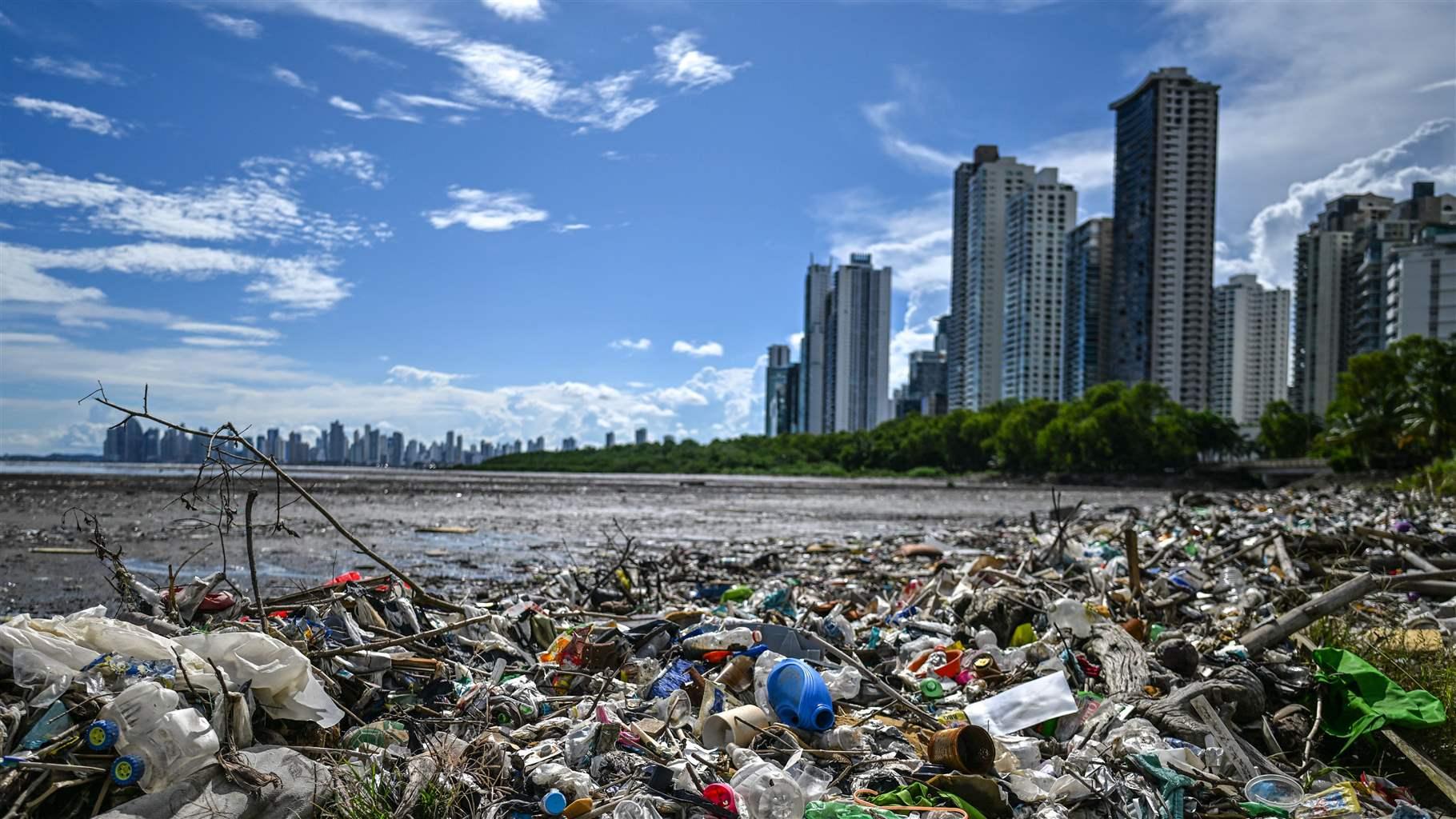
- Plastic Pollution: Mismanaged municipal solid waste in coastal cities accumulates into global marine pollution, disrupting ocean ecosystems worldwide.
Top-Down Transmission: Global Cascade
Conversely, macro-level global events cascade into immediate local vulnerabilities:
- Geopolitical Conflict: Military or diplomatic disruptions in major energy-producing regions lead to rising municipal utility tariffs, increased local logistics costs, and food price inflation for municipal households.
- Macroeconomic Shocks: International currency fluctuations or global central bank policy shifts alter regional industrial investments, localized housing market stability, and municipal tax bases.
Core Domains Across Local and Global Scales
Analytic frameworks categorizing these challenges focus on four primary domains: environment, economic equity, public health, and technological governance.
| Domain | Focus / Comparison |
|---|---|
| Environmental | Local pollution vs. Planetary climate boundaries |
| Economic Equity | Regional labor displacement vs. Global trade flows |
| Public Health | Local clinical capacity vs. Global disease monitoring |
| Technology & AI | Community digital divides vs. Global data governance |
1. Environmental Sustainability and Climate Change
Environmental challenges showcase the immediate connection between local land management and global systems.
- Local Manifestation: Industrial runoff polluting a municipal watershed harms local fisheries, increases water treatment costs, and threatens public safety.
- Global Manifestation: Rising sea levels driven by global ice sheet melt threaten coastal cities worldwide, requiring international climate adaptation funding and coordinated disaster response strategies.
- Policy Linkage: International frameworks like the Paris Agreement depend on city-level climate action plans and local building code updates to achieve baseline reduction targets. Research published by the Intergovernmental Panel on Climate Change (IPCC) emphasizes that subnational policy enforcement determines overall emission reduction success.
2. Economic Inequality and Labor Shifts
Global market integration alters regional employment, income distribution, and economic stability.
- Local Manifestation: Plant closures in manufacturing hubs create localized unemployment, reduced municipal tax revenue, and neighborhood blight.
- Global Manifestation: Shift in global capital flows, supply chain re-shoring, and international trade tariffs alter global commodity prices and international labor movement.
- Policy Linkage: National social safety nets must respond to structural shifts driven by global trade dynamics, requiring localized workforce retraining alongside international trade agreements.
3. Public Health and Biosecurity
Pathogen transmission illustrates how quickly local health incidents can turn into global public health emergencies.
- Local Manifestation: Hospital bed capacity deficits, localized vector-borne disease outbreaks, or municipal water contamination demand immediate clinical and municipal emergency response.
- Global Manifestation: High-velocity international travel allows local infectious disease outbreaks to spread across continents within days, requiring global surveillance networks and coordinated vaccine distribution.
- Policy Linkage: The World Health Organization (WHO) relies on localized disease reporting systems to monitor emerging biological threats, while local public health departments enforce health directives established under International Health Regulations.
4. Digital Governance, Privacy, and Artificial Intelligence
The expansion of global digital infrastructure creates complex interactions between localized access and international tech governance.
- Local Manifestation: Municipal digital divides restrict access to local educational services, municipal job boards, and online civic portals for lower-income households.
- Global Manifestation: Cross-border data transfers, algorithmic bias, AI safety risks, and international cyber warfare threaten economic stability and national security across borders.
- Policy Linkage: National and regional regulations—such as the European Union's General Data Protection Regulation (GDPR) and AI Act—shape how local businesses and municipalities collect, process, and secure citizen data.
Structural Comparison: Local vs. Global Issues
The table below outlines structural differences across key operational metrics:
| Metric / Dimension | Local Issues | Global Issues |
|---|---|---|
| Geographic Scope | Defined municipality, county, or regional watershed. | Transnational, continental, or planetary. |
| Primary Governance Body | City councils, municipal agencies, regional boards. | United Nations agencies, multilateral treaties, G20. |
| Data & Monitoring | Local sensors, municipal census data, local surveys. | Satellite observation networks, global statistical databases. |
| Implementation Speed | Rapid execution via municipal ordinances and local budgets. | Slow consensus-building requiring multilateral diplomacy. |
| Resource Allocation | Municipal taxes, state grants, localized private capital. | Multilateral development banks, sovereign funds, international aid. |
| Accountability Mechanism | Local elections, civic feedback, municipal public hearings. | International courts, peer reviews, compliance reporting. |
| Resolution Complexity | Moderate; clear regulatory authority and local jurisdiction. | High; conflicting sovereign interests and enforcement limits. |
Analytical Frameworks for Multilevel Challenges
To diagnose and solve problems that span local and global scales, policy analysts, research institutions, and civic managers rely on established structured frameworks.
- UN SUSTAINABLE DEVELOPMENT GOALS (SDGs)
- Standardized framework for 17 global priorities
- SYSTEMS THINKING
- Maps feedback loops between local/global nodes
- POLICY CASCADE MODELLING
- Translates global treaties into local codes
The United Nations Sustainable Development Goals (SDGs)
The 17 Sustainable Development Goals provide a universal framework for addressing challenges across spatial scales. Established by the UN General Assembly, the SDGs connect macro-level targets (such as ending global poverty or halting biodiversity loss) with localized indicators measured at municipal and regional levels.
- Localization of SDGs: Cities translate broad goals—such as SDG 11 (Sustainable Cities and Communities)—into specific local policies, including expanded public transit, green building requirements, and municipal waste reduction targets. Detailed indicator tracking is accessible through the UN Sustainable Development Goals Knowledge Platform.
Systems Thinking and Causal Loop Mapping
Systems thinking helps analysts avoid treating local symptoms in isolation by mapping out systemic feedback mechanisms:
- Identify Core Variables: Define the local symptom (e.g., urban heat island effect) alongside global inputs (e.g., regional atmospheric warming trends).
- Map Feedback Loops: Trace how local land-use decisions (such as paving green spaces) aggravate localized heat retention, which increases building energy demand and drives higher power-grid carbon emissions.
- Locate Leverage Points: Identify small structural adjustments—such as mandatory reflective roofing ordinances—that generate system-wide environmental and economic benefits.
Policy Cascade Frameworks
Policy cascading evaluates how international treaties translate into operational rules on the ground:
- Level 1 (Global Treaty): Sovereign states ratify an international treaty (e.g., international marine protection agreements).
- Level 2 (National Statute): National legislatures pass enabling laws setting baseline standards.
- Level 3 (Municipal Ordinance): Local governments adjust zoning rules, industrial discharge permits, and municipal procurement guidelines to ensure practical compliance.
Case Studies: Interconnected Problem-Solving
Examining practical implementations shows how global frameworks succeed or fail based on local execution.
Case Study Focus Areas:
- Urban Climate Adaptation (Heat Mitigation)
- Global Supply Chain Resilience (Port Infrastructure)
Case Study 1: Urban Heat Adaptation and Climate Resilience
- Global Driver: Global thermal anomalies increase the frequency, intensity, and duration of urban heatwaves worldwide.
- Local Vulnerability: Densely built urban centers experience amplified heat effects, placing low-income communities with limited cooling infrastructure at severe risk.
- Applied Solution: Cities like Medellín, Colombia, introduced a systemic local intervention: creating 30 "Green Corridors"—landscaping urban thoroughfares and waterways with dense vegetation.
- Results & Impact: The localized planting reduced urban ambient temperatures in targeted zones by over 2°C, improved local air quality, and helped meet broader national emissions and climate resilience commitments under global agreements.
Case Study 2: Marine Plastic Remediation and Global Value Chains
- Global Driver: Marine plastic waste damages ocean ecosystems, degrades international fisheries, and accumulates microplastics throughout the global food chain.
- Local Vulnerability: Coastal municipalities in developing economies often lack the solid waste infrastructure needed to handle high volumes of single-use consumer packaging.
- Applied Solution: The implementation of Extended Producer Responsibility (EPR) regulations in regions like the European Union shifts end-of-life packaging management costs from local taxpayers back to corporate manufacturers.
- Results & Impact: Requiring global consumer-goods packaging to use certified recycled content creates global demand for post-consumer plastics, which funds waste collection infrastructure in vulnerable coastal municipalities.
Strategic Action Guide for Policymakers and Institutions
To address interrelated local and global challenges, institutions should apply a systematic execution framework:
- Conduct Multilevel Impact Assessment
- Align Local Planning with Global Standards (e.g., SDGs)
- Establish Multi-Stakeholder Financing Mechanisms
- Implement High-Frequency Data Monitoring Loops
Step 1: Conduct a Multilevel Impact Assessment
Before deploying capital or enacting regulations, analyze how proposed local interventions interact with broader regional and international dynamics:
- Assess whether local regulatory changes comply with national statutes and international trade rules.
- Evaluate whether local resource consumption creates unintended environmental vulnerabilities downstream.
Step 2: Align Local Strategic Plans with Standardized Global Frameworks
Adopt recognized international metrics to benchmark local performance:
- Integrate UN SDG targets directly into municipal master plans, county budgets, and corporate ESG reporting.
- Use standard accounting protocols—such as the Greenhouse Gas Protocol—to report local municipal emissions data consistently across international monitoring platforms.
Step 3: Secure Blended Capital and Funding
Funding complex issues requires combining resources across governance scales:
- Leverage municipal tax revenues alongside state grants, international development bank loans (such as those provided by the World Bank), and private ESG investments.
- Use local public investment to de-risk private capital projects in renewable energy, resilient infrastructure, and social housing.
Step 4: Establish High-Frequency Local Data Monitoring
Build robust local monitoring systems to assess policy impact over time:
- Deploy Internet of Things (IoT) environmental sensor arrays to measure local air and water quality in real time.
- Feed localized data into regional statistical portals to support national compliance reporting and refine ongoing policy interventions.
Frequently Asked Questions
What is the primary difference between a local issue and a global issue?
The main difference lies in geographic scope, governance jurisdiction, and resolution complexity. A local issue is contained within a specific municipality or region and can be addressed by local regulatory authorities. A global issue spans international borders, impacts populations across multiple countries, and requires multilateral cooperation and treaties to resolve effectively.
How do local environmental problems turn into global crises?
Local environmental issues become global crises through spatial aggregation and ecological feedback loops. When thousands of municipalities release untreated industrial effluent, emit carbon dioxide, or mismanage solid waste, these localized impacts accumulate. Over time, this cumulative stress destabilizes planetary systems, driving ocean acidification, global warming, and global biodiversity loss.
What does "Think Globally, Act Locally" mean in practice?
In practical policy and corporate strategy, "Think Globally, Act Locally" means designing localized interventions that take global challenges and broad international standards into account. For example, a city council updates its municipal building codes to enforce energy efficiency. While the action is entirely local, its design directly supports global climate goals.
Why do global treaties sometimes fail to solve local problems?
Global treaties can fail locally when they lack binding enforcement mechanisms, fail to provide adequate funding for subnational governments, or ignore local cultural and economic contexts. Without targeted implementation strategies, clear municipal legal mandates, and regional administrative capacity, international agreements remain non-binding aspirations.
How can small communities address major global issues like climate change?
Small communities contribute to addressing global challenges by joining municipal networks (such as C40 Cities or ICLEI), passing local land-use ordinances that support renewable energy development, reducing municipal waste production, and investing in localized climate resilience infrastructure. Aggregated across thousands of communities, these actions drive significant global progress.
Strategic Recommendations and Next Steps
Addressing interconnected local and global issues requires moving past isolated approaches toward systematic, scalable strategies:
- For Municipal Administrators: Audit existing municipal operational plans against UN SDG metrics. Prioritize infrastructure investments—such as urban stormwater management or fleet electrification—that deliver immediate local benefits while contributing to international environmental standards.
- For Corporate Leadership: Evaluate your organization's supply chain risks across both local operational nodes and global shipping networks. Transition from reactive crisis response to proactive resilience planning by adopting verified environmental, social, and governance reporting frameworks.
- For Civic Leaders and Educators: Frame local community problems within broader global contexts. Build public awareness campaigns that explain how localized community actions—such as municipal recycling, water conservation, and smart energy consumption—help resolve pressing international challenges.
Image Gallery