F Amino Acid Code: Meaning, Structure, Codons, and Biochemical Role
In the standard single-letter amino acid code established by IUPAC-IUB, the single-letter code F represents Phenylalanine (three-letter code: Phe). Phenylalanine is an essential aromatic amino acid encoded by the mRNA codons UUU and UU...
In the standard single-letter amino acid code established by IUPAC-IUB, the single-letter code F represents Phenylalanine (three-letter code: Phe). Phenylalanine is an essential aromatic amino acid encoded by the mRNA codons UUU and UUC. The letter "F" was selected phonetically for its "ph" sound because the letter "P" had already been designated for proline.
Contents
Understanding the Single-Letter Amino Acid Code System
In bioinformatics, structural biology, and biochemistry, amino acid sequences were historically represented using three-letter abbreviations (such as Phe, Ala, or Gly). As protein sequencing, genomic databases, and computational biology expanded during the late 20th century, processing long peptide chains using three-letter codes became visually cluttered and computationally inefficient.
To standardize biological sequence data, the International Union of Pure and Applied Chemistry (IUPAC) and the International Union of Biochemistry and Molecular Biology (IUBMB) Joint Commission on Biochemical Nomenclature adopted a standardized single-letter notation system. Pioneer bioinformatician Margaret Dayhoff played a key role in popularizing these single-letter designations in the Atlas of Protein Sequence and Structure.
Because there are 20 standard proteinogenic amino acids and only 26 letters in the English alphabet, assignment priority was given to the most common amino acids and those with unique starting letters.
The letter assignment rules followed a logical hierarchy:
- Unique initial letters: Alanine (A), Cysteine (C), Histidine (H), Isoleucine (I), Methionine (M), Proline (P), Serine (S), Threonine (T), Valine (V).
- Most frequent common letters: Leucine (L) won over Lysine; Glycine (G) won over Glutamate.
- Phonetic assignments: Phenylalanine begins with the letter "P", but because Proline claimed "P", Phenylalanine was assigned F based on its starting phonetic "ph" sound (Fenylalanine). Similarly, Arginine became R ("R-ginine"), and Tyrosine became Y ("tYrosine").
- Visual or positional similarity: Tryptophan was assigned W due to its bulky double-ring indole group.
Official guidelines for amino acid nomenclature and single-letter representation are available directly through the IUPAC Chemical Nomenclature Committee.
Chemical Structure and Physical Properties of Phenylalanine (F)
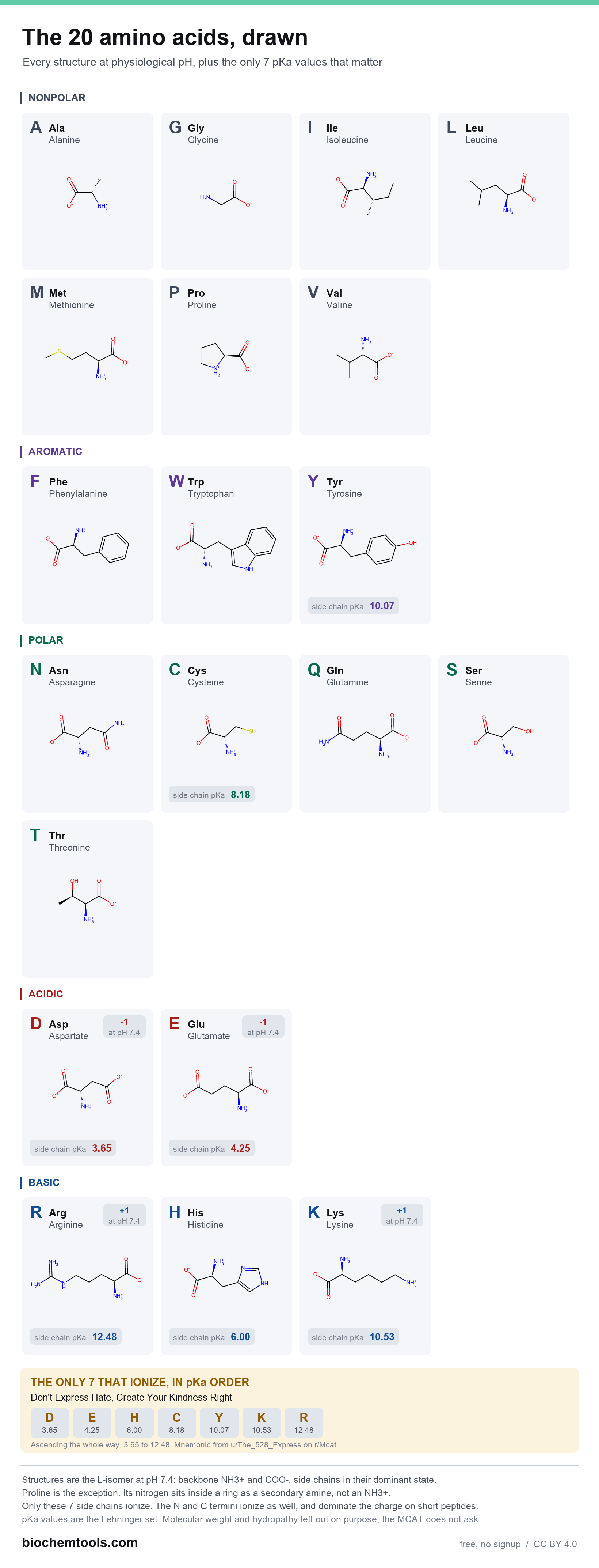
Phenylalanine is classified as an essential, non-polar, aromatic amino acid. Because the human body cannot synthesize its benzene ring de novo, it must be obtained entirely through dietary protein sources.
- H, H, O
- H - N - C - C - OH
- CH2
- ( C6H5 ) Benzene Ring (Phenyl Group)
- CH2
Key Chemical Specifications
- IUPAC Name: (2S)-2-amino-3-phenylpropanoic acid
- Single-Letter Code: F
- Three-Letter Code: Phe
- Molecular Formula: $\text{C}9\text{H}{11}\text{NO}_2$
- Molecular Weight: 165.19 g/mol
- Isoelectric Point (pI): 5.48
- Side-Chain Classification: Non-polar, hydrophobic aromatic side chain
- Hydropathy Index: +2.8 (Kyte-Doolittle scale)
Role in Protein Structure and Hydrophobic Cores
The aromatic side chain of phenylalanine consists of a rigid benzyl group ($\text{-CH}_2\text{-C}_6\text{H}_5$). Because this phenyl ring lacks polar functional groups (such as hydroxyl or carboxyl groups), phenylalanine is strongly hydrophobic.
In globular proteins, phenylalanine residues are predominantly buried within the internal hydrophobic core. This positioning shields the aromatic ring from the aqueous cytosolic environment, driving the thermodynamic stabilization of tertiary and quaternary protein structures through hydrophobic collapse and van der Waals interactions.
Additionally, the aromatic rings of phenylalanine residues frequently participate in $\pi$-$\pi$ stacking and cation-$\pi$ interactions. These weak non-covalent forces contribute significantly to enzyme active-site architecture, ligand binding, and membrane-protein stability.
Genetic Codons and Translation of Phenylalanine
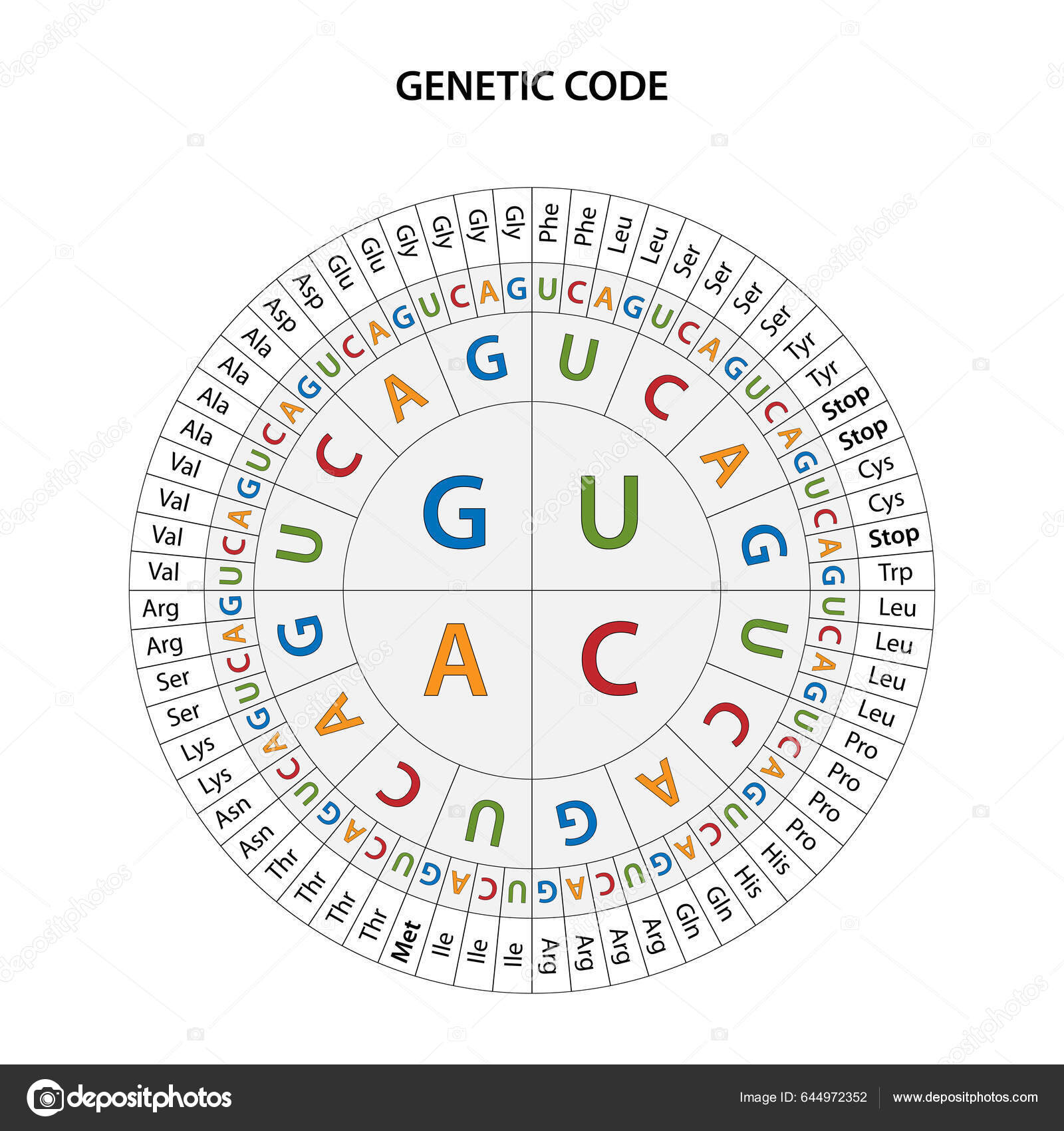
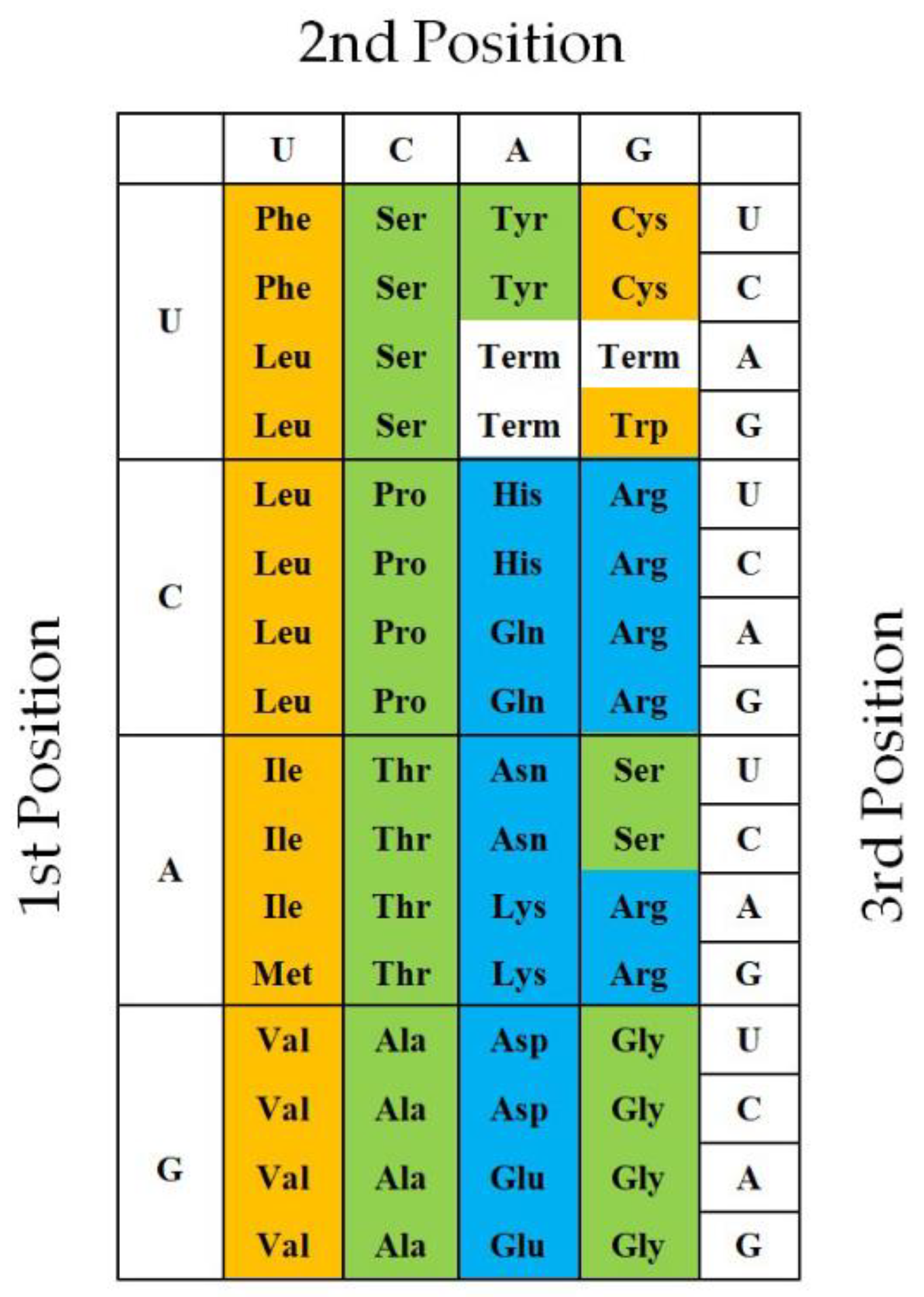
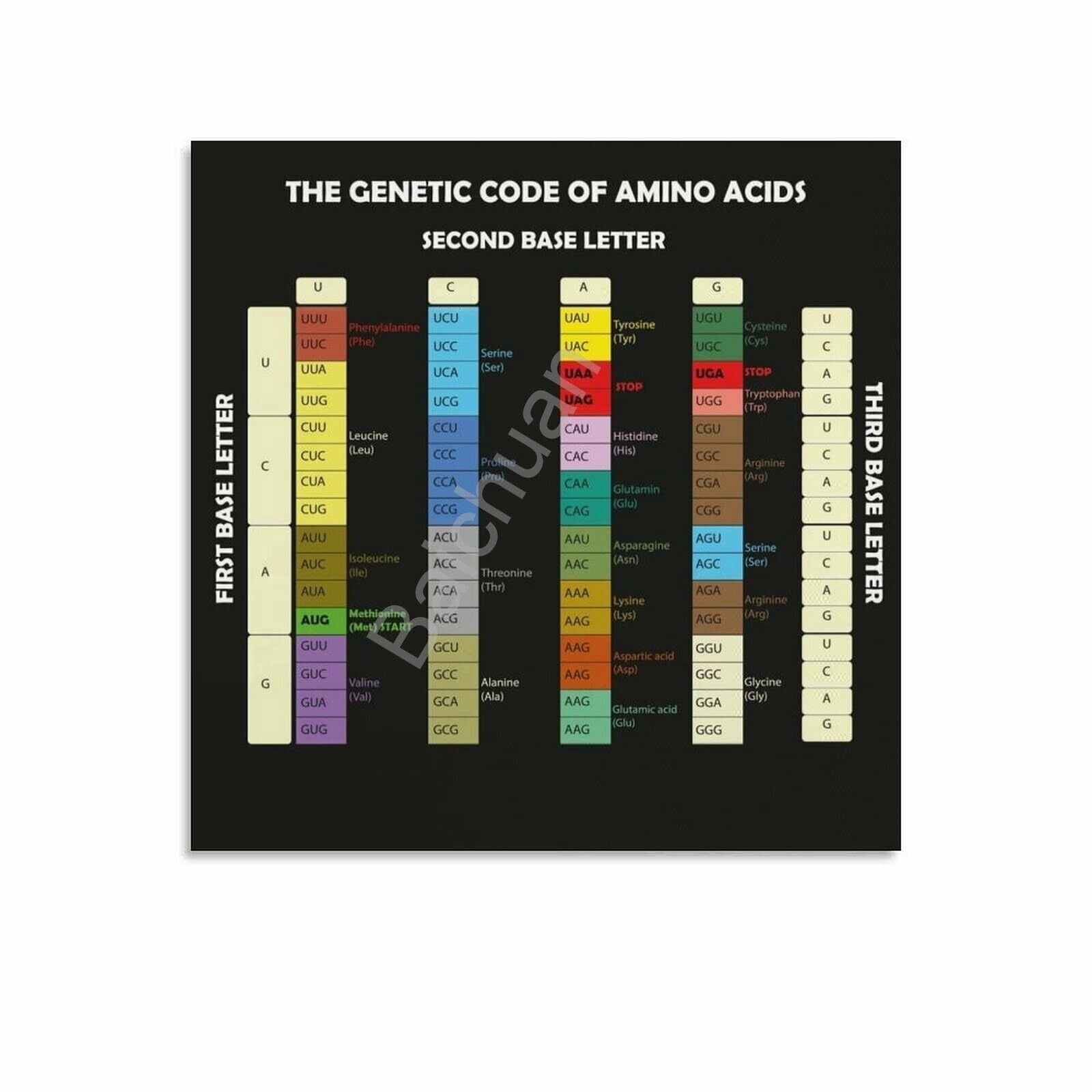
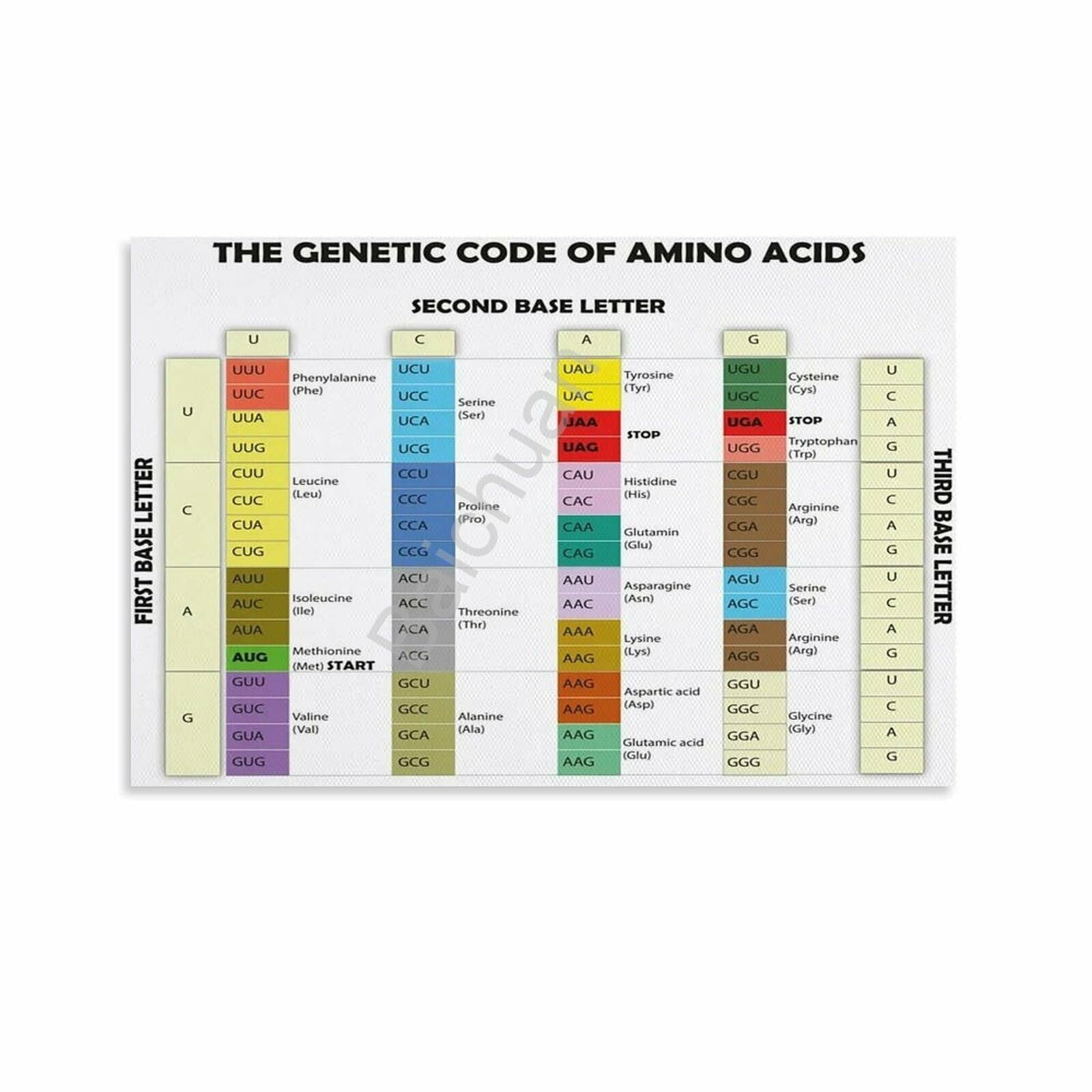
In the canonical genetic code, phenylalanine is specified by two degenerate mRNA codons: UUU and UUC. In genomic DNA sequence data, these correspond to TTT and TTC.
| mRNA Codon | DNA Triplet | tRNA Anticodon | Amino Acid |
|---|---|---|---|
| UUU | TTT | 3'-AAG-5' | Phenylalanine (F) |
| UUC | TTC | 3'-AAG-5' (Wobble) | Phenylalanine (F) |
Historical Landmark: Cracking the Genetic Code with Poly-U
Phenylalanine holds a historic position in molecular biology. In 1961, American biochemists Marshall Nirenberg and Heinrich Matthaei conducted their famous cell-free translation experiment at the National Institutes of Health.
To determine which triplet codons corresponded to specific amino acids, Nirenberg and Matthaei introduced a synthetic single-stranded RNA polymer consisting entirely of uracil bases—poly-uracil (poly-U)—into an Escherichia coli cell extract containing all 20 amino acids.
The cell-free system produced a polypeptide chain composed exclusively of repeating phenylalanine residues (polyphenylalanine). This landmark discovery proved that the codon UUU codes specifically for phenylalanine, marking the first decoded codon in the genetic code—an achievement for which Nirenberg shared the 1968 Nobel Prize in Physiology or Medicine. Sequence details and structural data for phenylalanine-containing proteins are documented in the UniProt Consortium Database.
Comprehensive Reference Table: Standard Amino Acid Codes
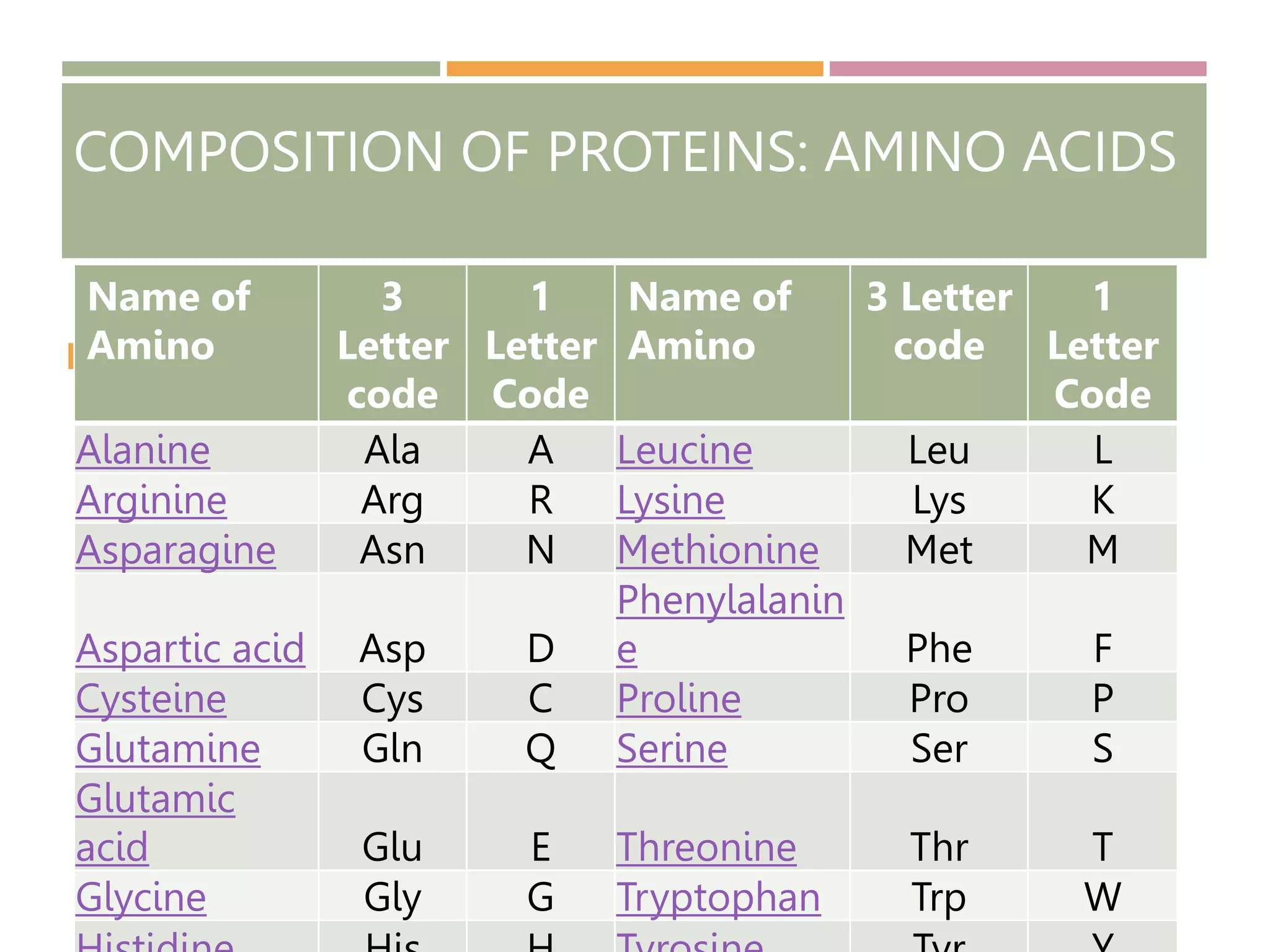
To contextualize the F code alongside the remaining standard proteinogenic amino acids, the table below details the single-letter, three-letter, codon, and structural characteristics for all 20 canonical amino acids.
| Amino Acid Name | 3-Letter | 1-Letter | Codons (mRNA) | Side Chain Polarity / Charge | Code Origin / Mnemonic |
|---|---|---|---|---|---|
| Alanine | Ala | A | GCU, GCC, GCA, GCG | Non-polar, aliphatic | Initial letter |
| Arginine | Arg | R | CGU, CGC, CGA, CGG, AGA, AGG | Basic, positively charged | Phonetic ("R-ginine") |
| Asparagine | Asn | N | AAU, AAC | Polar, uncharged | Letter within name |
| Aspartate (Aspartic Acid) | Asp | D | GAU, GAC | Acidic, negatively charged | Phonetic ("AsparDic") |
| Cysteine | Cys | C | UGU, UGC | Polar, uncharged | Initial letter |
| Glutamate (Glutamic Acid) | Glu | E | GAA, GAG | Acidic, negatively charged | Next available letter |
| Glutamine | Gln | Q | CAA, CAG | Polar, uncharged | Phonetic ("Q-tamine") |
| Glycine | Gly | G | GGU, GGC, GGA, GGG | Non-polar, aliphatic | Initial letter |
| Histidine | His | H | CAU, CAC | Basic, positively charged | Initial letter |
| Isoleucine | Ile | I | AUU, AUC, AUA | Non-polar, aliphatic | Initial letter |
| Leucine | Leu | L | UUA, UUG, CUU, CUC, CUA, CUG | Non-polar, aliphatic | Initial letter |
| Lysine | Lys | K | AAA, AAG | Basic, positively charged | Letter preceding L |
| Methionine | Met | M | AUG | Non-polar, aliphatic | Initial letter (Start codon) |
| Phenylalanine | Phe | F | UUU, UUC | Non-polar, aromatic | Phonetic ("Fenylalanine") |
| Proline | Pro | P | CCU, CCC, CCA, CCG | Non-polar, cyclic | Initial letter |
| Serine | Ser | S | UCU, UCC, UCA, UCG, AGU, AGC | Polar, uncharged | Initial letter |
| Threonine | Thr | T | ACU, ACC, ACA, ACG | Polar, uncharged | Initial letter |
| Tryptophan | Trp | W | UGG | Non-polar, aromatic | Visual double-ring shape |
| Tyrosine | Tyr | Y | UAU, UAC | Polar, aromatic | Sound / internal letter |
| Valine | Val | V | GUU, GUC, GUA, GUG | Non-polar, aliphatic | Initial letter |
Metabolic Pathways and Clinical Relevance
Phenylalanine is not merely a structural block in protein synthesis; it acts as an essential metabolic precursor for several biologically active molecules.
- Phenylalanine (F)
- (Phenylalanine Hydroxylase + BH4)
- L-Tyrosine (Y)
- L-DOPA
- Dopamine
- Norepinephrine
- Epinephrine
- Norepinephrine
- Dopamine
- Thyroid Hormones (T3 & T4)
- Melanin Pigments
- L-DOPA
- L-Tyrosine (Y)
- (Phenylalanine Hydroxylase + BH4)
1. Conversion to Tyrosine
Under normal physiological conditions, the enzyme phenylalanine hydroxylase (PAH), along with the tetrahydrobiopterin ($\text{BH}_4$) cofactor, hydroxylates phenylalanine to yield L-tyrosine (single-letter code Y). Tyrosine subsequently serves as the biochemical foundation for catecholamine neurotransmitters (dopamine, norepinephrine, epinephrine), thyroid hormones, and melanin skin pigments.
2. Phenylketonuria (PKU)
Phenylketonuria (PKU) is an autosomal recessive metabolic disorder caused by mutations in the PAH gene. When PAH enzyme activity is deficient or absent, phenylalanine cannot be converted to tyrosine. Consequently, L-phenylalanine accumulates in blood and tissue to toxic levels.
- Pathophysiology: Excess phenylalanine is alternatively metabolized into neurotoxic phenylketones (such as phenylpyruvate, phenyllactate, and phenylacetate), which are excreted in the urine.
- Clinical Effects: Untreated PKU leads to severe irreversible intellectual disability, microcephaly, seizures, psychiatric disorders, and hypopigmentation (light hair and skin due to impaired melanin synthesis).
- Diagnosis and Management: Newborn screening programs worldwide routinely test for elevated blood phenylalanine levels via heel-prick blood tests shortly after birth. PKU management requires a strict lifelong phenylalanine-restricted diet, avoiding high-protein foods (meat, dairy, fish, eggs, nuts) and artificial sweeteners containing aspartame (L-aspartyl-L-phenylalanine methyl ester). Comprehensive clinical summaries regarding PKU screening are maintained by the National Institutes of Health (NIH) MedlinePlus.
Common Misconceptions and Bioinformatics Disambiguation
When analyzing sequence alignments, database entries, or biological literature, researchers occasionally encounter notation ambiguity surrounding the letter F and related representations.
1. "F" vs. "fMet" (Formylmethionine)
A frequent point of confusion in molecular genetics is mistaking the single-letter code F for fMet (or fM).
- F: Refers strictly to the amino acid Phenylalanine.
- fMet: Refers to N-formylmethionine, a modified methionine residue that acts as the initiator amino acid in prokaryotic translation and eukaryotic mitochondrial/chloroplast protein synthesis. It is never abbreviated simply as a capital letter "F".
2. Lowercase "f" in Bioinformatics Formats
In certain FASTA files, sequence alignment databases, or structural PDB files:
- A lowercase f may designate a modified, non-standard, or chemically altered phenylalanine residue (such as fluorophenylalanine used in NMR spectroscopy).
- Standard IUPAC protein sequence strings use uppercase letters exclusively. Lowercase letters may indicate low-complexity protein regions when processed by sequence masking algorithms like SEG.
3. Aromatic Amino Acid Single-Letter Codes
Students and researchers frequently confuse the single-letter codes for the three principal aromatic amino acids. Remembering their distinct code derivations prevents sequence annotation errors:
- F = Phenylalanine (Phonetic: Fenylalanine)
- Y = Tyrosine (Phonetic/Internal letter: tYrosine)
- W = Tryptophan (Visual structure: double-ring indole resembles W)
Frequently Asked Questions
What does the single-letter amino acid code F stand for?
The single-letter amino acid code F stands for Phenylalanine (three-letter code: Phe). It represents an essential aromatic amino acid used by all living organisms in protein synthesis.
Why is Phenylalanine coded as F instead of P?
The letter P was assigned to Proline because proline is more common and was assigned earlier in the IUPAC hierarchy. Phenylalanine was assigned the letter F based on the phonetic "ph" sound at the beginning of its name (Fenylalanine).
What codons code for the F amino acid?
Phenylalanine is specified by two mRNA codons: UUU and UUC. In DNA coding sequences, these correspond to the triplets TTT and TTC.
Is phenylalanine polar or non-polar?
Phenylalanine is a strongly non-polar, hydrophobic amino acid. Its side chain consists of a non-polar benzyl group, causing it to fold into the interior hydrophobic cores of proteins.
What is the metabolic consequence of excess phenylalanine?
If the enzyme phenylalanine hydroxylase (PAH) is defective, phenylalanine cannot be converted to tyrosine, causing Phenylketonuria (PKU). Unmanaged PKU leads to toxic phenylalanine accumulation in the brain, resulting in severe neurological damage and cognitive impairment.
Does the single-letter code F ever mean Formylmethionine?
No. The code F refers exclusively to Phenylalanine. Formylmethionine is abbreviated as fMet or fM in translation initiation contexts and should not be confused with the capital letter F.
Practical Guidance for Researchers and Students
When working with amino acid sequence data, genomic files, or structural models, apply these best practices:
- Verify Database Notation: Ensure sequence parser scripts interpret capital F as Phenylalanine ($\text{C}9\text{H}{11}\text{NO}_2$) rather than non-standard modifications or initiator residues.
- Cross-Check Codon Tables: When translating open reading frames (ORFs), remember that both UUU and UUC map to F. A silent mutation changing UUU to UUC will not alter the phenylalanine residue in the resulting protein.
- Account for Hydrophobic Effects: In structural modeling or protein engineering projects, mutating an internal F residue to a polar or charged residue (such as Serine or Aspartate) frequently disrupts protein stability and causes misfolding due to loss of core hydrophobic packing.
Image Gallery