Does Mattel Own Fisher-Price? Acquisition History, Brand Ownership, and Corporate Structure
Yes, Mattel, Inc. owns Fisher-Price. Mattel acquired Fisher-Price in November 1993 through a stock-swap merger valued at approximately $1.1 billion. Today, Fisher-Price operates as a wholly owned subsidiary of Mattel, serving as the en...
Yes, Mattel, Inc. owns Fisher-Price. Mattel acquired Fisher-Price in November 1993 through a stock-swap merger valued at approximately $1.1 billion. Today, Fisher-Price operates as a wholly owned subsidiary of Mattel, serving as the enterprise's central division for infant, toddler, and preschool toys alongside flagships like Barbie, Hot Wheels, and American Girl.
Contents
The Historical Timeline: How Mattel Acquired Fisher-Price
Understanding the ownership of Fisher-Price requires looking back at several corporate transitions across the 20th century. Founded in 1930 in East Aurora, New York, by Herman Fisher, Irving Price, Margaret Evans Price, and Helen Schelle, Fisher-Price established an early reputation for durable, educational wooden and plastic toys.
For nearly four decades, Fisher-Price operated as an independent business entity before entering its first corporate conglomerate structure.
- 1930: Founded in East Aurora, NY
- 1969: Acquired by The Quaker Oats Company
- 1991: Spun off as an independent public company
- 1993: Acquired by Mattel, Inc. ($1.1 Billion Merger)
- Present: Wholly owned subsidiary leading Mattel's Infant/Preschool segment
The Quaker Oats Era and Subsequent Spinoff
In 1969, consumer packaged goods manufacturer The Quaker Oats Company acquired Fisher-Price. Quaker Oats held the toy maker for more than twenty years, expanding its manufacturing footprint and introducing iconic product lines such as Little People and baby gear items. However, by the late 1980s, corporate strategies began shifting away from non-food subsidiaries. In 1991, Quaker Oats officially spun off Fisher-Price as an independent, publicly traded corporation on the New York Stock Exchange.
The 1993 Merger with Mattel
Fisher-Price's tenure as an independent public entity was brief. In August 1993, Mattel, Inc. announced a definitive merger agreement to acquire Fisher-Price in a tax-free stock swap. The deal, completed in late 1993, valued Fisher-Price at roughly $1.1 billion.
The acquisition was a strategic move for Mattel. At the time, Mattel dominated the youth market for older children through fashion dolls (Barbie) and die-cast vehicles (Hot Wheels), but lacked a dominant presence in early childhood development. Fisher-Price possessed unmatched market share in infant gear, developmental toys, and preschool playsets. Merging the two companies allowed Mattel to capture consumer loyalty from infancy through pre-adolescence under one corporate umbrella.
Organizational Structure: How Fisher-Price Operates Within Mattel
Following the acquisition, Mattel maintained Fisher-Price as a distinct brand entity while integrating its back-office operations, supply chain management, and international distribution channels.
- Mattel, Inc.
- Global Brands (Barbie, Hot Wheels, etc.)
- Fisher-Price Subsidiary
- Baby & Toddler
- Little People
- Imaginext & Power Wheels
Preserved Creative Headquarters
Unlike acquisitions where operations are completely absorbed into a buyer's headquarters, Mattel chose to retain Fisher-Price's historic headquarters in East Aurora, New York. The East Aurora campus continues to house the division's primary design labs, research facilities, and testing centers, including the famous Fisher-Price Play Lab, where child development experts observe children interacting with prototype toys.
Division Integration
Within Mattel's public financial reporting, Fisher-Price products fall into the Infant, Toddler, and Preschool (ITP) segment. Corporate leadership at Mattel manages global capital allocation, legal compliance, international retail partnerships, and supply chain logistics. Meanwhile, brand managers and product designers in East Aurora focus on product innovation, safety engineering, and developmental content.
Managed Brands and Sub-Lines
Fisher-Price manages several sub-brands and licensed properties, including:
- Little People: Playsets and figurines tailored for toddler fine-motor skill development.
- Imaginext: Action figures and playsets designed for preschool and early elementary creative play.
- Power Wheels: Battery-powered ride-on vehicles for young children.
- Fisher-Price Baby: High chairs, bouncers, swings, crib soaking toys, and developmental infant gear.
- Thomas & Friends: Motorized and wooden train systems (managed within Mattel's preschool category under the Fisher-Price banner).
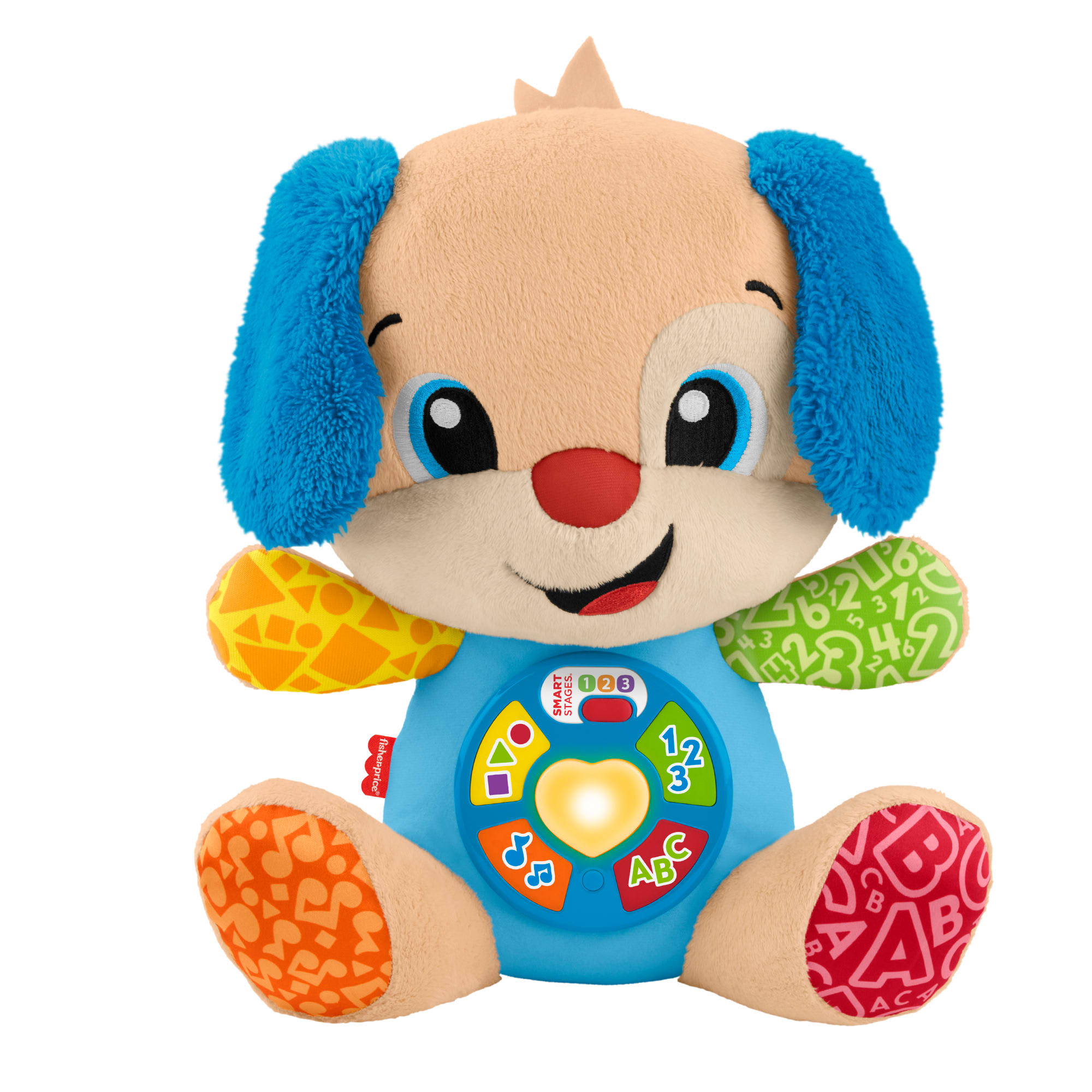
- Laugh & Learn: Interactive electronic learning toys featuring Smart Stages technology.
Brand Portfolio Comparison: Mattel vs. Fisher-Price Divisions
Mattel manages a divided product strategy across its core business units. While Mattel's primary corporate brand oversees fashion, collectibles, and action figures, the Fisher-Price division targets developmental milestones for younger children.
| Brand / Product Line | Primary Operating Division | Core Target Demographic | Primary Product Categories | Key Historical Origin |
|---|---|---|---|---|
| Fisher-Price Baby & Infant | Fisher-Price (Mattel Subsidiary) | 0 – 12 Months | Swings, bouncers, playmats, rattles | Introduced as dedicated division in 1970s |
| Little People | Fisher-Price (Mattel Subsidiary) | 1 – 5 Years | Figurines, vehicles, community playsets | Launched in 1959 (as Safety School Bus) |
| Imaginext | Fisher-Price (Mattel Subsidiary) | 3 – 8 Years | Action figures, adventure castles, sci-fi playsets | Launched by Fisher-Price in 2002 |
| Power Wheels | Fisher-Price (Mattel Subsidiary) | 2 – 7 Years | Ride-on battery-operated vehicles | Acquired by Kransco (1984), then Mattel/FP (1994) |
| Barbie | Mattel Global Brands | 3 – 12+ Years | Fashion dolls, dollhouses, media franchises | Launched by Mattel in 1959 |
| Hot Wheels | Mattel Global Brands | 3 – Adult | Die-cast cars, track sets, collector series | Launched by Mattel in 1968 |
| American Girl | Mattel Direct-to-Consumer | 6 – 12 Years | Historical and contemporary 18-inch dolls, books | Acquired by Mattel in 1998 |
Cross-Brand and Licensed Licensing Synergies
Being under the Mattel corporate structure allows Fisher-Price to cross-license IP efficiently. For example, Fisher-Price frequently produces Little People Collector lines featuring pop culture properties, classic media characters, and themed sets alongside Mattel properties such as Hot Wheels-branded preschool playsets or Barbie-themed Fisher-Price baby items.
Quality Control, Recalls, and Customer Support
Because Fisher-Price is a wholly owned subsidiary of Mattel, customer support, safety monitoring, regulatory compliance, and warranty services are managed through unified corporate infrastructure.
Consumer Safety & Support Flow
- Consumer Issue / Recall Query
- Mattel Global Consumer Relations (
service.mattel.com)- Warranty Validation & Replacement Parts
- CPSC Safety Notices & Recall Fulfillment
Safety Testing and Regulatory Compliance
Fisher-Price products are subject to global toy safety standards, including those set by the U.S. Consumer Product Safety Commission (CPSC), the European Committee for Standardization (CEN), and international ASTM standards. Testing occurs both at the East Aurora facility and inside centralized Mattel testing facilities globally.
Handling Safety Recalls
When a recall or safety alert is issued for a Fisher-Price product, the procedure is administered jointly under Mattel Global Consumer Relations and regulatory agencies like the CPSC.
If you own a Fisher-Price product subject to a recall or safety notice:
- Locate the Product Model Number: Found printed on a white tag or stamped onto the plastic body of the toy/gear item (typically a 5-character alphanumeric code, such as
HBP44). - Access the Centralized Recall Portal: Consumers must access Mattel's unified customer service center at Mattel Service Portal.
- Verify Remediation Steps: Mattel provides instructions for remedies, which may include replacement parts, repair kits, or partial/full refunds depending on the specific product recall guidelines.
Customer Support and Replacement Parts
Consumers looking for replacement assembly screws, battery doors, stickers, or extra figures for Fisher-Price products do not deal with an independent entity; requests are routed directly to Mattel Consumer Services.
- Online Support: Visit
service.mattel.comto search for product manuals, replacement parts, and recall status. - Phone Support: Consumers in North America can reach Mattel/Fisher-Price Customer Service at 1-800-528-0033 (Monday through Friday).
Business Impact: Fisher-Price's Role in Mattel’s Financial Model
Fisher-Price remains one of Mattel’s key revenue-generating pillars. For retail partners such as Target, Walmart, and Amazon, Mattel bundles its entire brand catalog—offering shelf placements that span from infant baby gear to adolescent collectibles.
Key Financial Contributions
- Category Dominance: The Infant, Toddler, and Preschool (ITP) division represents a substantial percentage of total consolidated net sales for Mattel, Inc.
- Retail Supply Chain Synergies: Shared distribution centers and global shipping contracts reduce logistics overhead for Fisher-Price products compared to when the brand operated as an independent business.
- Sustainability & Material Transition: Under Mattel’s corporate sustainability goals, Fisher-Price has been a primary testbed for using 100% recycled, recyclable, or bio-based plastic materials in products and packaging (such as the Fisher-Price Rock-a-Stack and Baby’s First Blocks eco-focused editions).
Frequently Asked Questions
When did Mattel buy Fisher-Price?
Mattel formally acquired Fisher-Price in November 1993 through a tax-free stock merger valued at approximately $1.1 billion.
Is Fisher-Price still an independent company?
No. Fisher-Price is not an independent public company. It is a wholly owned subsidiary operating under its parent corporation, Mattel, Inc. (traded on the NASDAQ under ticker symbol MAT).
Who owned Fisher-Price before Mattel acquired it?
Fisher-Price was owned by The Quaker Oats Company from 1969 until 1991. In 1991, Quaker Oats spun Fisher-Price off into an independent, publicly traded company, which it remained until merging with Mattel in 1993.
Where is Fisher-Price headquartered today?
Fisher-Price maintains its operational and creative headquarters in East Aurora, New York. While financial and global operations are directed from Mattel’s headquarters in El Segundo, California, product design and child testing remain in East Aurora.
How do I register a Fisher-Price product or file a warranty claim?
All product registration, replacement part purchases, and warranty claims for Fisher-Price toys and baby gear are handled through Mattel’s unified portal at Mattel Consumer Service or by calling 1-800-528-0033.
Summary and Next Steps
Fisher-Price is fully owned by Mattel, Inc., operating as its core division for infant, toddler, and preschool products. This corporate structure has lasted for over three decades, providing Fisher-Price with global supply chain infrastructure while retaining its dedicated design and testing facilities in East Aurora, New York.
- For Consumers and Parents: For replacement parts, assembly guides, or product recall information, visit Mattel Service to search by your product's 5-character model code.
- For Retailers and Business Partners: Distribution and sales agreements for Fisher-Price products are negotiated directly through Mattel, Inc.’s commercial operations channels.
- For Investors: Financial performance data for Fisher-Price is published in Mattel, Inc.’s quarterly and annual financial filings (Form 10-Q and Form 10-K) under the Infant, Toddler, and Preschool segment on the SEC EDGAR database or via Mattel Investor Relations.
Image Gallery