Federal Reserve Accounts and Social Security Numbers: Debunking the Scam and Understanding Banking Realities
Social Security numbers are not connected to hidden Federal Reserve bank accounts, nor does the Federal Reserve maintain personal trust funds for U.S. citizens. Federal Reserve accounts are legally restricted to qualified depository fi...
Social Security numbers are not connected to hidden Federal Reserve bank accounts, nor does the Federal Reserve maintain personal trust funds for U.S. citizens. Federal Reserve accounts are legally restricted to qualified depository financial institutions, federal agencies, and foreign central banks. Attempting to pay debts using a Social Security number paired with a Federal Reserve routing number is fraudulent and illegal.
Contents
The Origin of the "Secret Federal Reserve Account" Myth
For decades, internet rumors, social media videos, and self-proclaimed legal theorists have promoted a persistent myth: that the U.S. government creates a secret bank account at the Federal Reserve for every citizen at birth. According to this conspiracy theory—often associated with the "Sovereign Citizen" movement or "redemption" schemes—these accounts allegedly contain hundreds of thousands or even millions of dollars, backed by an individual’s future lifetime economic output.
Promoters of this hoax claim that individuals can access these "hidden trust accounts" to pay off private debts, including mortgages, credit card balances, car loans, and student loans. The instructions provided by scammers typically advise people to use a Federal Reserve Bank’s routing transit number alongside their nine-digit Social Security number (SSN) as the account number when making online bill payments or ACH transfers.
This entire premise is completely false. The Federal Reserve System does not hold money for individuals, does not manage birth-certificate trust accounts, and does not allow private citizens to pay off public or private obligations using their SSN as an account identifier.
- THE MYTH
- SSN + Fed Routing Number = Access to "Secret" Millions
- THE REALITY (REALITY CHECK)
- No individual accounts exist at the Federal Reserve.
- Transactions using SSN as account # will fail.
- Submitting false payments constitutes bank fraud.
Why the Myth Persists
The myth continues to circulate primarily because of initial transaction delays in the automated banking network. When an individual submits an online payment using a Federal Reserve routing number and an SSN, the payment processor may initially show a status of "pending" or "accepted."
This temporary status occurs because the Automated Clearing House (ACH) network processes payments in batches. The receiving merchant or utility company assumes the payment details provided by the customer are valid until the transaction is routed to the Federal Reserve Bank for clearing. Once the Federal Reserve or the targeted financial institution processes the transaction, it identifies the account number as non-existent or invalid and rejects the payment. By the time the transaction bounces, the individual who attempted the transfer may have already published videos or posts claiming the method "worked," further spreading the misinformation.
How Federal Reserve Accounts Actually Work
To understand why individual access to the Federal Reserve is impossible, it is essential to review the structural purpose of the United States central banking system. Established by Congress under the Federal Reserve Act of 1913, the Federal Reserve operates as the central bank of the United States to conduct monetary policy, foster financial stability, and provide safe, efficient payment systems.
Master Accounts
The Federal Reserve maintains specialized depository accounts known as Master Accounts. These accounts function as checking accounts for qualified financial institutions rather than private individuals. Master Accounts allow financial institutions to:
- Hold required reserve balances to meet liquidity standards.
- Settle interbank payments and funds transfers via Fedwire and FedACH networks.
- Access the Federal Reserve's discount window for short-term liquidity assistance.
- Deposit and withdraw physical currency and coin to supply local retail branches.
Who Is Eligible for a Federal Reserve Account?
Under federal law and Federal Reserve operating circulars, eligibility to maintain an account with a Federal Reserve Bank is strictly restricted. Entities permitted to hold accounts include:
- Insured Depository Institutions: Commercial banks, savings banks, and credit unions insured by the Federal Deposit Insurance Corporation (FDIC) or National Credit Union Administration (NCUA).
- Non-Insured Financial Institutions: Certain non-bank financial institutions, state-chartered trust companies, or systemically important financial market utilities that meet rigorous regulatory standards.
- The U.S. Department of the Treasury: The federal government uses the Federal Reserve Bank of New York to maintain the Treasury General Account (TGA), which functions as the primary operating account for processing official government receipts and disbursements.
- Foreign Central Banks and Official Entities: International monetary authorities and foreign governments hold foreign official accounts at the Federal Reserve Bank of New York for international reserve management.
At no point in the history of the Federal Reserve System have private individuals or natural persons been granted the right to open, maintain, or access personal bank accounts at central bank facilities.
The Purpose and Legal Scope of Social Security Numbers
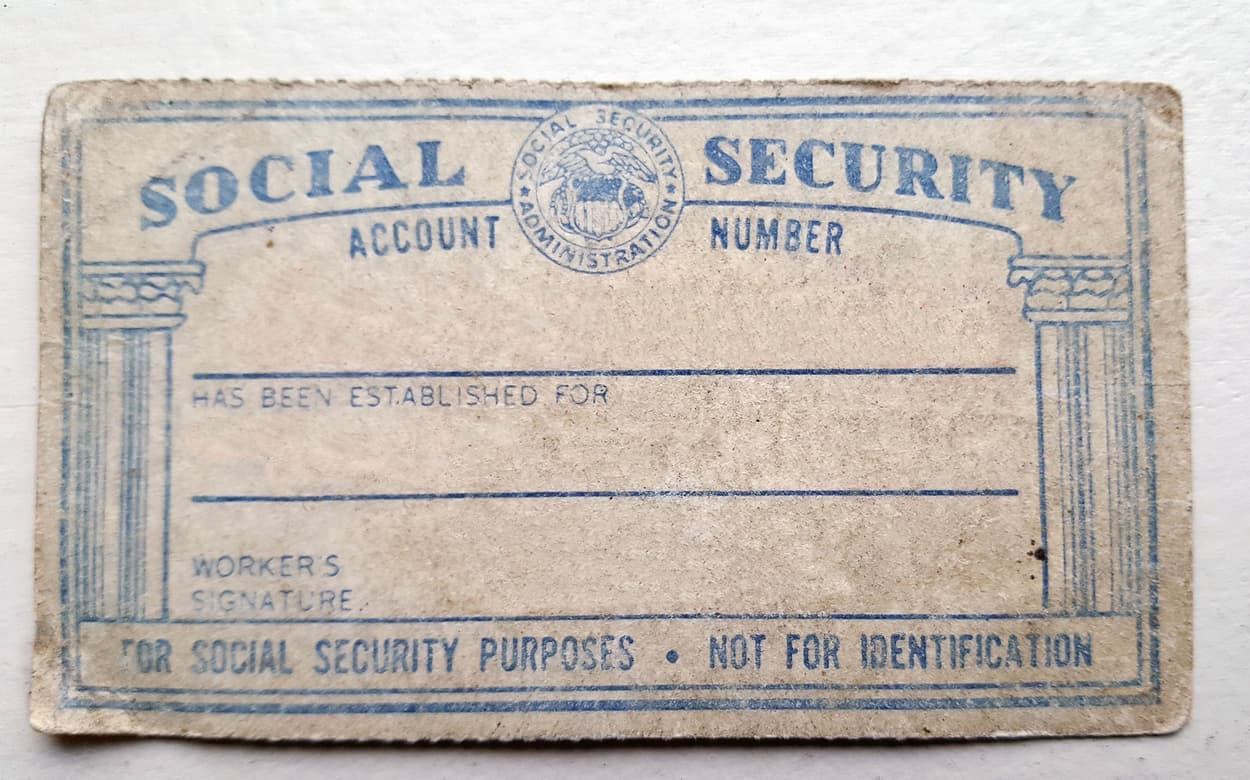
A Social Security number (SSN) is a nine-digit number issued by the Social Security Administration (SSA) to U.S. citizens, permanent residents, and eligible non-citizen workers.
Why SSNs Were Created
Congress authorized the creation of the Social Security number through the Social Security Act of 1935. Its original and core purpose is to track an individual's earnings history over their working life to determine eligibility and benefit amounts for:
- Retirement benefits
- Disability insurance payments (SSDI)
- Survivor benefits for dependent family members
- Supplemental Security Income (SSI)
Over time, federal laws permitted the expanded use of SSNs as a primary tax identification number by the Internal Revenue Service (IRS), as well as a standard identifier for credit reporting agencies, background checks, and identity verification by private commercial banks.
What an SSN Is Not
An SSN is an identification number, not a bank account number. It contains no underlying financial asset value, is not backed by government collateral, and does not grant access to liquidity pools held by federal monetary authorities.
The structure of an SSN consists of three parts:
- Area Number (First 3 digits): Historically assigned based on the geographic region where the card was applied for (randomized since June 25, 2011).
- Group Number (Middle 2 digits): Used for internal administrative grouping and file management by the SSA.
- Serial Number (Last 4 digits): A straight numerical sequence assigned within each group.
None of these numbers represent dollar values, ledger accounts, or monetary funds.
Comparing Financial Accounts and Identifiers
Understanding the distinction between central bank structures, legitimate federal tools, and standard private banking helps clarify why individual Federal Reserve accounts do not exist.
| Feature / Aspect | Federal Reserve Master Account | TreasuryDirect Account | Standard Commercial Account | Social Security Number (SSN) |
|---|---|---|---|---|
| Primary Account Holder | Insured Banks, Credit Unions, U.S. Treasury | Private Individuals, Corporations, Trusts | Private Individuals, Small Businesses, Enterprises | Single Individual Person |
| Issuing / Managing Agency | Federal Reserve Banks | U.S. Department of the Treasury | Private Retail Banks & Credit Unions | Social Security Administration (SSA) |
| Primary Function | Interbank settlement, liquidity, monetary policy implementation | Buying & holding government securities (Savings Bonds, T-Bills) | Storing personal deposits, checking, direct payments | Tracking income history, tax identification, identity verification |
| Contains Monies? | Yes (Institutional reserve balances) | Yes (Invested personal principal in federal bonds) | Yes (Personal cash deposits) | No (Identification sequence only) |
| Can Pay Commercial Bills Directly? | Yes (Via interbank networks) | No (Requires cash redemption to personal bank account first) | Yes (Via debit cards, checks, consumer ACH) | No (Invalid payment mechanism) |
| Public Accessibility | Prohibited for the general public | Open to public verification and enrollment | Open to qualified public applicants | Issued to qualifying individuals |
Legal Consequences of Using Federal Reserve Scams
Attempting to pay personal credit card debts, auto loans, utility bills, or mortgages using a Federal Reserve routing number combined with an SSN carries severe legal and financial repercussions.
CONSEQUENCES OF USING FRAUDULENT ACH
- Immediate Rejection: Transaction is declined; original debt remains.
- Dishonored Payment Fees: Lenders add returned-payment penalty fees.
- Credit Score Damage: Late payment reporting harms credit profile.
- Account Closure: Banks close private accounts for fraudulent ACH.
- Criminal Charges: Prosecution under 18 U.S.C. § 1344 (Bank Fraud).
1. Civil and Financial Penalties
When an ACH payment fails because of fraudulent routing or account data:
- Dishonored Payment Fees: Lenders and utility services impose returned-payment charges ranging from $25 to $50 or more per failed attempt.
- Late Fees and Default: Because the payment was invalid, the account remains unpaid. Debtors incur late payment charges, default interest rates, and risk vehicle repossession or home foreclosure.
- Credit Rating Reduction: Unpaid bills reported to credit bureaus (Equifax, Experian, TransUnion) lower credit scores significantly.
- Account Termination: Financial institutions routinely close consumer checking accounts, terminate credit lines, and blacklist individuals accused of issuing fraudulent payments.
2. Criminal Prosecution and Statutes
Submitting false routing and account numbers to discharge debt is not a harmless misunderstanding under U.S. law. Federal agencies—including the Federal Bureau of Investigation (FBI), the Federal Trade Commission (FTC), and the Federal Financial Institutions Examination Council (FFIEC)—actively investigate and refer these cases for prosecution.
Applicable statutes include:
- Bank Fraud (18 U.S.C. § 1344): Knowingly executing a scheme to defraud a financial institution or obtain money under custody of a bank by means of false pretenses carries penalties of up to $1,000,000 in fines, up to 30 years in federal prison, or both.
- Wire Fraud (18 U.S.C. § 1343): Transmitting false signals, writing, or payment instructions via electronic communications networks to misappropriate property carries sentences of up to 20 years in federal prison.
- Utterance of Fictitious Financial Instruments (18 U.S.C. § 514): Attempting to pass fictitious instruments represented as valid government obligations carries a sentence of up to 25 years in prison.
Legitimate Federal Government Financial Tools for Individuals
While citizens cannot hold Federal Reserve accounts, the federal government offers real, secure tools for managing individual savings, purchasing securities, and receiving government benefits.
TreasuryDirect
Managed by the Bureau of the Fiscal Service—a division of the U.S. Department of the Treasury—TreasuryDirect is the official platform where individual investors can buy, hold, and redeem U.S. government securities electronically.
Through a legitimate TreasuryDirect account, individuals can purchase:
- Series I Savings Bonds: Inflation-protected individual savings bonds.
- Series EE Bonds: Fixed-rate interest savings securities.
- Treasury Bills (T-Bills): Short-term government debt obligations maturing in a few days to 52 weeks.
- Treasury Notes and Bonds: Intermediate and long-term fixed-income investments.
Important Difference: TreasuryDirect accounts do not contain pre-funded government trust money. Account holders must fund purchases using money transferred from their commercial bank accounts. TreasuryDirect accounts cannot be used as primary checking accounts to pay bills or credit cards.
Direct Express and Direct Deposit Systems
The U.S. government uses modern electronic networks to issue Social Security benefits, military pensions, and tax refunds:
- Direct Deposit: Citizens provide their routing and checking/savings account details from a commercial bank or credit union to receive federal benefit payments securely.
- Direct Express Debit Mastercard: For individuals without a commercial bank account, the U.S. Department of the Treasury offers the Direct Express card. Federal benefits are deposited directly onto a prepaid debit card, offering safe access to funds without requiring a traditional checking account.
What to Do If You Have Received False Financial Advice or Fallen Victim to a Scam
If you attempted to use a Federal Reserve routing number with your Social Security number or were targeted by a financial promoter offering access to "secret accounts," take these steps immediately:
- Contact Your Financial Creditors: If you submitted a fraudulent payment to a mortgage lender, credit card issuer, or utility provider, call their customer service department immediately. Explain that the payment submission was invalid, rectify the balance using legitimate commercial bank funds, and request the waiver of returned payment fees.
- Cease Further Transactions: Stop submitting non-standard ACH payment instructions. Do not purchase "instruction kits," legal forms, or templates from online promoters promising to unlock government accounts.
- Protect Your Sensitive Personal Information: Sharing your Social Security number, full legal name, date of birth, and personal identifiers with online financial promoters exposes you to identity theft. Request a credit freeze with the major credit bureaus and monitor your identity through official channels like the FTC Identity Theft Portal.
- Report Fraudulent Schemes: File an official complaint with law enforcement and consumer protection authorities:
- Federal Trade Commission (FTC): Report scams at ReportFraud.ftc.gov.
- FBI Internet Crime Complaint Center (IC3): Submit online reports regarding wire and internet financial fraud at IC3.gov.
- Social Security Administration OIG: Report improper use of Social Security credentials to the Office of the Inspector General.
Frequently Asked Questions
Does every American citizen have a secret Federal Reserve account created at birth?
No. Neither the Federal Reserve System nor the U.S. Department of the Treasury creates monetary trust accounts for individual citizens upon birth. Birth certificates are vital statistics records maintained by state governments to document birth data; they are not financial instruments, collateral notes, or stock certificates.
Can I use a Federal Reserve routing number to pay off my credit card or loan balance?
No. Federal Reserve routing numbers belong to central bank regional offices and are used exclusively for interbank clearing and institutional settlements. Using a central bank routing number with an SSN is an invalid transaction that will fail and may trigger bank fraud investigations, legal penalties, and credit profile damage.
What happens if an online payment using an SSN initially shows as "Pending" or "Approved"?
An initial status of "pending" or temporary "approval" simply indicates that the merchant's payment processor received the transaction request. ACH payments process in automated batches. Once the clearing network attempts to reconcile the funds with the Federal Reserve or target bank, the transaction will be rejected for invalid account information.
What is TreasuryDirect, and does it give me access to free Federal Reserve funds?
TreasuryDirect is an official web portal operated by the U.S. Department of the Treasury allowing individuals to buy government securities like savings bonds and Treasury bills. It does not provide access to free money or Federal Reserve trust funds. Users must fund all purchases using their own money from a commercial bank account.
How can I verify if financial advice regarding government accounts is legitimate?
Legitimate financial rules and government programs are published on official federal websites ending in .gov, such as FederalReserve.gov, Treasury.gov, and SSA.gov. Advice that requests payment for "secret legal instructions," instructs you to use your SSN as a bank account, or promises to discharge debt using government collateral is fraudulent.
Practical Guidance and Next Actions
Navigating personal finances requires reliance on established legal mechanisms. If you are experiencing financial hardship or struggling with debt management, avoid unverified theories or illegal debt-discharge methods.
Instead, take these actionable steps:
- Work directly with accredited financial counseling services: Seek guidance through organizations affiliated with the National Foundation for Credit Counseling (NFCC) to establish legitimate debt management plans.
- Negotiate directly with lenders: If you cannot make payments, contact your lenders to inquire about hardship programs, loan modifications, or temporary forbearance.
- Maintain traditional banking relationships: Store personal savings and manage checking operations through insured commercial banks, state banks, or credit unions.
Disclaimer: This article is for informational and educational purposes only and does not constitute formal legal or financial advice. Individuals seeking assistance with debt resolution, tax strategies, or bankruptcy laws should consult a qualified legal professional or accredited financial advisor.
Image Gallery