Rich Eisen and the Legacy of Stuart Scott: How Their Partnership Reshaped Sports Media
The broadcast partnership between Rich Eisen and Stuart Scott transformed American sports journalism by blending authentic culture, quick-witted humor, and genuine friendship on ESPN’s SportsCenter. Following Scott’s passing from cance...
The broadcast partnership between Rich Eisen and Stuart Scott transformed American sports journalism by blending authentic culture, quick-witted humor, and genuine friendship on ESPN’s SportsCenter. Following Scott’s passing from cancer in 2015, Eisen has actively preserved Scott’s legacy through broadcast tributes, charitable support for cancer research, and advocacy for cultural authenticity in modern broadcasting.
Contents
The Golden Era of SportsCenter: The Partnership of Scott and Eisen
During the late 1990s and early 2000s, ESPN’s SportsCenter evolved from a straightforward highlight delivery service into a cultural institution. At the center of this transformation was the dynamic anchor pairing of Rich Eisen and Stuart Scott. Arriving at ESPN in 1996, Eisen brought a sharp, dry, cerebral wit polished at local television stations and regional news networks. Scott, who joined ESPN2 at its launch in 1993 before moving up to the main channel, brought an unprecedented rhythmic flair, energy, and warmth.
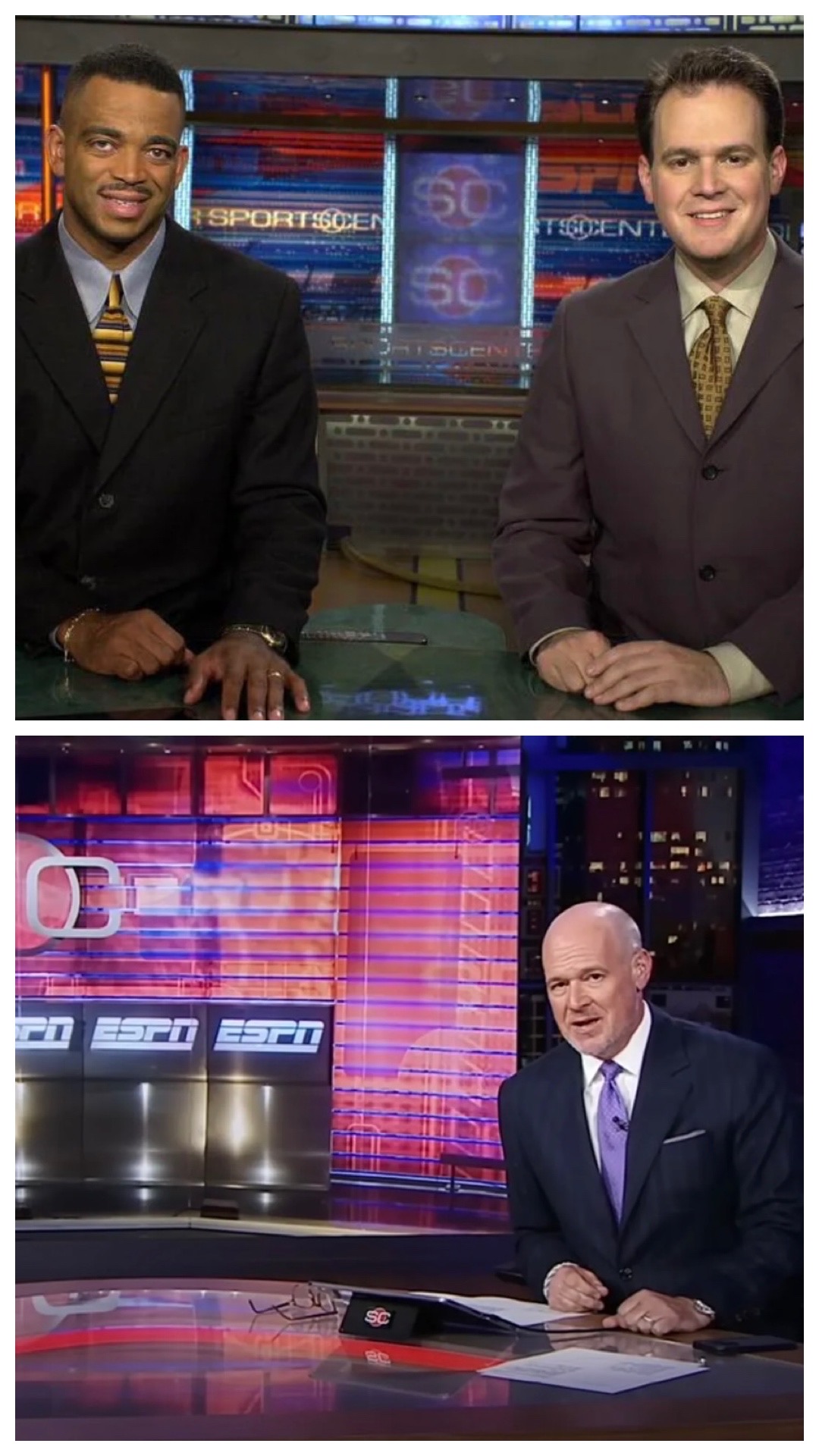
Together, Eisen and Scott anchored the late-night editions of SportsCenter, a time slot that allowed for creative freedom and experimental broadcasting. Their on-air banter felt unscripted because it was grounded in real friendship and mutual respect. Rather than competing for airtime or punchlines, the duo established a conversational cadence that made viewers feel like they were sitting in the room watching games with two passionate friends.
Eisen often played the straight-faced setup man to Scott’s high-energy deliveries, creating a comedic timing that elevated basic highlight reels into appointment viewing. This chemistry helped establish the 11:00 PM and midnight SportsCenter broadcasts as vital elements of sports culture, setting a standard for sports commentary that modern studio shows continue to emulate.
Cultural Revolution: How Stuart Scott Transformed Sports Broadcasting
Before Stuart Scott’s rise, national sports broadcasting adhered largely to a traditional, formal format. Broadcasters typically spoke in measured, Midwestern accents and relied on conventional journalistic phrasing. Scott broke that mold completely by introducing hip-hop culture, urban idioms, and Black vernacular into mainstream American living rooms.
Scott’s signature catchphrases became part of the broader American lexicon:
- "Cool as the other side of the pillow" to describe a clutch performance under intense pressure.
- "Booyah!" to emphasize an emphatic slam dunk or explosive touchdown.
- "Must be the money!" acknowledging spectacular plays following major contract extensions.
- "As butter on a stack of hot flapjacks" describing effortless athletic execution.
Scott’s style was not an act; it reflected his genuine identity. As Eisen has repeatedly highlighted in retrospectives, Scott faced significant pushback early in his career from traditionalists who questioned his phrasing, tone, and delivery. Scott refused to alter his voice, arguing that sports culture was intrinsically tied to youth culture, music, and diverse urban communities.
By standing firm, Scott opened the door for generations of minority journalists and non-traditional broadcasters. He demonstrated that journalists could maintain rigorous reporting standards while bringing their authentic cultural backgrounds to the anchor desk. Eisen’s open embrace of Scott’s style validated this shift on air, creating a collaborative environment where cultural inclusion was celebrated rather than suppressed.
The Emotional Pivot: Facing Cancer and the 2014 ESPYs Speech
In November 2007, Stuart Scott was diagnosed with appendiceal cancer after experiencing severe abdominal pain during a Monday Night Football broadcast. Over the next seven years, Scott underwent dozens of surgeries, aggressive chemotherapy cycles, and continuous medical treatments. Remarkably, he maintained a demanding work schedule, often traveling directly from chemotherapy infusions to host major studio shows or cover championship events.
The defining public moment of Scott’s battle occurred at the July 2014 ESPY Awards, where he accepted the Jimmy V Award for Perseverance. Frail from recent surgeries but exhibiting immense dignity, Scott delivered an address that reshaped how public figures talk about terminal illness.
"When the die is cast and you die, it does not mean that you lose to cancer. You beat cancer by how you live, why you live, and in the manner in which you live." — Stuart Scott, 2014 ESPY Awards
Scott also expressed his deep love for his two daughters, Taelor and Sydni, and acknowledged the colleagues, medical teams, and friends who supported him throughout his treatment. Among those dedicated friends was Eisen, who, despite having left ESPN in 2003 to become the lead anchor at NFL Network, maintained a close bond with Scott.
The video of Scott’s acceptance speech is archived through ESPN’s Official ESPY Coverage and remains a landmark moment in sports broadcasting history.
January 4, 2015: Rich Eisen’s On-Air Tribute and the Power of Memory
When Stuart Scott died on January 4, 2015, at the age of 49, the sports media world mourned deeply. Eisen was tasked with anchoring live coverage on NFL Network on the final morning of the NFL regular season—an exceptionally difficult professional assignment.
Eisen’s live tribute to Scott remains one of the most moving moments in modern sports broadcasting. Visibly emotional yet resolute, Eisen delivered an unscripted eulogy that captured Scott’s professional brilliance and personal warmth. He famously referenced a shared personal story to illustrate Scott’s character, concluding his tribute with Scott’s iconic phrase:
"You beat cancer by how you live, why you live, and the manner in which you live. Rest in peace, my brother. With a 'Booyah.'"
Eisen’s tribute went beyond a personal goodbye; it served as a masterclass in how to honor a colleague on air. By sharing authentic memories rather than reading a canned obituary, Eisen provided sports fans across the nation with a space to grieve. The broadcast emphasized that Scott’s impact extended far beyond the studio, shaping the personal lives of those who worked beside him.
Comparative Matrix: Scott and Eisen in Sports Media History
The partnership between Stuart Scott and Rich Eisen combined distinct broadcast styles, career paths, and cultural contributions to shape modern media.
| Feature / Dimension | Stuart Scott | Rich Eisen | Combined Impact |
|---|---|---|---|
| Broadcasting Style | High-energy, hip-hop infused, cadence-driven, groundbreaking vernacular | Dry wit, conversational humor, precise storytelling, adaptable lead anchor | Blended youth culture with traditional sports journalism, widening television audiences |
| Primary Platforms | ESPN, ESPN2, SportsCenter, NBA Finals coverage, Monday Night Football | ESPN, NFL Network (NFL GameDay Morning), The Rich Eisen Show | Defined the signature look and feel of major national sports cable networks |
| Iconic Catchphrases / Bits | "Cool as the other side of the pillow", "Booyah!", "Call him butter..." | "He’s got get-away-from-the-cops speed", annual 40-yard dash in a suit | Proved that sports highlights could be entertaining narrative television |
| Philanthropic Focus | V Foundation Stuart Scott Memorial Cancer Research Fund | "Run Rich Run" supporting St. Jude Children’s Research Hospital | Raised tens of millions of dollars for pediatric and equity-focused cancer research |
| Journalistic Legacy | Championed authenticity and cultural diversity for journalists of color | Championed long-form athlete storytelling and cross-platform independent media | Re-engineered broadcast norms, encouraging modern talent to embrace individuality |
Continuing the Fight: Cancer Philanthropy and Modern Impact
In the years following Scott’s death, Eisen has continually leveraged his media presence to advance cancer research and honor his friend’s memory. Scott’s legacy lives on prominently through the Stuart Scott Memorial Cancer Research Fund, established by ESPN and the V Foundation for Cancer Research.
This fund specifically targets two major challenges in oncology:
- Addressing Health Disparities: Funding research focused on why certain cancers disproportionately affect racial and ethnic minorities.
- Supporting Minority Scientists: Providing research grants to underrepresented minority researchers in the clinical oncology field.
Eisen frequently promotes the V Foundation’s mission across his platforms, including The Rich Eisen Show. Furthermore, Eisen’s long-running charitable campaign, "Run Rich Run"—in which he runs a timed 40-yard dash at the NFL Scouting Combine wearing a business suit—has raised millions of dollars for St. Jude Children's Research Hospital. Eisen regularly connects his philanthropic efforts to the spirit of perseverance that Scott embodied during his illness.
Broadcasters across networks continue to invoke Scott's memory when covering cancer awareness events, ensuring that younger audiences understand the origin of modern sports media's philanthropic focus.
Practical Lessons for Contemporary Media Professionals
The broadcast partnership and enduring legacy of Rich Eisen and Stuart Scott offer practical insights for content creators, journalists, and media executives operating in today’s digital landscape.
- CORE LESSONS FROM THE SCOTT-EISEN ERA
- AUTHENTIC VOICE: Bring your true cultural identity to your craft rather than conforming.
- GENUINE PARTNERSHIP: Elevate co-anchors through chemistry, shared space, and mutual respect.
- PURPOSE BEYOND MEDIA: Use visibility to drive meaningful, real-world philanthropic impact.
1. Authenticity Trumps Conformity
Stuart Scott demonstrated that attempting to copy established media personalities dilutes individual value. Content creators and journalists build stronger connections with audiences when they bring their authentic culture, language, and lived experiences to their work.
2. Chemistry Requires Shared Space and Mutual Respect
The success of the Scott-Eisen SportsCenter desk was built on listening. Great broadcast duos succeed not by waiting for their turn to speak, but by actively reacting to, supporting, and elevating their partners.
3. Media Platforms Have a Duty Beyond Entertainment
Both Scott and Eisen recognized that television visibility provides a powerful tool for social good. Whether using broadcast time to reframe the psychological fight against cancer or mobilizing audiences for charitable fundraising, media leaders maximize their impact when serving causes larger than sports.
Frequently Asked Questions
When did Rich Eisen and Stuart Scott work together on ESPN?
Rich Eisen and Stuart Scott co-anchored SportsCenter together at ESPN from 1996 through 2003. Their late-night broadcasts during this era are widely recognized as a high point for sports broadcast entertainment.
What is Stuart Scott's most famous quote about cancer?
Scott’s most famous statement on illness came during his 2014 ESPY Awards speech: "When the die is cast and you die, it does not mean that you lose to cancer. You beat cancer by how you live, why you live, and in the manner in which you live."
How did Rich Eisen honor Stuart Scott when he passed away?
On January 4, 2015, Rich Eisen delivered a tearful, unscripted live tribute on NFL Network, highlighting Scott's influence on sports culture, his loyalty as a friend, and his courageous battle against cancer, finishing with Scott's catchphrase, "Booyah."
What is the Stuart Scott Memorial Cancer Research Fund?
Established by ESPN and the V Foundation for Cancer Research, this fund supports minority researchers and finances clinical studies investigating cancer disparities among racial and ethnic minority populations.
How does Rich Eisen continue to honor Stuart Scott today?
Eisen honors Scott by keeping his memory active on The Rich Eisen Show, speaking publicly about Scott's impact on journalism, supporting cancer research foundations, and mentoring younger sports journalists who look up to Scott's trailblazing career.
Recommended Next Steps for Media Historians and Fans
To gain a deeper understanding of the broadcast evolution pioneered by Scott and Eisen, consider taking the following concrete actions:
- Watch Historic Broadcast Archives: Review clips of 1990s SportsCenter broadcasts available through official sports networks to study the timing, script writing, and highlight integration used by Scott and Eisen.
- Study the 2014 ESPY Speech: Watch Stuart Scott’s full acceptance speech for the Jimmy V Award for Perseverance to understand how public figures can articulate resilience and hope in the face of terminal illness.
- Support Cancer Equity Initiatives: Learn more about oncology disparities by reviewing the current research grants and initiatives funded through the V Foundation Stuart Scott Fund.
Image Gallery