How to Calculate Net Worth from an Income Statement
To calculate the change in net worth from an income statement, identify the bottom-line net income and add it to your existing equity. While an income statement tracks performance over time, its final profit figure directly increases y...
To calculate the change in net worth from an income statement, identify the bottom-line net income and add it to your existing equity. While an income statement tracks performance over time, its final profit figure directly increases your net worth by boosting retained earnings or cash reserves on the balance sheet.
Contents
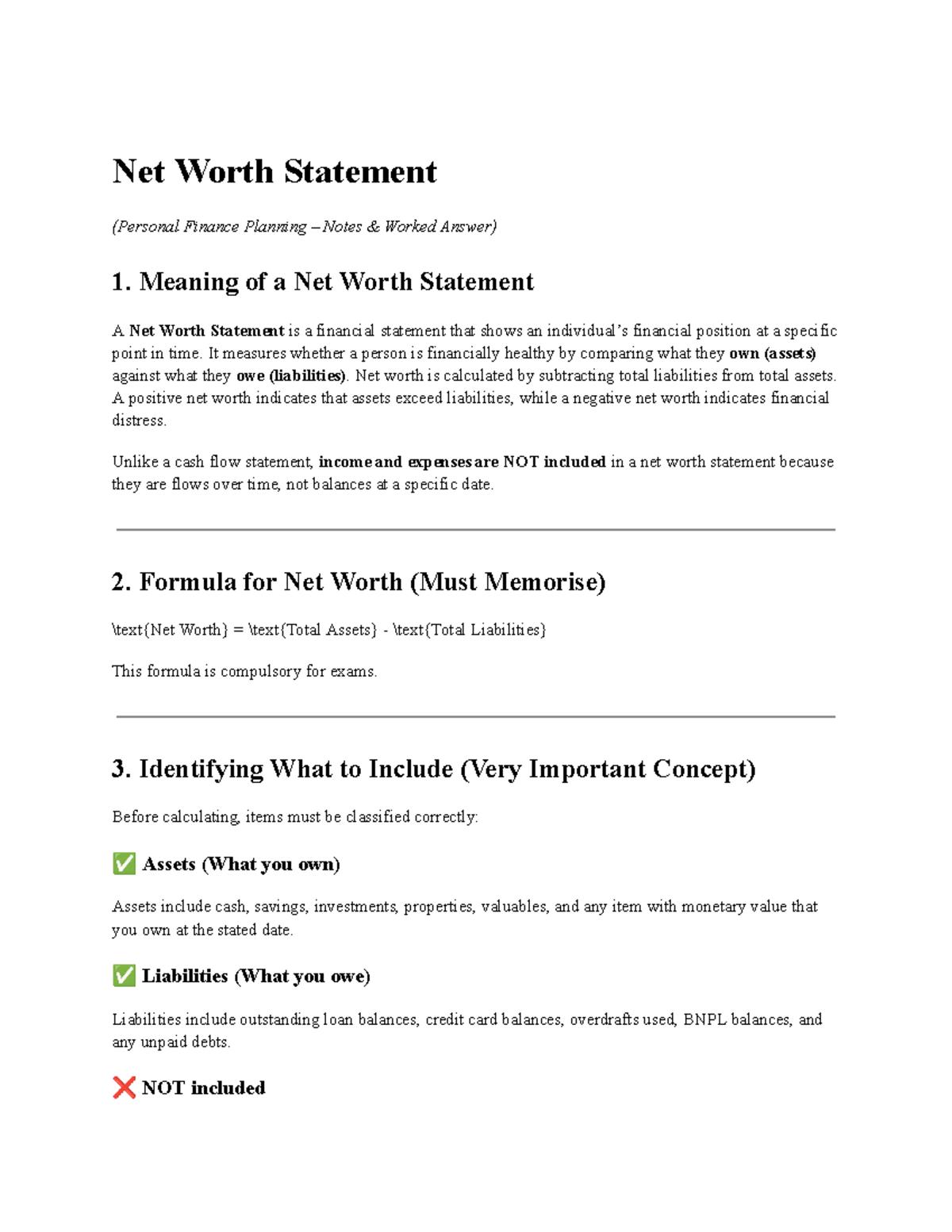
Financial literacy in 2026 requires a nuanced understanding of how different financial documents interact. Many individuals and business owners mistakenly view the income statement and the statement of net worth (the balance sheet) as isolated silos. However, they are deeply interconnected through the mechanism of net profit. To accurately determine net worth using an income statement, one must understand that the income statement provides the "flow" of value, while the net worth represents the "stock" of value at a specific point in time.
The Relationship Between Income and Equity
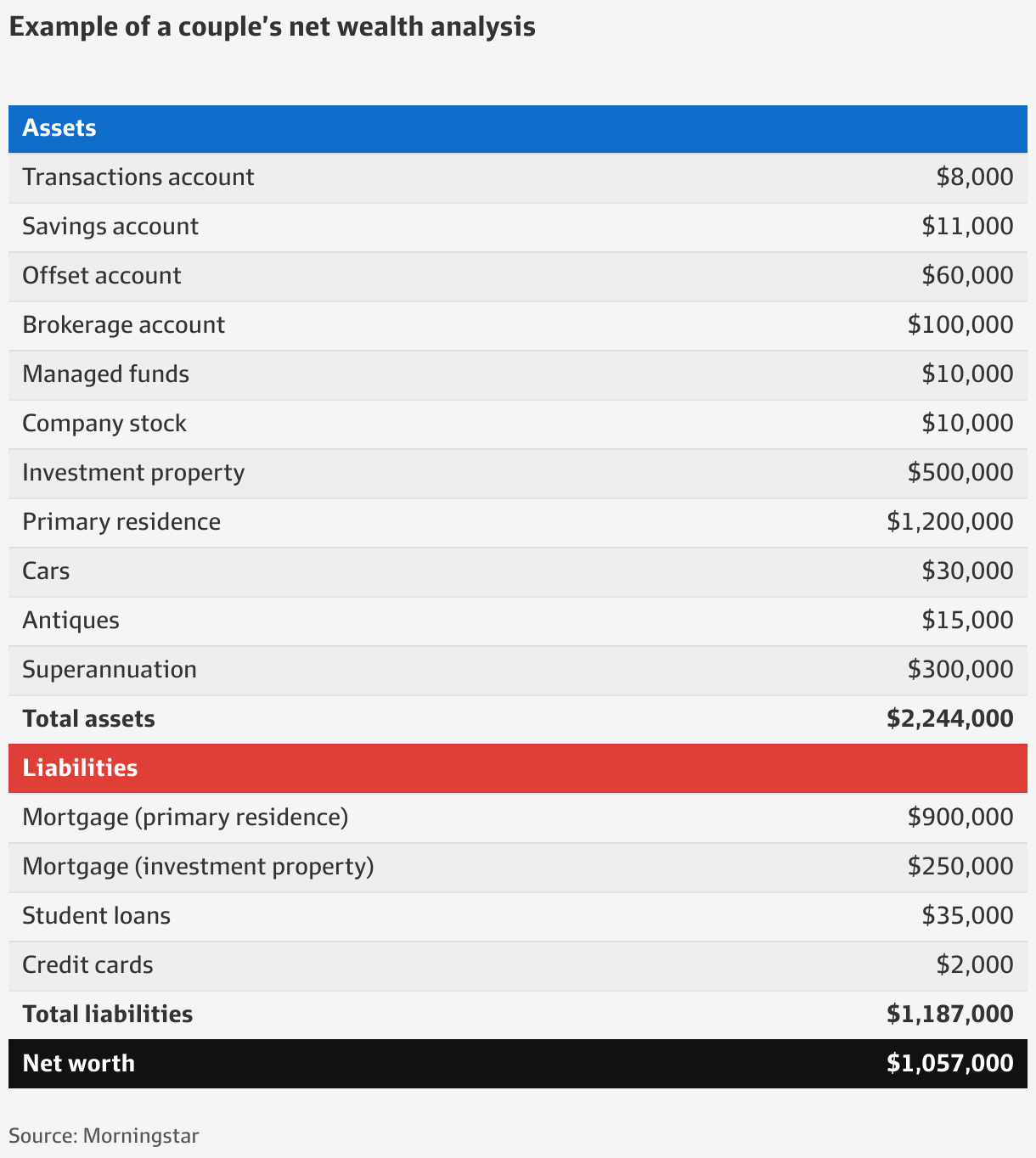
The fundamental link between an income statement and net worth is found in Retained Earnings. In accounting, net worth is defined by the accounting equation: Assets - Liabilities = Equity (Net Worth). The income statement accounts for all revenue generated and all expenses incurred during a specific period—be it a month, a quarter, or a fiscal year.
When the income statement shows a surplus (Net Income), that value does not simply vanish at the end of the period. Instead, it flows into the equity section of the balance sheet. If you are tracking personal net worth, your "net income" (what remains after taxes and living expenses) becomes the capital you use to purchase assets or pay down debts, both of which increase your net worth. In a corporate context, net income increases the company’s retained earnings, thereby increasing the total book value or net worth of the entity.
It is important to distinguish between "Net Income" and "Cash Flow." An income statement may show a high net profit due to non-cash items like accounts receivable, but if that money hasn't been collected, your liquid net worth might not reflect that growth immediately. Understanding this distinction is vital for accurate financial planning in 2026's volatile economic landscape.
Step 1: Identify the Starting Net Worth
You cannot calculate a total, absolute net worth figure using only an income statement. An income statement only tells you how much your net worth changed during a specific timeframe. Therefore, the first step is establishing a "Beginning Net Worth" from a prior balance sheet or a snapshot of your assets and liabilities at the start of the period.
For example, if you are looking at an income statement for the year 2026, you must first know your net worth as of January 1, 2026. This serves as your baseline. Without this baseline, the income statement only provides a "delta" (the amount of increase or decrease) rather than a final destination.
Step 2: Analyze the Income Statement Components
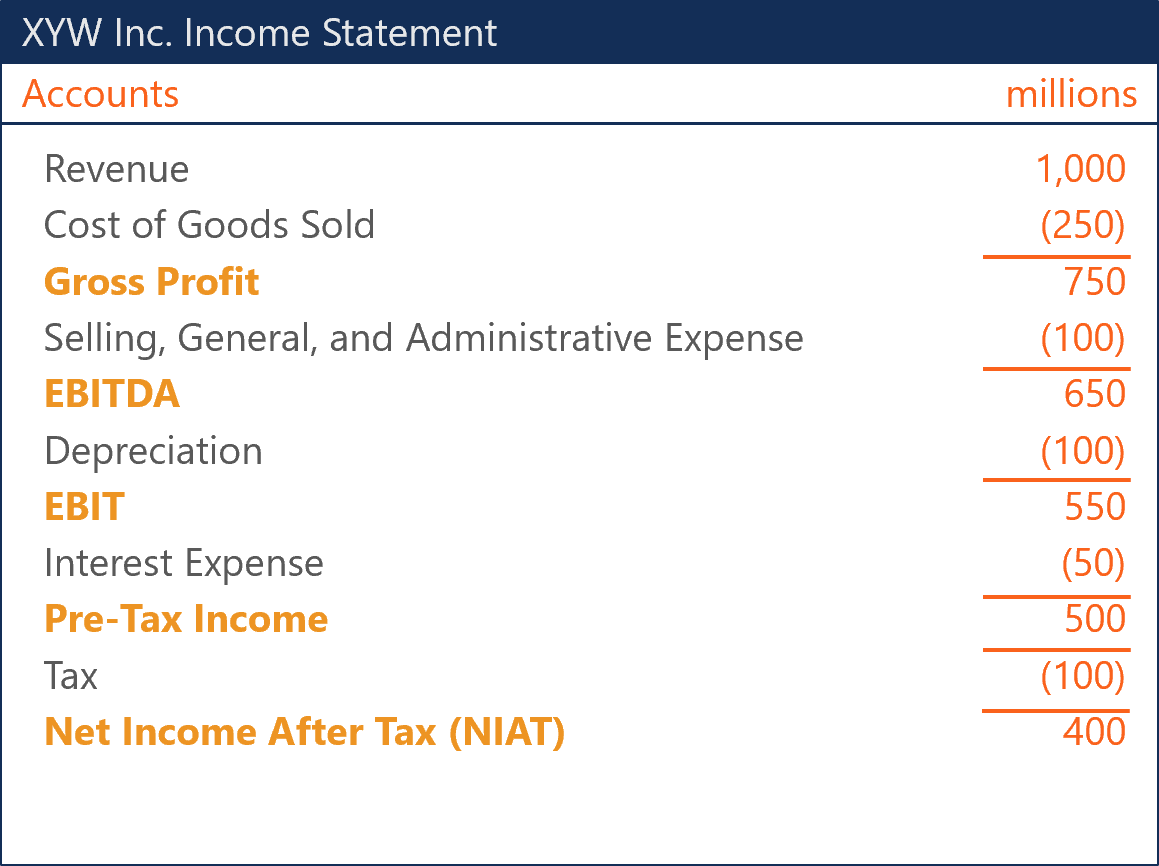
To find the specific figure that impacts net worth, you must navigate the layers of the income statement. Each layer represents a different level of operational efficiency and financial obligation.
- Gross Revenue: This is the total amount of money brought in from sales or salary before any deductions.
- Cost of Goods Sold (COGS): For businesses, this represents the direct costs of producing goods. For individuals, this is rarely used, though some include direct costs of maintaining a professional practice.
- Operating Expenses (OpEx): These are the day-to-day costs, such as rent, utilities, and payroll. In personal finance, these are your "living expenses."
- EBITDA: Earnings Before Interest, Taxes, Depreciation, and Amortization. This is a common metric used in 2026 for business valuations, but it is not the figure used to update net worth.
- Net Income: This is the "bottom line." It is the amount remaining after all expenses, including interest and taxes, have been deducted. This is the primary figure you need.
Step 3: Account for Non-Cash Expenses
A critical technical adjustment when moving from an income statement to a net worth calculation involves Depreciation and Amortization. These are recorded as expenses on the income statement to reduce taxable income, but they do not involve an actual outflow of cash.
However, they do represent a decrease in the value of your assets. If your income statement shows $10,000 in depreciation for a piece of machinery, your net worth has technically decreased by that amount because the asset on your balance sheet is now worth less. When calculating the change in net worth, ensure that the net income figure accounts for these non-cash adjustments to reflect the true "book value" of your holdings.
Step 4: The Bridge Formula
Once you have the Net Income from the income statement, you apply it to the net worth equation. The formula for calculating your ending net worth at the end of the period is:
Ending Net Worth = Beginning Net Worth + Net Income - Distributions (Dividends/Draws)
Distributions are funds taken out of the entity for personal use or paid to shareholders. If a business earns $100,000 in net income but the owner withdraws $40,000 for personal expenses, the net worth of the business only increases by $60,000. For a personal net worth calculation, "Distributions" would represent discretionary spending that was not captured in the "Expenses" section of your income statement (such as moving money into a non-tracked asset).
Data Mapping: Income Statement to Net Worth
The following table demonstrates how specific line items on a standard 2026 income statement translate to changes in the net worth (Balance Sheet) environment.
| Income Statement Item | Financial Impact | Effect on Net Worth |
|---|---|---|
| Total Revenue | Increases Cash or Accounts Receivable | Potential Increase |
| Operating Expenses | Decreases Cash or Increases Liabilities | Potential Decrease |
| Interest Expense | Decreases Cash | Direct Decrease |
| Depreciation | Non-cash expense; reduces asset book value | Direct Decrease |
| Net Profit (Positive) | Increases Retained Earnings | Increase |
| Net Loss (Negative) | Decreases Retained Earnings | Decrease |
| Taxes Paid | Decreases Cash | Direct Decrease |
Limitations of Using Only an Income Statement
While the income statement is a powerful tool for measuring wealth creation, it has significant blind spots regarding total net worth. It does not account for:
- Market Fluctuations: If you own real estate or stocks, their value may increase (unrealized gains) or decrease (unrealized losses) without appearing on an income statement. An income statement only records "realized" transactions.
- Debt Principal Payments: When you pay down the principal on a loan, it is not an expense on the income statement (only the interest is). However, paying down principal reduces your liabilities, which directly increases your net worth.
- New Asset Acquisitions: Purchasing a building or a vehicle is an exchange of one asset (cash) for another (equipment). This "capital expenditure" does not appear as a lump-sum expense on the income statement, but it fundamentally changes the composition of your net worth.
For these reasons, the income statement should be viewed as a "performance report" that explains why your net worth changed, rather than a comprehensive map of what you currently own and owe.
Advanced Considerations for 2026
In the current financial environment of 2026, many individuals and small businesses utilize automated accounting software that bridges these statements in real-time. However, manual verification remains essential, especially regarding Deferred Tax Liabilities. If your income statement shows a high profit but you have not yet accounted for the tax burden associated with that profit, your "estimated" net worth may be artificially inflated.
Furthermore, for those involved in the digital asset space, income statements often struggle to capture the volatility of cryptocurrency or tokenized assets. Ensure that your income statement reflects "Fair Market Value" adjustments if you are using it to track the net worth of a portfolio heavily weighted in digital finance.
Frequently Asked Questions
Can I determine my total debt from an income statement? No, you cannot determine total debt from an income statement. The income statement only lists the interest paid on that debt during a specific period. To see the total principal balance remaining, you must consult the Liabilities section of a Balance Sheet.
What happens to net worth if the income statement shows a net loss? A net loss directly reduces net worth. When expenses exceed revenue, the "Retained Earnings" or equity portion of your financials is debited to cover the deficit. This results in a lower overall net worth unless offset by an external infusion of capital (like a new loan or personal investment).
How do "Owner Draws" affect the calculation? Owner draws (or dividends in a corporation) are not considered expenses on a standard income statement, but they are a distribution of equity. This means that while your income statement might show a healthy profit, your net worth could remain stagnant or even decrease if you withdraw more money than the entity earned.
Is "EBITDA" the same as the increase in net worth? No. EBITDA ignores interest, taxes, depreciation, and amortization. Because interest and taxes are actual cash outflows, and depreciation represents a real loss in asset value, EBITDA will almost always be higher than the actual increase in your net worth. Always use "Net Income" for net worth calculations.
Why does my bank ask for both an income statement and a net worth statement? Banks ask for both because they serve different purposes. The income statement proves your "repayment capacity" (how much cash you generate to service a loan), while the net worth statement provides "collateral assurance" (what assets the bank can claim if you fail to pay).
Practical Recommendation
To maintain an accurate view of your financial health in 2026, perform a Reconciliation at the end of every quarter. Take your beginning net worth, add the net income from your income statement, subtract any personal draws or dividends, and compare the result to your actual ending net worth (calculated by listing all assets and liabilities). If the numbers do not match, look for "unrealized" changes, such as shifts in the market value of your investments or principal payments on debts that were not captured on your profit and loss report. This practice ensures that your "performance" (income) is actually translating into "wealth" (net worth).
Financial Disclaimer: This article is provided for informational purposes only and does not constitute professional financial, legal, or tax advice. Jurisdictional rules regarding accounting standards (such as GAAP or IFRS) vary by region and entity type. Consult with a certified public accountant (CPA) or qualified financial advisor before making significant investment or reporting decisions.
Image Gallery