Term vs. Lifetime Insurance: Which Policy Secures Your Future in 2026?
Choosing between term and lifetime insurance depends on whether you need temporary protection or a lifelong financial asset. Term life insurance provides affordable coverage for a specific period, such as 20 or 30 years, while lifetime...
Choosing between term and lifetime insurance depends on whether you need temporary protection or a lifelong financial asset. Term life insurance provides affordable coverage for a specific period, such as 20 or 30 years, while lifetime (permanent) insurance offers coverage that never expires and includes a cash value component that grows over time.
Contents
Selecting the right life insurance policy is one of the most consequential financial decisions a household can make. In 2026, the insurance landscape has evolved to offer more flexible riders and technology-driven underwriting, but the fundamental choice remains a pivot between "pure protection" and "permanent security." Understanding the mechanics of term and lifetime insurance is essential to ensuring your beneficiaries are protected without overextending your monthly budget.
Understanding Term Life Insurance: Pure Protection
Term life insurance is the most straightforward form of life coverage available. It is designed to provide a high death benefit for a relatively low premium. The policy stays in effect for a "term"—usually 10, 15, 20, or 30 years. If the insured individual passes away during this window, the insurance company pays the face value of the policy to the named beneficiaries.
The primary appeal of term insurance in 2026 remains its cost-efficiency. Because the policy does not accumulate cash value and the risk to the insurer ends when the term expires, premiums are significantly lower than those for permanent policies. This makes it an ideal tool for covering specific, time-bound financial obligations. For example, a young family might purchase a 20-year term policy to ensure that if a breadwinner passes away, the mortgage can be paid off and the children’s education can be funded.
However, term insurance is not a "savings" vehicle. If you outlive the term, the policy simply expires, and you receive no money back unless you have specifically purchased a "return of premium" rider, which typically increases the monthly cost. In 2026, most consumers opt for level-term policies, where the premium remains the same for the duration of the term, providing predictable budgeting for decades.
Renewable and Convertible Features
Modern term policies often include two critical features that provide future flexibility:
- Renewability: This allows the policyholder to extend coverage on a year-to-year basis after the initial term ends without undergoing a new medical exam. However, premiums usually spike significantly upon renewal.
- Convertibility: This is a vital provision that allows a policyholder to "convert" their term policy into a lifetime policy (whole or universal) within a certain timeframe. This is particularly valuable if your health declines during the term, as it allows you to secure permanent coverage without proving insurability.
Exploring Lifetime Insurance: Permanent Coverage and Cash Value
Lifetime insurance, often referred to as permanent life insurance, is designed to remain in force as long as the premiums are paid. Unlike term insurance, it does not expire. It also features a "cash value" component, which acts as a tax-deferred savings account within the policy.
When you pay a premium for a lifetime policy, a portion goes toward the cost of insurance (the death benefit), a portion covers administrative fees, and the remainder is funneled into the cash value. Over years and decades, this cash value grows. Policyholders in 2026 often use this accumulated wealth to take out policy loans, pay future premiums, or even supplement retirement income.
Varieties of Lifetime Insurance
Lifetime insurance is an umbrella term for several different policy structures:
- Whole Life Insurance: This is the most traditional form. It offers fixed premiums, a guaranteed death benefit, and a guaranteed rate of return on the cash value. Some policies issued by mutual companies also pay dividends, which are not guaranteed but can significantly increase the policy’s value.
- Universal Life (UL): This offers more flexibility than whole life. Policyholders can often adjust their premium payments and death benefits as their financial situation changes. The cash value growth is tied to current interest rates.
- Indexed Universal Life (IUL): These policies tie the cash value growth to a market index, such as the S&P 500, with "floors" to protect against market losses and "caps" on maximum gains.
Critical Differences in Premiums and Cost-Efficiency
The most immediate difference between term and lifetime insurance is the price. For the same death benefit, a lifetime policy can cost five to ten times more than a term policy. This is because the insurer is guaranteed to eventually pay the death benefit—provided the policy is kept in force—whereas most term policies expire without a claim ever being filed.
In 2026, financial advisors often categorize this as a choice between "buying protection" and "building an asset." If you are 30 years old and in good health, a $500,000 20-year term policy might cost you $25–$40 per month. A comparable whole life policy could cost $300–$500 per month.
The question for most consumers is whether the extra premium is better spent on a permanent insurance policy or invested independently in a brokerage account or 401(k). This debate, known as "buy term and invest the difference," is a cornerstone of personal finance. For many, the simplicity and low cost of term insurance allow for more aggressive investing elsewhere. For others, the "forced savings" aspect of lifetime insurance provides a safety net they might not otherwise build.
The Role of Cash Value in Financial Planning
The cash value in a lifetime policy is not just a savings account; it is a complex financial tool with specific tax advantages. Under current 2026 tax codes, the growth within the cash value is tax-deferred. Furthermore, policy loans—where you borrow against your own cash value—are generally not considered taxable income, provided the policy remains active.
However, there are risks. If you take a large loan and do not repay it, the interest can compound. If the loan balance exceeds the cash value, the policy could lapse, potentially triggering a massive tax bill on the "gain" in the policy. Additionally, if you die with an outstanding loan, the balance is deducted from the death benefit paid to your beneficiaries.
Comparative Table: Term vs. Lifetime Insurance
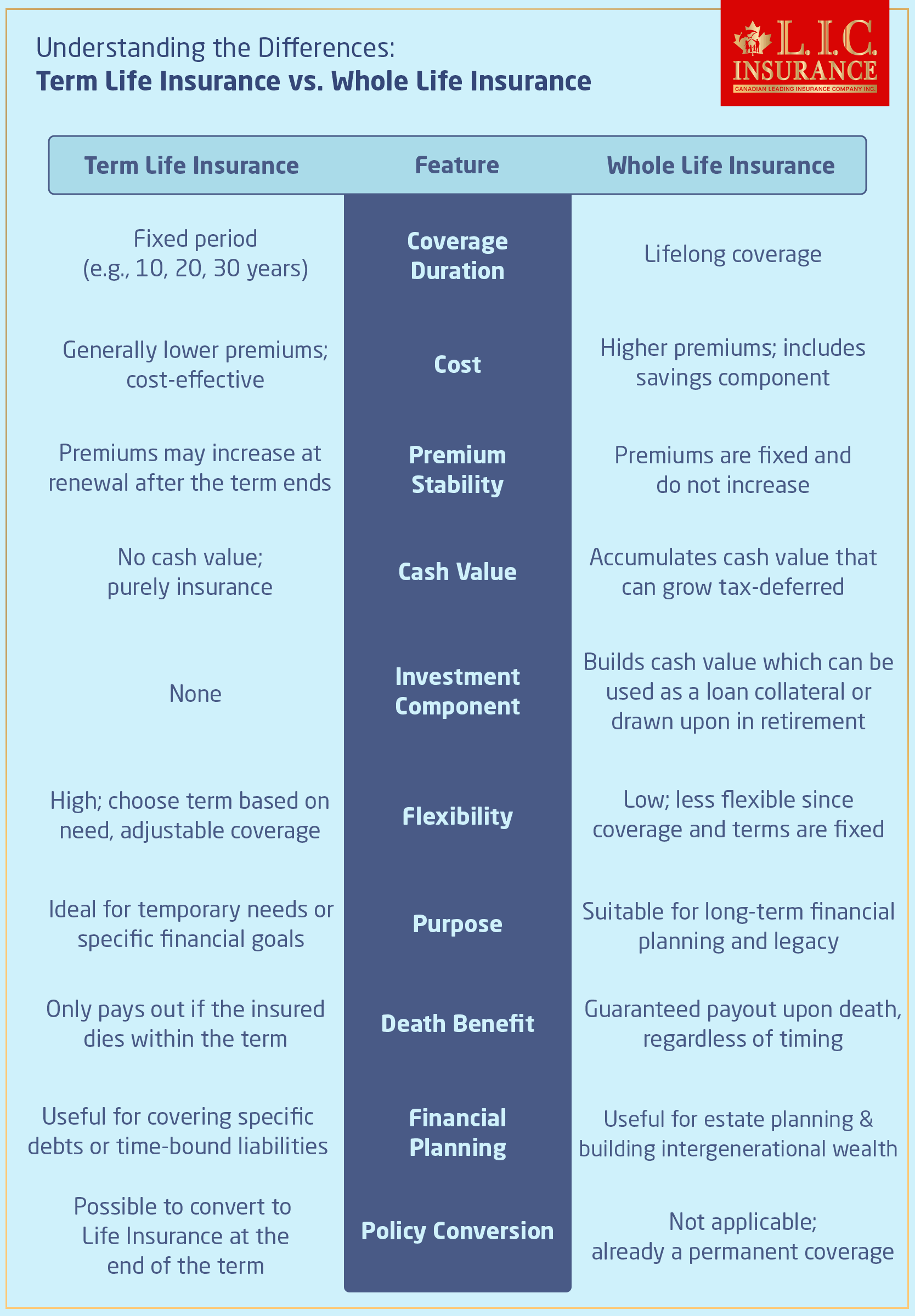
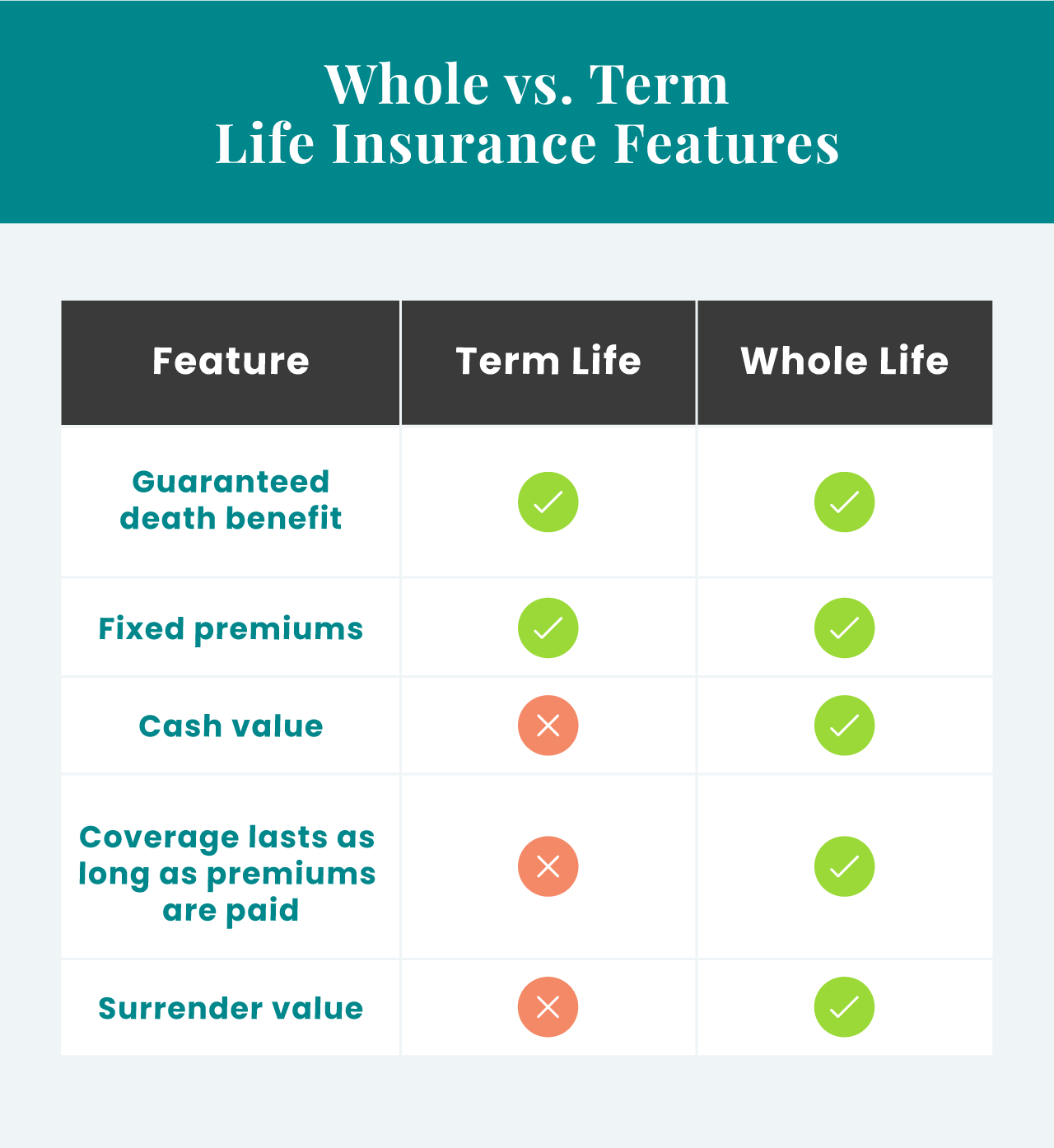
| Feature | Term Life Insurance | Lifetime (Permanent) Insurance |
|---|---|---|
| Duration | Fixed period (10–30 years) | Entire life |
| Premiums | Lower; fixed for the term | Higher; can be fixed or flexible |
| Cash Value | None | Yes; grows over time |
| Complexity | Low; easy to understand | High; involves investment components |
| Death Benefit | Paid only if death occurs in term | Guaranteed (if premiums are paid) |
| Best For | Income replacement; debt coverage | Estate planning; lifelong dependents |
| Flexibility | Limited; "use it or lose it" | High; loans and premium adjustments |
Strategic Scenarios: Who Should Choose What?
The "better" policy depends entirely on your specific life stage and financial objectives in 2026.
When Term Insurance Makes Sense
- Young Families: If you have a 30-year mortgage and children who will eventually be independent, a 30-year term policy covers that specific window of high financial vulnerability.
- Budget-Conscious Individuals: If you want the maximum possible death benefit for the lowest possible price to protect your spouse's lifestyle.
- Business Owners: Term insurance is often used for "key person" coverage during the most critical growth years of a startup or small business.
When Lifetime Insurance Makes Sense
- Lifelong Dependents: If you have a child with special needs who will require financial support long after you are gone, permanent coverage is essential.
- High-Net-Worth Individuals: For those looking to mitigate estate taxes or transfer wealth to the next generation efficiently, the death benefit of a lifetime policy can provide the necessary liquidity.
- Final Expenses: A small whole life policy (often called "final expense insurance") ensures that funeral and burial costs are covered regardless of when death occurs.
Tax Implications and Legal Frameworks
Life insurance death benefits are generally received by beneficiaries tax-free. This remains one of the most powerful aspects of both term and lifetime insurance in 2026. However, the legal and tax treatment of the living benefits (the cash value) is more nuanced.
For a lifetime policy to maintain its tax-favored status, it must pass the "7-pay test" established by the IRS to ensure it isn't being used purely as an investment vehicle. If a policy is funded too quickly, it becomes a Modified Endowment Contract (MEC), and withdrawals are taxed more heavily. It is crucial to consult with a financial professional to ensure your lifetime policy is structured correctly to avoid these pitfalls.
FAQs
Can I change my term policy to a lifetime policy later?
Yes, if your policy includes a conversion rider. Most modern term policies allow you to convert to a permanent policy within a specified number of years or before you reach a certain age (often 65 or 70). This is a valuable feature because it allows you to lock in permanent coverage based on your health at the time you originally bought the term policy, even if your health has since declined.
What happens to the cash value in a lifetime policy when I die?
In most standard whole life policies, the insurance company keeps the cash value, and your beneficiaries receive only the face value (death benefit). However, some universal life policies allow you to select an option where the death benefit includes both the face value and the accumulated cash value, though this typically requires higher premiums.
Is term insurance a waste of money if I don't die?
Not at all. Insurance is the purchase of "risk transfer." You are paying the premium to transfer the financial risk of your premature death to the insurance company. If the term ends and you are still alive, the "waste" of premiums is actually the best-case scenario—it means you lived a long life and were protected during your years of highest financial risk.
Can I have both term and lifetime insurance?
Yes, many people use a "laddering" strategy. They may have a small lifetime policy to cover funeral costs and provide a legacy, while also carrying a large term policy during their working years to cover the mortgage and income replacement for their family.
Does lifetime insurance have a guaranteed rate of return?
Whole life insurance typically offers a guaranteed minimum rate of interest on the cash value. Universal and Indexed Universal life policies do not usually have a fixed guarantee for the total return, as they are tied to market performance or current interest rates, though they often have a "floor" (such as 0%) to prevent the cash value from decreasing due to market losses.
Final Recommendation
As you evaluate your options in 2026, start by calculating your "total need." If your primary goal is to protect your family during their most vulnerable years (while you have a mortgage, debt, and young children), term life insurance is almost always the most efficient choice. It provides the highest coverage for the lowest cost, allowing you to invest your remaining capital in other assets.
If you have already maxed out your traditional retirement accounts, have a need for permanent coverage for a dependent, or are looking for a complex estate planning tool, lifetime insurance deserves a place in your portfolio. Regardless of which path you choose, ensure the carrier has a strong financial strength rating (A or better from AM Best) to guarantee they will be there when your beneficiaries need them most.
Image Gallery