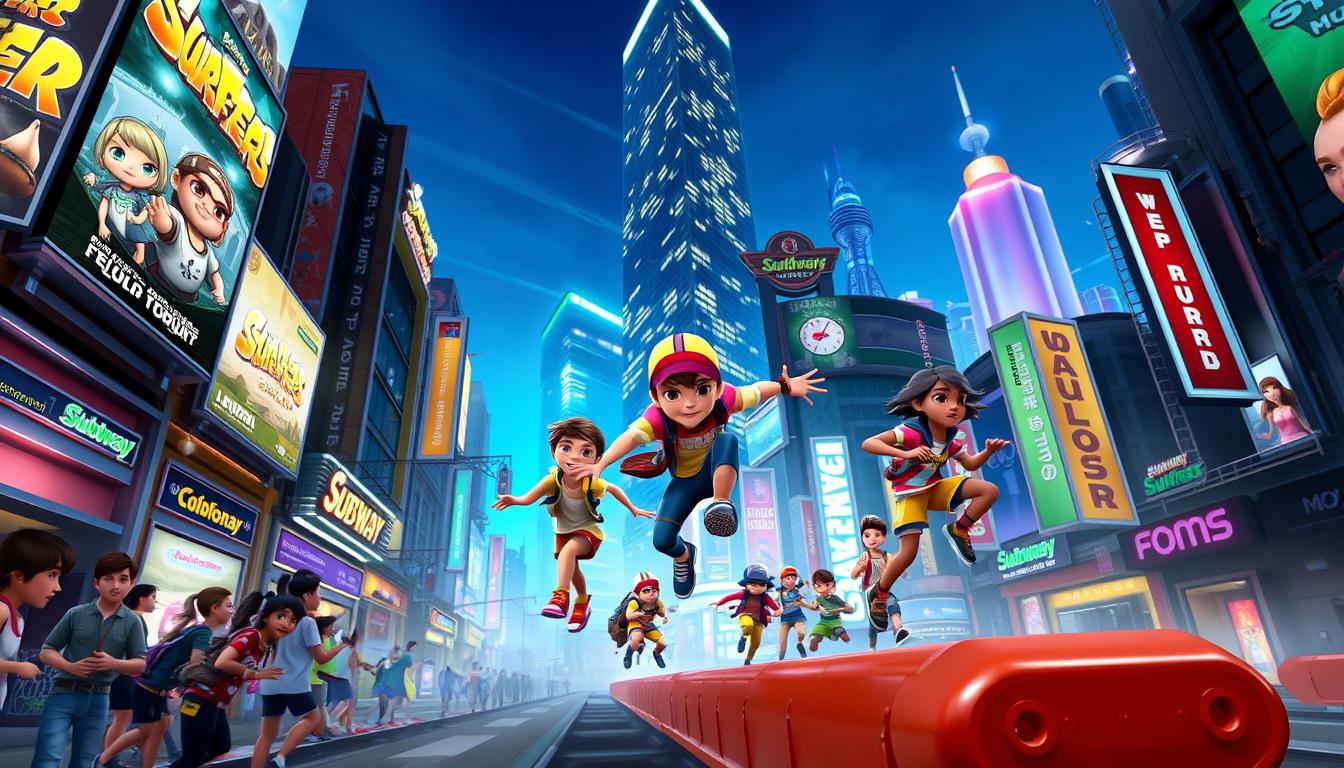
Understanding the Subway Surfers NYC Death Event: Urban Legend vs. Digital Reality
The "Subway Surfers NYC death event" is a pervasive internet urban legend that claims the game’s creators, Kiloo and SYBO Games, based the premise of the mobile sensation Subway Surfers on the tragic death of a teenager in New York Cit...
The "Subway Surfers NYC death event" is a pervasive internet urban legend that claims the game’s creators, Kiloo and SYBO Games, based the premise of the mobile sensation Subway Surfers on the tragic death of a teenager in New York City who lost his life while graffitiing subway cars. This narrative suggests the game serves as a dark tribute to the real-life individual, though investigation confirms this story is entirely fictional, lacking any basis in the development history of the game.
Contents
The Origins of the Urban Legend
In the digital age, viral stories often gain traction by attaching a dark, tragic backstory to innocent entertainment. The Subway Surfers myth is a prime example of a creepypasta—a form of internet-based horror fiction that is presented as factual to elicit emotional responses from the player base.
The narrative typically follows a consistent, albeit fabricated, structure: a young graffiti artist, often unnamed or referred to as a "local NYC kid," was killed by an oncoming train while attempting to paint a subway car in the middle of the night. Proponents of this theory claim that the game’s core mechanics—the constant running, the avoidance of trains, and the presence of the "Inspector" and his dog—are metaphors for the final moments of this person’s life, with the Inspector representing the authorities chasing them.
This legend gained significant momentum on platforms like TikTok and YouTube in the early 2020s, where "storytime" videos often pair gameplay footage with voiceovers recounting the supposed tragedy. Because the game features a recurring "World Tour" update that frequently returns to iconic cities like New York, users often conflate the game's geographical settings with real-world news, lending a false sense of legitimacy to the claim.
Verifying the Development History
To understand the true origins of Subway Surfers, one must look at the official documentation provided by the developers, SYBO Games and Kiloo. The game was released in May 2012, and its conception was rooted in the developers' interest in street culture, skateboarding, and the fast-paced nature of urban environments.
There is no mention in any press releases, developer interviews, or corporate history of a tragic death being the catalyst for the game’s design. The "Inspector" character was created as a classic antagonist archetype, functioning as a persistent pursuit mechanic to force the player into forward movement, which is a staple of the "endless runner" genre. The aesthetic of the game is inspired by the vibrant, non-lethal art style of modern animation and urban street art, intended for a global audience of all ages.
The persistent nature of this myth is largely a testament to how effectively mobile game mechanics can be recontextualized by internet users. When a game involves high-stakes situations—such as dodging subway trains—the human tendency to project narrative depth onto those mechanics can lead to the creation of "lore" that has no connection to the developer's original intent.
Comparative Analysis of Game Lore vs. Urban Legends
Understanding the difference between official game lore and player-created myths is essential for digital literacy. The following table highlights the contrast between the actual mechanics of the game and the claims made by the urban legend.
| Feature | Official Reality | Urban Legend Claim |
|---|---|---|
| Origin Source | SYBO Games & Kiloo development team | Supposed tribute to a real-life incident |
| Inspector Role | Standard game antagonist for difficulty | Representation of the police chasing a teen |
| Premise | An endless runner featuring street art | A simulation of a fatal accident |
| Developer Stance | No public acknowledgment of a "death event" | Often claimed as a "hidden truth" |
| Core Goal | High-score accumulation | Surviving a "re-enactment" |
The Psychological Appeal of Creepypasta
Why do these legends persist despite a complete lack of evidence? The psychology behind the "Subway Surfers death event" is linked to the "uncanny valley" of gaming history. Players spend hundreds of hours in these digital environments, and the lack of a explicit, linear story mode often leads the community to fill in the gaps.
By fabricating a tragic backstory, users effectively "gamify" their own perception of the game. It adds a layer of morbid curiosity to the experience, which in turn drives engagement on social media platforms. For younger players who may not have been around for the game's initial release in 2012, these videos serve as their primary introduction to the game's background, making it difficult to distinguish between factual history and viral content.
Legal and Ethical Implications of Digital Myths
While the Subway Surfers legend is relatively harmless, it underscores a broader issue regarding digital content creation. Content creators who spread misinformation under the guise of "true stories" can sometimes inadvertently trivialize real-world tragedies. In the case of graffiti and subway safety, the real-world dangers of trespassing in transit facilities are significant and documented, yet the urban legend focuses on a specific, non-existent individual rather than addressing the actual legal and physical risks of the activity.
When discussing the game, it is important to emphasize that while Subway Surfers uses the visual language of graffiti and urban exploration, it is a piece of software designed for entertainment. It does not reflect or record real-world deaths, nor is it a memorial.
Frequently Asked Questions
Is there an official "Death Mode" or update in Subway Surfers? No. There is no hidden mode, update, or feature in any version of Subway Surfers that references death or a specific tragic event. The game’s updates are strictly thematic, focusing on different cities, seasonal holidays, or character additions.
Did the developers ever respond to the "NYC death" rumor? The developers have largely ignored the rumor, as it is a standard piece of internet folklore that lacks any factual basis. Publicly addressing every internet myth would give them a level of undeserved credibility that software companies generally seek to avoid.
Why is New York City frequently associated with this legend? NYC is the most recognizable subway hub globally, and it serves as a common setting for street art-themed games. The association is likely due to the "World Tour" update and the general cultural prominence of New York’s subway system in film and media, making it the default backdrop for such urban legends.
Could the game's mechanics be interpreted as a cautionary tale? While some interpret the "game over" screen (being caught by the inspector) as a form of consequence, it is purely a gameplay mechanic. It is not designed to be a moral or cautionary lesson on the dangers of urban environments.
How can I verify game lore in the future? Always check official company websites, reputable video game databases, or verified developer social media accounts. If a story sounds like it relies heavily on "secrets," "hidden truths," or "dark backstories" without citing developer interviews or official press releases, it is almost certainly an urban legend.
Next Steps for Players
If you encounter claims regarding the "Subway Surfers NYC death event," the most effective action is to recognize them for what they are: non-factual internet content created for engagement purposes. Players looking for accurate information about the game’s development should consult the official SYBO Games website or their verified developer blogs, which outline the actual creative process, artistic inspirations, and technical updates that have defined the game since its 2012 debut. Enjoying the game as a casual, skill-based runner is the best way to interact with the software, free from the unnecessary weight of fabricated, dark narratives.
Image Gallery