Patatas Kitchen Appliances Explained in Detail: Types, Mechanics, and Buying Guide
Patatas kitchen appliances encompass specialized commercial and domestic machinery engineered specifically for preparing, processing, and cooking potatoes. Ranging from automated abrasive peelers and commercial electric cutters to dual...
Patatas kitchen appliances encompass specialized commercial and domestic machinery engineered specifically for preparing, processing, and cooking potatoes. Ranging from automated abrasive peelers and commercial electric cutters to dual-tank fryers and low-shear mashers, these appliances optimize starch handling, streamline labor-intensive prep, and ensure uniform culinary results across residential kitchens and commercial food-service operations.
Contents
Disambiguation and the Scope of Potato-Processing Equipment
In culinary terminology and global food service, appliances designed for "patatas" (the Spanish and multilingual culinary term for potatoes) refer to a dedicated class of food-processing equipment. Unlike general-purpose food processors or standard blenders, appliances built for potatoes must account for the unique physical and chemical properties of high-starch root vegetables: dense cellular structures, high moisture content, abrasive exterior soil, and shear-sensitive starch molecules.
Processing potatoes efficiently requires machinery that can withstand high mechanical resistance without turning the interior starch into a gummy, cohesive paste. Whether equipping a tapas bar producing thousands of portions of patatas bravas, a high-volume quick-service restaurant (QSR) serving french fries, or an automated central prep kitchen, specialized potato appliances automate five discrete stages: peeling, cutting, starch removal, thermal cooking, and mashing.
Primary Categories of Patatas Kitchen Appliances
Understanding how potato appliances function requires examining each machine by its mechanical role in the prep and cooking pipeline.
Raw Potatoes ➔ Abrasive Peeler ➔ Precision Cutter ➔ Starch Wash & Dryer ➔ Two-Stage Fryer / Steamer
1. Automated Rotary Peelers (Abrasive Rumblers)
Abrasive peelers, frequently referred to in commercial catering as potato rumblers, eliminate manual peeling through mechanical friction.
- Operating Mechanism: The machine features a cylindrical upright chamber with a rotating bottom disc. The interior chamber walls and the rotating plate are coated with an abrasive bonded grit (typically carborundum or silicon carbide). Centrifugal force throws the tumbling potatoes against the abrasive walls while rotating them continuously.
- Water Injection System: An integrated water inlet sprays a steady stream of cold water over the batch throughout the cycle. This flushes pulverized skins downward into a waste separator basket, preventing the abrasive surface from clogging.
- Capacity and Cycle Speed: Standard commercial units process batch sizes between 5 kg and 25 kg within 60 to 180 seconds. Domestic or countertop variations handle smaller 1 kg to 2 kg loads using lighter polymer abrasive disks.
- Yield Retention: High-performance units yield waste margins between 8% and 15%. Over-running the timer results in excessive pulp loss (flats), reducing overall vegetable yield.
2. Commercial Cutters, Chippers, and Slicers
Once peeled, dense potato tubers must be segmented into uniform geometric cuts—such as batons for fries, cubes for patatas bravas, thin discs for chips, or wedges.
- Mechanical Manual Lever Cutters: Built from cast iron or heavy aluminum alloy with stainless steel pusher blocks. The operator pulls a compound-leverage handle to drive the potato through a grid of tensioned surgical-steel blades.
- Electric Hydraulic and Pneumatic Cutters: In continuous-production kitchens, air-powered or electric-motor hydraulic rams replace manual levers. These systems deliver consistent thrust (often exceeding 400 kg of force), driving through hundreds of kilograms per hour without crushing the cell walls at the end of the stroke.
- Interchangeable Cutting Heads: Professional appliances accept standardized cutting dies:
- 6 mm to 7 mm: Shoestring or matchstick cuts.
- 9 mm to 10 mm: Standard culinary cut.
- 12 mm to 15 mm: Steak cut and thick-cut pub style.
- Cubing Grids: Cross-action slicing grids that turn the tuber into uniform dice for stews, Spanish tortillas, and fried potato cubes.
3. Starch Spin Dryers and De-Watering Units
Moisture is the primary enemy of crispy fried potatoes. Putting wet-cut potatoes directly into hot oil causes violent bubbling, lowers vat oil temperatures, and yields soggy crusts.
- Centrifugal De-Watering Spinners: Similar to industrial salad spinners but engineered with reinforced stainless steel drums and high-torque motors.
- Process Function: After sliced potatoes soak in cold water to wash away loose surface starch (amylose), the batch is loaded into the spin basket. The appliance accelerates to roughly 500 to 900 RPM for 45 to 90 seconds, forcing water off the potato surface through centrifugal acceleration without breaking fragile cut edges.
4. Specialized Fryers and Thermal Cooking Stations
Cooking potatoes to a crisp exterior and tender, steaming interior requires tight temperature regulation and dedicated heating equipment.
- Open-Vat Commercial Deep Fryers (Gas and Electric): Equipped with deep "cold zones" below the heating elements. Because cut potatoes shed starch fragments during frying, an unheated collection zone prevents settled debris from scorching and degrading the frying oil prematurely.
- Pressure Fryers: Pressure fryers seal the cooking chamber up to approximately 0.8 to 1.0 bar (12 psi). Raising the internal pressure elevates the boiling point of the potato's internal moisture, reducing cooking times by roughly 30% while retaining cellular steam and preventing oil absorption.
- Two-Stage Blanching Fryers: High-volume operations utilize paired fryer vats:
- Stage One (Blanching): Low-temperature oil (135°C to 150°C / 275°F to 300°F) gelatinizes internal starches without browning the exterior.
- Stage Two (Finishing): High-temperature oil (180°C to 190°C / 356°F to 375°F) rapidly crisps and colors the exterior crust.
5. Electric Potato Ricers and Low-Shear Mashers
Turning cooked potatoes into smooth purees or classic mashed textures requires deliberate mechanical design to preserve starch integrity.
- The Problem with Standard Blenders: Standard food processor blades rotate at speeds exceeding 3,000 RPM, rupturing the potato's cellular walls and releasing massive amounts of amylose and amylopectin into the surrounding liquid. The result is an unpalatable, glue-like emulsion.
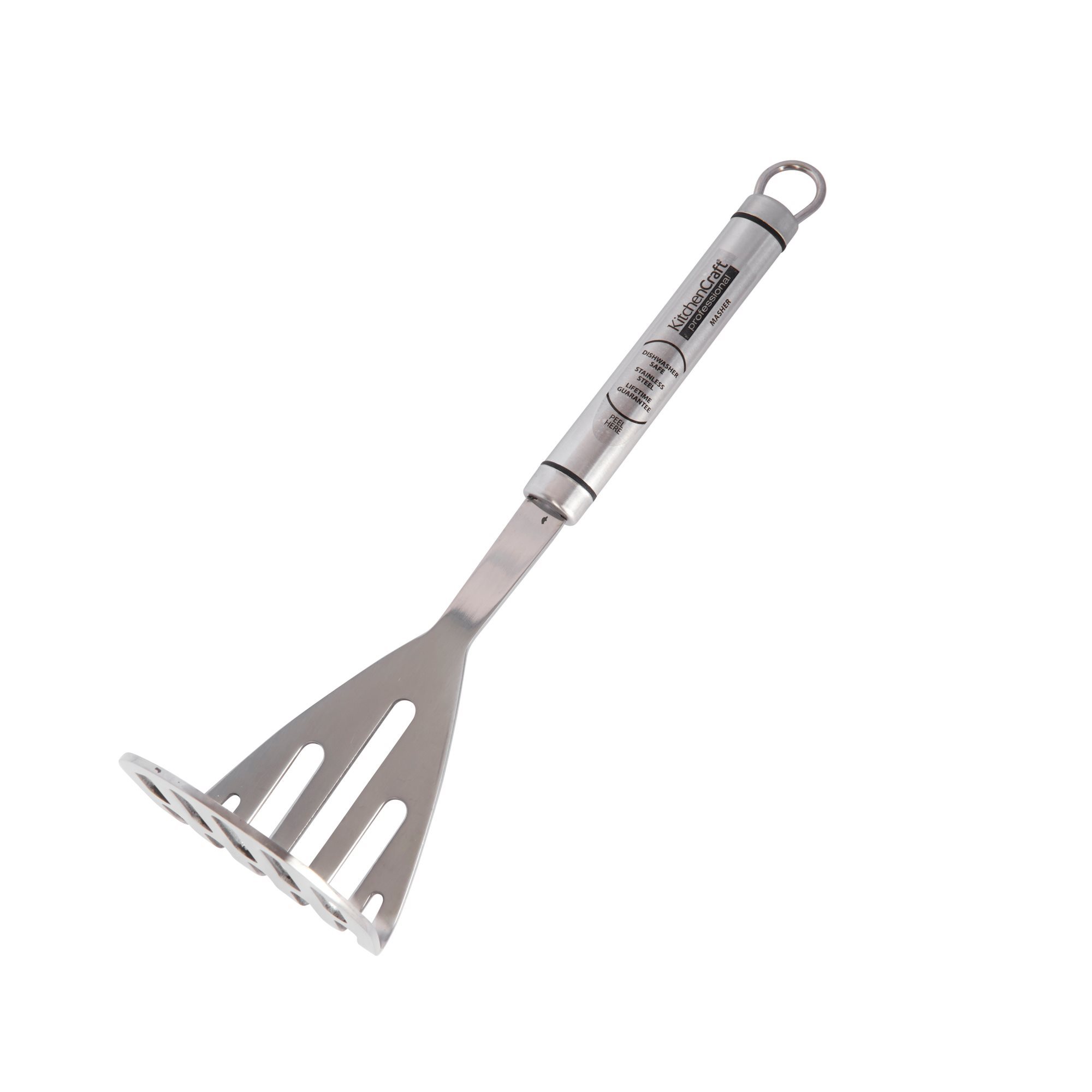
- Low-Shear Planetary Attachments & Immersion Ricers: Specialized potato immersion appliances use slow-turning planetary gearboxes (100 to 300 RPM) fitted with perforated extruding screens or dull paddle extruders. These push soft cooked potato flesh through mechanical apertures, cleanly separating the cells rather than shearing them open.
Technical Comparison of Potato Appliances
The following table outlines the operational parameters, energy requirements, and primary use cases across major equipment categories:
| Appliance Type | Primary Drive Mechanism | Typical Output / Capacity | Primary Culinary Task | Essential Maintenance Requirement |
|---|---|---|---|---|
| Abrasive Peeler | Direct-drive electric motor (0.37–1.5 kW) | 5 kg – 25 kg per batch (up to 300 kg/hr) | Bulk peeling and skin rinsing | Emptying waste filter basket; cleaning carborundum lining |
| Electric Fry Cutter | Pneumatic ram or hydraulic piston | 100 kg – 500 kg per hour | Baton, dice, and wedge slicing | Blade grid sharpening; seal lubrication; safety interlock checks |
| Centrifugal De-Waterer | High-torque motor with mechanical brake | 5 kg – 15 kg per load | Surface moisture evacuation | Drum balancing; dynamic seal checking; drainage trap clearing |
| Dual-Tank Deep Fryer | Immersion gas tubes or electric elements | 18 L – 25 L oil per vat | Two-stage par-cooking and crisping | Daily oil filtration; sediment purge; boil-out cleaning cycles |
| Low-Shear Puree Machine | Geared reduction planetary motor | 10 kg – 60 kg per hour | Smooth mashing without starch shear | Gearbox inspection; cleaning perforated dies; seal sanitization |
Mechanical and Chemical Factors in Equipment Selection
Selecting kitchen appliances for potato preparation requires aligning equipment mechanics with the plant's underlying food chemistry.
Starch Management and Gelatinization
Potatoes consist primarily of water (around 80%) and starch (15% to 18%), split between linear amylose and branched amylopectin molecules. When potato cells rupture mechanically, amylose leaks out.
Appliances that cut potatoes must use extremely sharp, thin-profile blades rather than blunt wedges. Dull blades tear and compress the cell walls, depositing excess free starch on the surface of the cut baton. This free starch burns rapidly when fried, causing bitter black spots and sticky clumping in fry baskets. Quality fry cutters maintain clean shear angles to minimize cellular damage.
Moisture Removal Dynamics
When preparing fried potato varieties, introducing surface moisture into hot oil creates a steam envelope that prevents oil contact while simultaneously accelerating oil hydrolysis (breakdown into free fatty acids). Centrifugal de-waterers remove this boundary layer mechanically, extending commercial oil life by up to 25% and reducing the energy required for thermal recovery when the basket drops into the vat.
Motor Duty Cycles and Electrical Ratings
Potatoes are hard, dense tubers. Cutting or peeling equipment requires motors designed for continuous torque under heavy friction.
- Commercial S1 Continuous Duty: Motors rated S1 can run continuously under full load without exceeding thermal limits. These are standard in abrasive peelers processing back-to-back batches.
- Intermittent Duty (S2/S3): Often found in budget or consumer-grade electric spiralizers and slicers. These units must rest after several minutes of operation to prevent stator windings from overheating.
Best Practices for Installing and Operating Potato Appliances
Executing high-volume potato preparation efficiently demands a logical physical layout and strict adherence to utility requirements.
Incoming Cold Water ➔ Peeler ➔ Waste Interceptor Trap ➔ Gravity Waste Drain
1. Plumbing and Waste Separation
Abrasive peelers must never be plumbed directly into standard sanitary drainage lines without a dedicated peel interceptor trap. The fine slurry produced by abrasive carborundum peelers settles into an impermeable, heavy sediment layer inside horizontal pipes, leading to severe plumbing backups. A mechanical filter basket must sit immediately below the peeler’s discharge chute to catch solid skins while allowing waste water to pass through.
2. Blade Alignment and Maintenance in Slicing Equipment
When using manual or pneumatic potato cutters:
- Inspect blade grids before every shift for bent or nicked blades. A single misaligned blade causes the pusher block to bind, potentially shearing metal shavings into the food product.
- Avoid feeding oversized, unyielding tubers sideways into undersized grids. Orient the longitudinal axis of the potato directly perpendicular to the blade grid to balance mechanical stress across the frame.
3. Oil Filtration Protocols for Frying Stations
Because potatoes release fine starch sediment continuously, deep fryers dedicated to potatoes require micro-filtration cycles:
- Skim floating particulates every 30 to 45 minutes of active cooking.
- Run frying oil through an automated or mobile mechanical filter (using diatomaceous earth or filter paper pads down to 5–10 microns) at least once per operating day to strip out suspended caramelized starches.
Troubleshooting Common Equipment Issues
Uneven or Flat Peeling Patterns
- Cause: The abrasive disk is rotating with an underloaded chamber, or water flow is insufficient to evacuate skin debris.
- Remedy: Ensure batches reach at least 60% of the peeler’s rated capacity. Clear blocked water spray jets to ensure steady lubricant flow across the rotating base.
Crushed or Ragged French Fry Edges
- Cause: Dull cutting blades or an improperly aligned mechanical pusher block.
- Remedy: Replace the cutting grid assembly. Check guide rods for lateral play and tighten mounting bolts to ensure the pusher fingers pass squarely between the blade gaps without contact.
Gummy, Glue-Like Mashed Potatoes
- Cause: Over-processing with a high-velocity rotating blade (e.g., standard blender or immersion stick).
- Remedy: Switch immediately to an extrusion-based ricer, a food mill with a rotating sweep arm, or a geared, low-RPM planetary mixer using a flat beater paddle on the lowest speed setting.
Frequently Asked Questions
What makes an abrasive potato peeler better than peeling by hand?
An abrasive peeler reduces labor time by roughly 90%, processing a 10 kg bag of potatoes in under two minutes compared to 20 to 30 minutes of manual labor. While manual peeling can yield slightly less waste when done meticulously, the labor savings and consistent skin removal make abrasive peelers essential for operations processing more than 25 kg of potatoes per day.
Can standard food processors be used to mash potatoes?
Standard food processors should not be used to mash potatoes. Their high-speed cutting blades rupture individual potato starch cells, releasing amylose directly into the mixture. This transforms the puree into an elastic, sticky paste with a glue-like texture. Mashed potatoes require low-shear processing tools like ricers, food mills, or slow-speed planetary beaters.
Why do commercial potato cutters use pushers instead of rotating blades?
Pushers drive the potato straight through a fixed, two-dimensional grid in a single motion, producing straight batons with clean-cut faces. Rotating blades slice sequentially at an angle, which tends to yield curved cuts, higher surface cellular damage, and uneven thickness along the length of the fry.
How often do the abrasive disks in potato peelers need replacement?
Under moderate commercial use (processing 50 kg to 100 kg per day), a bonded carborundum abrasive plate typically lasts between 2 and 4 years. When the peeling cycle extends beyond three minutes for a standard batch, or when potatoes emerge with flats rather than rounded contours, the abrasive disk has worn smooth and requires recoating or replacement.
Is a dedicated blanching fryer necessary for high-volume french fries?
Yes. Producing authentic crisp french fries requires a two-stage cooking process. The first stage cooks the potato through at lower temperatures (around 140°C / 284°F) without browning, while the second stage crisps and colors the exterior at higher heat (180°C / 356°F). Attempting to do both in a single vat forces operators to constantly adjust temperatures up and down, destabilizing oil temperature recovery and causing uneven batches.
Next Steps: Designing an Efficient Potato Prep Station
To build an efficient potato processing line, audit your kitchen's daily preparation volume:
- Under 15 kg daily: Rely on a heavy-duty manual lever-action cutter paired with handheld mechanical ricers and a single-vat fryer.
- 15 kg to 50 kg daily: Introduce a countertop 5 kg abrasive peeler equipped with an integrated skin-trap basket, alongside a dedicated double-vat fryer setup.
- Over 50 kg daily: Invest in a floor-standing 10 kg to 25 kg peeler, an electric or pneumatic continuous feed cutter, a centrifugal spin dryer, and an automated oil-filtering dual-vat frying station. Ensure your facility has appropriate three-phase electrical connections and high-volume sediment drainage traps installed before setting up the line.
Image Gallery