Understanding Jens Haaning Artwork: Conceptualism, Labor, and the Kunsten Museum Dispute
Jens Haaning is a prominent Danish conceptual artist renowned for his provocative works that interrogate power structures, labor economies, financial systems, and cultural integration. Rather than creating traditional objects of visual...
Jens Haaning is a prominent Danish conceptual artist renowned for his provocative works that interrogate power structures, labor economies, financial systems, and cultural integration. Rather than creating traditional objects of visual beauty, Haaning utilizes everyday systems, institutional frameworks, and legal contracts as his primary mediums. His practice frequently blurs the boundaries between the art object, the artist, and the socioeconomic reality of the institutions exhibiting him. By deploying real money, manufactured goods, or borrowed labor, Haaning confronts viewers with stark economic truths that museums and commercial galleries often prefer to keep abstract.
Contents
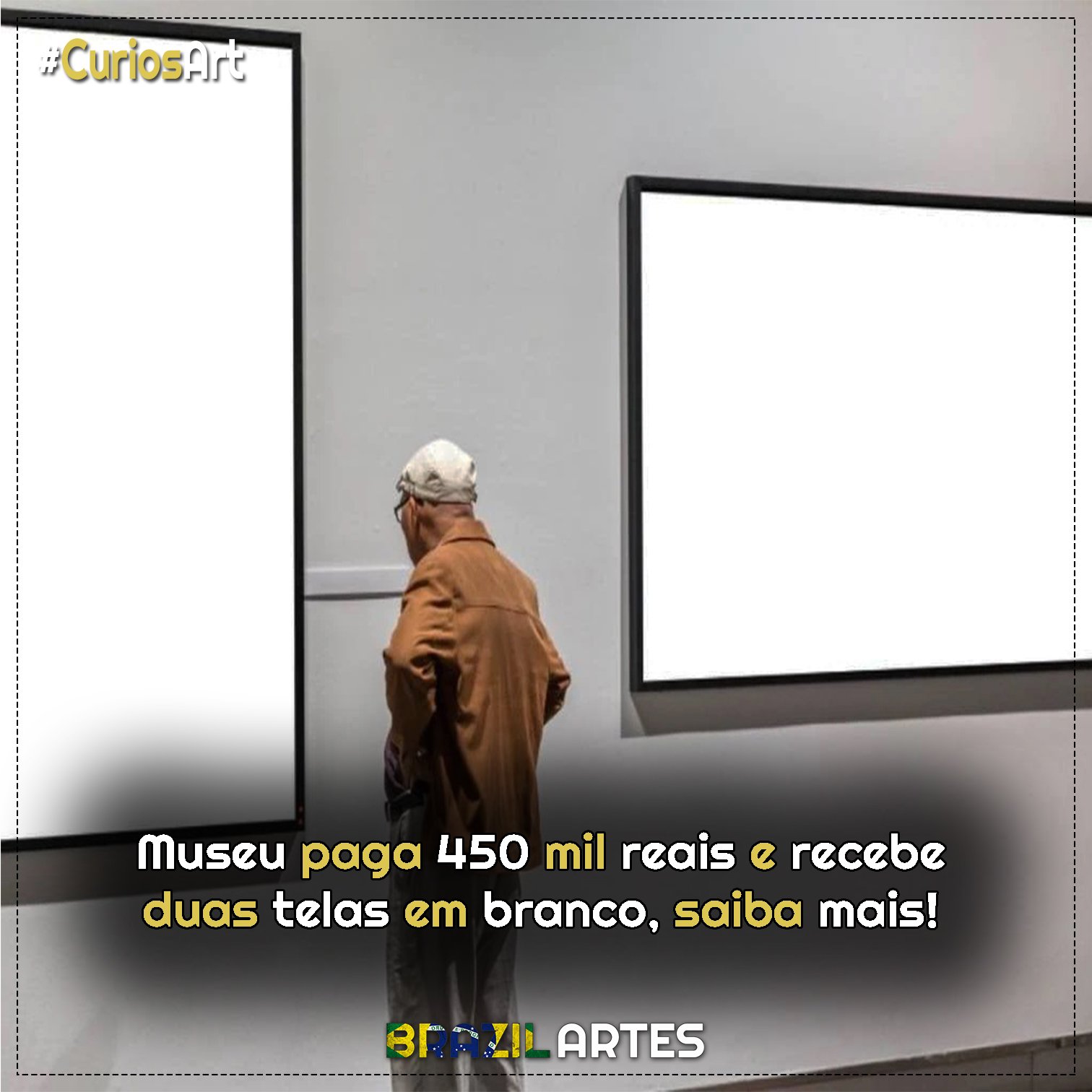
The most widely discussed moment in contemporary art regarding Haaning's portfolio involves his 2021 commission for the Kunsten Museum of Modern Art in Aalborg, Denmark. Asked to recreate two previous artworks that symbolized annual Danish and Austrian incomes using physical cash, Haaning delivered two empty picture frames alongside a provocative conceptual pivot. This high-profile dispute ignited global debates surrounding copyright law, the exploitation of creative labor, breach of contract, and the autonomy of modern art institutions. Examining this landmark piece alongside his broader body of work reveals how Haaning uses institutional critique to challenge the very foundations of the contemporary art market.
The Conceptual Framework of Jens Haaning's Practice
To fully understand Jens Haaning's artwork, one must examine the lineage of institutional critique and conceptual art that emerged in the late 20th century. Conceptual artists prioritize ideas, systems, and processes over the physical manifestation of an art object. Haaning adopts this methodology to expose how museums function not merely as neutral containers for culture, but as economic enterprises deeply embedded in class structures, capitalism, and labor exploitation.
Throughout his career, Haaning has consistently manipulated real-world situations to highlight systemic disparities. His works often involve relocating marginalized people, objects, or systems into high-culture environments where they do not traditionally belong. By doing so, he forces audiences to confront the invisible architectures that govern social mobility, migration, and economic value.
- Systemic Disruption: Using institutional spaces to display raw economic data or sociological realities rather than paintings or sculptures.
- The Economics of Art: Highlighting the disparity between the immense capital generated by the art market and the meager compensation afforded to laborers and artists.
- Participatory Realities: Involving everyday workers, immigrants, or ordinary citizens to construct the physical framework of the exhibition.
Take the Money and Run: The Kunsten Museum Controversy
The defining milestone of Haaning’s career occurred in 2021 when the Kunsten Museum of Modern Art in Aalborg, Denmark, invited him to participate in an exhibition titled Work It Out, which focused on the modern relationship between labor and capital. The museum commissioned Haaning to recreate two of his older works: An Average Danish Annual Income (2007) and An Average Austrian Annual Income (2010). These pieces historically featured real paper currency framed behind glass, representing the exact purchasing power of average citizens in those respective nations.
To execute the commission, the Kunsten Museum lent Haaning 532,000 Danish kroner (approximately $76,000 USD or €72,000 EUR) in cash, alongside a modest production fee. Instead of framing the money, Haaning kept the cash, pocketed the funds, and delivered two empty picture frames to the museum. He titled the newly minted conceptual work Take the Money and Run.
| Aspect of the Commission | Original Plan (2021) | The Actual Execution |
|---|---|---|
| Medium | Framed Danish and Austrian cash | Two empty picture frames |
| Financial Transfer | 532,000 DKK lent for display | 532,000 DKK retained by the artist |
| Artistic Intent | Illustrate average national earnings | Critique low wages and labor exploitation in the arts |
| Institutional Response | Expectation of physical display | Demand for contract fulfillment and legal action |
The museum initially displayed the empty frames as instructed by the conceptual nature of the provocation, but a bitter legal dispute quickly ensued. The Kunsten Museum argued that Haaning had breached their formal contract, which explicitly stated that the borrowed money must be returned at the end of the exhibition. Haaning, conversely, defended his actions as an authentic artistic commentary on workplace conditions, noting that his net earnings from the museum's meager artist fee would have left him financially strained after covering production costs. He famously stated that taking the money was, in itself, the artwork—a creative act representing a refusal to work under exploitative conditions.
Legal Battles, Resolution, and Global Impact
The confrontation between Jens Haaning and the Kunsten Museum escalated beyond a mere publicity stunt into a complex legal battle over copyright infringement, contract law, and ownership rights. In September 2023, a Copenhagen court ruled in favor of the museum, ordering Haaning to return the principal sum of 492,000 DKK (after accounting for a previously unpaid artist fee and framing costs that the court acknowledged).
Despite the legal setback and the obligation to return the borrowed capital, the cultural victory belonged entirely to the artist. The global media attention generated by Take the Money and Run catapulted Haaning’s conceptual message into international headlines. Ironically, the exhibition featuring the empty frames drew record-breaking visitor numbers to the Kunsten Museum, and the media value generated by the dispute far exceeded the borrowed sum itself.
This outcome underscored a central paradox of contemporary art: institutions that attempt to punish or litigate against conceptual artists for critiquing capitalism often end up validating and amplifying the very critique leveled against them. The case established a fascinating modern precedent regarding the limits of artistic contracts when the creation of the artwork involves the subversion of the contract itself.
Key Precedents in Haaning's Earlier Body of Work
While Take the Money and Run brought mainstream visibility to Jens Haaning, his earlier portfolio laid a rigorous foundation for institutional and socioeconomic critique. Understanding these foundational pieces clarifies that his 2021 action was not an isolated prank, but the logical evolution of a decades-long artistic methodology.
Early Interventions and Relational Aesthetics
In the 1990s and 2000s, Haaning executed several radical interventions that challenged how galleries define their spaces. One of his most notable early works involved importing an entire Turkish garment factory setup into a Danish art gallery, complete with immigrant workers performing their daily labor inside the exhibition space. By relocating marginalized economic labor into the sterile, elite environment of an art gallery, Haaning forced viewers to confront the invisible hands that sustain Western consumer economies.
Another notable project involved broadcasting audio recordings of foreign languages in public squares or altering commercial signage in immigrant neighborhoods. These projects examined how language acts as both a barrier and a bridge, defining who belongs to a civic space and who is treated as an outsider. In each instance, Haaning bypassed traditional artistic craft—such as painting or sculpture—in favor of sociological choreography.
Common Criticisms and Debates Surrounding Haaning's Methods
Jens Haaning’s approach to art consistently polarizes critics, curators, and the general public. While supporters view his work as a brilliant, necessary wake-up call regarding the commodification of culture and the exploitation of creative workers, detractors raise valid ethical and professional concerns.
- Breach of Trust: Critics argue that violating legally binding loan agreements undermines the fragile trust required between public cultural institutions and artists. If museums cannot rely on artists to return borrowed public or private assets, the feasibility of mounting complex exhibitions is severely threatened.
- Elitism vs. Populism: Some commentators suggest that conceptual gestures involving large sums of money pander to sensationalism, overshadowing quieter, more rigorous forms of political art.
- Institutional Complicity: Detractors note that despite his anti-capitalist rhetoric, Haaning remains entirely dependent on elite museums, wealthy collectors, and high-end galleries to validate and monetize his provocation.
Frequently Asked Questions About Jens Haaning Artwork
What is Jens Haaning's most famous artwork?
Jens Haaning's most famous and widely discussed artwork is Take the Money and Run (2021), created for the Kunsten Museum of Modern Art in Denmark, which featured two empty picture frames representing the retention of 532,000 DKK in loaned cash.
Did Jens Haaning have to return the money to the museum?
Yes. Following a court ruling in September 2023, Haaning was legally ordered to return the principal sum of 492,000 DKK to the Kunsten Museum, though he retained his original artist fee and framing costs.
What is the primary theme of Jens Haaning's art?
Haaning's work focuses primarily on institutional critique, socioeconomic disparities, labor conditions, immigration, and the financial structures underpinning the contemporary art market.
How does Haaning create art without traditional mediums?
Rather than using paint, clay, or bronze, Haaning utilizes everyday systems, legal contracts, real currency, manufactured goods, and human labor to construct situations that expose societal power dynamics.
Where can I view Jens Haaning's exhibitions?
Haaning's works and documentation of his conceptual interventions are periodically exhibited in contemporary art museums and galleries across Europe and internationally, though many of his site-specific works exist primarily as temporary actions or historical case studies.
Practical Guidance for Art Scholars and Collectors
For students, researchers, and collectors engaging with Jens Haaning's portfolio, appreciating the work requires looking beyond the physical artifacts—which are often minimal, absent, or entirely conceptual. Evaluating conceptual art of this nature demands a rigorous examination of the underlying documentation, the legal frameworks governing the exhibition, and the public discourse sparked by the intervention. When studying Haaning, researchers should consult original museum correspondence, court documents, and critical essays rather than relying solely on visual inspection, as the true substance of the artwork resides in its systemic and political ramifications.
Image Gallery